Efficient treatment system and efficient treatment method for electroplating wastewater

A technology of electroplating wastewater and treatment system, which is applied in metallurgical wastewater treatment, water/sewage treatment, special compound water treatment, etc. It can solve problems such as exceeding the standard, unqualified discharge, and failure to achieve the effect, so as to ensure the filtering effect and the amount of pollutants The effect of reducing and improving efficiency

CN109111034APending Publication Date: 2019-01-01苏州新工环境工程技术有限公司
9 Cites 2 Cited by

Patent Information

Authority / Receiving Office
CN · China
Patent Type
Applications(China)
Current Assignee / Owner
Publication Date
2019-01-01

Smart Images

  • Figure 1
    Figure 1
  • Figure 2
    Figure 2
  • Figure 3
    Figure 3
Patent Text Reader

Abstract

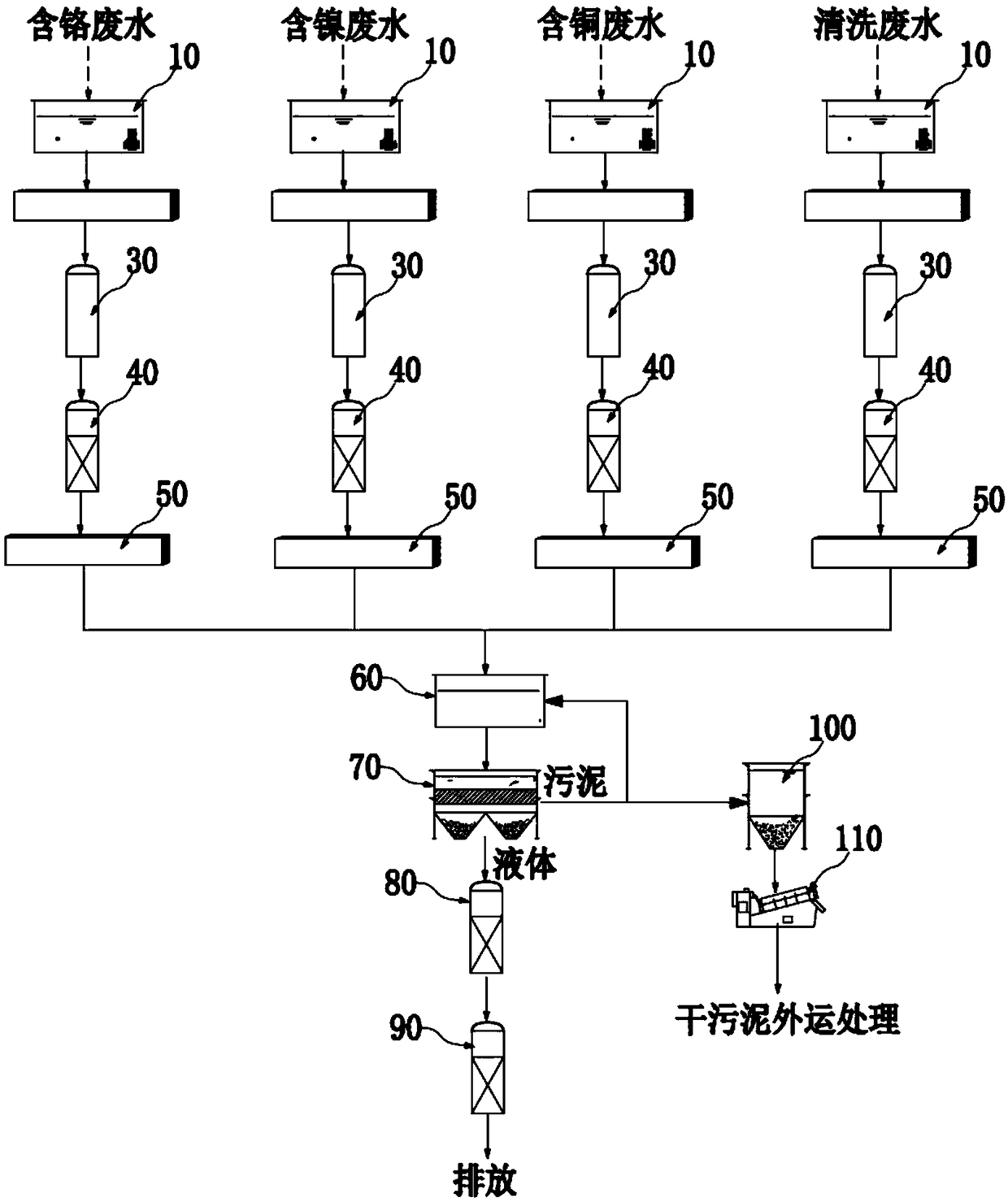
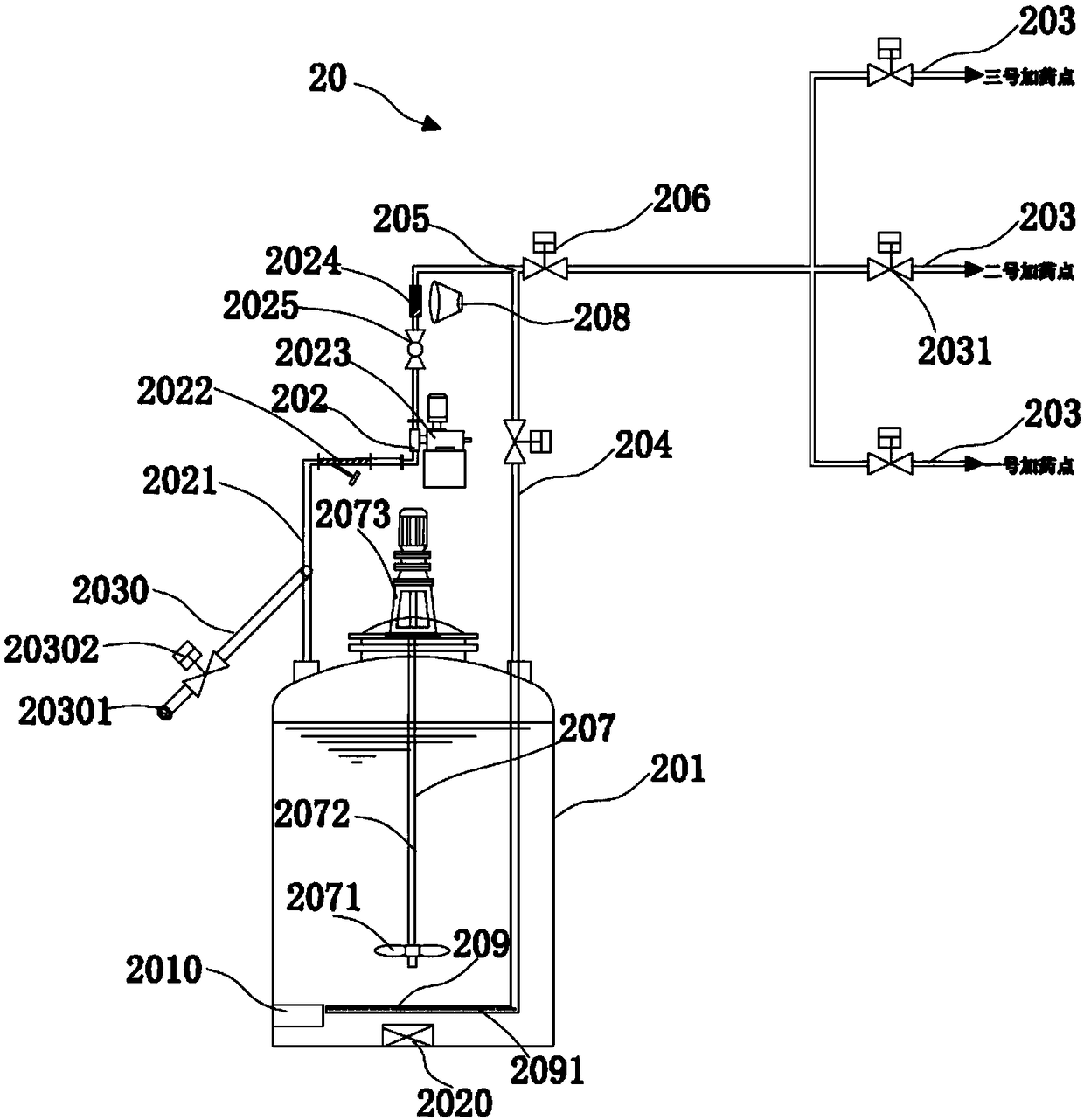
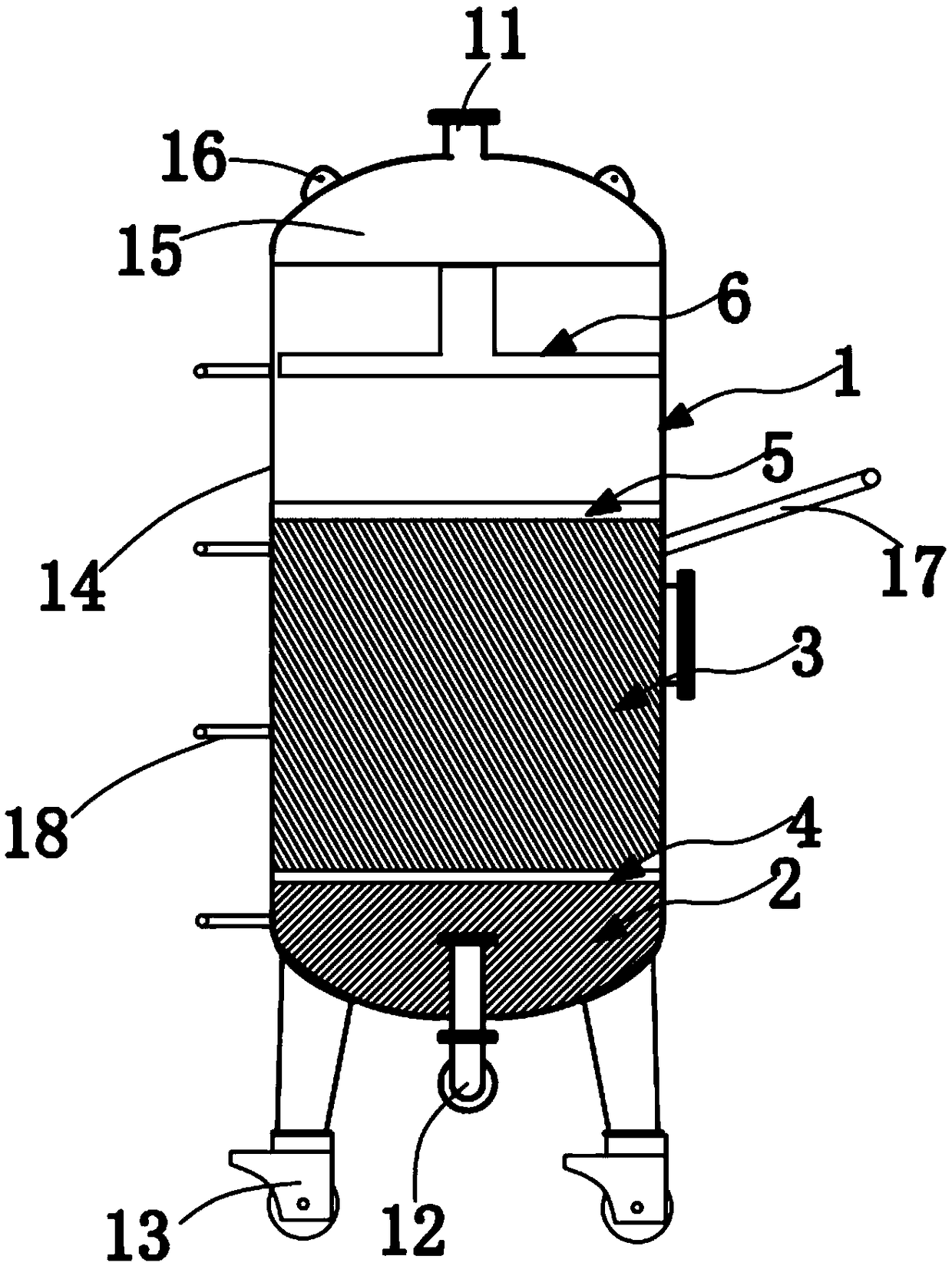
The invention discloses an efficient treatment system and an efficient treatment method for electroplating wastewater. The treatment system comprises at least one degradation sedimentation basin, an ion exchange pool, a biological treatment tank, a sedimentation tank and a primary activated carbon filter, wherein wastewater in the degradation sedimentation basin is treated by Fenton reaction and coagulating sedimentation; the ion exchange pool is connected with the degradation sedimentation basin and is used for treating effluent treated by the degradation sedimentation basin through ion exchange resin in the ion exchange pool; the biological treatment tank is connected with the ion exchange pool and is used for treating effluent treated by the ion exchange pool through aerobic sludge in the biological treatment tank; the sedimentation tank is connected with the biological treatment tank; the primary activated carbon filter is connected with the sedimentation tank. According to the scheme, the degradation sedimentation basin carries out Fenton treatment for improving the biodegradability of electroplating wastewater, so that organic matters in the wastewater can be removed by a biological treatment technology, and further COD, total phosphorus, ammonia nitrogen, total nitrogen and the like reach emission indexes; meanwhile, by combining with an ion exchange method, metal ions,in particular to heavy metal ions in the wastewater are effectively removed, so that the contents of the heavy metals reach the emission indexes.
Need to check novelty before this filing date? Find Prior Art

Description

Technical field

[0001] The invention relates to the field of sewage treatment, in particular to a high-efficiency treatment system for electroplating wastewater and a treatment method thereof. Background technique

[0002] Electroplating refers to the use of electrolysis principles to coat other metals or alloys on the surface of some metals to prevent metal oxidation and improve wear resistance. Electroplating wastewater is sewage with complex water quality and difficult to control composition in the electroplating production process. Containing cyanide, acid, alkali, and a large number of metal ions such as chromium, pickaxe, nickel, copper, etc., and the existence of metal ions in various forms, some in the form of simple cations, and some are in the form of acid radicals. Some are in the form of complex complex ions. At the same time, the wastewater basically contains organic additives. If the electroplating wastewater is directly discharged, it is extremely harmful to the en...

Examples

Embodiment Construction

[0035] The purpose, advantages and characteristics of the present invention will be illustrated and explained through the following non-limiting description of preferred embodiments. These embodiments are only typical examples of applying the technical solutions of the present invention, and any technical solutions formed by equivalent substitutions or equivalent transformations fall within the protection scope of the present invention.

[0036] In the description of the scheme, it should be noted that the terms "center", "upper", "lower", "left", "right", "front", "rear", "vertical", "horizontal", " The orientation or positional relationship indicated by "inner" and "outer" is based on the orientation or positional relationship shown in the drawings, and is only for the convenience of description and simplified description, and does not indicate or imply that the device or element referred to must have a specific orientation , It is constructed and operated in a specific orienta...