
Compound initiator of tomato seeds
A technology of compound initiator and tomato, applied in the fields of seed and rhizome treatment, biocide, animal repellent, etc., can solve problems such as failure to meet production requirements, unsatisfactory initiation effect, etc., to break dormancy and improve intracellular environment , the effect of promoting extravasation
- Summary
- Abstract
- Description
- Claims
- Application Information
AI Technical Summary
Problems solved by technology
Method used
Image

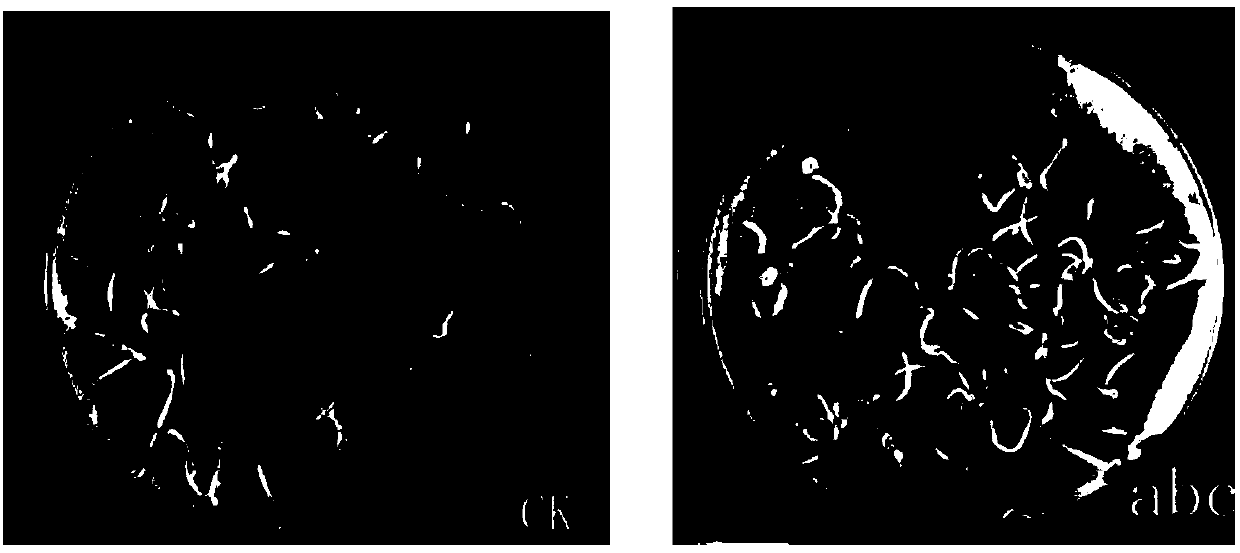
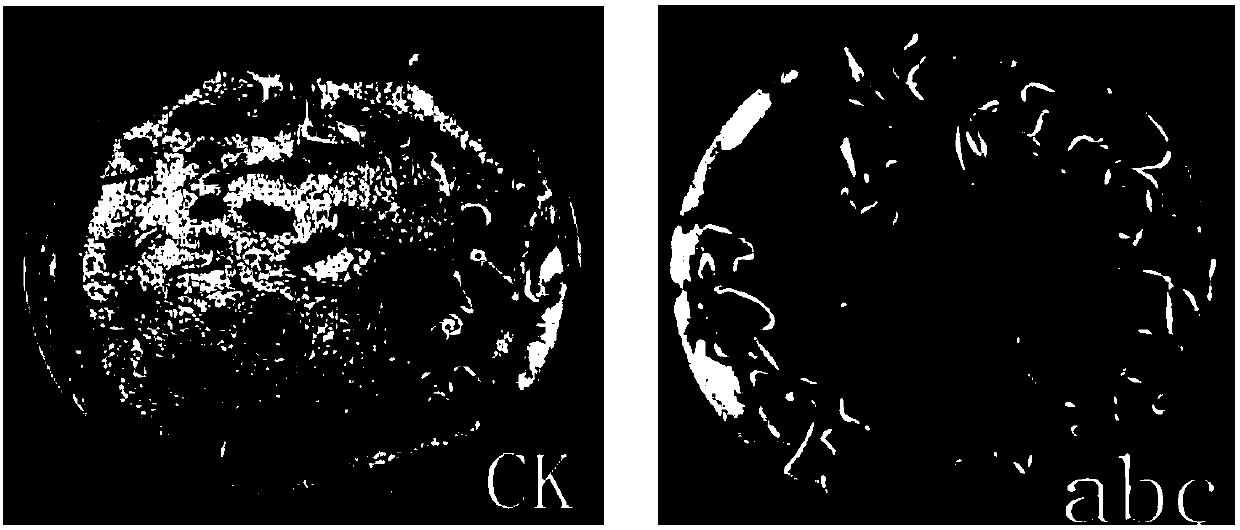
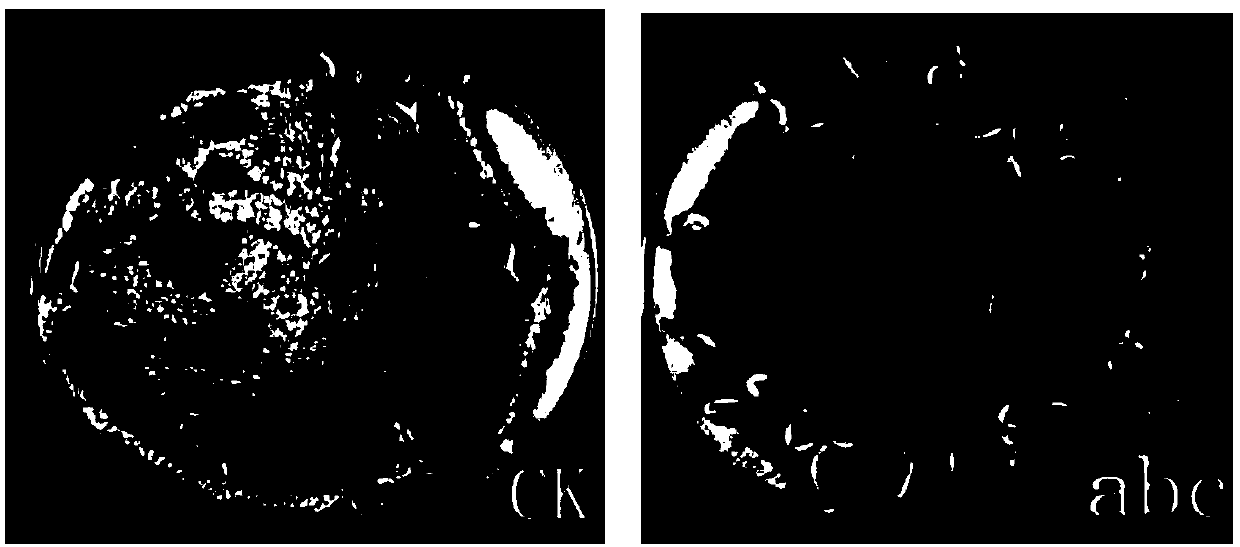
Examples
Embodiment 1
[0030] The proportioning of initiator is:
[0031]
[0032]
[0033] Configuration method:
[0034] 2g chitosan is first dissolved in a small amount of 1%-2% acetic acid, 0.2g gibberellin is first dissolved in a small amount of 100% alcohol, and the dissolved chitosan and gibberellin are mixed and stirred, and finally 10g sodium chloride is added, and then water Adjust the volume to 1L.
Embodiment 2
[0036] The proportioning of initiator is:
[0037]
[0038] Configuration method:
[0039] 1.5g chitosan is first dissolved in a small amount of 1%-2% acetic acid, 0.15g gibberellin is first dissolved in a small amount of 100% ethanol, the dissolved chitosan and gibberellin are mixed and stirred, and finally 5g sodium chloride is added, and then Make up to 1L with water.
Embodiment 3
[0041] The proportioning of initiator is:
[0042]
[0043] Configuration method:
[0044] 2.5g chitosan is first dissolved in a small amount of 1%-2% acetic acid, 0.25g gibberellin is first dissolved in a small amount of 100% ethanol, the dissolved chitosan and gibberellin are mixed and stirred, and finally 15g sodium chloride is added, and then Make up to 1L with water.
PUM
 Login to View More
 Abstract
Description
Claims
Application Information
 Login to View More