
ISP color interpolation method and device based on self-adaptive Gaussian kernel
A color interpolation and Gaussian kernel technology, applied in the ISP field, can solve the problems of low calculation, high frame rate, false color phenomenon, damage to the proper process, etc., to accelerate the interpolation processing speed, improve the distortion problem, and speed up the processing speed Effect
- Summary
- Abstract
- Description
- Claims
- Application Information
AI Technical Summary
Problems solved by technology
Method used
Image

Examples
Embodiment Construction
[0032] The present invention will be further described below in conjunction with the accompanying drawings and specific preferred embodiments, but the protection scope of the present invention is not limited thereby.
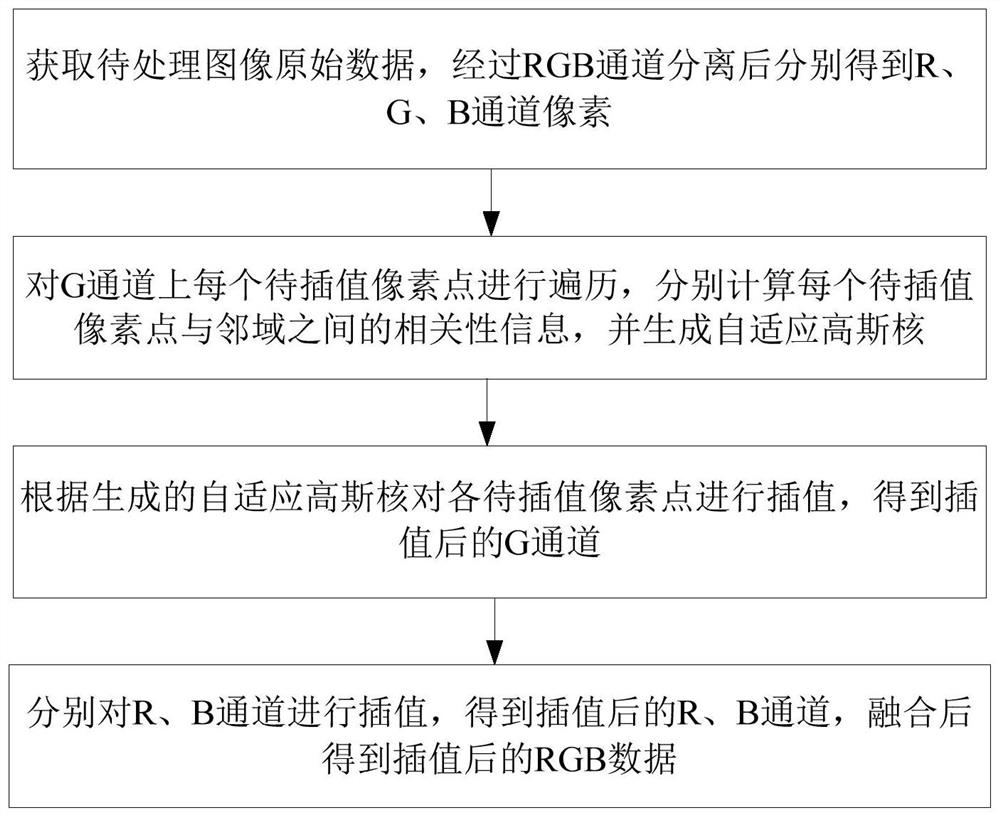
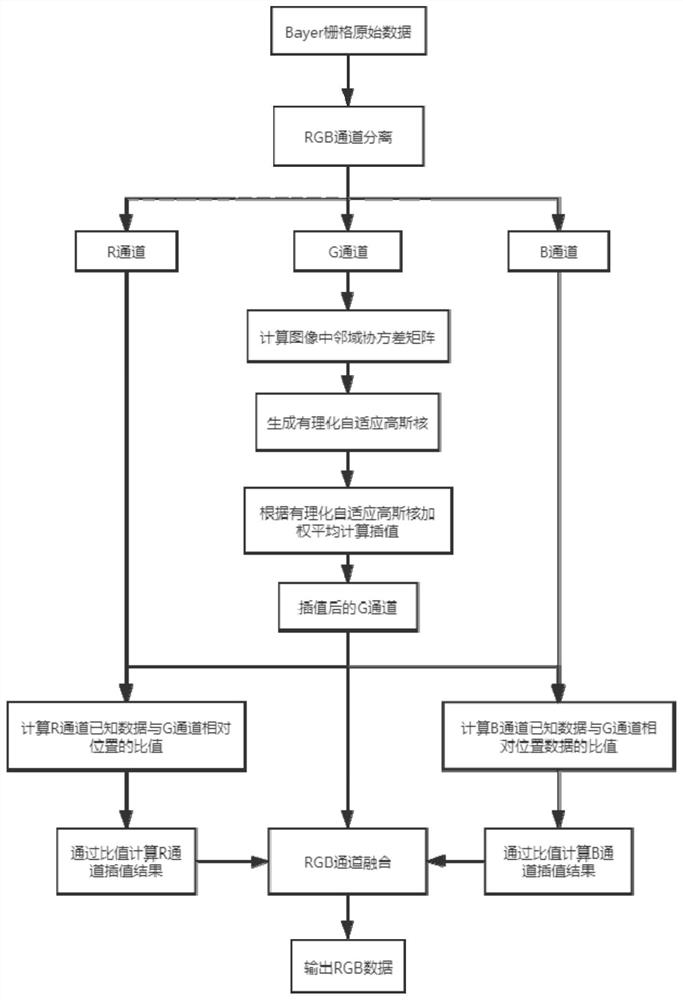
[0033] Such as figure 1 As shown, the steps of the ISP color interpolation method based on the adaptive Gaussian kernel in this embodiment include:
[0034] S1. RGB channel separation: obtain the original data of the image to be processed, and obtain R, G, and B channel pixels after RGB channel separation;
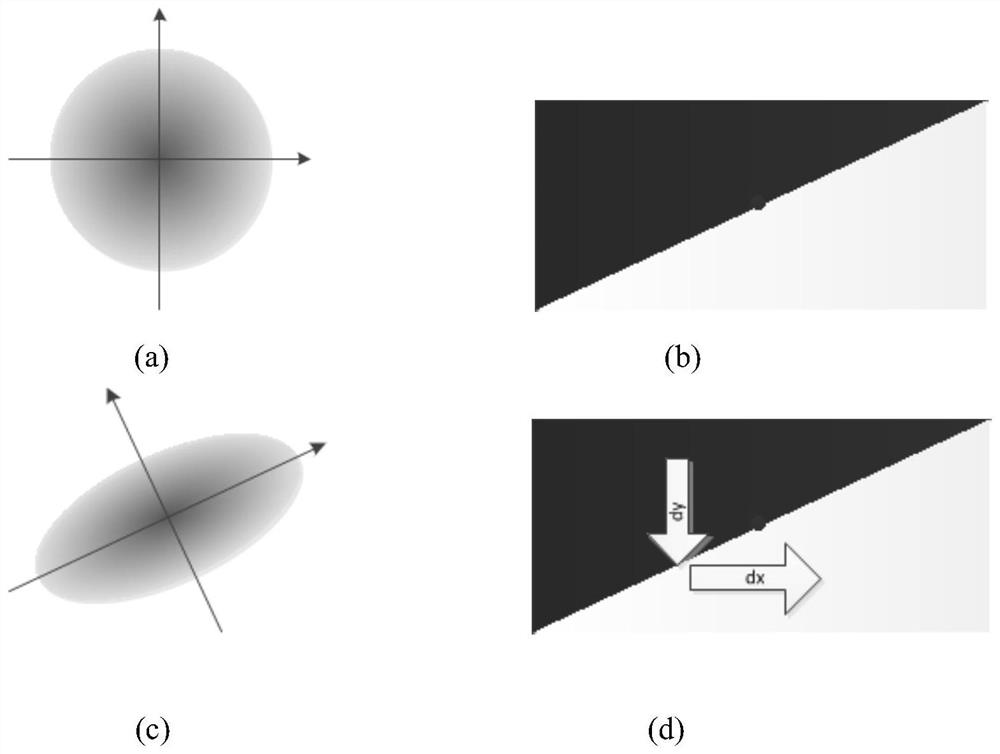
[0035] S2. Adaptive Gaussian kernel generation: traverse each pixel to be interpolated on the G channel, calculate the correlation information between each pixel to be interpolated and the neighborhood, and use the calculated correlation information to generate an adaptive Gaussian kernel, where correlation information is used to control the rotation and scaling of the Gaussian kernel;
[0036] S3. G channel interpolation: Interpolate each pixel to be inte...
PUM
 Login to View More
 Abstract
Description
Claims
Application Information
 Login to View More