
Method of converting wheat chemical insecticide composition into triseries composition
A technology of wheat and maintainer lines, applied in botany equipment and methods, applications, plant genetic improvement, etc., can solve the problems of haploid production, low recovery degree, and recovery degree variation
- Summary
- Abstract
- Description
- Claims
- Application Information
AI Technical Summary
Problems solved by technology
Method used
Image

Examples
Embodiment Construction
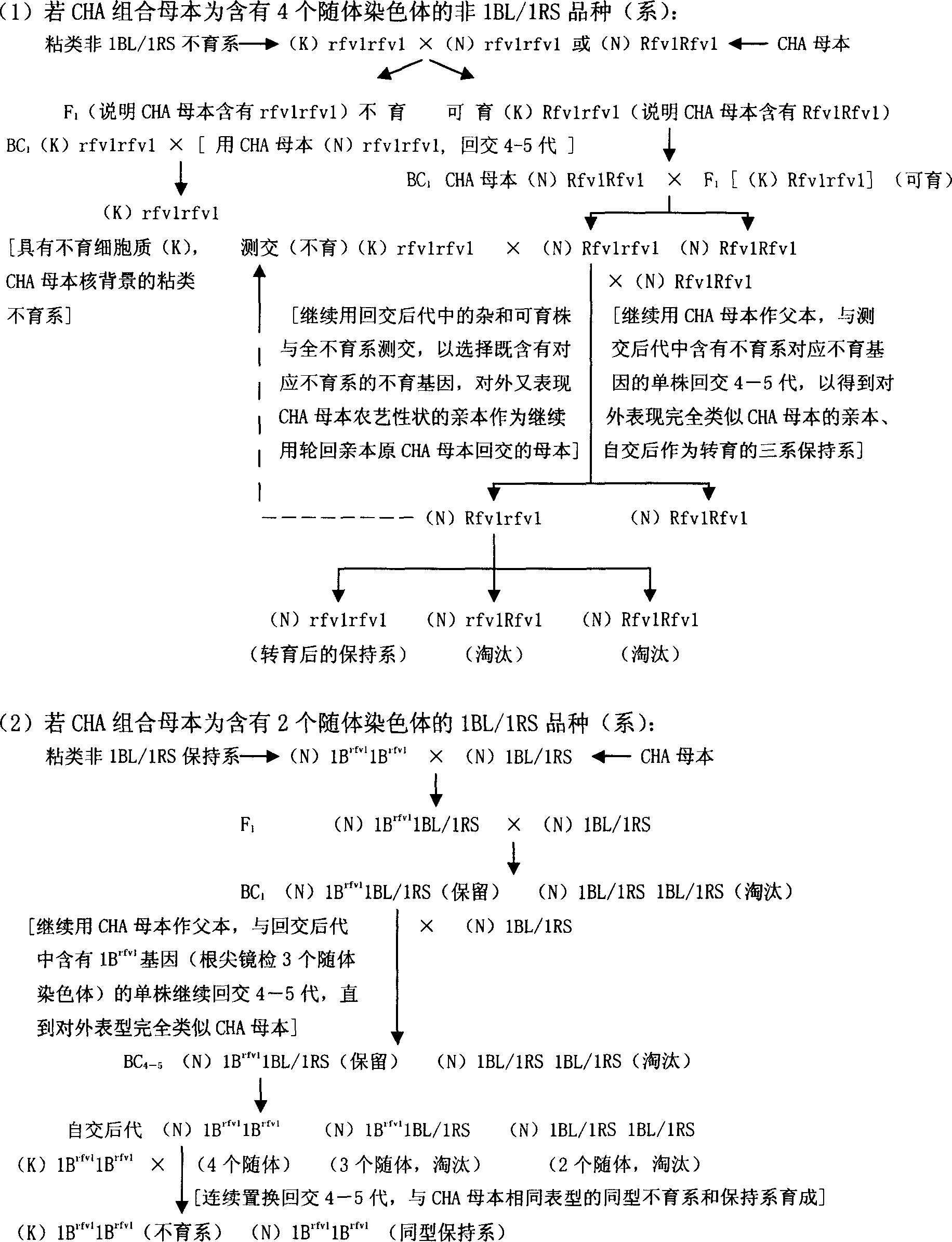
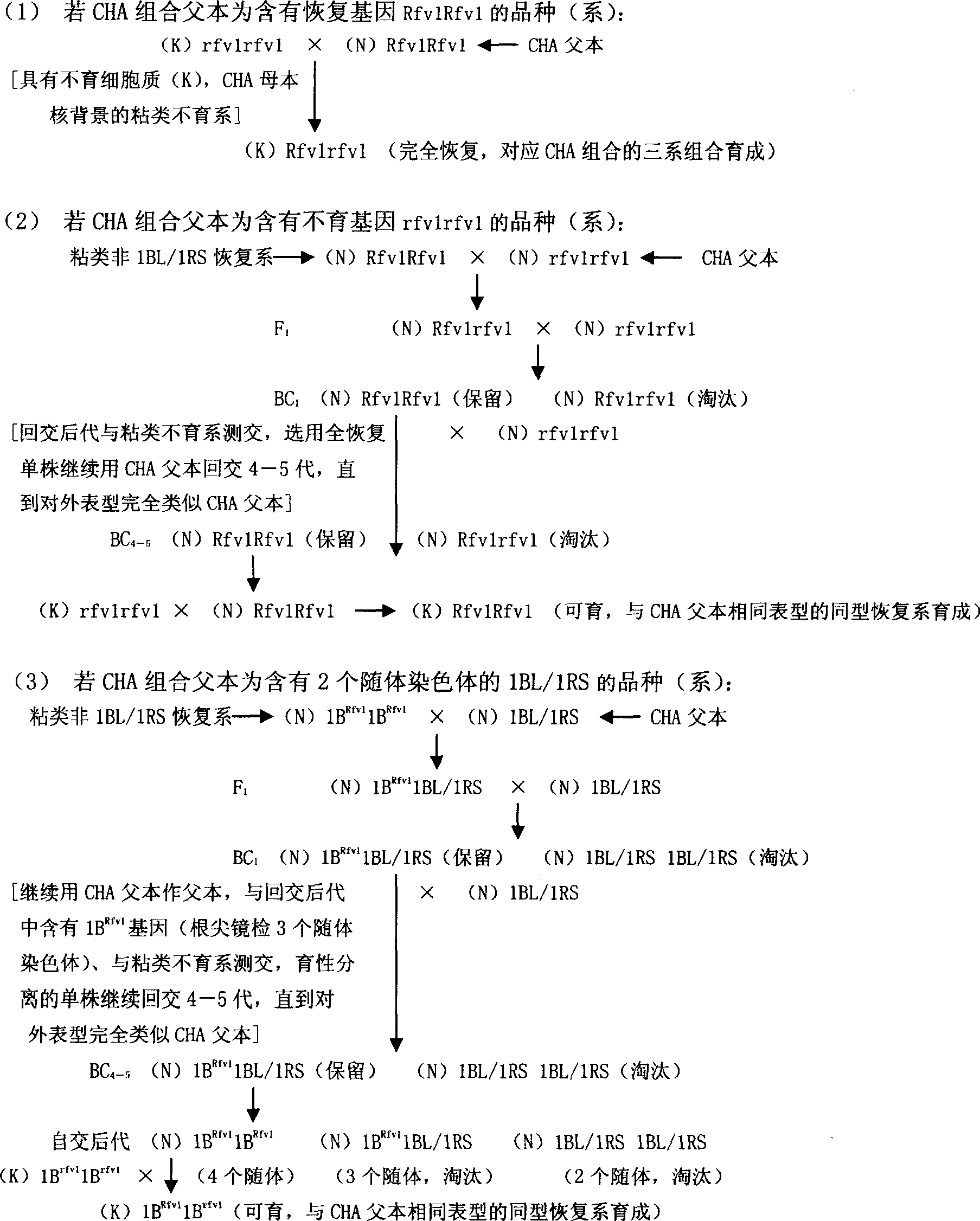
[0061] The present invention adopts rigorous and scientific chromosome engineering technology and cytogenetic analysis technology to transfer the 1B chromosome of the sterile gene (rfv1) of the glutinous sterile line in wheat to replace the 1B chromosome of the female parent in the strong combination of CHA (In the case of not carrying the rfv1 gene); the 1B chromosome carrying the restorer gene (Rfv1) of the sticky sterile line is targeted to replace the 1B chromosome of the male parent in the strong combination of CHA (in the case of not carrying the Rfv1 gene) ). And through chromosomal marker selection and targeted continuous replacement backcross, the other genetic background of the recipient of the replaced parent (CHA parent) is kept basically unchanged, and the same sterile line, maintainer line and restorer line as the parent of the same combination of CHA are bred , So as to achieve the three-line matching, and finally the three-line superior combination with the same co...
PUM
 Login to View More
 Abstract
Description
Claims
Application Information
 Login to View More