Wastewater treatment system

a technology of nitrification and treatment system, applied in the direction of biological water/sewage treatment, sustainable biological treatment, water/sewage treatment by degassing, etc., can solve the problems of complex de-nitrification process, aqueous environment, and harmful effect of nitrate generated in the nitrification step, so as to reduce the complexity and operating cost, eliminate the complex and costly nitrification and de-nitrification steps, and reduce the size and cost

US10065871B2Inactive Publication Date: 2018-09-04BLUMETRIC ENVIRONMENTAL
5 Cites 0 Cited by

Patent Information

Authority / Receiving Office
US · United States
Patent Type
Patents(United States)
Current Assignee / Owner
Publication Date
2018-09-04
Estimated Expiration
Not applicable · inactive patent

Smart Images

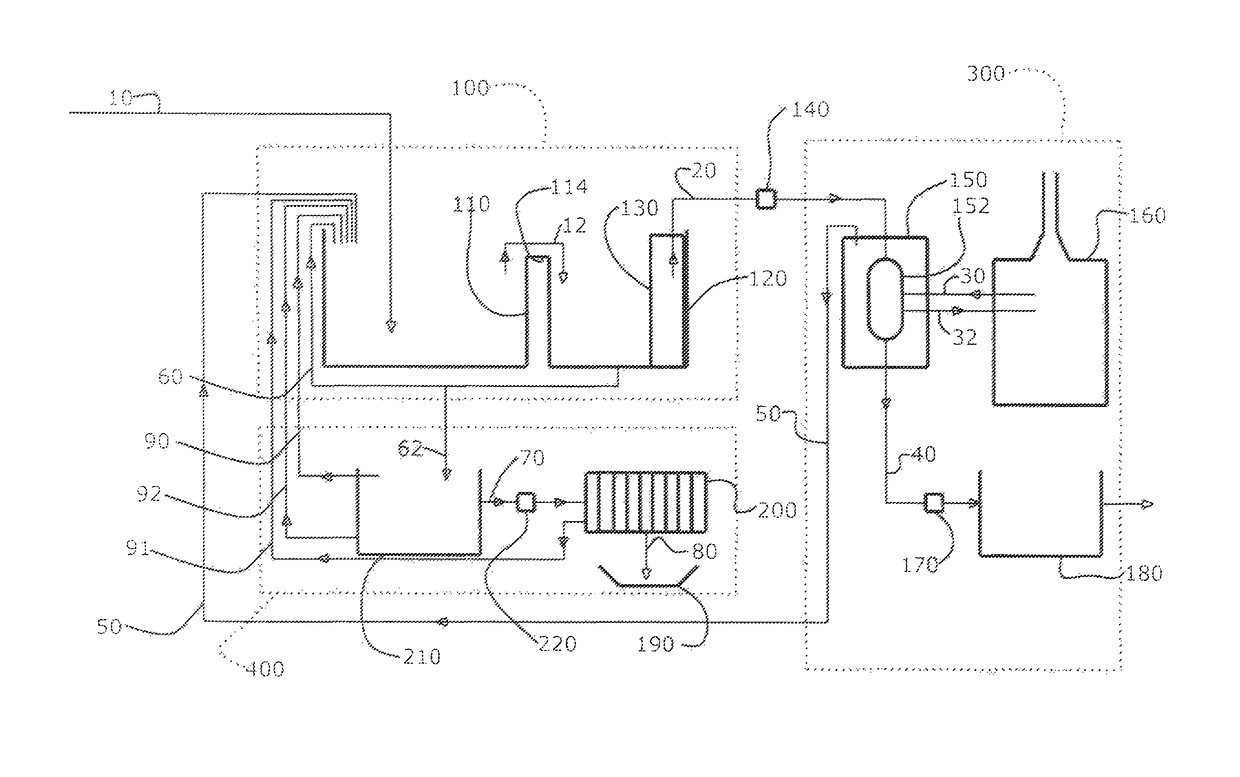
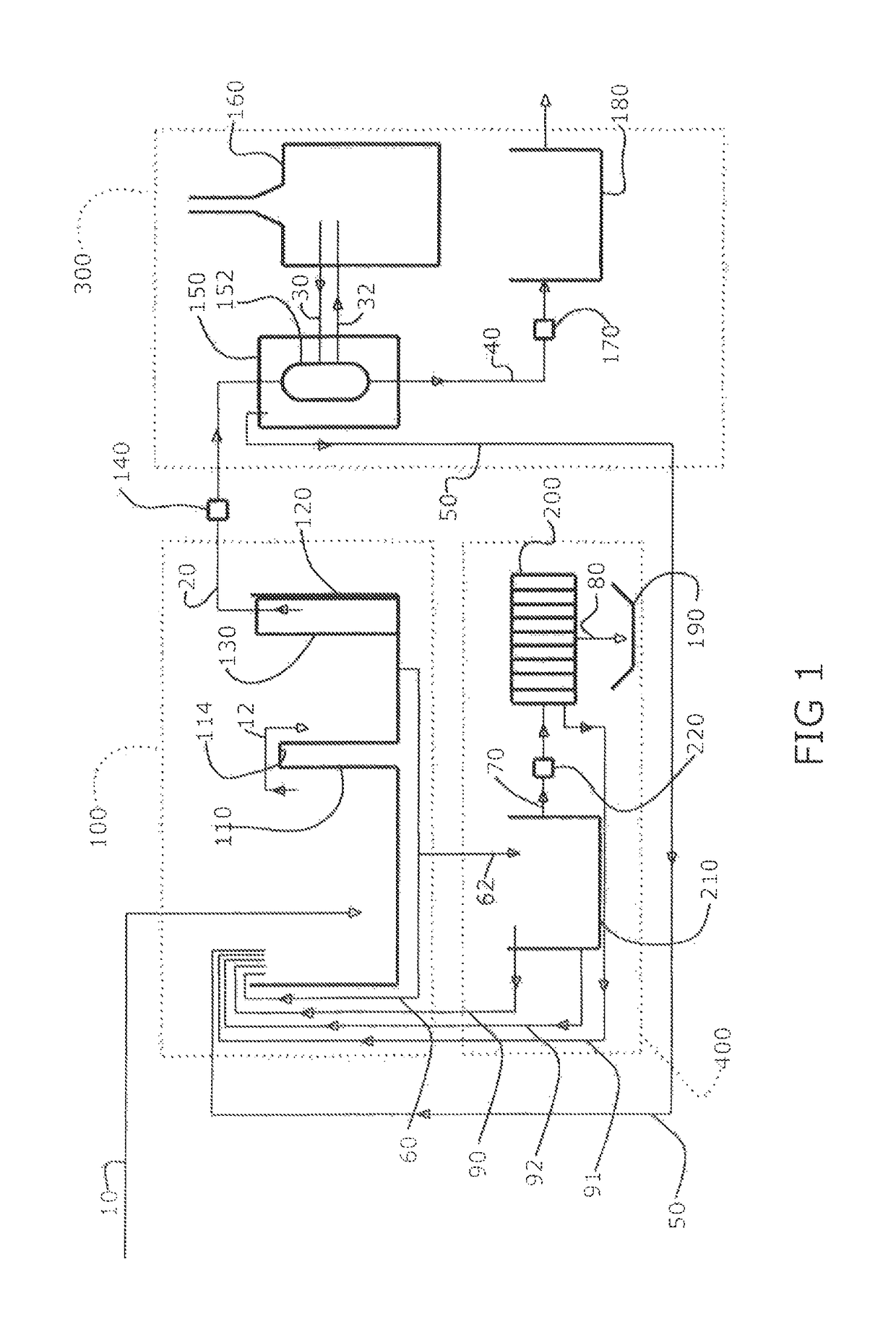
  • Figure 1
    Figure 1
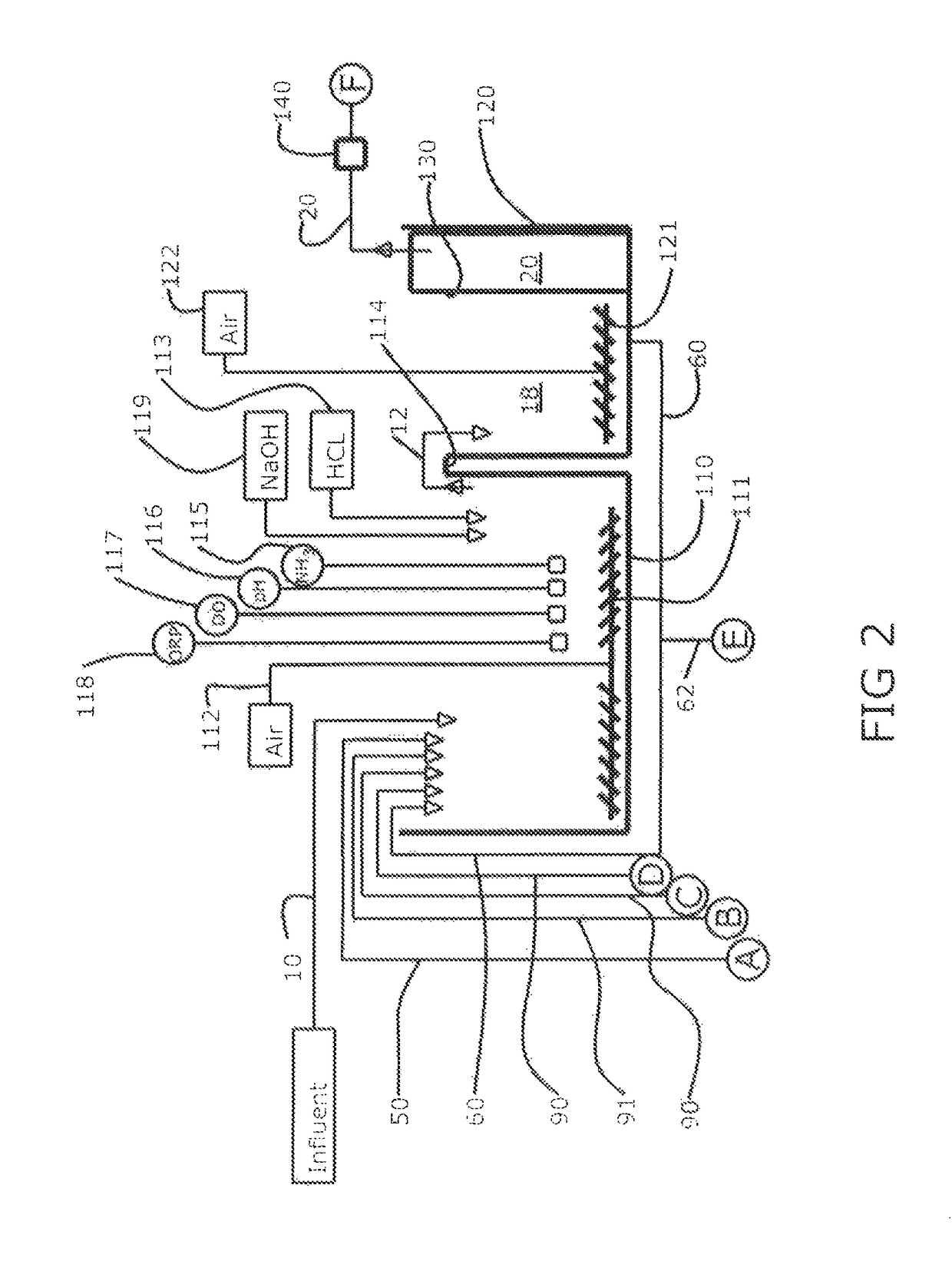
  • Figure 2
    Figure 2
  • Figure 3
    Figure 3
Patent Text Reader

Abstract

In a process for the treatment of wastewater containing carbonaceous and nitrogenous contaminants, wastewater is mixed with aerobic microorganisms capable of converting carbonaceous biological oxygen demand (CBOD) into carbon dioxide, water, and biological cell mass. Oxygen is supplied to the reaction mixture for supporting reduction of the CBOD by the aerobic microorganisms in the reaction mixture. To substantially prevent nitrification of the nitrogenous contaminants in the reaction mixture and avoid the cost of downstream denitrification, the hydraulic residence time of the nitrogenous contaminants in the reaction mixture is controlled by removing partially treated water with dissolved ammonia from the reaction mixture, while retaining the biological cell mass in the reaction mixture. This separates the nitrogen load from the carbon load and enables independent treatment of these contaminants. The ammonia is scrubbed from the partially treated water to create fully treated water which is disposed or returned to the reaction mixture.
Need to check novelty before this filing date? Find Prior Art

Description

RELATED APPLICATIONS

[0001] This application claims priority from Provisional U.S. Patent Application No. 62 / 207,754, which was filed on Aug. 20, 2015, and is incorporated herein by reference.FIELD OF THE INVENTION

[0002] The present invention relates generally to wastewater treatment and in particular to residential, industrial and municipal waste water treatment processes and systems.BACKGROUND

[0003] Most wastewater contains organic contaminants that fall into two groups; carbonaceous, which is derived from sugars, starches and other carbohydrates, and nitrogenous, which comes from the degradation of more complex compounds, such as proteins and amino acids, into ammonia. Most conventional treatment systems address these contaminants separately by using different species of aerobic microorganisms which can use the contaminants as food source. Generally, naturally occurring microorganisms are used and maintained in an environment that keeps them in intimate contact with the food source a...

Examples

example

[0049]A pilot test program was developed to determine the best manner to reduce the oxygen demand created by wastewater generated from an existing wastewater management facility (Facility 1). Initial evaluation of the varied wastewater streams showed that certain streams carried the highest potential for effective reduction of both ammonia and BOD. An exemplary pilot system in accordance with the invention was constructed and tests were run to assess the efficacy of ion exchange resin at removing ammonia from blended landfill leachate water, as well as pre-treated process water. Following ammonia removal by ion exchange, BOD removal was tested using a 3:1 ratio of activated sludge from the Middletown Municipal Wastewater Treatment Plant (Middletown WWTP) to sample. BOD removal was tested on a blended landfill leachate stream, and a pretreated wastewater stream over varying time intervals, following contact with the ion exchange bed, as well as a sample of wastewater from a second fa...