Context-based endpoint detection

a technology of speech signals and endpoint detection, applied in the field of speech processing, can solve the problems of cumbersome and inefficient methods for detecting the endpoint of speech signals using electronic devices, requiring more time than necessary, and existing techniques use a complex and time-consuming user interface, so as to improve efficiency, improve the effect of efficiency and user satisfaction

US10186254B2Active Publication Date: 2019-01-22APPLE INC
4021 Cites 85 Cited by

Patent Information

Authority / Receiving Office
US · United States
Patent Type
Patents(United States)
Current Assignee / Owner
Publication Date
2019-01-22

Smart Images

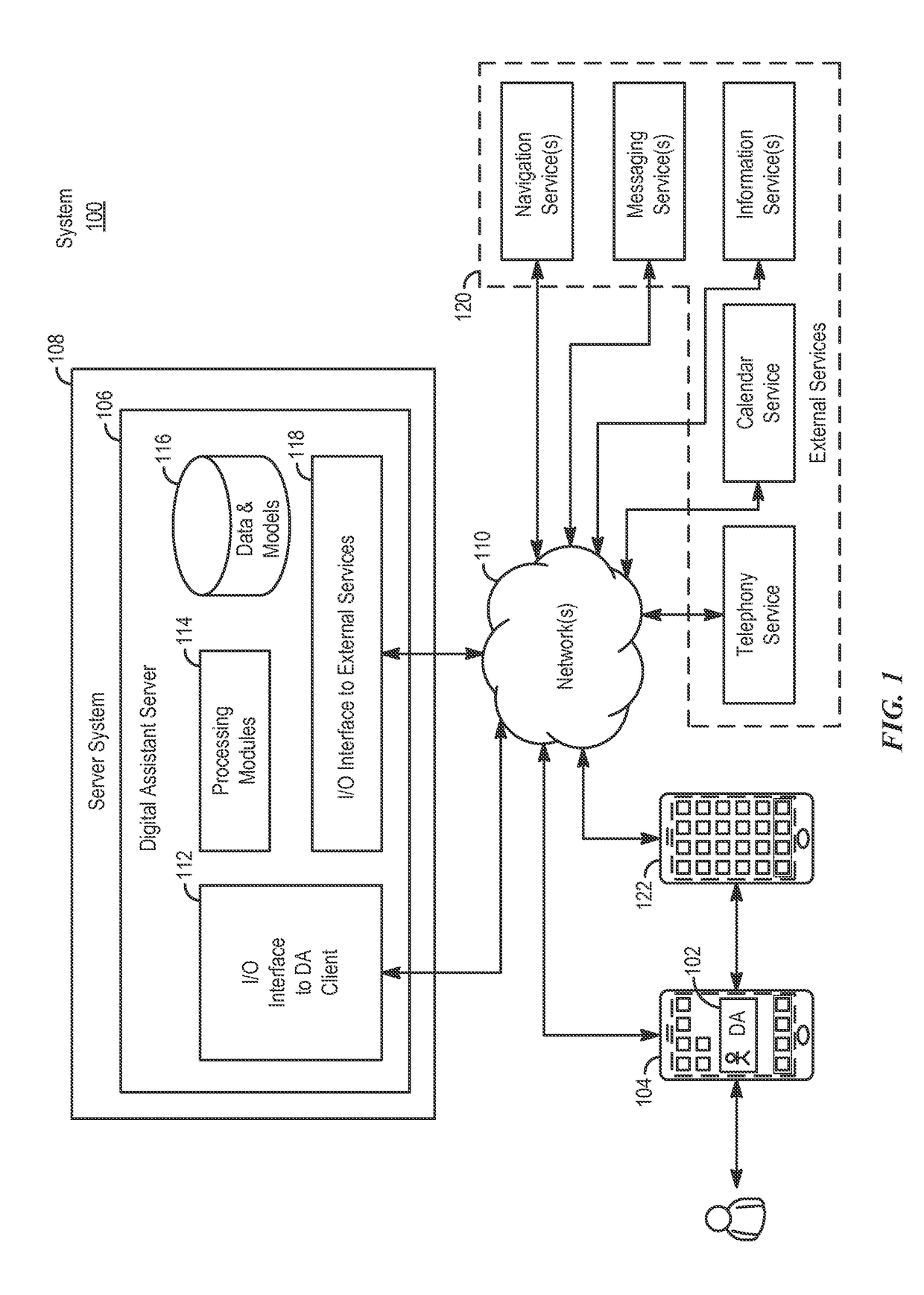
  • Figure 1
    Figure 1
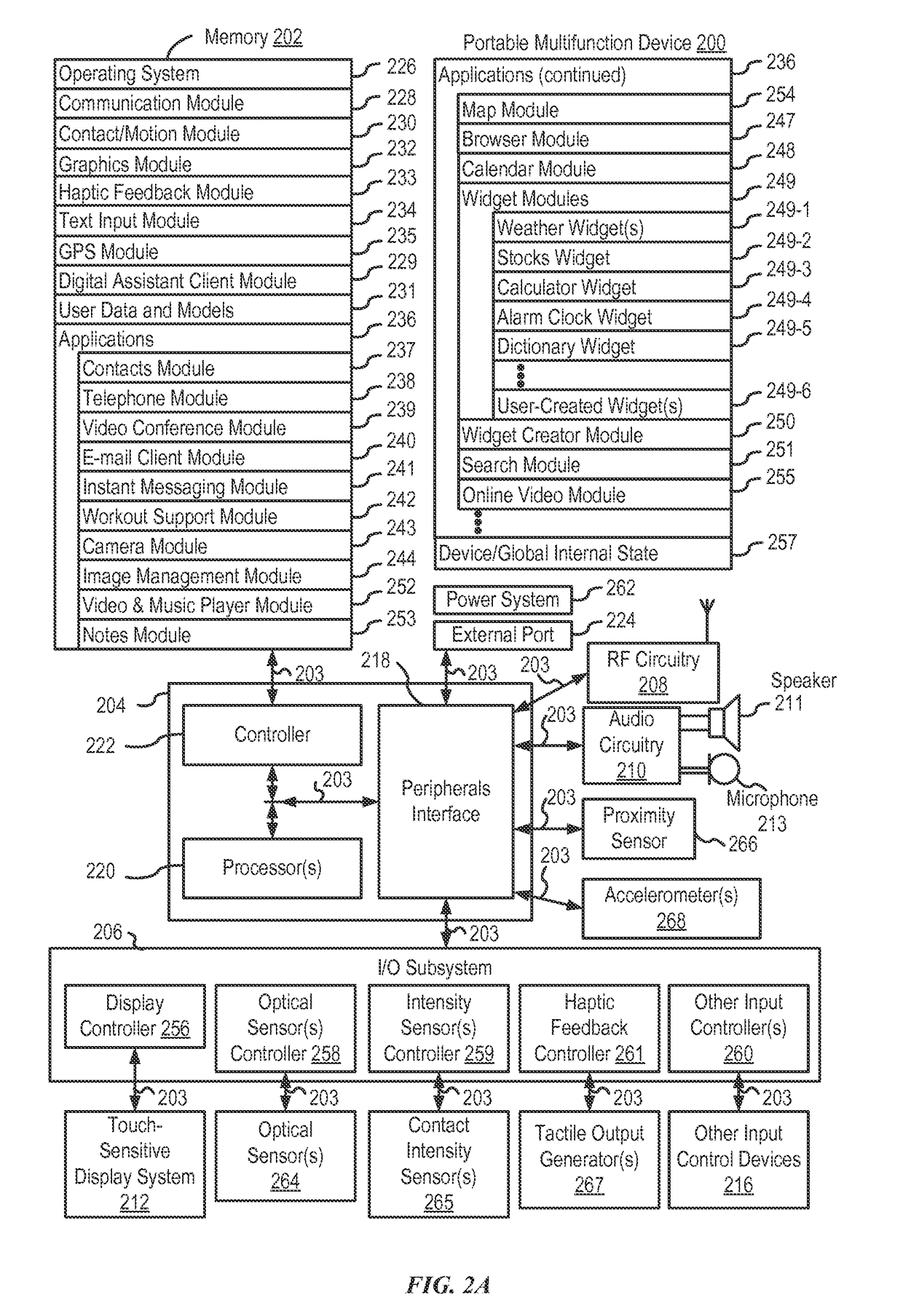
  • Figure 2
    Figure 2
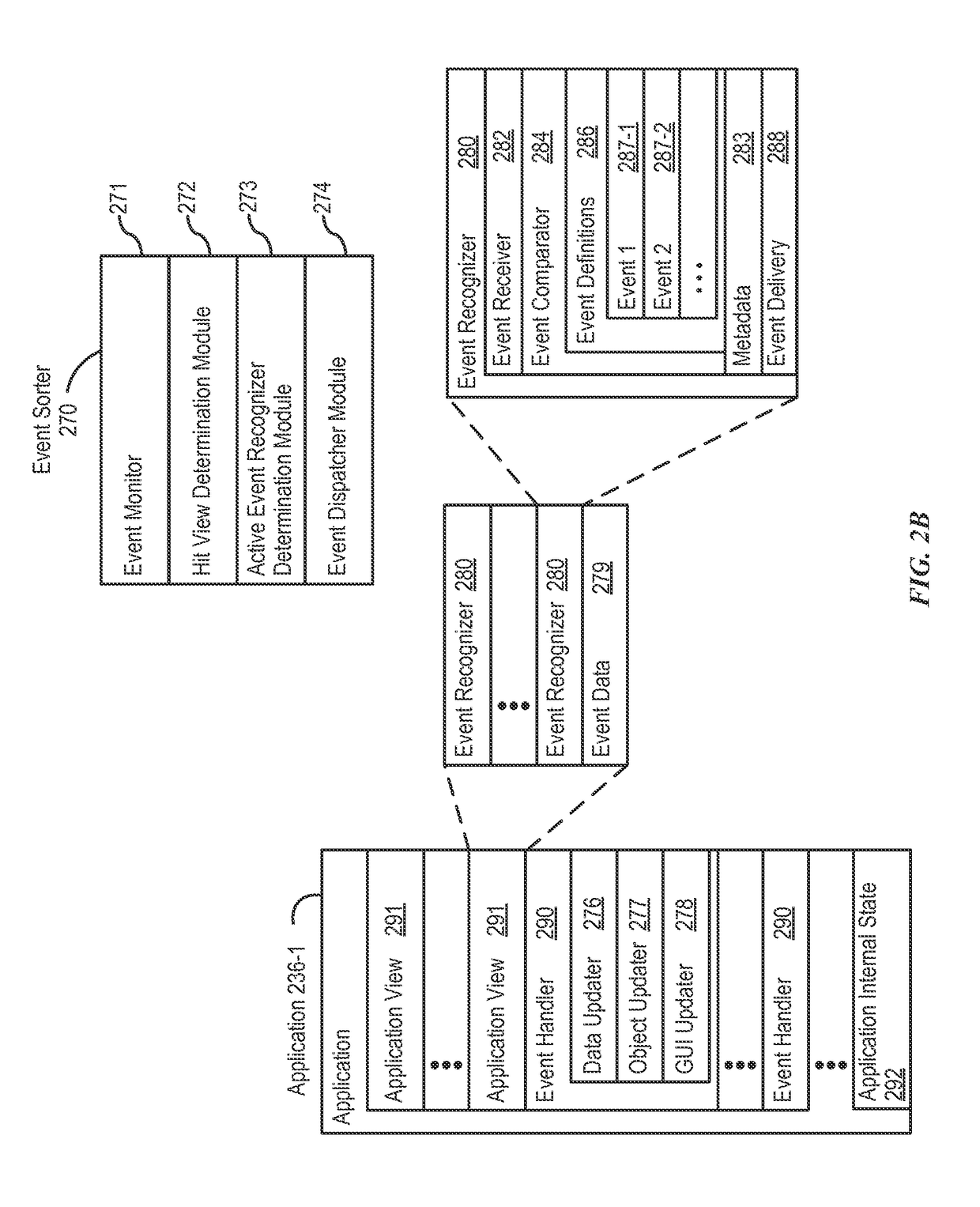
  • Figure 3
    Figure 3
Patent Text Reader

Abstract

The present disclosure generally relates to context-based endpoint detection in user speech input. A method for identifying an endpoint of a spoken request by a user may include receiving user input of natural language speech including one or more words; identifying at least one context associated with the user input; generating a probability, based on the at least one context associated with the user input, that a location in the user input is an endpoint; determining whether the probability is greater than a threshold; and in accordance with a determination that the probability is greater than the threshold, identifying the location in the user input as the endpoint.
Need to check novelty before this filing date? Find Prior Art

Description

CROSS-REFERENCE TO RELATED APPLICATIONS

[0001] This application claims priority to U.S. Provisional Patent Application No. 62 / 172,179, entitled “Context-Based Endpoint Detection,” filed Jun. 7, 2015, the content of which is hereby incorporated by reference in its entirety for all purposes.FIELD

[0002] The present disclosure relates generally to speech processing, and more specifically to context-based endpoint detection of speech signals.BACKGROUND

[0003] Intelligent automated assistants (or digital assistants) provide a beneficial interface between human users and electronic devices. Such assistants allow users to interact with devices or systems using natural language in spoken and / or text forms. For example, a user can access the services of an electronic device by providing a spoken user request to a digital assistant associated with the electronic device. The digital assistant can interpret the user's intent from the spoken user request and operationalize the user's intent into tasks...

Examples

Embodiment Construction

[0029]The following description sets forth exemplary methods, parameters, and the like. It should be recognized, however, that such description is not intended as a limitation on the scope of the present disclosure but is instead provided as a description of exemplary embodiments.

[0030]There is a need for electronic devices that provide efficient methods and interfaces for detecting the endpoint of speech signals. As described above, conventional endpointing techniques are not as effective as they might be, such as with users with slow or unusual speech patterns. Context-based endpointing of speech signals can reduce the cognitive burden on a user who access event notifications, thereby enhancing productivity. Further, such techniques can reduce processor and battery power otherwise wasted on redundant user inputs.

[0031]Below, FIGS. 1, 2A-2B, 3, 4, 5A-5B and 6A-6B provide a description of exemplary devices for performing the techniques for context-based endpointing of speech signals...