
Nucleic acid compound and oligonucleotide
a technology which is applied in the field of nucleic acid compound and oligonucleotide, can solve the problems of insufficient stability, serious side effects, and unexpected expression of genes or suppression of expression of important genes, and achieve the effect of reducing the affinity for guanosin
- Summary
- Abstract
- Description
- Claims
- Application Information
AI Technical Summary
Benefits of technology
Problems solved by technology
Method used
Image

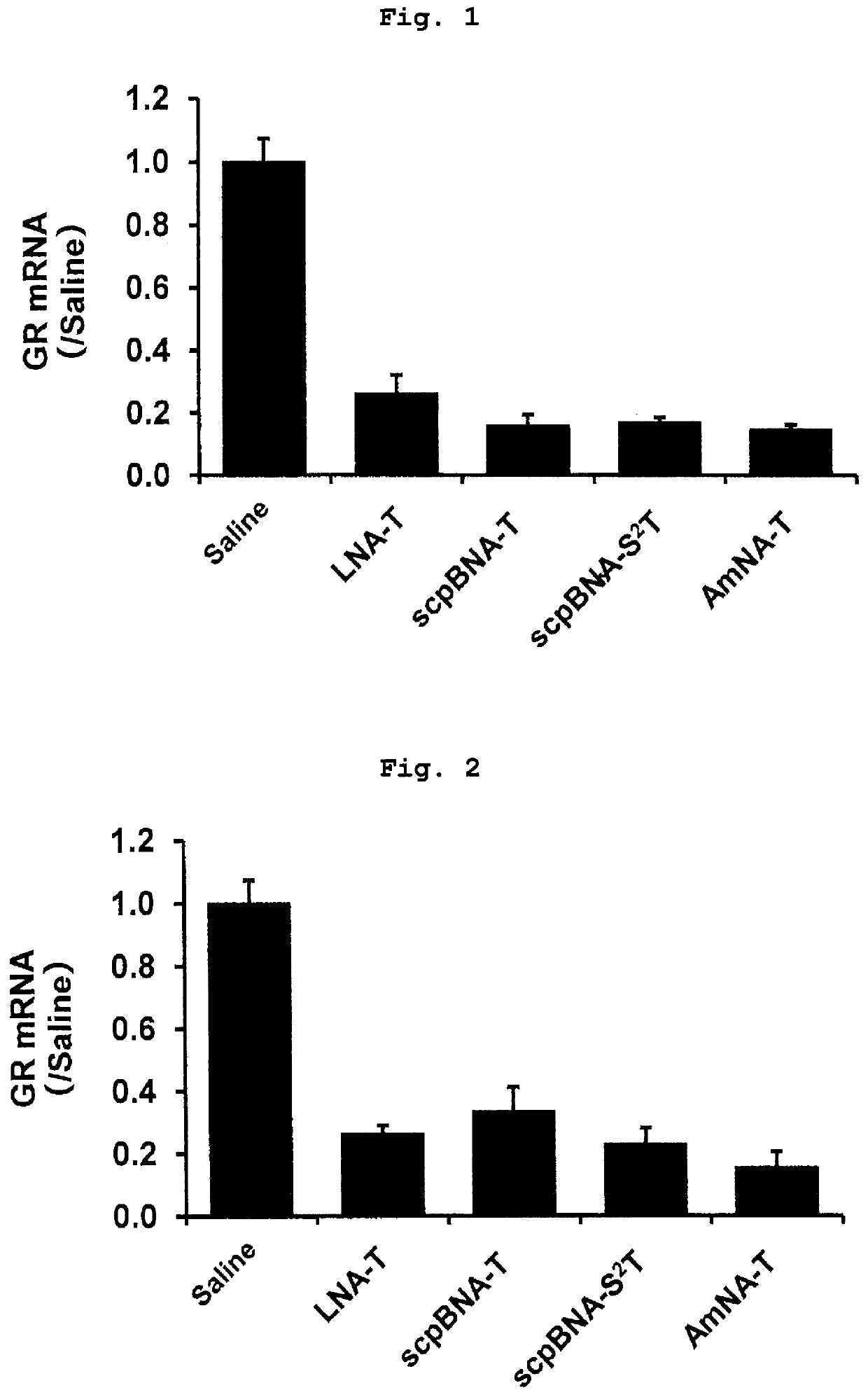
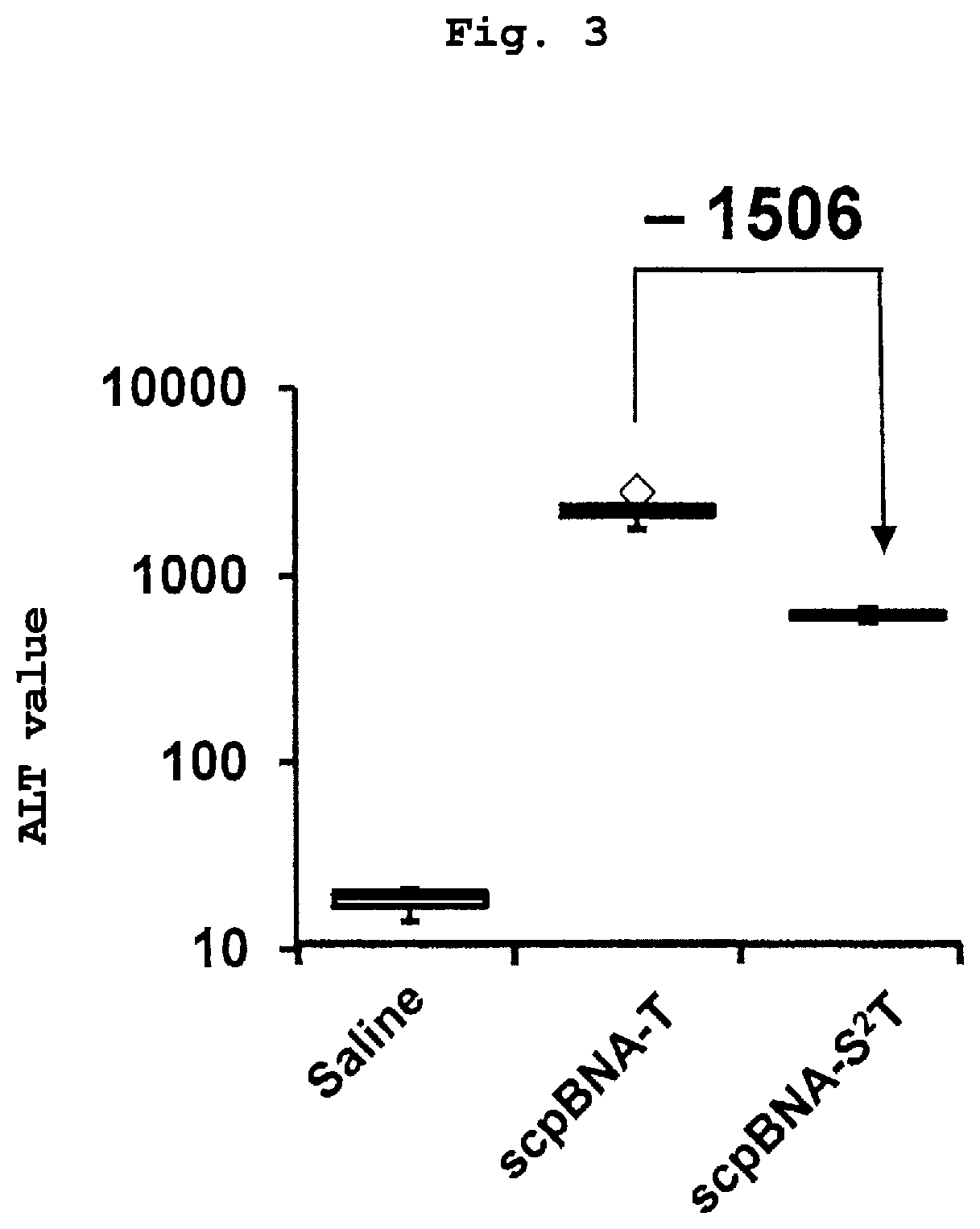
Examples
example 3
[0126]Oligonucleotides used in the following Experimental Examples were synthesized under the following conditions. A 0.1M anhydrous acetonitrile solution of the amidite blocks synthesized in Examples 1 and 2 (compounds 7 and 11) and commercially available dG (iBu), dC (Bz) and T phosphoramidite was prepared, and oligonucleotides were synthesized on a 0.2 μmol scale, trityl-on condition using GeneDesign nS-8 Oligonucleotides Synthesizer. Activator 42 (0.25 M acetonitrile solution) was used as the activator, and the condensation time was 8 min for the amidite block and 32 sec for the natural amidite blocks. The oxidizing agent used was tert-butyl hydroperoxide / acetonitrile / water (7:60:3), and the oxidation time was 10 min. Other operations followed general phosphoramidite method. After completion of the synthesis, oligonucleotides were treated with 28% aqueous ammonia solution at room temperature for 1.5 hr, cut out from the column carrier and subsequently stood at ...
PUM
| Property | Measurement | Unit |
|---|---|---|
| carbon number | aaaaa | aaaaa |
| carbon number | aaaaa | aaaaa |
| body weight | aaaaa | aaaaa |
Abstract
Description
Claims
Application Information
 Login to View More