
Video on demand in a broadcast network
a technology of broadcast network and video on demand, which is applied in the field of video on demand services in the broadcast network, can solve the problems of limiting the access of purchasers to the programming on the dvr, and the quantity of programs stored on the dvr is limited to the available storage capacity of the dvr, so as to reduce the risk of program content being accessed and the storage requirements of the subscriber's dvr
- Summary
- Abstract
- Description
- Claims
- Application Information
AI Technical Summary
Benefits of technology
Problems solved by technology
Method used
Image

Examples
Embodiment Construction
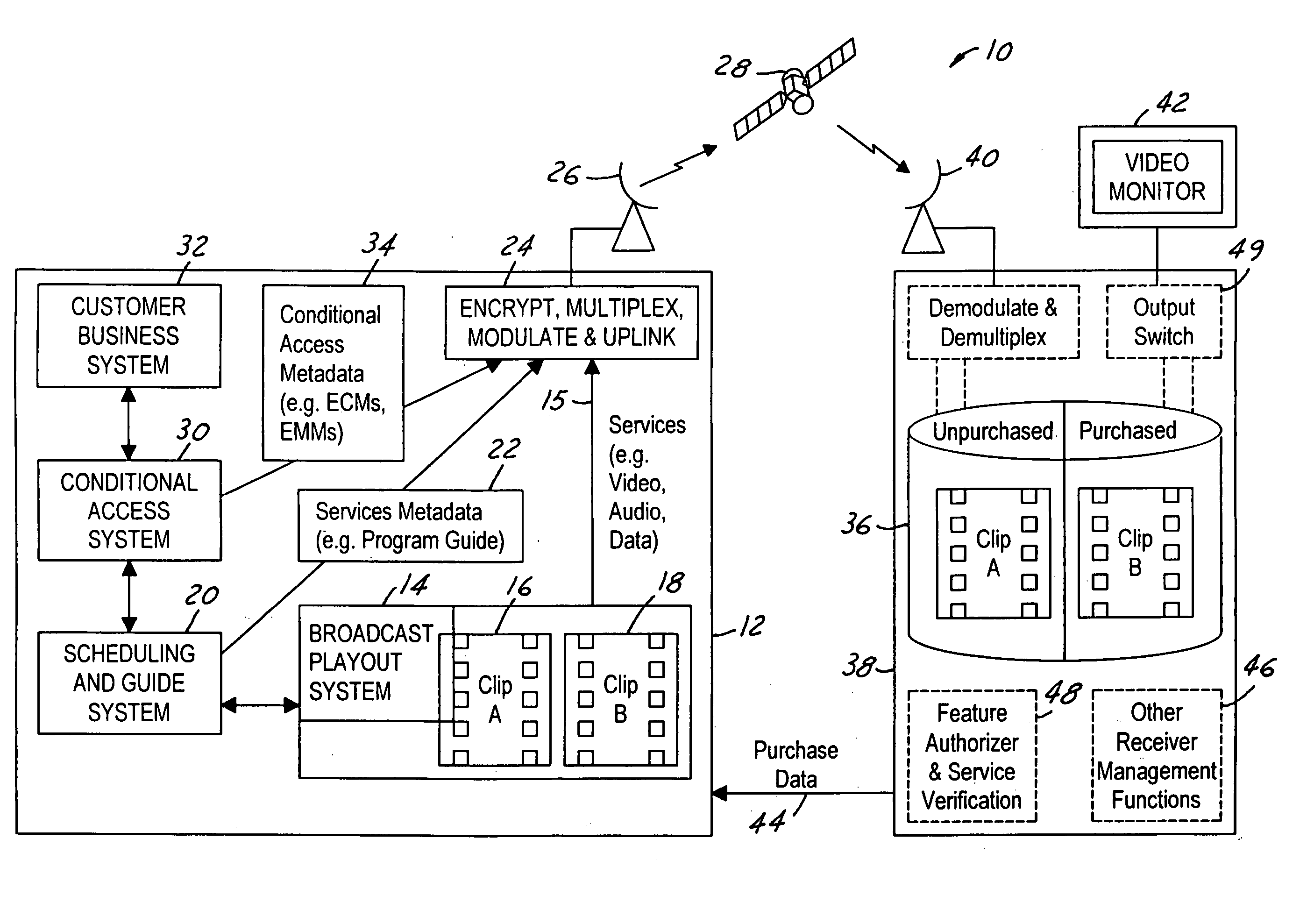
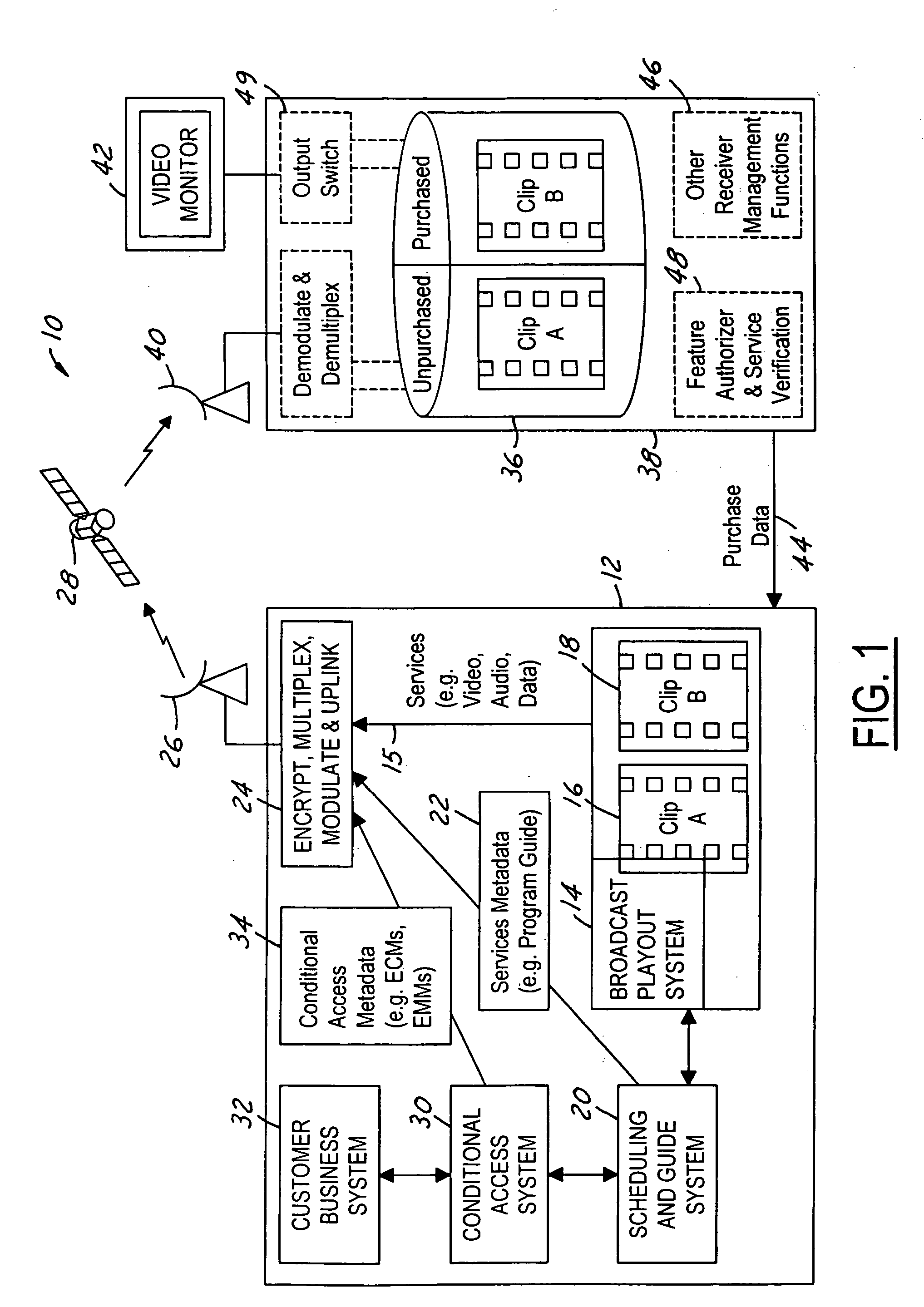
[0017] The present invention is described herein with reference to FIGS. 1 and 2. FIG. I is a block diagram of a satellite broadcast network system 10 and is used for example purposes to describe one embodiment of the present invention. It should be noted that the present invention is not limited to satellite broadcast networks and one skilled in the art is capable of applying the present invention to other broadcast network providers without departing from the scope of the present invention.
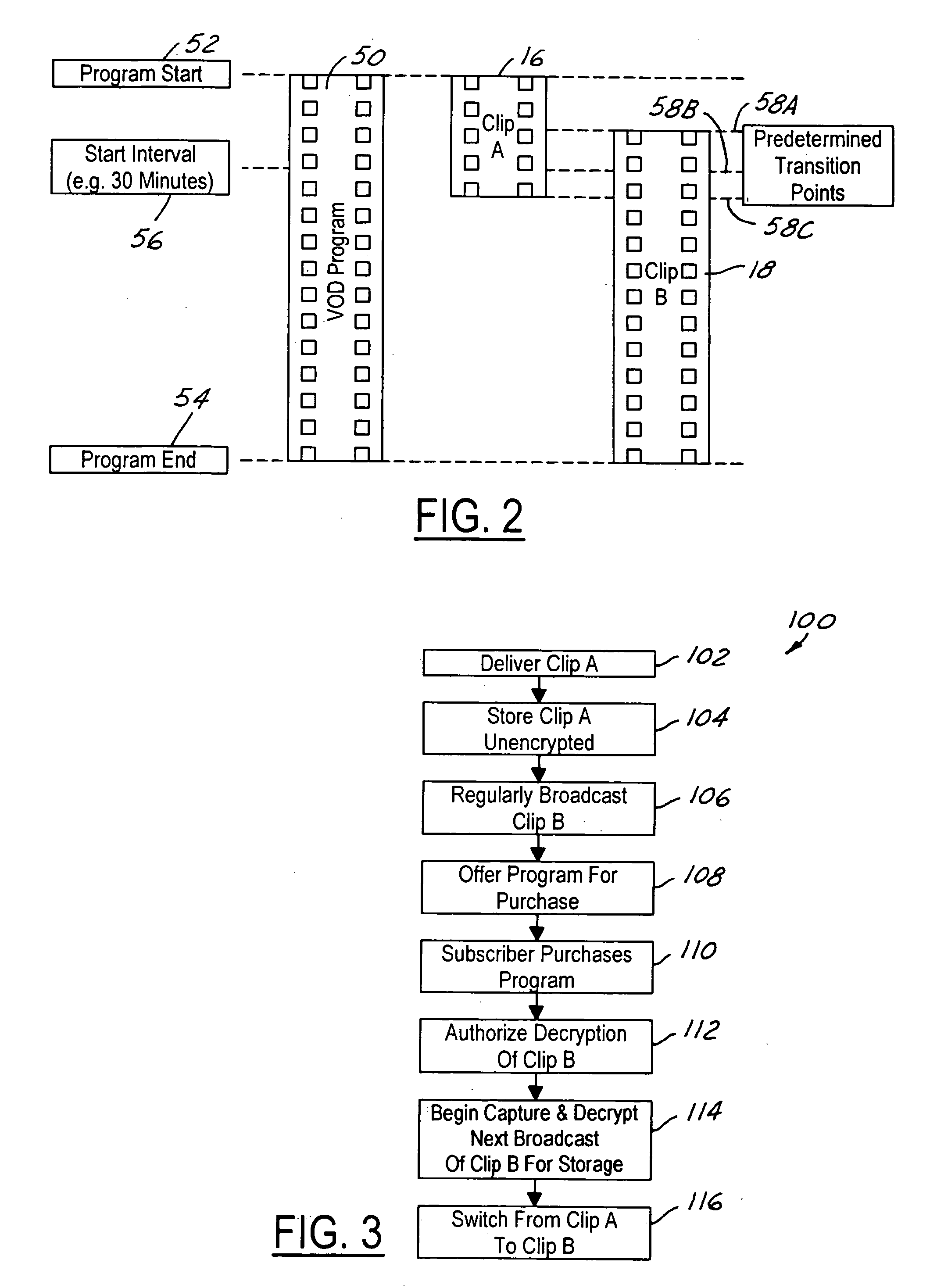
[0018] The headend system 12 has a broadcast playout system 14 that contains the program content broadcast by the network system 10. Services 15 available from the broadcast playout system 14 are processed before uplink to a satellite 28 for broadcast. The program content contains the programs available for on demand purchase by a subscriber, or customer. The on demand program content is sectioned into at least two portions, clip A 16 and clip B 18.
[0019] A scheduling and guide system 20 conta...
PUM
 Login to View More
 Abstract
Description
Claims
Application Information
 Login to View More