
Defined media for pluripotent stem cell culture
a defined media and stem cell technology, applied in the field of cell culture technology, can solve the problems of affecting the quality of pluripotent stem cells, the inability to differentiate rapidly, and the requirement of components such as serum, feeder cells, and/or conditioned media, so as to promote de-differentiation, promote cell de-differentiation, or reprogramming
- Summary
- Abstract
- Description
- Claims
- Application Information
AI Technical Summary
Benefits of technology
Problems solved by technology
Method used
Image

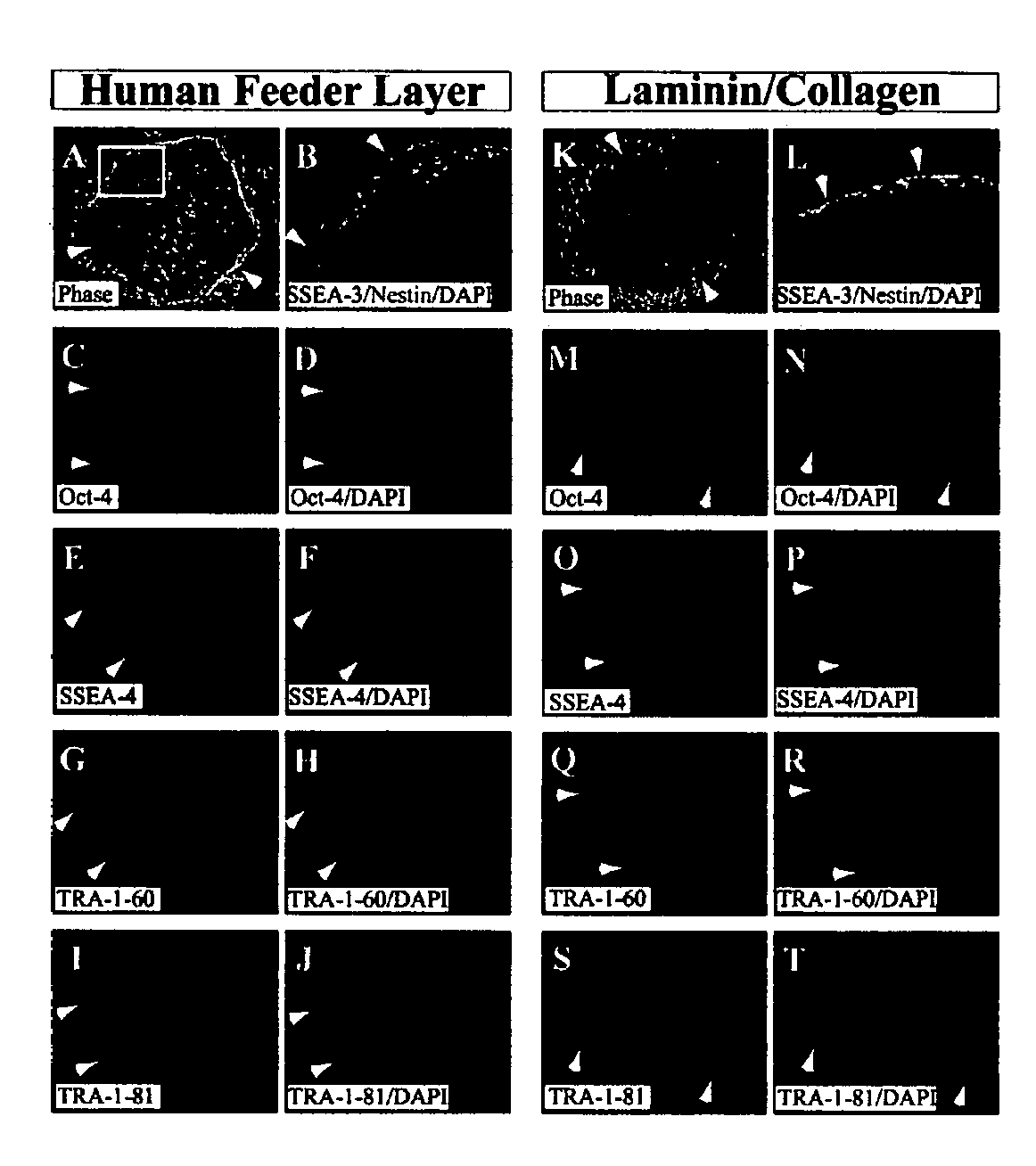
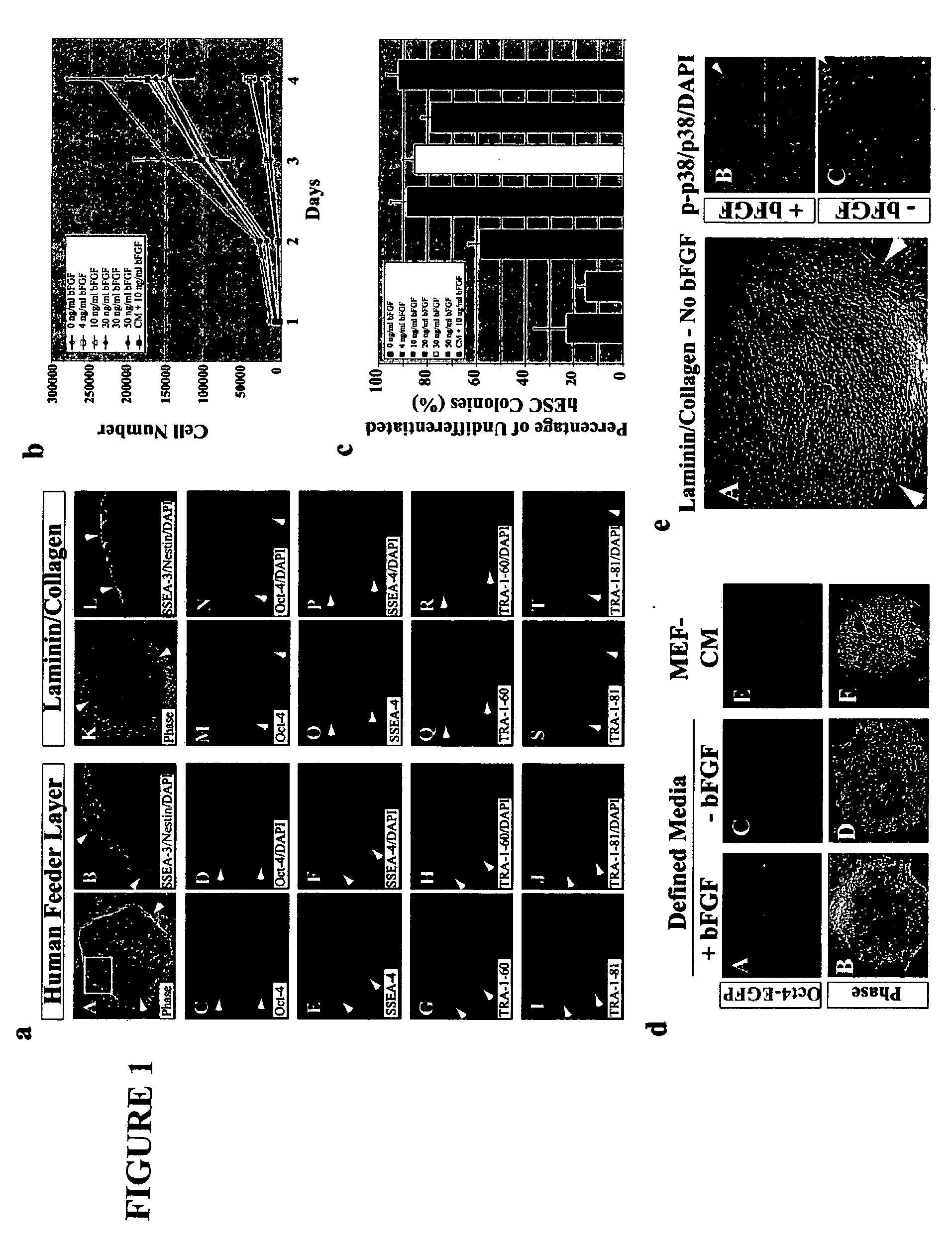
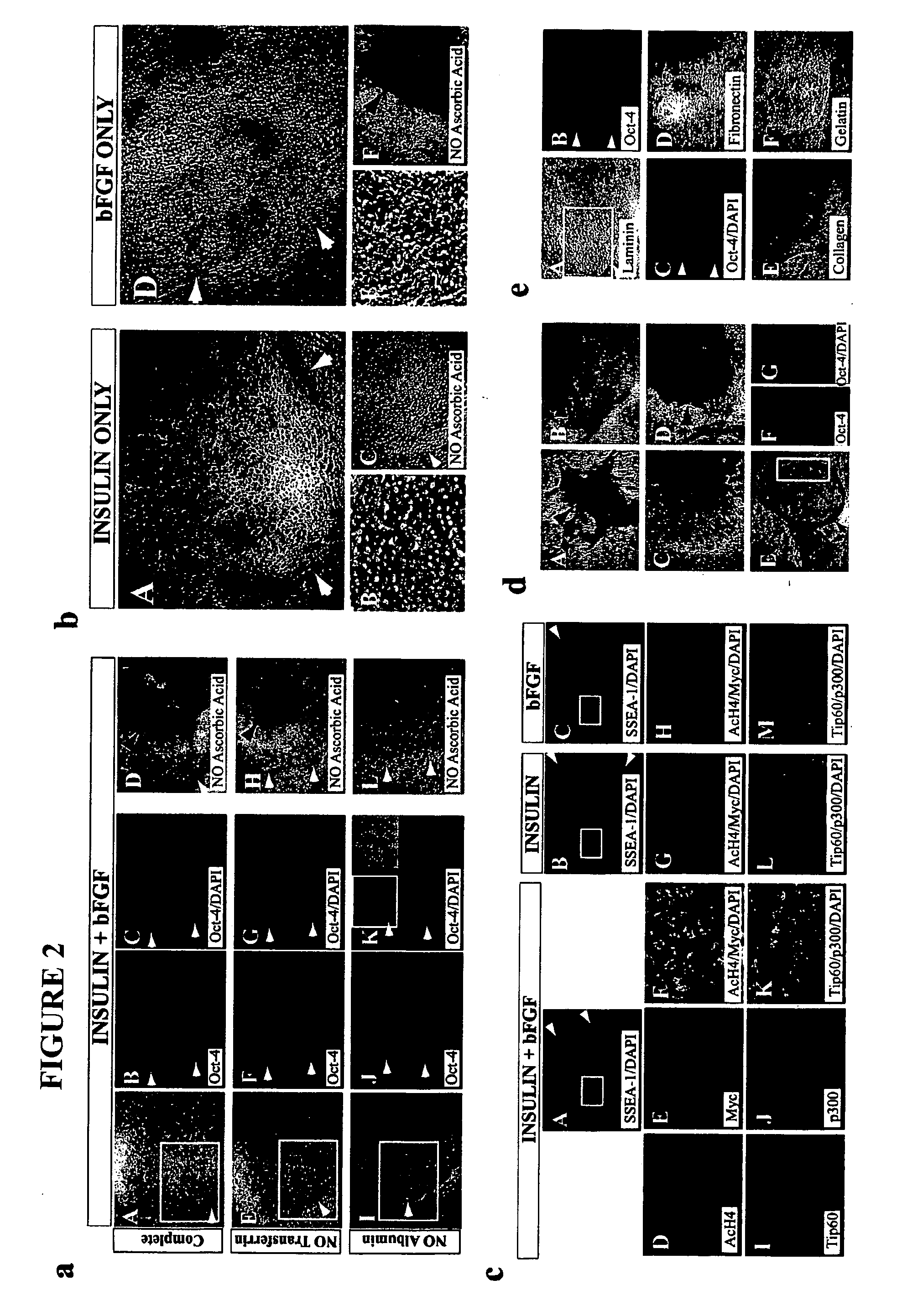
Examples
examples
[0116] The following Examples are provided to illustrate certain aspects of the present invention and to aid those of skill in the art in practicing the invention. These Examples are in no way to be considered to limit the scope of the invention in any manner.
[0117] General methods in molecular genetics and genetic engineering are described in the current editions of “Molecular Cloning: A Laboratory Manual” (Sambrook, et al., Cold Spring Harbor); Gene Transfer Vectors for Mammalian Cells (Miller & Calos eds.); and “Current Protocols in Molecular Biology” (Ausubel, et al. eds., Wiley & Sons). Cell biology, protein chemistry, and antibody techniques can be found in “Current Protocols in Protein Science” (Colligan, et al. eds., Wiley & Sons); “Current Protocols in Cell Biology” (Bonifacino, et al., Wiley & Sons) and “Current Protocols in Immunology” (Colligan et al. eds., Wiley & Sons.). Reagents, cloning vectors, and kits for genetic manipulation referred to in this disclosure are av...
example
1. Introduction
[0119] This example describes the development of efficient culture systems to maintain long-term growth of undifferentiated hESCs on a commercially available human feeder-layer as well as in feeder-free conditions in a defined serum-free medium that contains bFGF, insulin, and ascorbic acid.
[0120] Human ESCs, derived from the inner cell mass, have the capacity for long-term undifferentiated growth in culture, as well as the theoretical potential for differentiation into any cell type in the human body. These properties offer hESCs as a potential source for transplantation therapies and as a model system for studying mechanisms underlying mammalian development. Long-term cultivation of undifferentiated hESCs in a “biologics”-free—i.e., feeder-, serum-, and conditioned-medium-free—condition will be crucial for providing an unlimited supply of well-characterized healthy cells for cell-based therapies, as well as for directing the lineage-specific differentiation of hE...
PUM
| Property | Measurement | Unit |
|---|---|---|
| concentration | aaaaa | aaaaa |
| concentration | aaaaa | aaaaa |
| concentration | aaaaa | aaaaa |
Abstract
Description
Claims
Application Information
 Login to View More