
Method device base station and site for reducing the number of feeders in an antenna diversity system
a technology of diversity and feeders, applied in diversity/multi-antenna systems, modulation, electromagnetic wave modulation, etc., can solve the problems of high cost of feeders, poor efficiency inability to meet the needs of feeders in each branch, so as to reduce the number of feeders
- Summary
- Abstract
- Description
- Claims
- Application Information
AI Technical Summary
Benefits of technology
Problems solved by technology
Method used
Image

Examples
Embodiment Construction
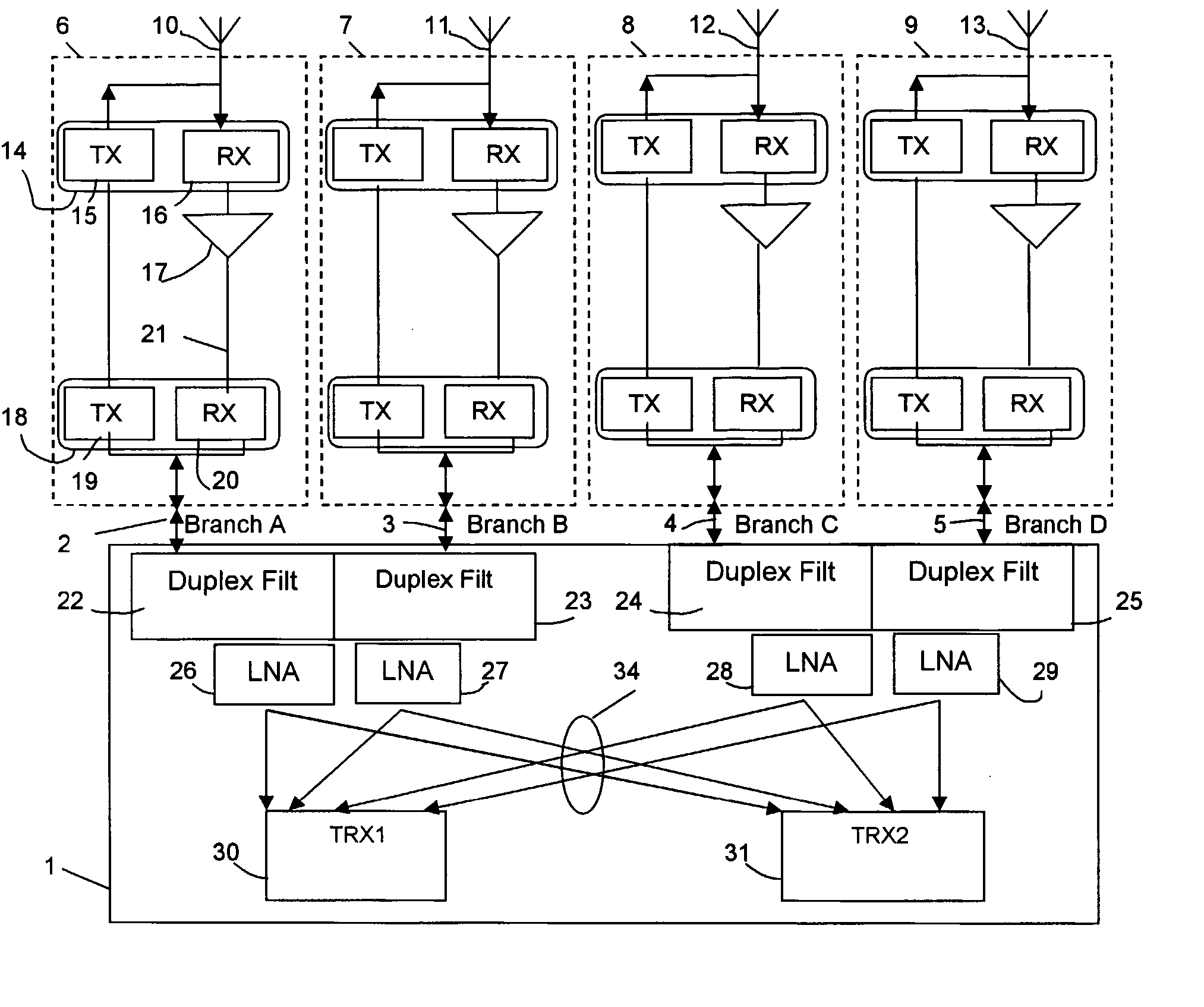
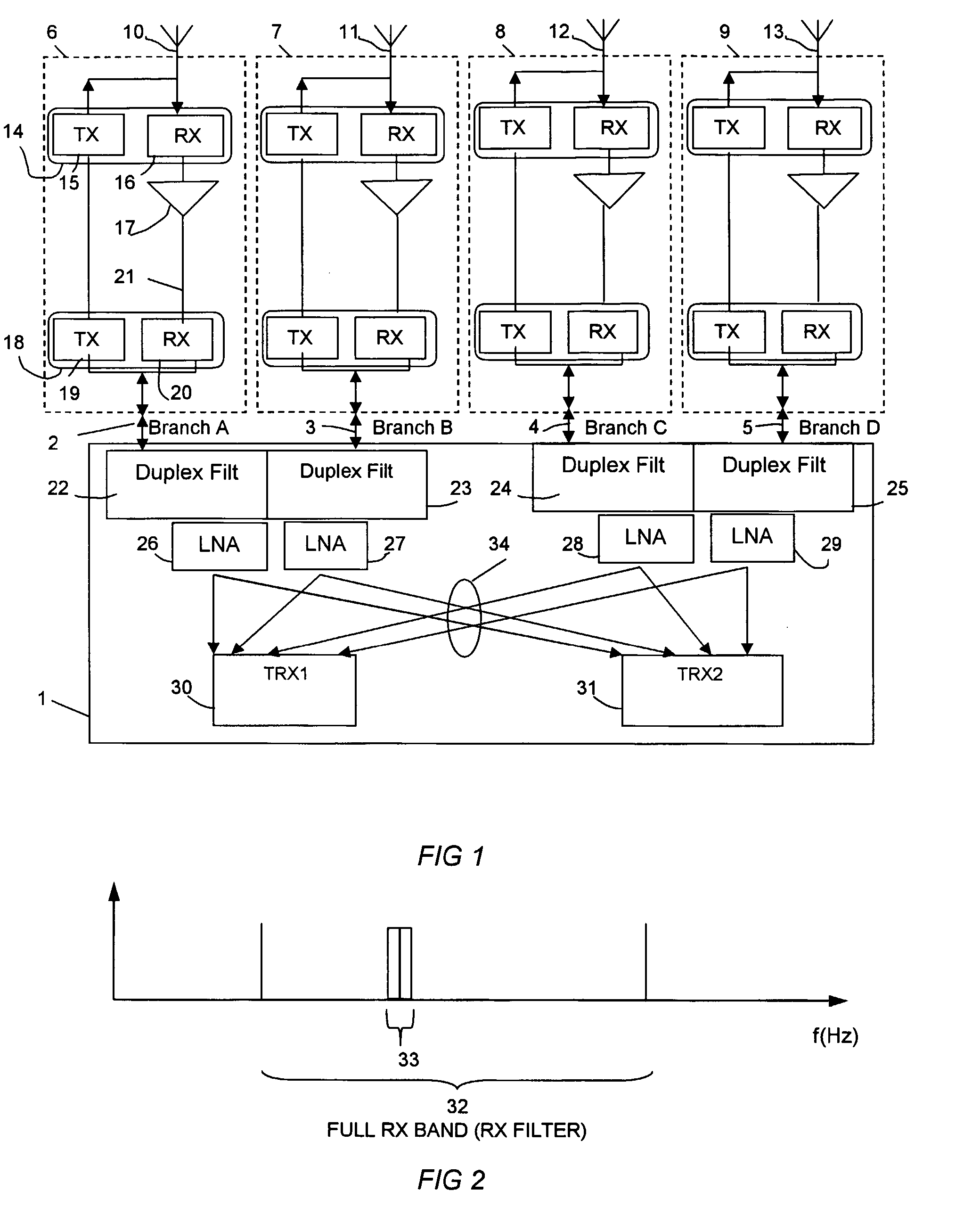
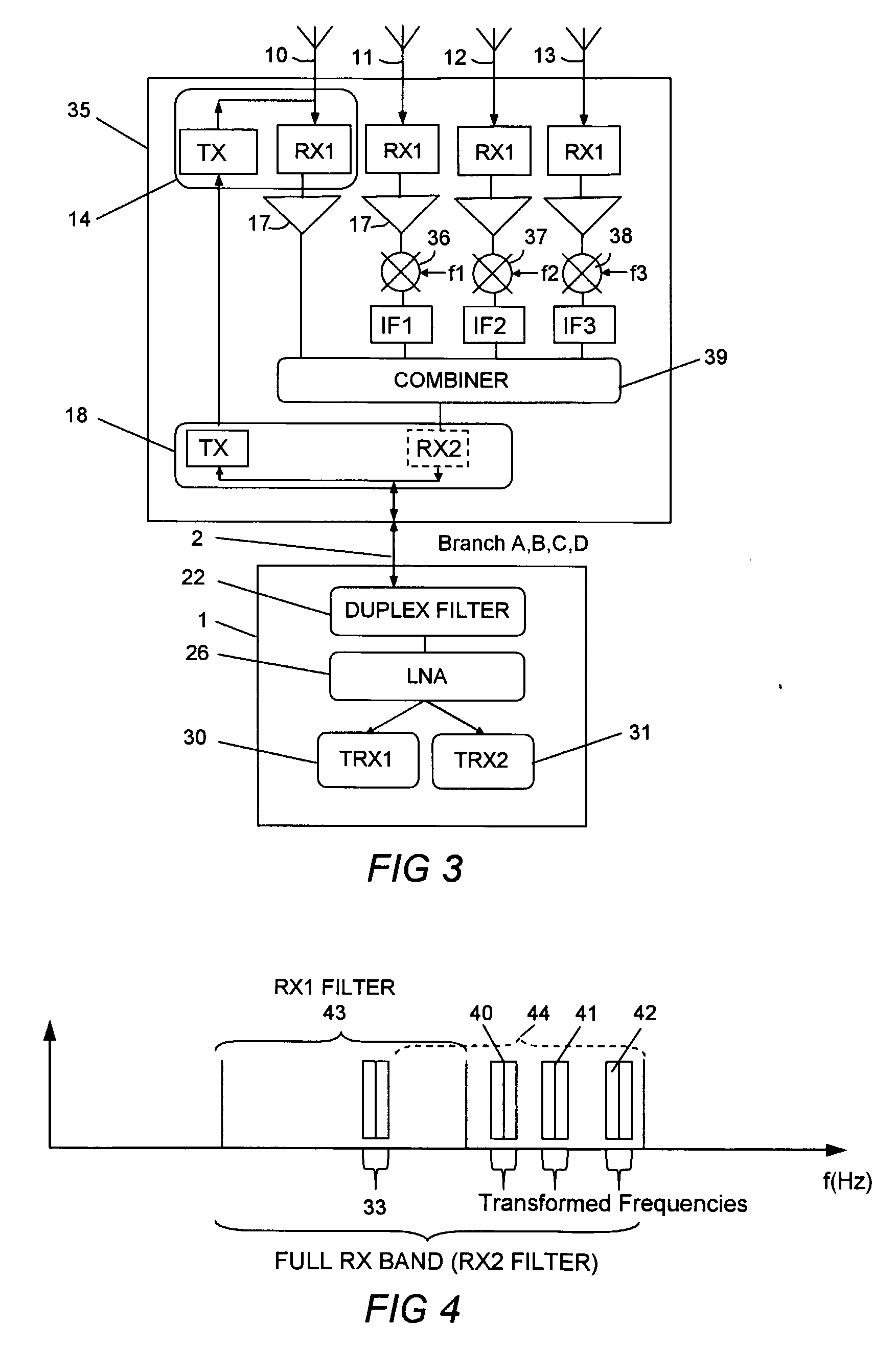
[0031]FIG. 3 illustrates an embodiment of the invention. Elements similar to those in FIGS. 1 and 2 bear the same reference designations. A novel tower mounted amplifier 35 comprises frequency converters 36,37, 38, each one connected to a respective antenna 11, 12 and 13 in order to move the frequency of the received RF antenna signal to a respective non-used frequency by mixing the RF antenna signal with a respective reference signal f1, f2, and f3 of a predetermined frequency. The signal received on antenna 10 is not moved in frequency. The reference signal may be a continuous wave signal, CW signal, a signal from a local oscillator or any equivalent.
[0032] The reference signal does not occupy a frequency band. Accordingly, the signal definition given above does not apply to the reference signal. A frequency converter is a device which as input receive the RX antenna signal and mixes it with the reference signal in order to obtain a frequency translated signal on an intermediate ...
PUM
 Login to View More
 Abstract
Description
Claims
Application Information
 Login to View More