

Decorative bandages and covers
a bandage and decorative technology, applied in the field of bandages and covers, can solve the problems of many individuals slipping food and/or beverages on their clothing, defeating the purpose of “blending-in", and unattractive bands themselves
- Summary
- Abstract
- Description
- Claims
- Application Information
AI Technical Summary
Benefits of technology
Problems solved by technology
Method used
Image

Examples
Embodiment Construction
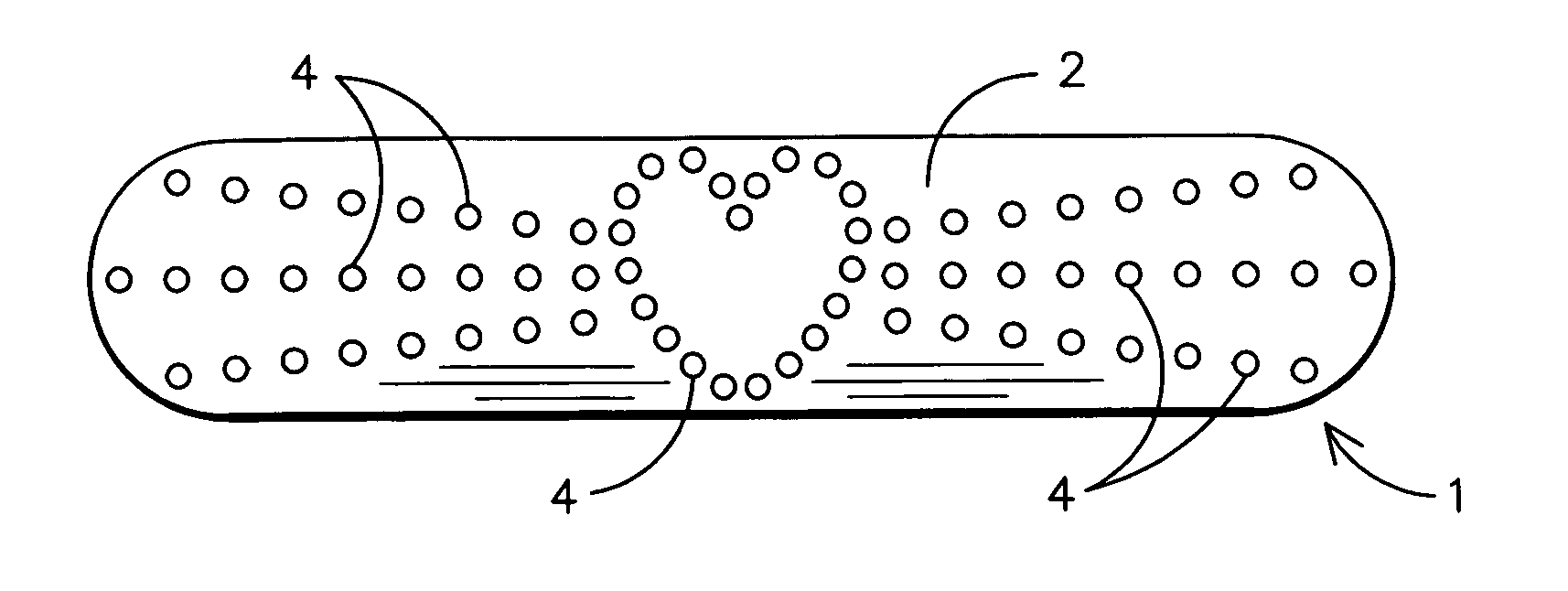
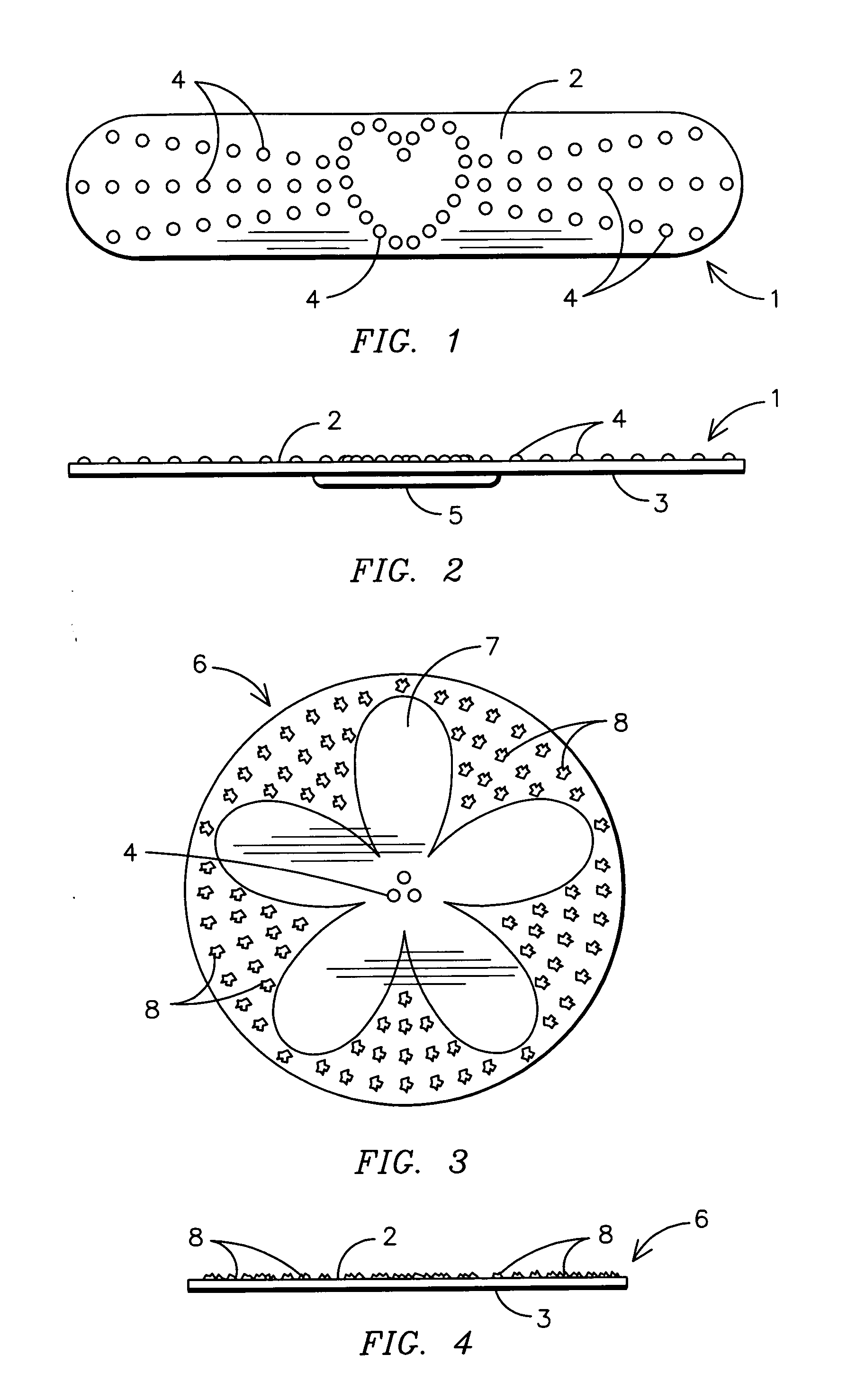
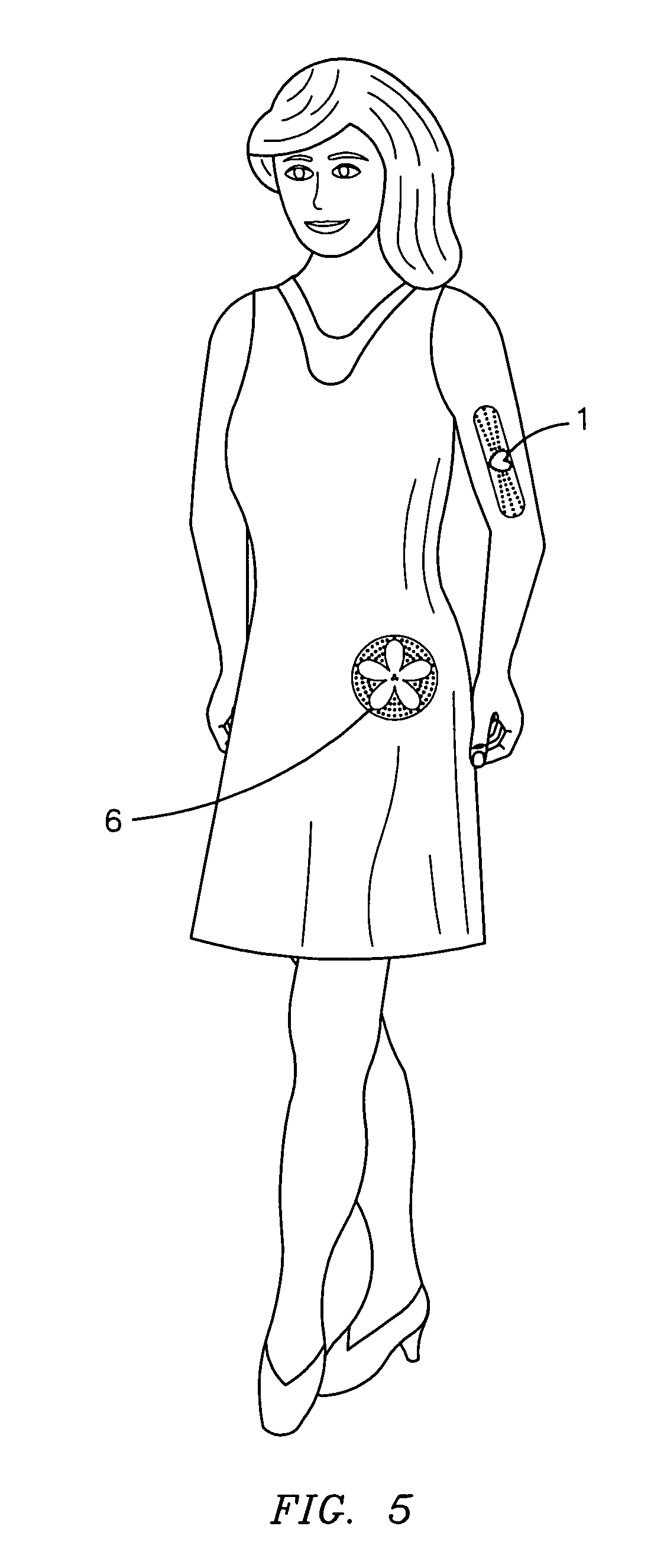
[0021] For purposes of describing the preferred embodiment, the terminology used in reference to the numbered components in the drawings is as follows: [0022]1. decorative bandage [0023]2. top surface [0024]3. bottom surface [0025]4. crystals [0026]5. cushion [0027]6. decorative cover [0028]7. symbol [0029]8. glitter
[0030] With reference to FIG. 1, a side view of a decorative bandage 1 of the present invention is shown. The bandage 1 includes a plurality of decorative objects, such as crystals 4 located on a top surface 2 of the decorative bandage 1. Although crystals 4 are shown, the decorative objects may also include gems, beads, pearls or any other decorative item. In addition, the decorative objects may be planar, two-dimensional or three-dimensional.
[0031] With reference to FIG. 2, a side view of a decorative bandage 1 of the present invention is shown. The decorative bandage 1 has a top surface 2 and a bottom surface 3. The bottom surface 3 is adhesive so as to adhere to a ...
PUM
 Login to View More
 Abstract
Description
Claims
Application Information
 Login to View More