Wavefront characterization of corneas

a wavefront and corneal technology, applied in the field of wavefront sensing, can solve the problems of inability to conclusively tell, either visually or under a microscope, and the cornea is generally unsuitable for corneal transplantation, and achieves scintillation and static aberration, aberrations that produce scintillation
US20080088796A1Inactive Publication Date: 2008-04-17KESTREL CORP

Patent Information

Authority / Receiving Office
US · United States
Patent Type
Applications(United States)
Current Assignee / Owner
KESTREL CORP
Publication Date
2008-04-17
Estimated Expiration
Not applicable · inactive patent

Smart Images

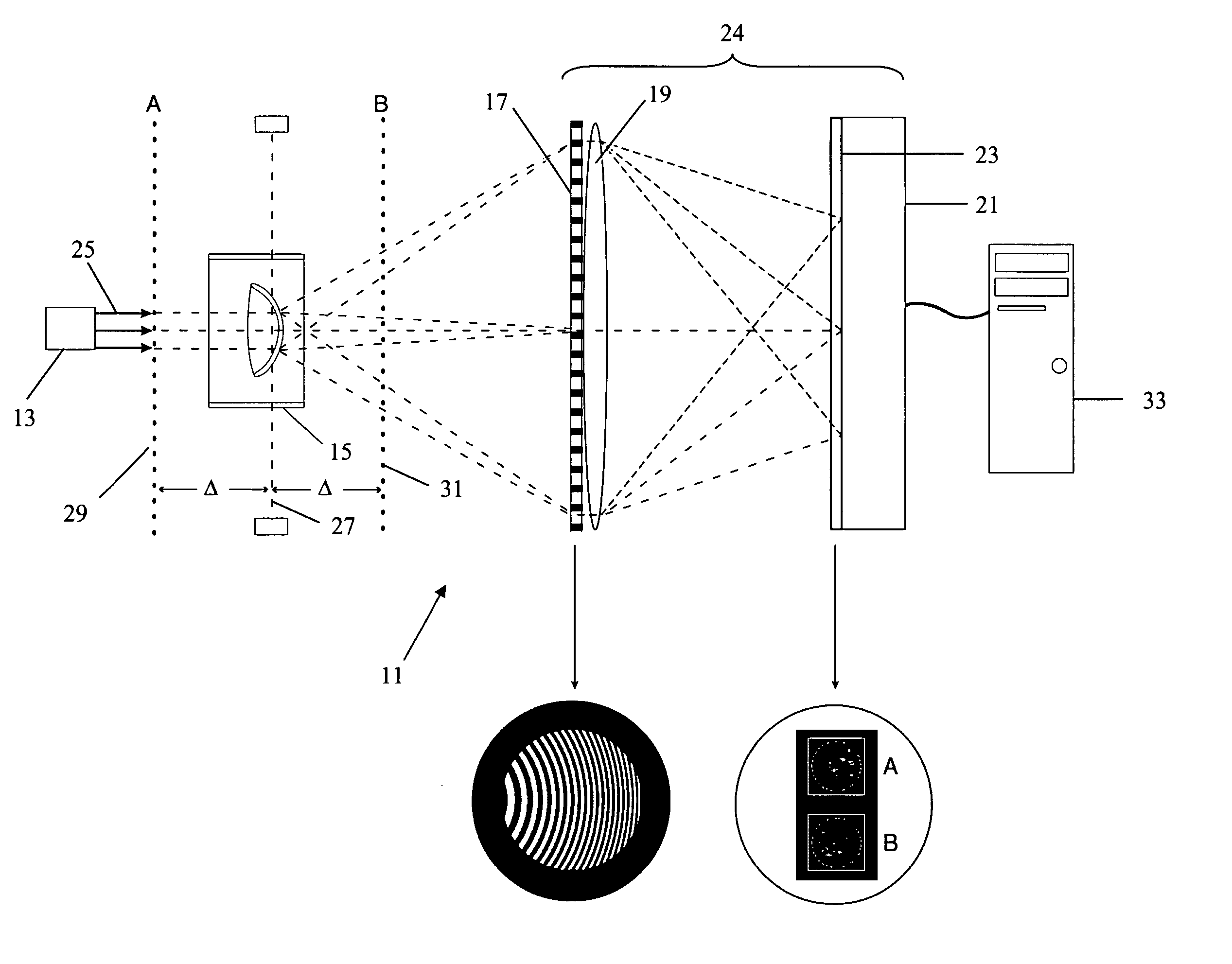
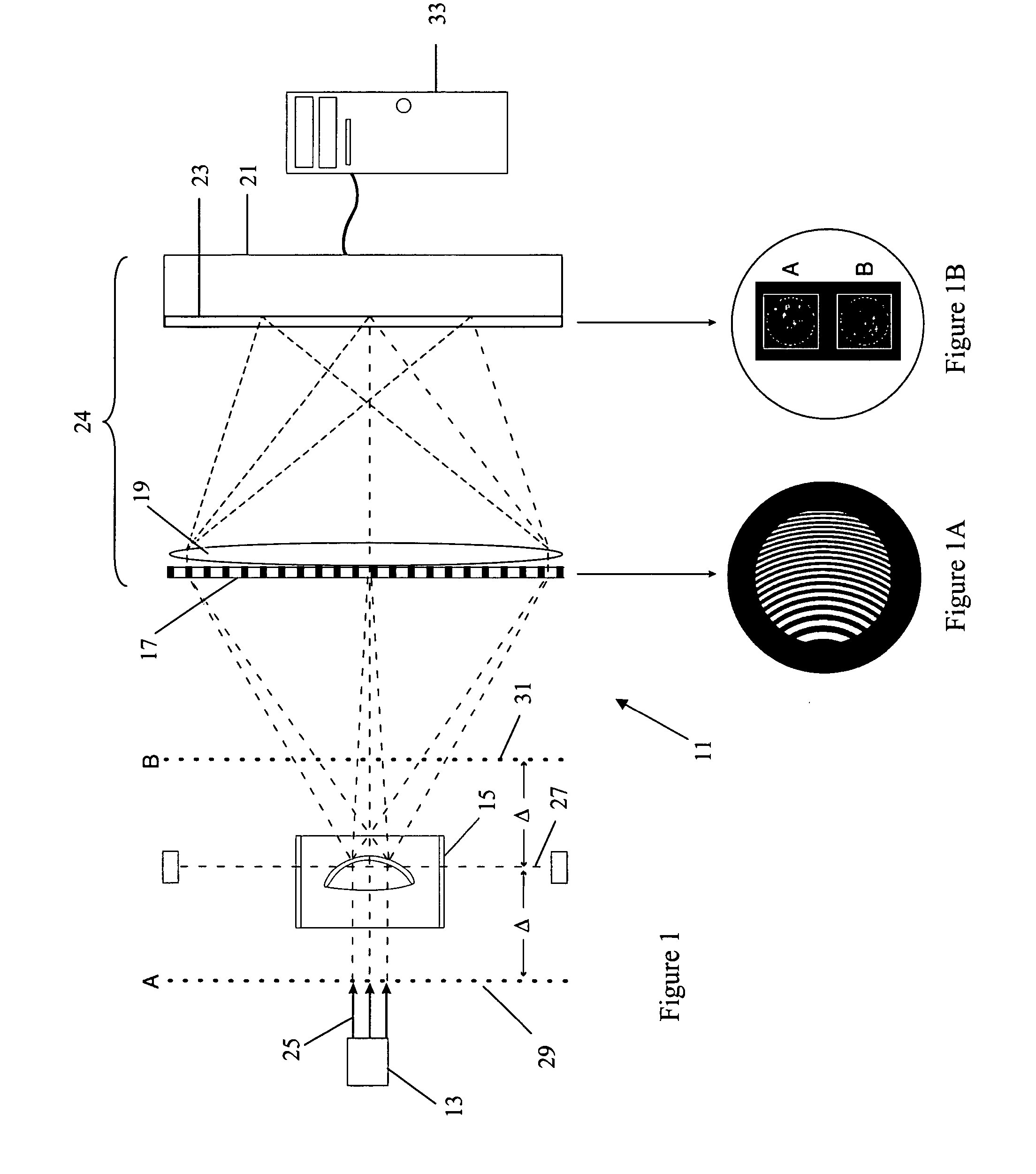
  • Figure 1
    Figure 1
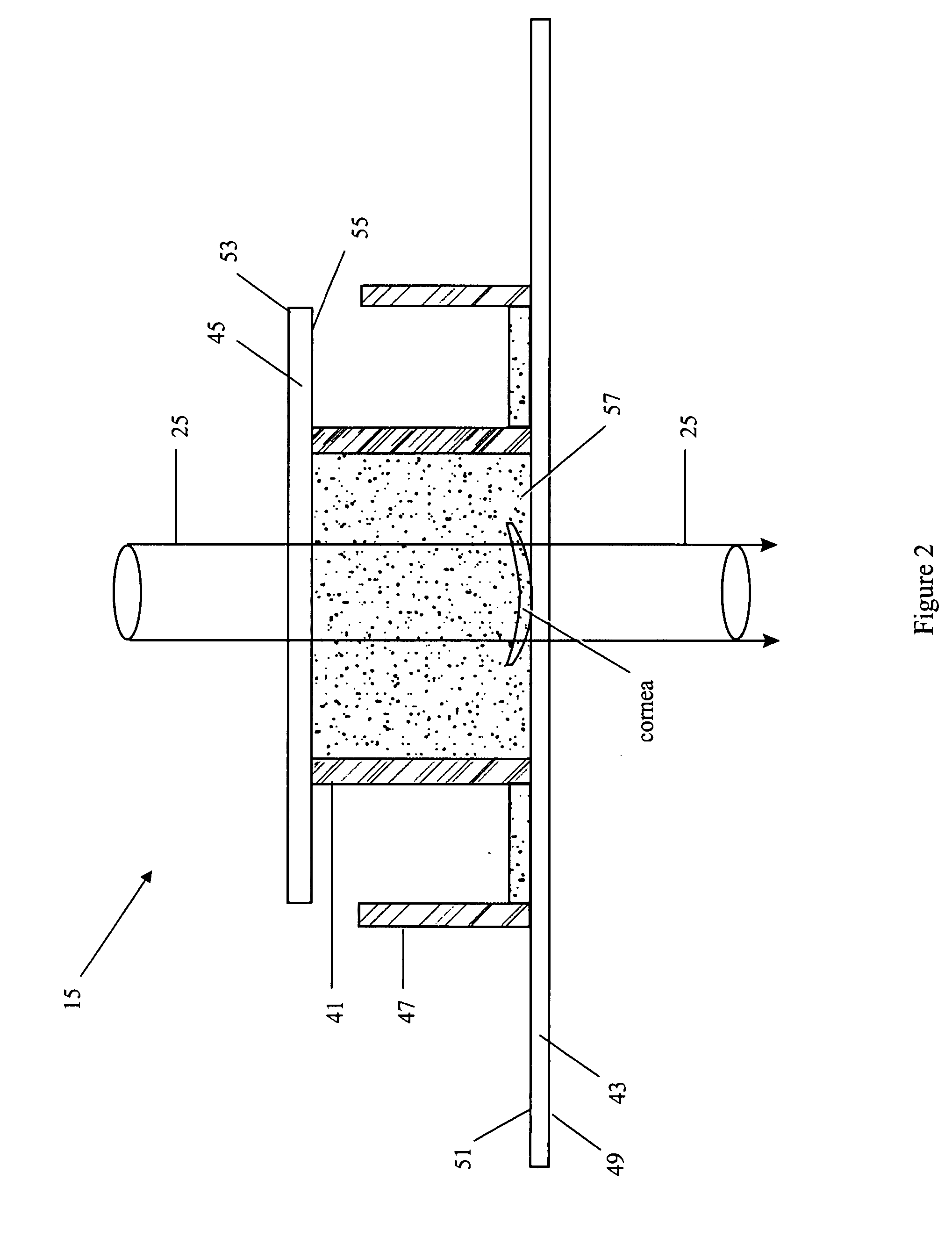
  • Figure 2
    Figure 2
  • Figure 3
    Figure 3
Patent Text Reader

Abstract

Apparatus for determining if a cornea (whether in vitro or in vivo) has been modified (either surgically or otherwise). The method includes the steps of: passing a beam of collimated light a (either coherent or incoherent) through the cornea to produce a distorted wavefront; determining the characteristics of the distorted wavefront; and analyzing the distorted wavefront for characteristics that identify the presence of a modification. The analysis of the distorted wavefront can be for the presence of higher order aberrations, or Gausian characteristics which are indicative of modifications. More particularly, the method includes the steps of providing an optical system that has a pupil plane and an image plane at a detector; positioning the cornea in the pupil plane; passing a collimated beam of light through the cornea to produce at least two images in the image plane; determining the characteristics of the distorted wavefront; and analyzing the distorted wavefront for characteristics that identify the presence of a modification. The apparatus includes: a source of collimated light: an optical system including a distorted grating and an imaging lens (which have a pupil plane, first and second virtual planes, and an image plane); structure for positioning the cornea in the pupil plane; and a computer. The structure for positioning the cornea (which is immersed in a suitable storage fluid) includes first and second plano / plano lenses. The first and second plano lens, which are substantially and perpendicular to and centered with respect to the axis, have less than λ / 10 total distortions.
Need to check novelty before this filing date? Find Prior Art

Description

FIELD OF THE INVENTION

[0001] This invention relates to the use of wavefront sensing to determine whether or not a cornea has been altered (due to corrective surgery, or accident). More specifically, the present invention relates to the use of wavefront sensing using a distorted defraction grating to identify corneas (whether in vitro or in vivo) that have been surgically modified (e.g., radical keratotomy (RK), excimer laser photorefractive keratectomy (PRK), laser-assisted in situ keratomileusis (LASIK) and automated lamellar keratoplasty (ALK)). BACKGROUND OF THE INVENTION

[0002] In the United States about 40,000 corneal transplant operations are performed each year. While success of such surgery may depend upon a number of other factors, one factor that always has an effect on the outcome is the condition of the donor cornea. In the United States, a donor cornea must be transplanted within 7 days of harvesting. Outside the United States donor corneas may be used up to 14 days af...

Claims

the structure of the environmentally friendly knitted fabric provided by the present invention; figure 2 Flow chart of the yarn wrapping machine for environmentally friendly knitted fabrics and storage devices; image 3 Is the parameter map of the yarn covering machine
Login to View More