
Skin Antiaging & Brightening via Multi-function Treatment of Enzyme Dysfunction
- Summary
- Abstract
- Description
- Claims
- Application Information
AI Technical Summary
Problems solved by technology
Method used
Image

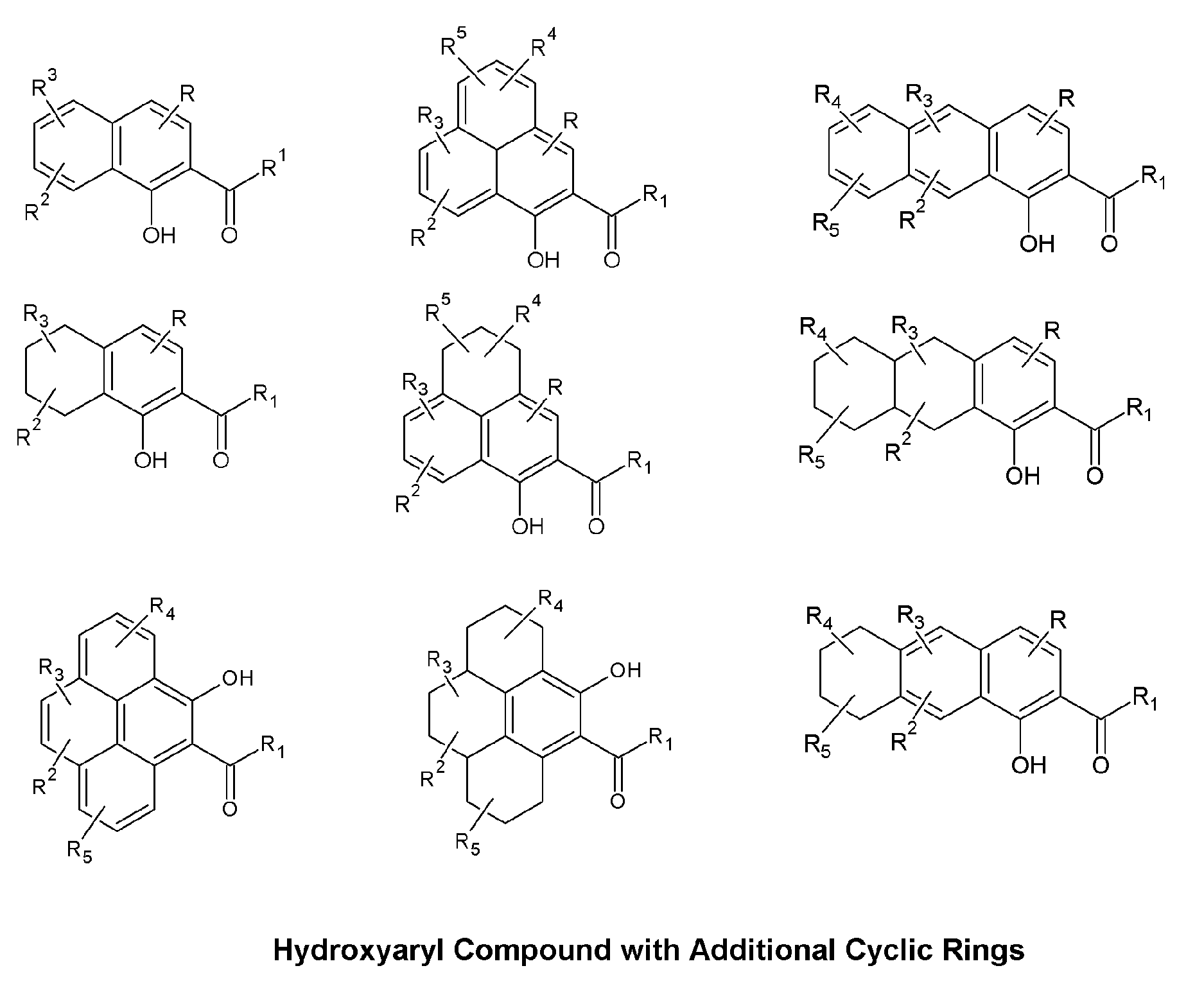
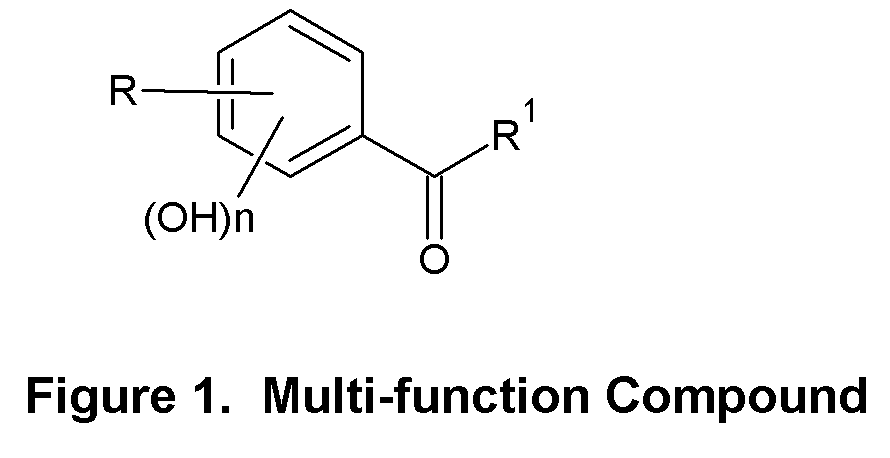
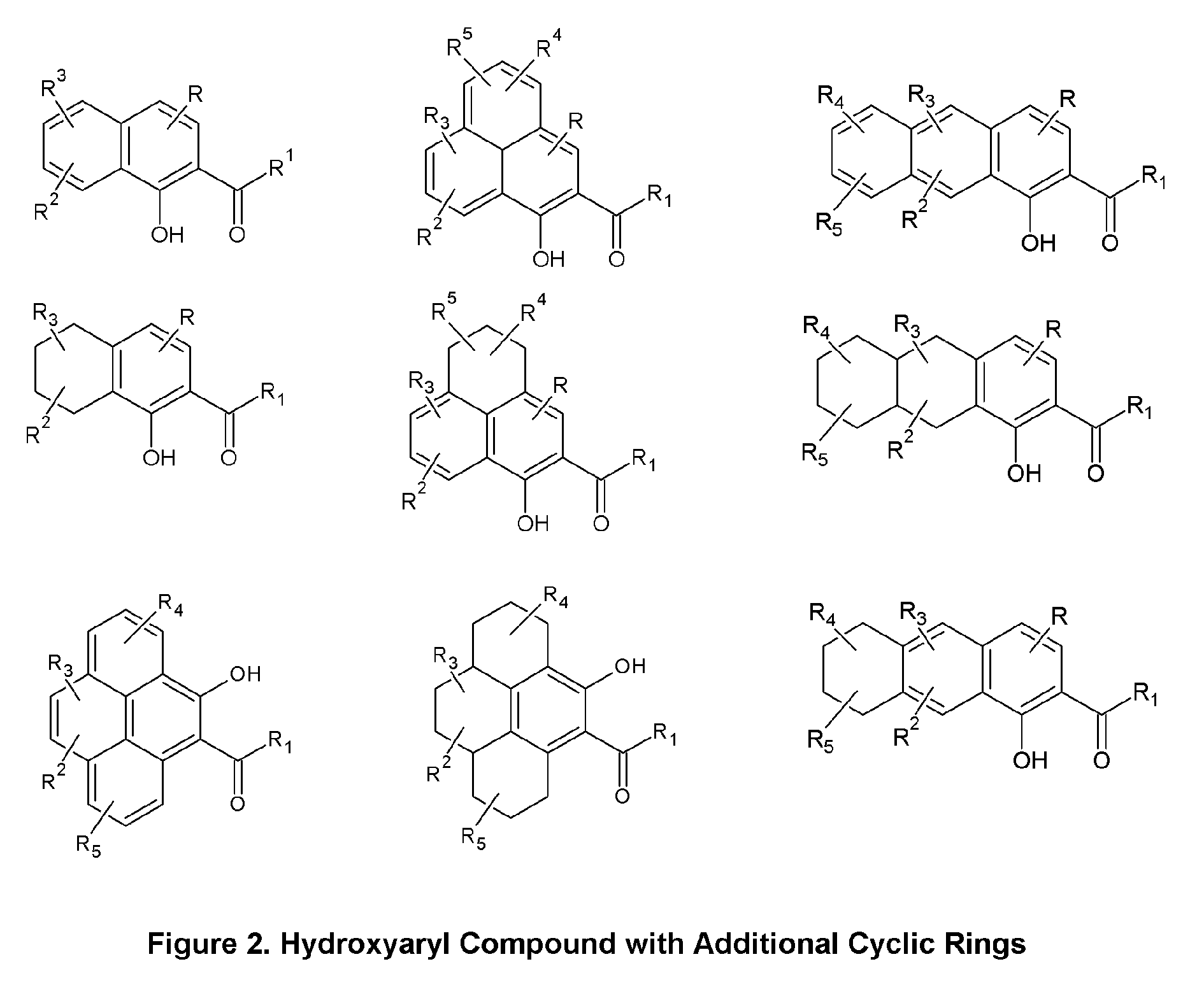
Examples
example 1
[0178]Enzyme Dysfunction Serum. Ingredients percent Weight (1) Deionized water 20.0 (2) 2-Acetyl-8-hydroxyquinoxaline 5.0 (3) Methylpropanediol 69.5 (4) Dimethicone copolyol 4.0 (5) Preservatives 0.5 (6) Ammonium Acryloyldimethyltaurate / VP copolymer 1.0. Procedure. Make main batch by mixing (2) to (5) at room temperature. Pre-mix (1) and (6) to a clear paste and add to main batch with mixing. The product has a clear to slightly hazy syrup-like appearance, typical of a skin serum product. Upon topical application according to the method of the present invention is absorbed rapidly with a silky smooth skin feel.
example 2
[0179]Wound Healing Serum with Copper Ions. Ingredients percent Weight (1)
[0180]Deionized water 20.0 (2) Quinacetophenone 5.0 (3) Methylpropanediol 69.0 (4) Dimethicone copolyol 4.0 (5) Preservatives 0.5 (6) Copper Gluconate 0.5. (7) Ammonium Acryloyldimethyltaurate / VP copolymer 1.0 Procedure. Make main batch by mixing (2) to (6) at room temperature. Pre-mix (1) and (7) to a clear paste and add to main batch with mixing. The product has a clear to slightly hazy syrup-like light blue appearance, typical of a skin serum product. Upon topical application to the wound area according to the method of the present invention it is absorbed rapidly.
example 3
[0181]Wound Healing Cream. Ingredients percent Weight (1) Deionized water 79.5 (2) Cetearyl alcohol (and) dicetyl phosphate (and) Ceteth-10 phosphate 5.0 (3) Cetyl alcohol 2.0 (4) Glyceryl stearate (and) PEG-100 stearate 4.0 (5) Caprylic / capric triglyceride 5.0 (6) Resacetophenone 3.0 (7) Paeonol 1.0 (8) (8) Preservatives 0.5. Procedure. Mix 1 to 5 and heat to 75-80° C. Adjust pH to 4.0 4.5. Cool to 35-40 C with mixing. Add 6 to 8 with mixing. Adjust pH to 4.0-4.5, if necessary. White to off-white cream.
PUM
 Login to View More
 Abstract
Description
Claims
Application Information
 Login to View More