Method and system for implementing aggregate endpoints on IMS networks

US20120219127A1Active Publication Date: 2012-08-30ACME PACKET +1
7 Cites 40 Cited by

Patent Information

Authority / Receiving Office
US · United States
Current Assignee / Owner
Publication Date
2012-08-30

Smart Images

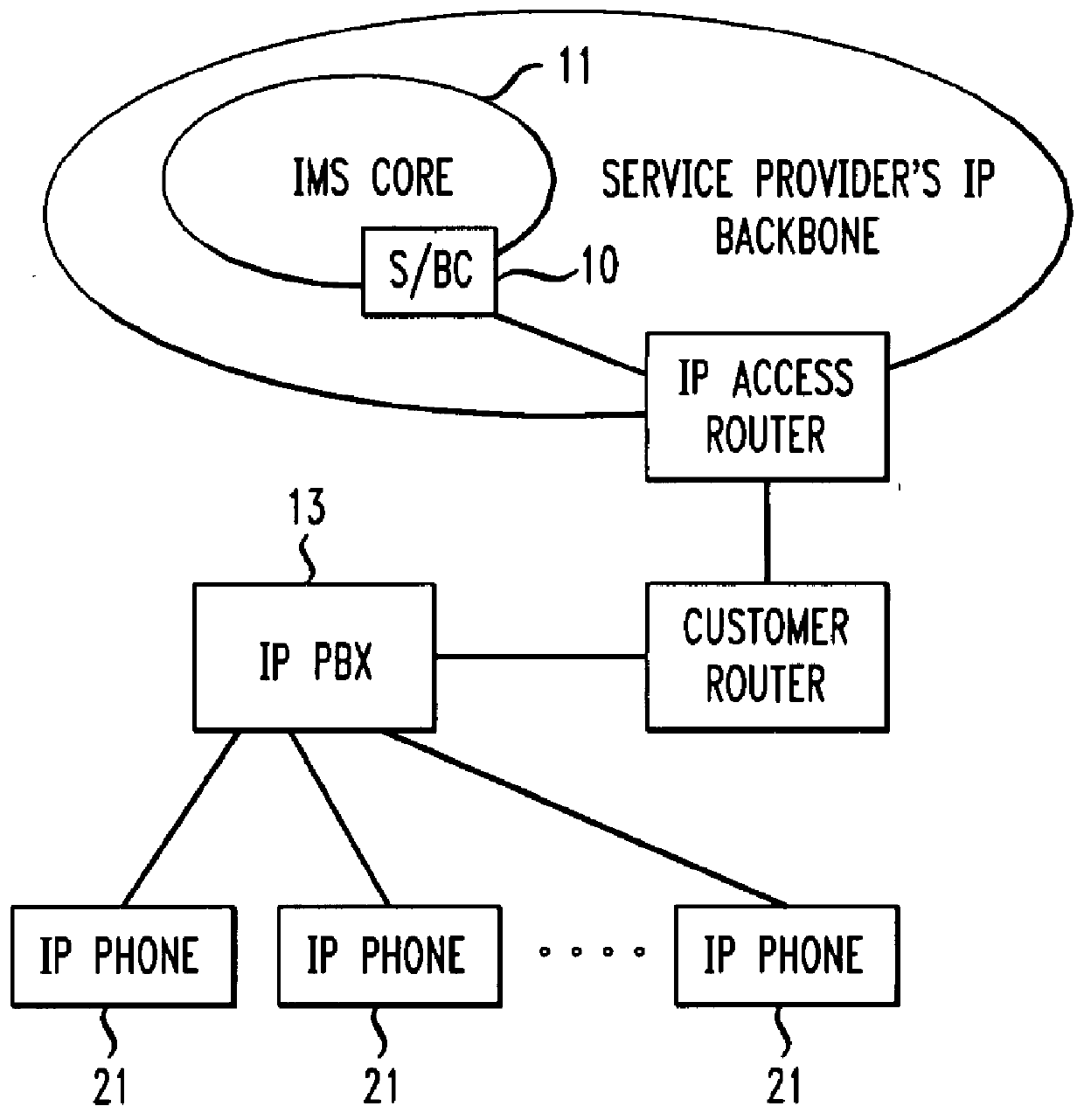
  • Figure 1
    Figure 1
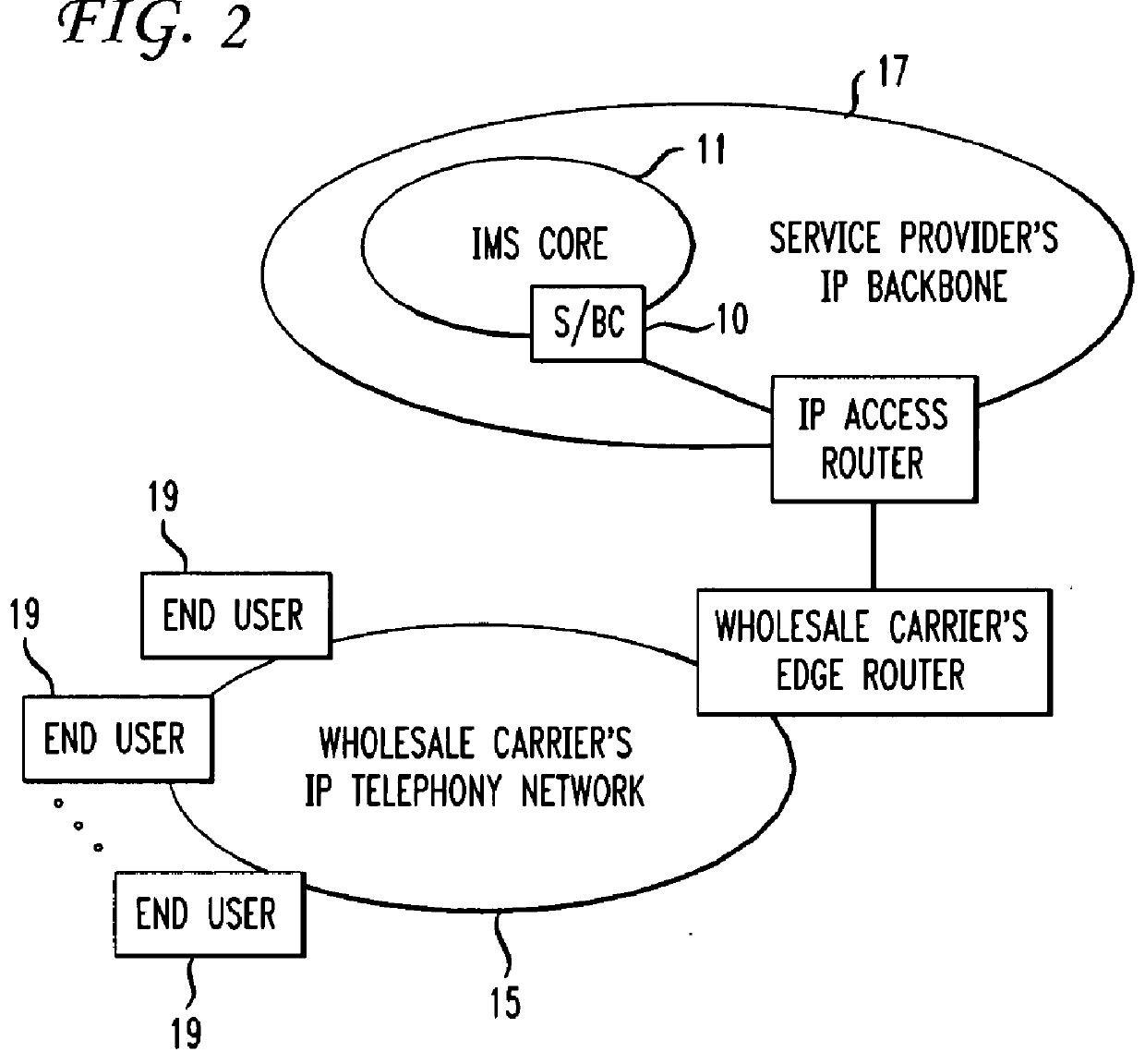
  • Figure 2
    Figure 2
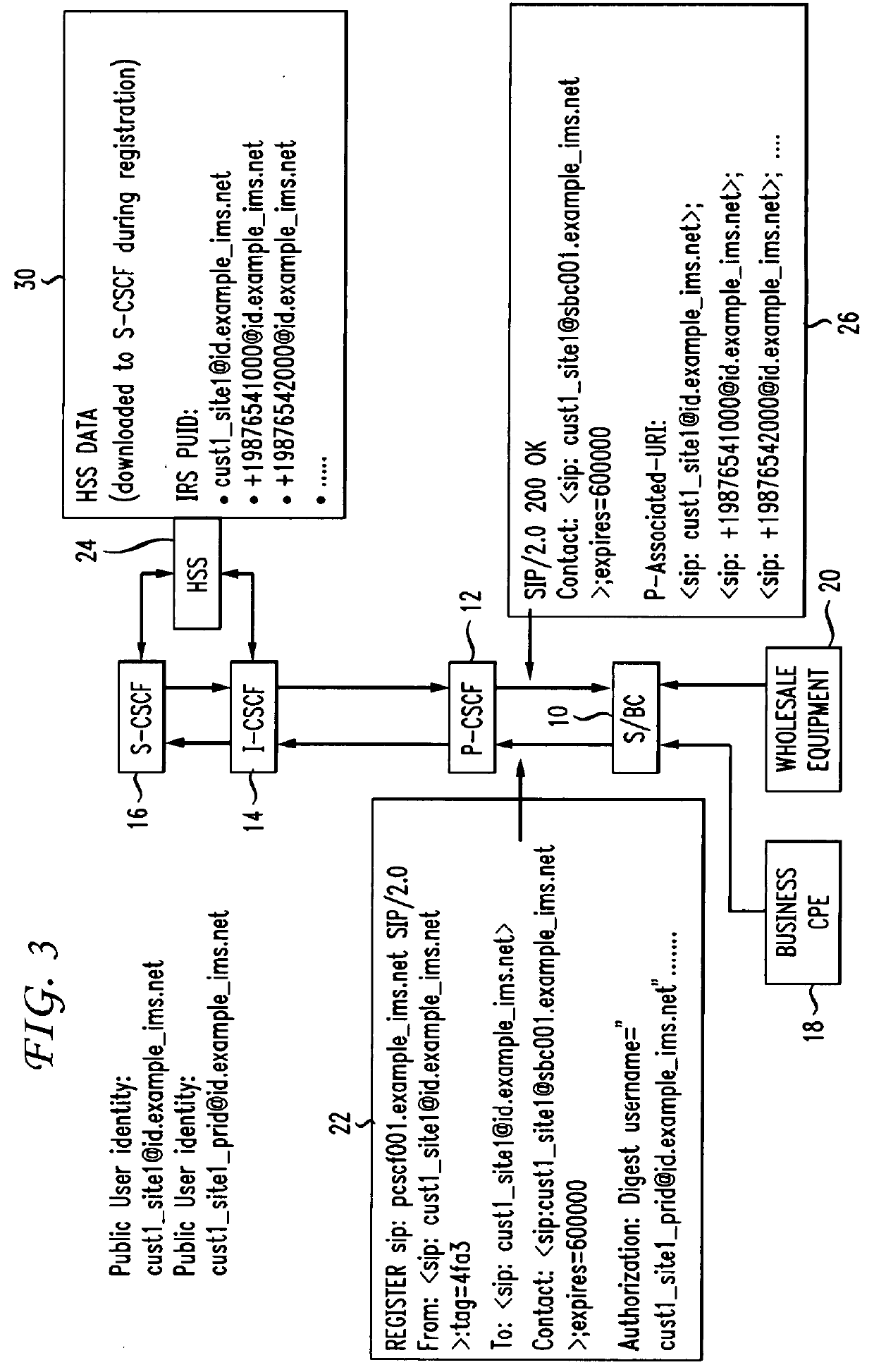
  • Figure 3
    Figure 3
Patent Text Reader

Abstract

A method and system are adapted to provide telephony services to aggregate endpoints on an Internet Protocol Multimedia Subsystem (IMS) network. The method includes assigning one or multiple PUIDs for surrogate registration purposes during the provisioning of the aggregate endpoint, performing reliable surrogate registration on behalf of the aggregate endpoint, allowing multiple SBCs to perform surrogate registrations independently for the same aggregate endpoint to achieve reliability, and providing reliable connection from an IMS core to the aggregate endpoints via multiple S / BCs. The system includes one or more Session Border Controllers (S / BC), at least one set of Call / Session Control Functions (CSCF), and an HSS operatively coupled together.
Need to check novelty before this filing date? Find Prior Art

Description

BACKGROUND OF THE INVENTION

[0001] 1. Field of the Invention

[0002] The present invention generally relates to providing Internet Protocol (IP) telephony services to a collection of users behind aggregate endpoints that connect to a network, such as business customer sites or wholesale customer sites. Examples of IP telephony services include the EP Multimedia Subsystem (IMS), as well as other services in which user endpoints are required to register to the network in order to receive reliable service.

[0003] 2. Brief Description of the Related Art

[0004] In the Internet Protocol (IP) Multimedia Subsystem (IMS) standard, which was originally designed for the individual subscriber wireless networks and is incorporated herein by reference, all subscribers need to register first before they can obtain services from the IMS network. As defined in the 3rd Generation Partnership Program (3GPP) IMS standard for, IMS network service providers use a Public User Identity (PUID) as the identifier to r...

Examples

Embodiment Construction

[0022]As shown in FIG. 1, business enterprise customers are customers that access the network, such as an IMS core 11 using a Private Branch Exchange (PBX) 13 or switch (TDM or softswitch). As shown in FIG. 2, wholesale customers are preferably a network 15 that resells services or access to the service provider 17. Thus, services are provided based on the access point for that network, and not typically on a per subscriber 19, 21 basis. For such customers, identification information regarding specific individual users obtaining services through the business or wholesale customer is not known, nor does it need to be known in accordance with the present invention. This type of access point is referred to herein as an “aggregate endpoint”. The actual users 19, 21 behind the aggregate endpoint are connected to the network via one or more Session Border Controllers (S / BC) 10, but are not considered individual subscribers.

[0023]The present invention is directed to make one or more Sessio...