

Method of producing paper with methane reduction ingredients
a technology of methane reduction and paper, which is applied in the field of paper processing to reduce methane production, can solve the problems of low methane output, srbs are largely inactive, and containing nitrate, sulfate, manganese(iv) or ferric ions generally do not support extensive formation of methane, so as to achieve the effect of reducing the formation of methane and being easy to break down
- Summary
- Abstract
- Description
- Claims
- Application Information
AI Technical Summary
Benefits of technology
Problems solved by technology
Method used
Image

Examples
Embodiment Construction
[0016]While the presently disclosed inventive concept(s) is susceptible of various modifications and alternative constructions, certain illustrated embodiments thereof have been shown in the drawings and will be described below in detail. It should be understood, however, that there is no intention to limit the inventive concept(s) to the specific form disclosed, but, on the contrary, the presently disclosed and claimed inventive concept(s) is to cover all modifications, alternative constructions, and equivalents falling within the spirit and scope of the inventive concept(s) as defined in the claims.
[0017]Paper in Microcosms. In the laboratory multiple small anaerobic environments can be established in individual bioreactors known as microcosms. Using formulae which we provided, microcosms were set up microcosms (delete) in which treated paper served as the main carbon source for anaerobic microbes. Both the evolution of methane and, by analysis of DNA, changes in the microbial com...
PUM
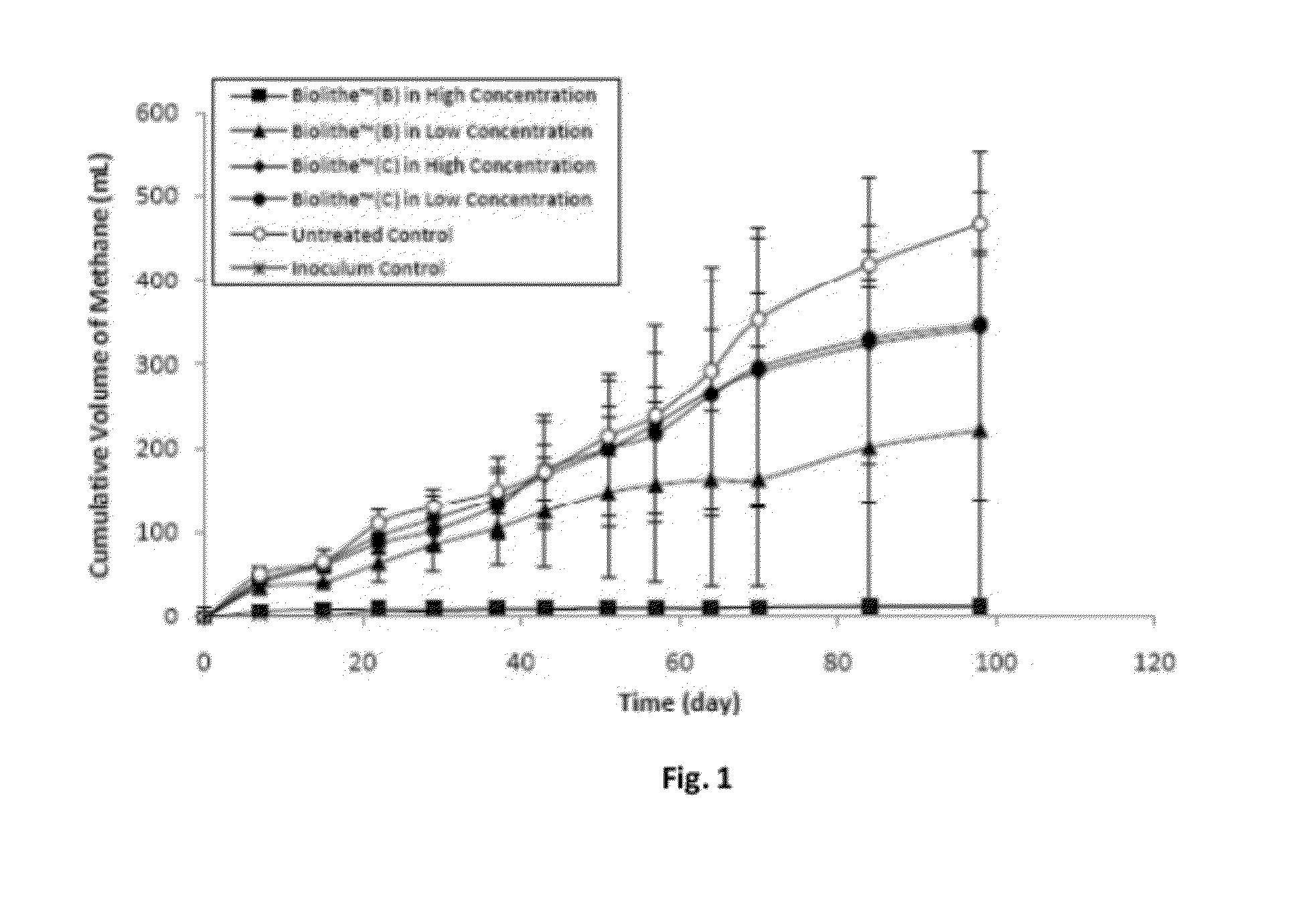
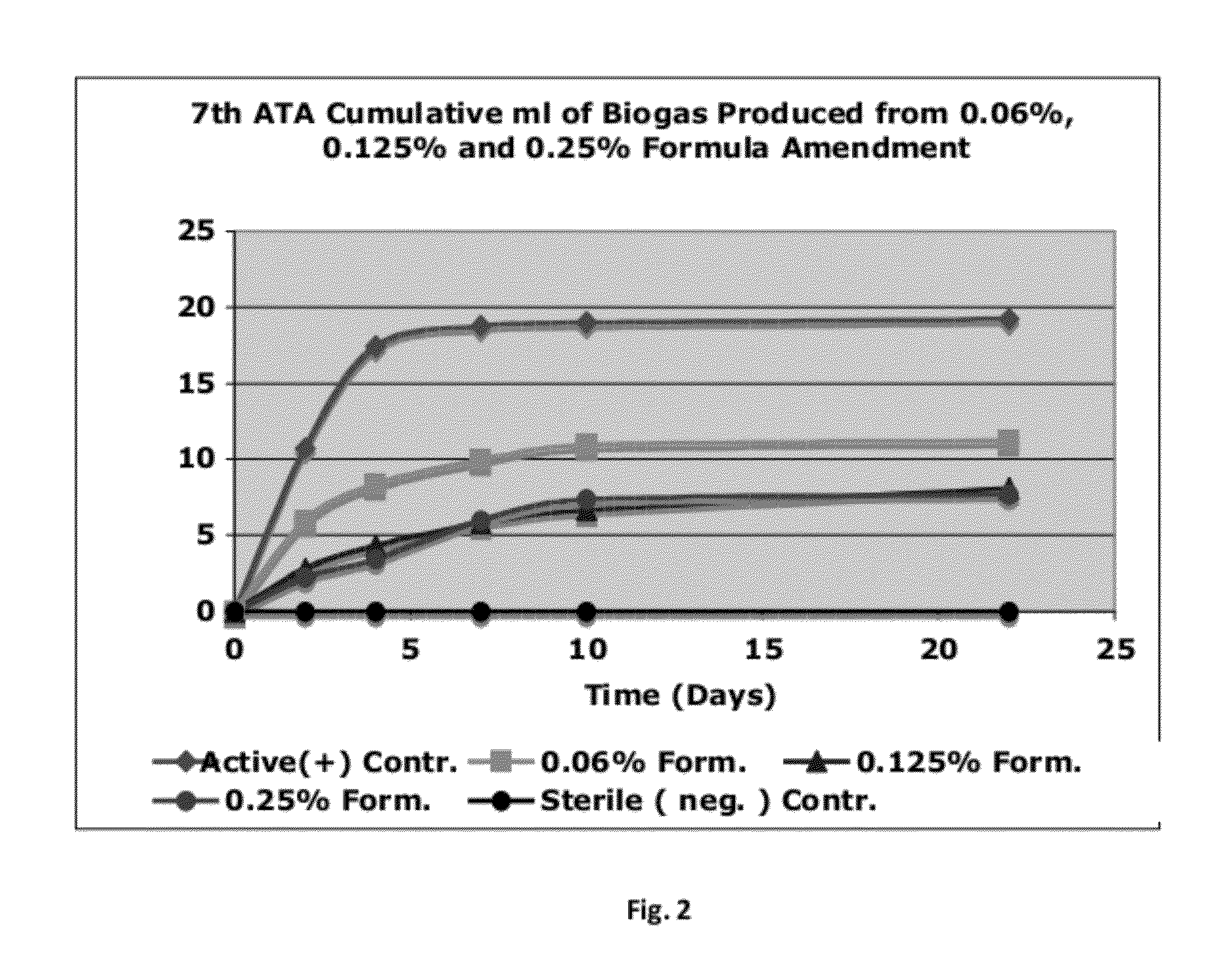
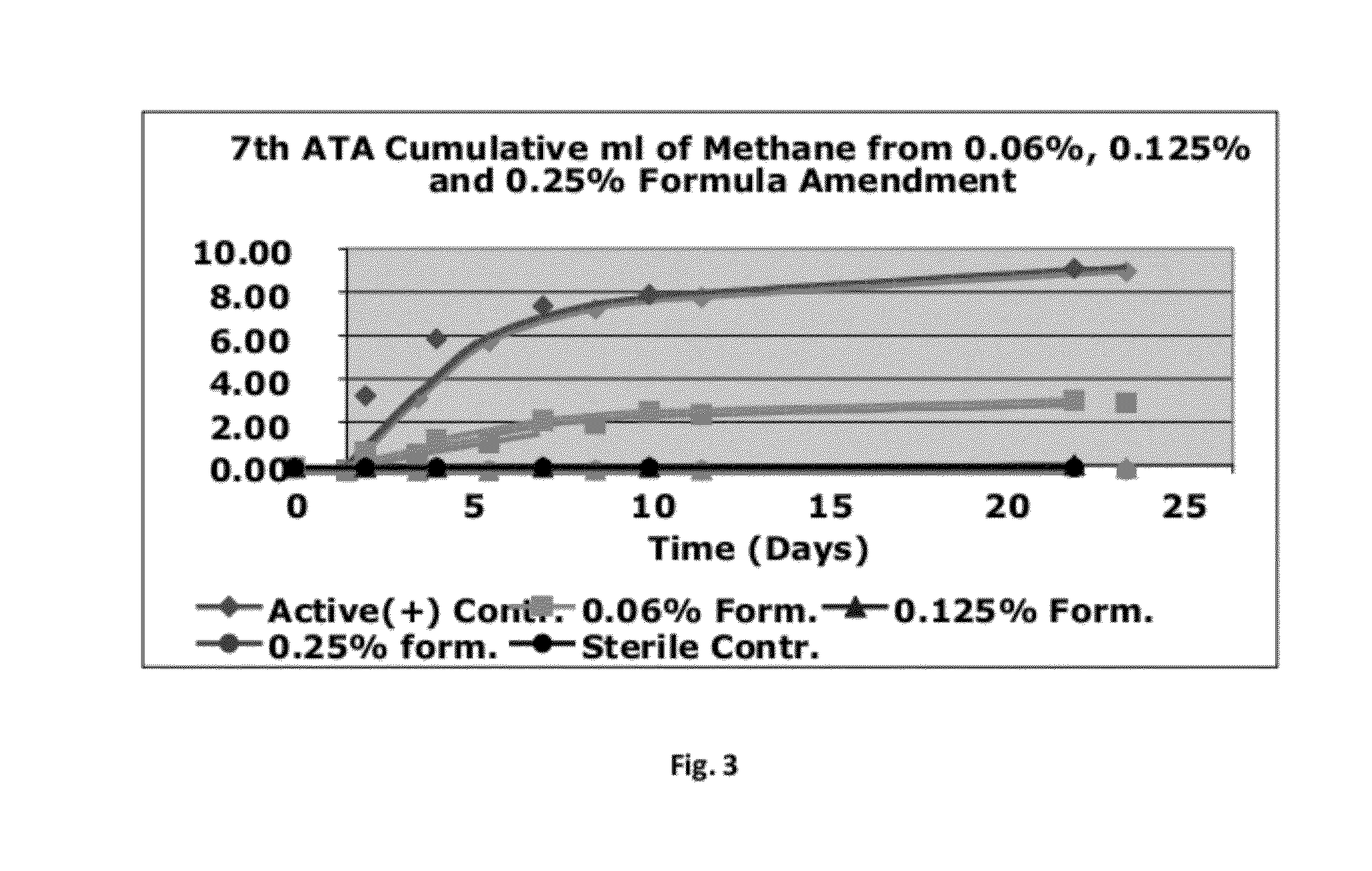
| Property | Measurement | Unit |
|---|---|---|
| specific gravity | aaaaa | aaaaa |
| specific gravity | aaaaa | aaaaa |
| specific gravity | aaaaa | aaaaa |
Abstract
Description
Claims
Application Information
 Login to View More