
Laminated sheet and method of manufacturing the same
a technology of laminated sheets and manufacturing methods, applied in the field of laminated sheets, can solve the problems of reducing the strength of synthetic leather including tear strength and surface abrasion resistance, affecting affecting the strength of synthetic leather, etc., and achieves the appearance of air holes, high tear strength, and flame resistance. simple
- Summary
- Abstract
- Description
- Claims
- Application Information
AI Technical Summary
Benefits of technology
Problems solved by technology
Method used
Image

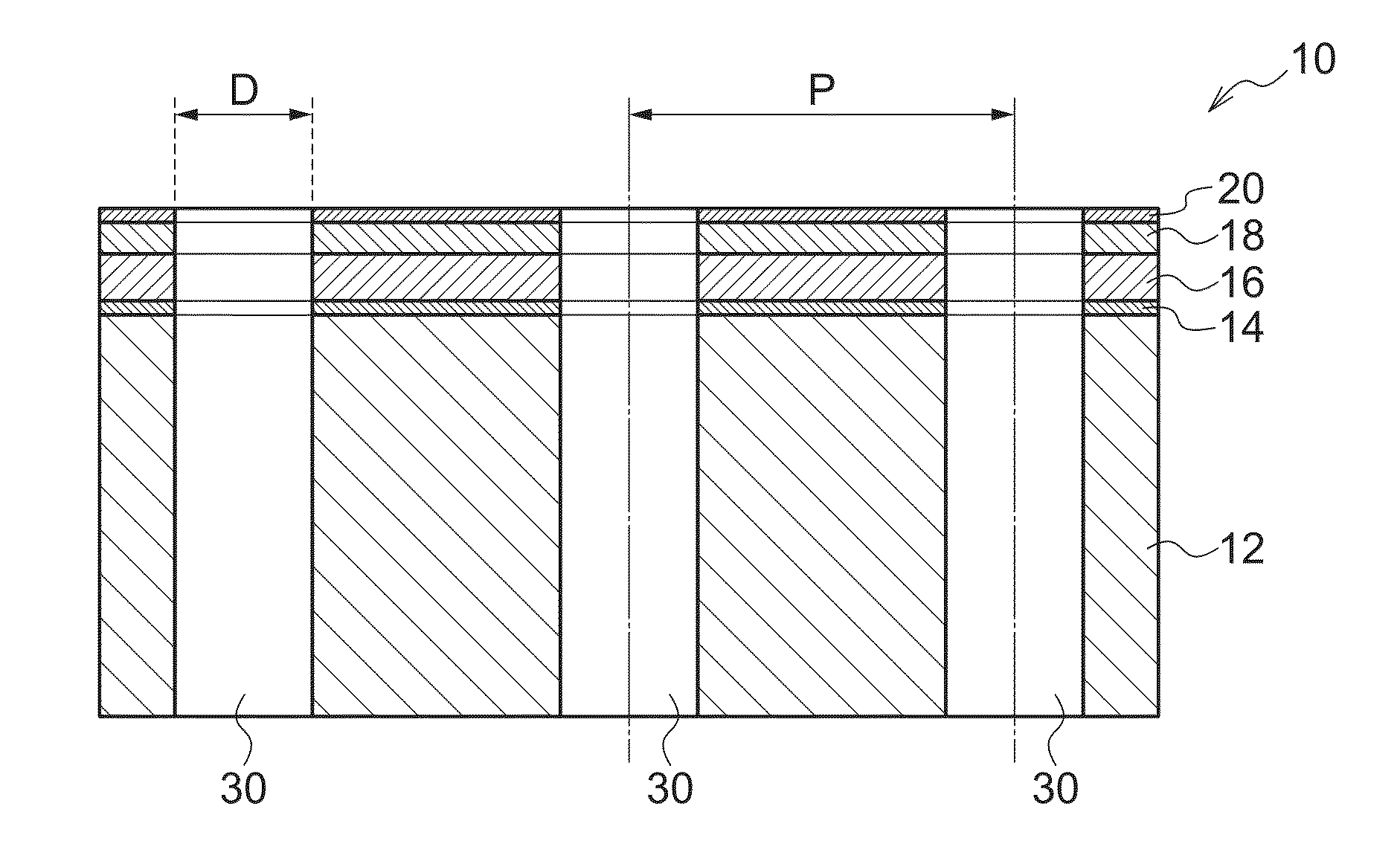
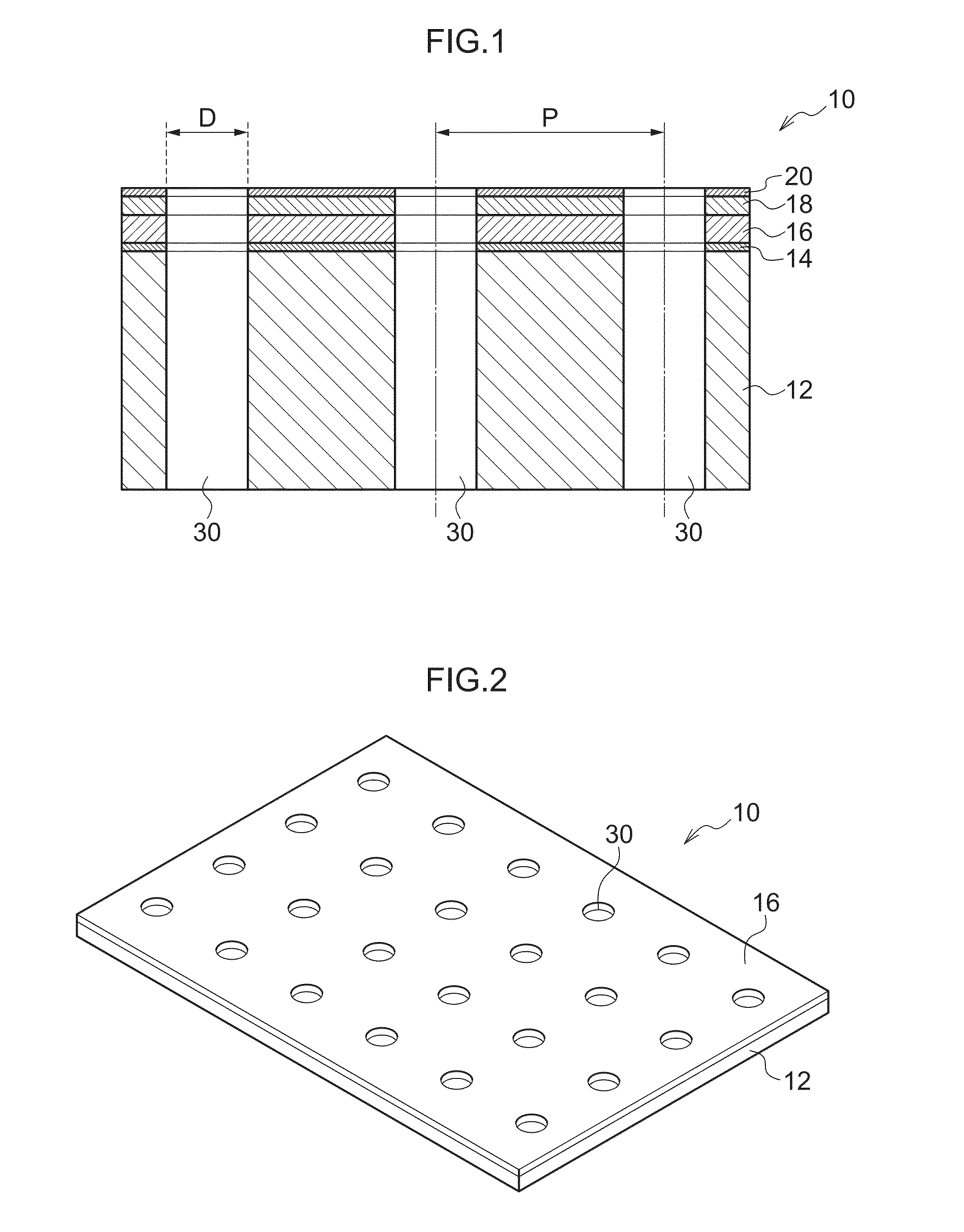
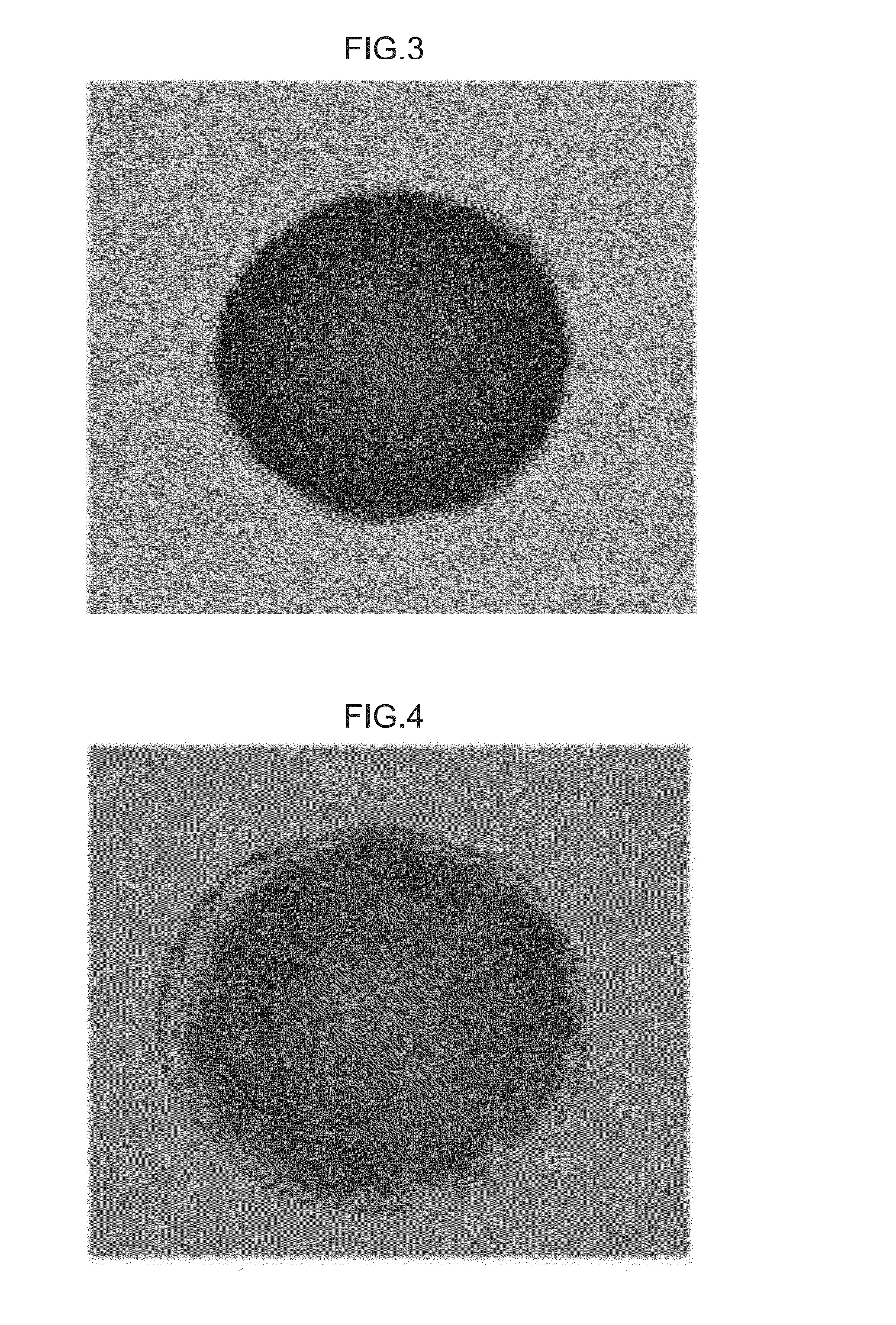
Examples
example 1
[0132](Formation of Base Cloth Layer)
[0133]A woven fabric that was twilled using yarns having a configuration shown in the following Table 1 was prepared, as a base cloth. The tear strength by a trapezoid method of this woven fabric was measured by a tensilon tester (manufactured by ORIENTEC Co., LTD, product name: UNIVERSAL TESTING INSTRUMENT model RTG-1310), and was 200 N in the longitudinal direction and 150 N in the lateral direction.
TABLE 1diameter ofthe number oftype of yarncounttwistsingle yarnyarns / inchwarppolyester / 20single1.7d86yarnrayon = 65 / 35yarnweftpolyester / 20four-ply1.3d42yarnrayon = 65 / 35
[0134]A resin solution having the following configuration was prepared.[0135]Polycarbonate Polyurethane (manufactured by DIC Corporation, product name: MP-865PS): 40 parts by mass[0136]Organic phosphate compound (flame retardant) (manufactured by Archroma Japan, KK, product name: PEKOFLAM STC, particle diameter: 3 μm): 10 parts by mass[0137]Dimethylformamide: 60 parts by mass
[0138]T...
example 2
[0197]A laminated sheet was manufactured in the same manner as Example 1 except that a base cloth was manufactured by changing the warp yarn from No. 20 count to No. 30 count and changing the weft yarn from No. 20 count four-ply to No. 20 count three-ply, respectively. Tear strength by a trapezoid method of a woven fabric used as the base cloth was 160 N in the longitudinal direction and 130 N in the lateral direction.
[0198]The obtained laminated sheet was evaluated in the same manner as Example 1.
example 3
[0199]A laminated sheet was manufactured in the same manner as Example 1 except that, in a resin solution for impregnating into a woven fabric, the flame retardant having a particle diameter of 3 μm was changed to a flame retardant having a particle diameter of 20 μm (manufactured by Archroma Japan, KK, product name: PEKOFLAM ATC).
[0200]The obtained laminated sheet was evaluated in the same manner as Example 1.
PUM
| Property | Measurement | Unit |
|---|---|---|
| hole diameter | aaaaa | aaaaa |
| size | aaaaa | aaaaa |
| distance | aaaaa | aaaaa |
Abstract
Description
Claims
Application Information
 Login to View More