
Contactless charging system, charging station, and contactless charged vehicle
a charging system and charging station technology, applied in the direction of transportation and packaging, instruments, roads, etc., can solve the problems of inability to externally confirm whether the vehicle is charged, difficult to alert the driver of the normal vehicle, and inability to use the contactless power transmission device provided in the parking spa
- Summary
- Abstract
- Description
- Claims
- Application Information
AI Technical Summary
Benefits of technology
Problems solved by technology
Method used
Image

Examples
first embodiment
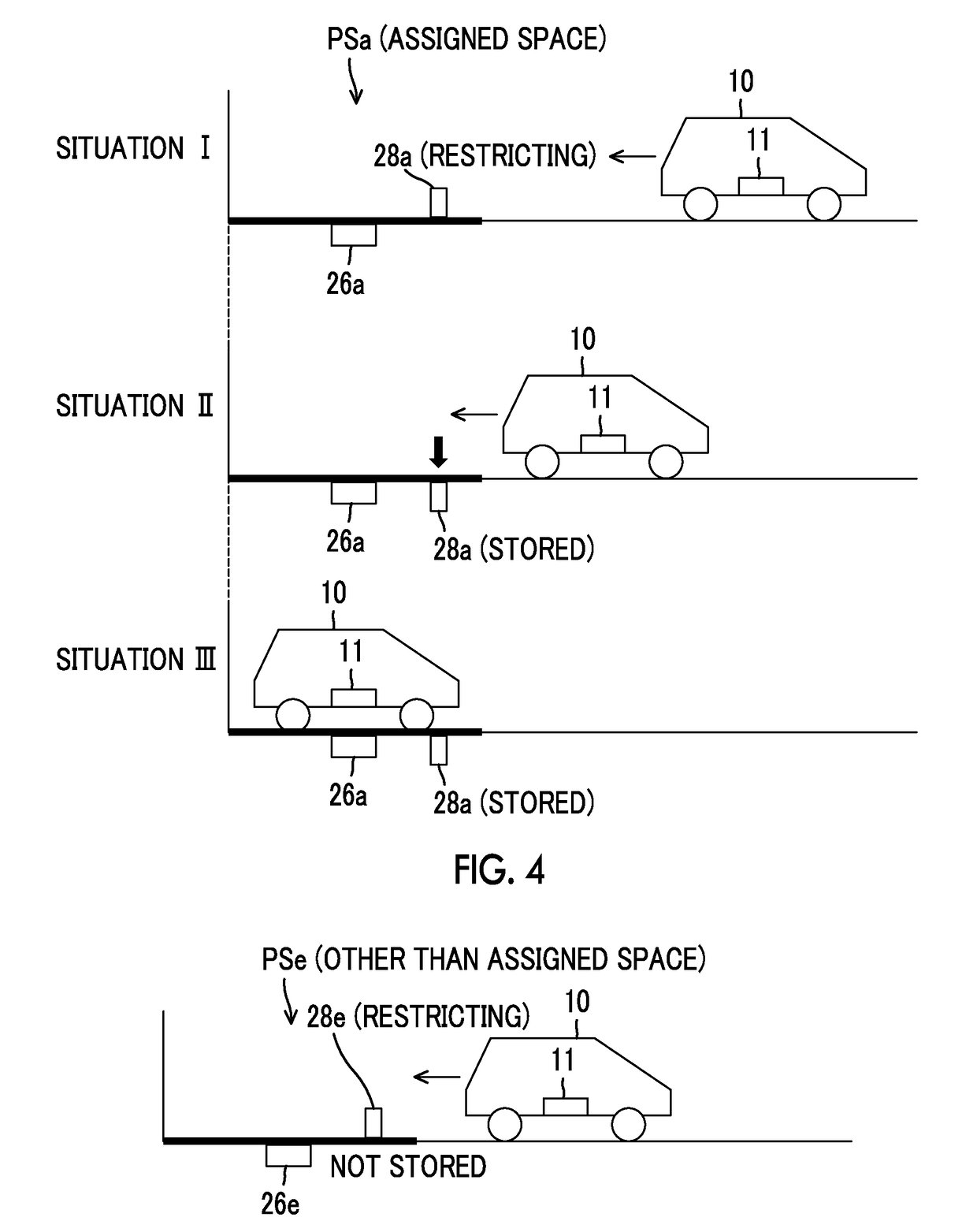
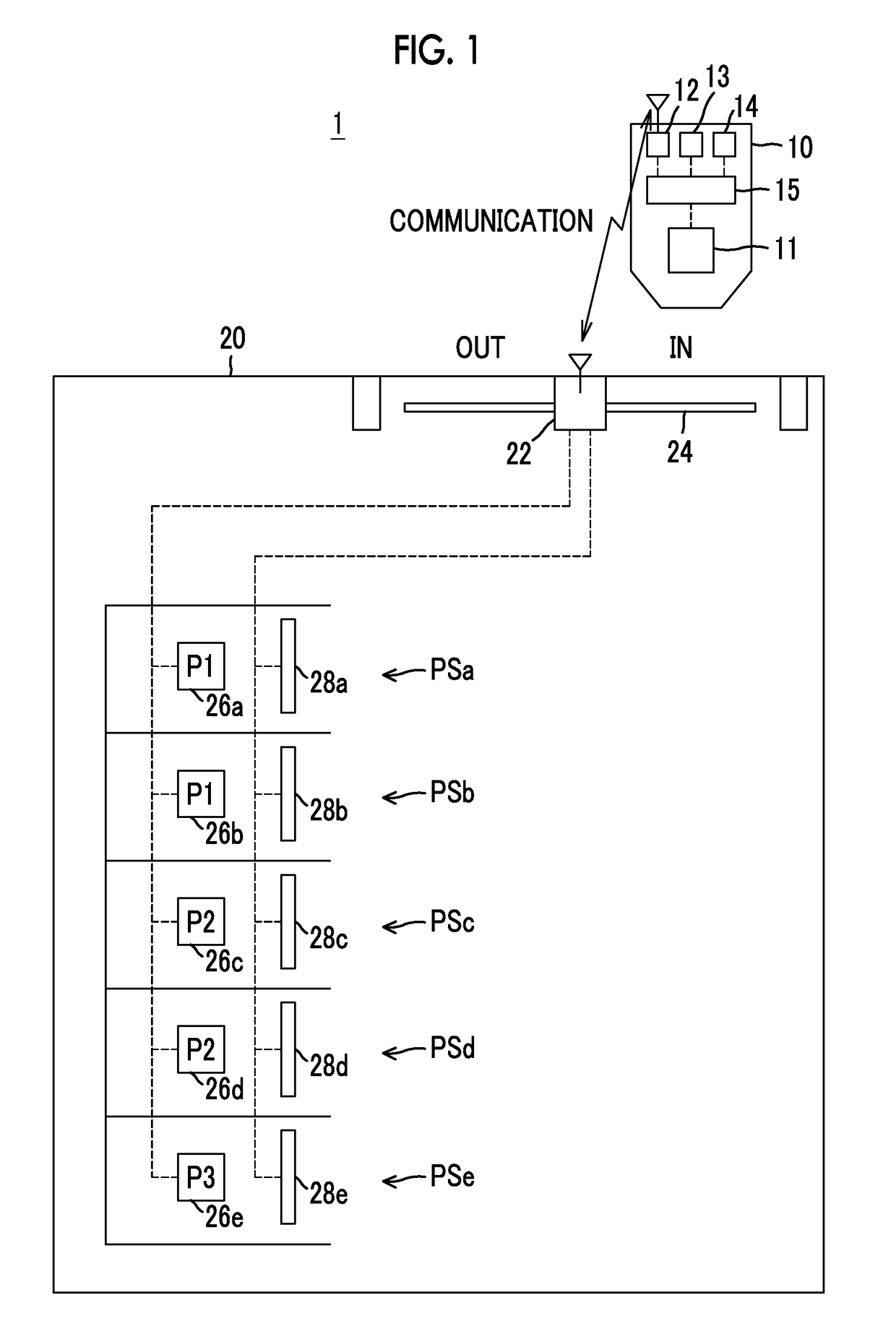
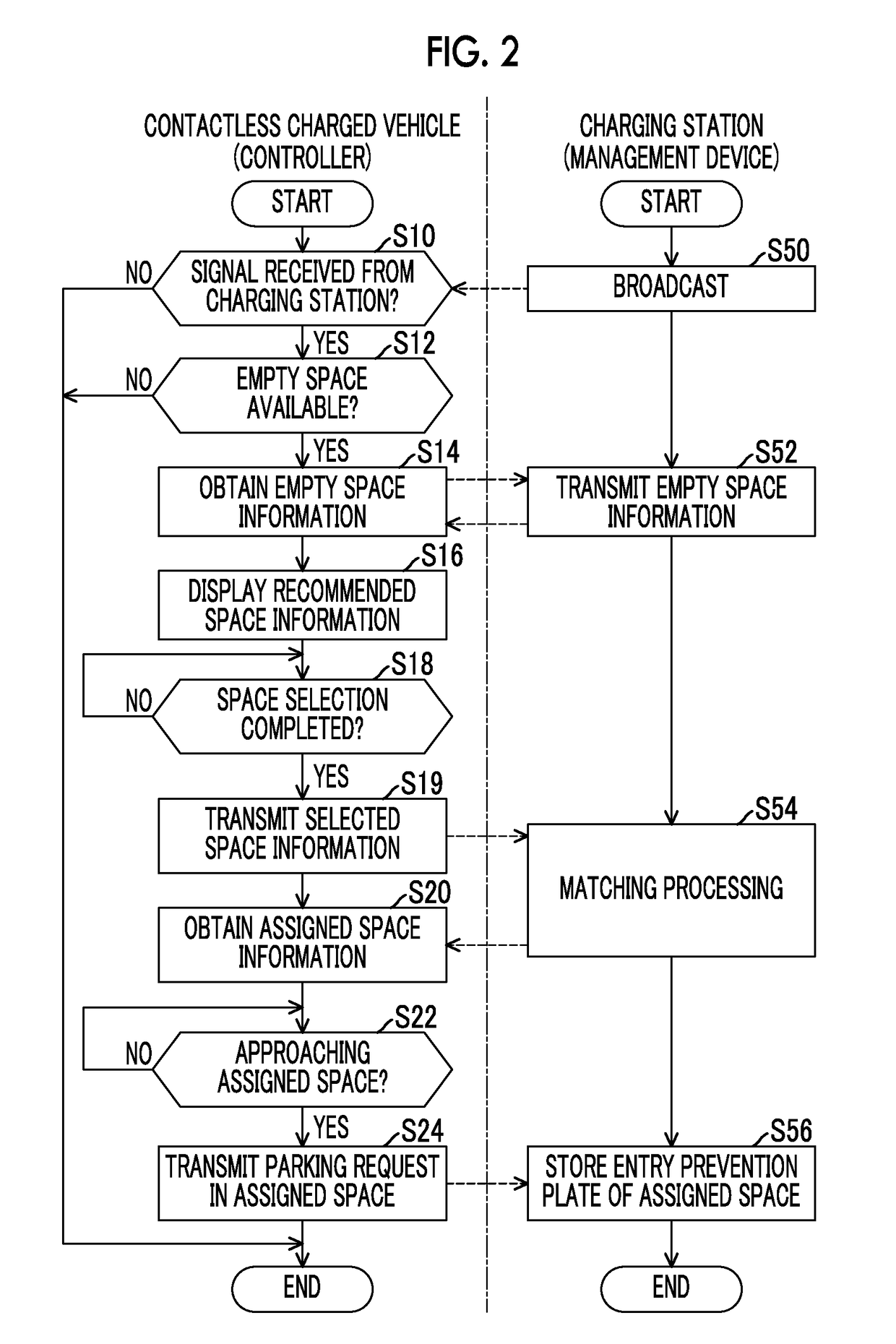
[0023]FIG. 1 is a schematic view of an overall configuration of a contactless charging system 1 according to a The contactless charging system 1 includes a contactless charged vehicle 10 and a charging station 20. The contactless charged vehicle 10 includes a power receiving device 11, a communication device 12, a navigation device 13, a human-machine interface (HMI) device 14, and a controller 15. The charging station 20 includes a management device 22, an entrance gate 24, and a plurality of (five in an example shown in FIG. 1) parking spaces PSa to PSe. The parking spaces PSa to PSe are respectively provided with power transmission devices 26a to 26e and entry prevention plates 28a to 28e. Each of the entry prevention plates 28a to 28e is one example of a restriction device.
[0024]The contactless charged vehicle 10 is an electric vehicle (a hybrid vehicle, an electric automobile, or the like) on which a drive motor and a drive battery (neither of them is shown) are mounted. The c...
second embodiment
[0090]As it has been described so far, the charging station 20A (the management device 22A) according to this second embodiment computes the predicted value of the parking use rate in accordance with the peripheral information obtained from the cloud server 30. When the predicted value of the parking use rate is lower than the threshold, the charging station 20A brings the entry prevention plate of the empty space into the stored state. In this way, when it is predicted that the possibility of the empty space being used by the contactless charged vehicle in the future is low, in addition to the contactless charged vehicle 10, the normal vehicle can also use the parking space. As a result, the parking space in the charging station can further efficiently be used.
[0091]In addition, the above-described embodiments and the modified example thereof can appropriately be combined within the scope that technical contradictions do not occur.
PUM
 Login to View More
 Abstract
Description
Claims
Application Information
 Login to View More