

Safety lockout for actuator shaft
a safety lockout and actuator technology, applied in the direction of surgical staples, paper/cardboard containers, surgical forceps, etc., can solve the problems of system errors, less than ideal hold by tissue staples,
- Summary
- Abstract
- Description
- Claims
- Application Information
AI Technical Summary
Benefits of technology
Problems solved by technology
Method used
Image

Examples
Embodiment Construction
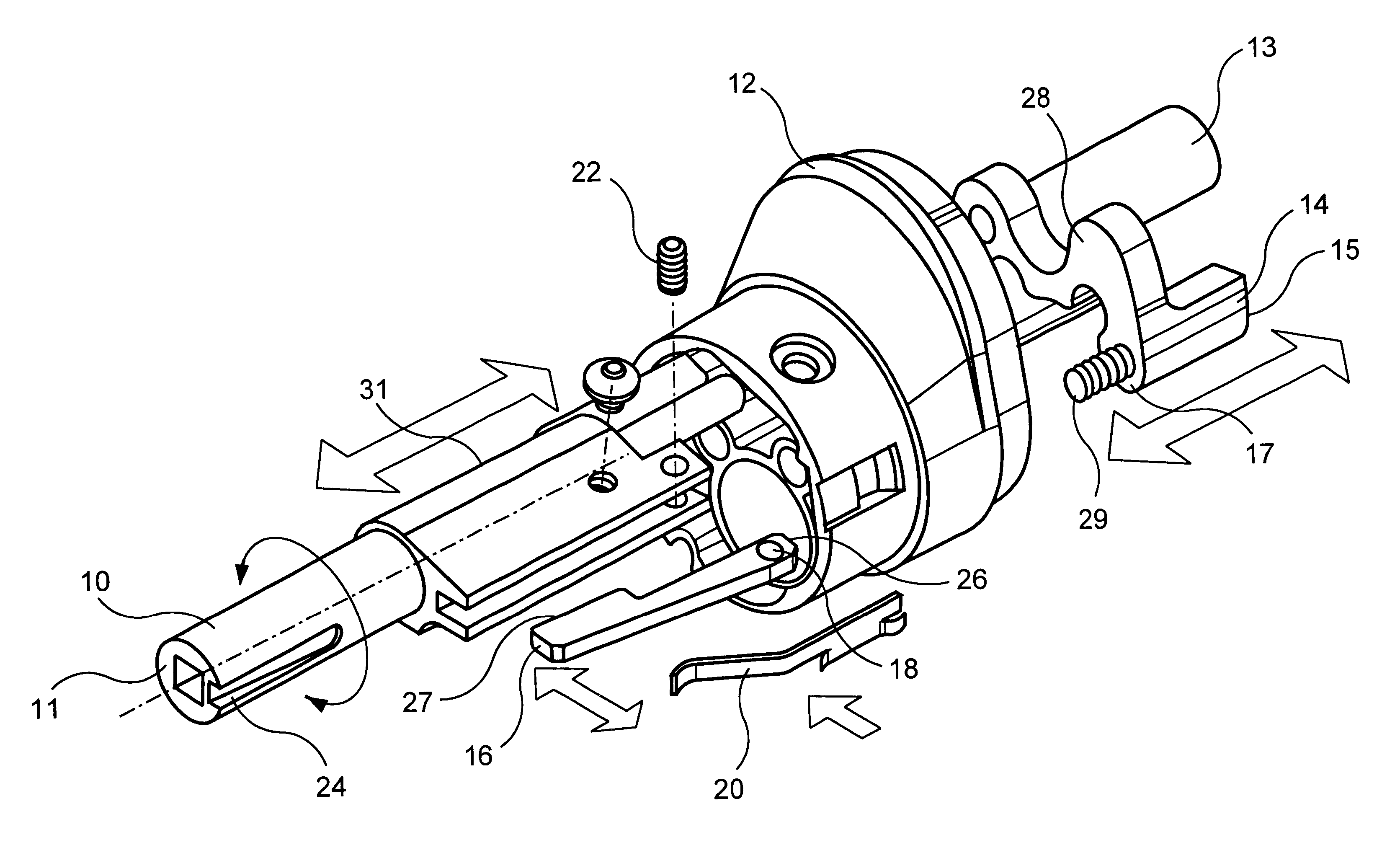
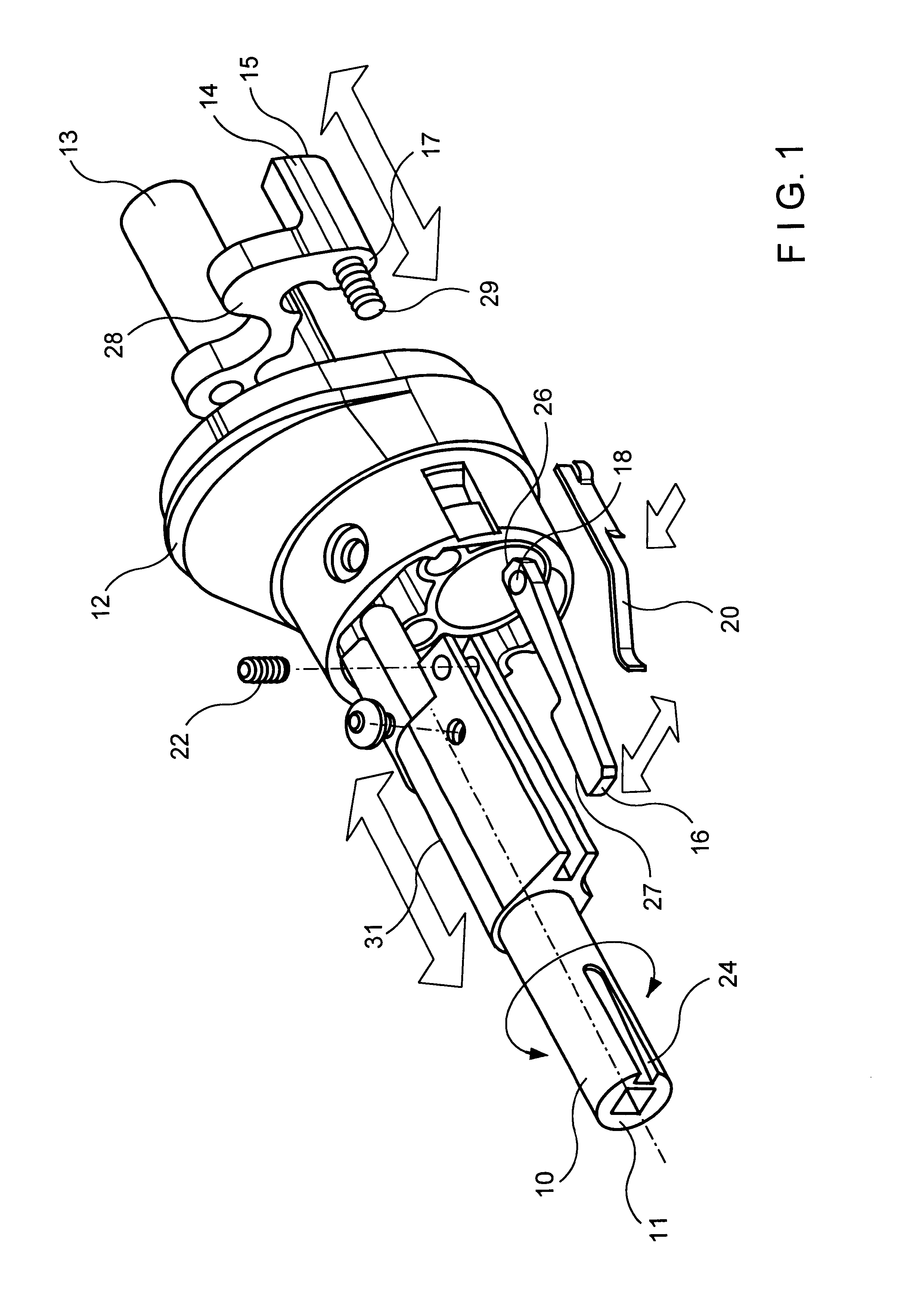
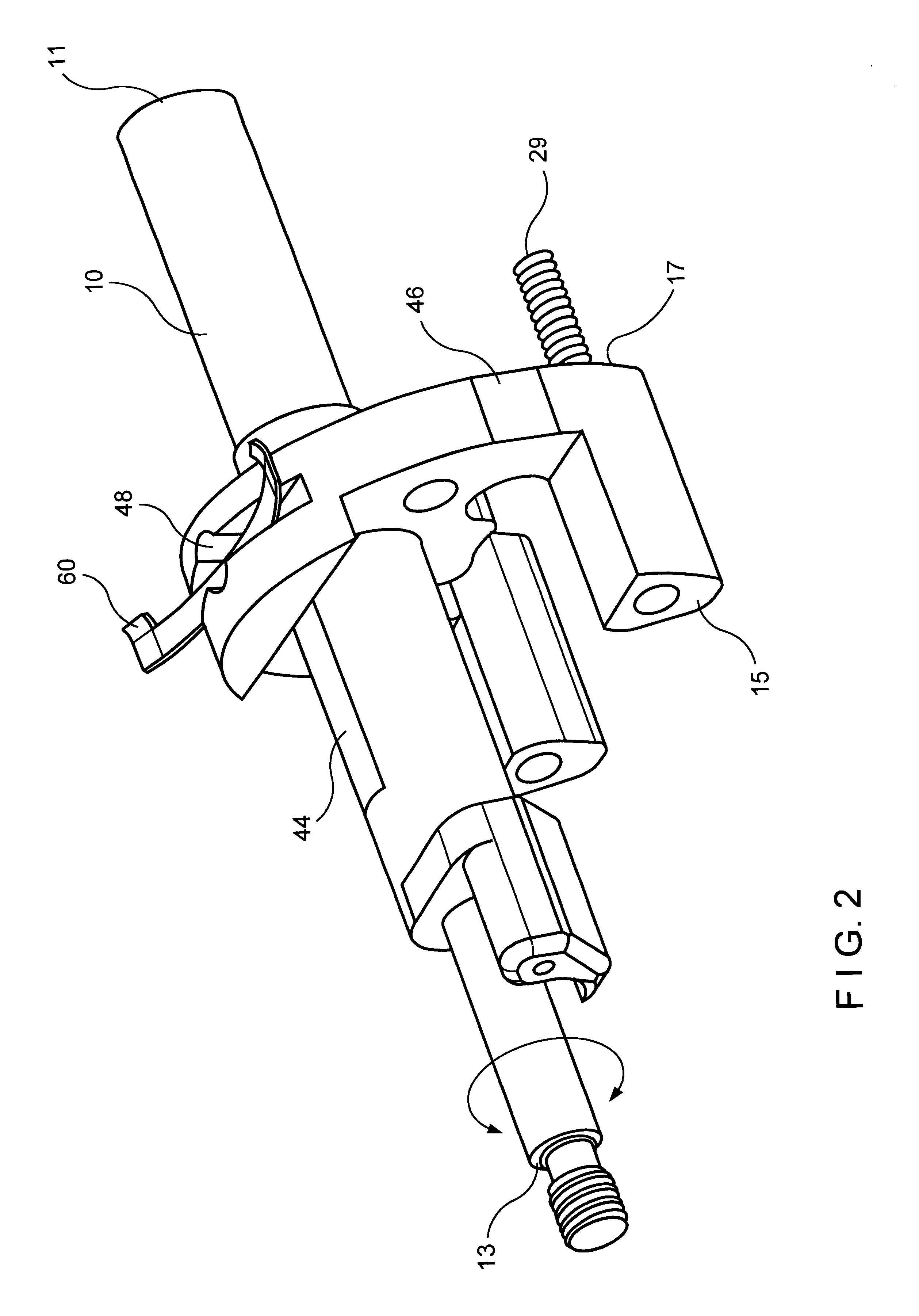
FIG. 1 shows an embodiment of the safety lockout according to the present invention, used to prevent rotation of a actuating shaft of a Full Thickness Resectioning Device. This assembly is located at a distal end of the FTRD, and forms part of the head section of the FTRD. A shaft 10 extends through the distal head section of the FTRD, and can be connected at end 11 to a flexible drive shaft (not shown) extending to the proximate end of the FTRD. Shaft 10 also has another end 13 that extends into a stapling head portion of the FTRD, not shown in the drawing, from which the staples are propelled into the tissue.
The surgeon operating the device can remotely rotate shaft 10 so that the mechanism of the stapling head connected to end 13 of shaft 10 fires a staple into the tissue when a sufficient rotation of shaft 10 has occurred. A frame 12 supports shaft 10 so that it can rotate and, if necessary, translate within frame 12. In one embodiment, frame 12 can be the rear tail cap of the h...
PUM
| Property | Measurement | Unit |
|---|---|---|
| distance | aaaaa | aaaaa |
| distance | aaaaa | aaaaa |
| axial distance | aaaaa | aaaaa |
Abstract
Description
Claims
Application Information
 Login to View More