is to provide a non-chemical, non-invasive, painless and inexpensive method of alleviating nausea. It is also portable, self-contained and convenient to the patient. Electrical pulse repetition rate of approximately 70 pulses per second and a pulse width of 80 microseconds has been found to provide effective relief of nausea in a patient. Our currently preferred electrical
pulse pattern comprises about 350
microsecond pulse width at about 31 pulses per second at power levels of about 10-35 milli-amps peak
pulse height. Thus a wide range of pulse patterns may be used in non-invasive
nerve stimulation devices. The device is described in Bertolucci,
Nausea Control Device, U.S. Pat. No. 4,981,146 (Jan. 1, 1991).
Previously, we have provided devices in several models, each providing a different strength of stimulation deemed appropriate for particular patients and indications. We have also marketed a version of the device which included circuitry and operator controls which allowed the patient to select from a wide range of
power setting and stimulation patterns. Currently, we are marketing over-the-counter devices and prescription devices. Both the over-the-
counter device and the prescription are provided in embodiments in which the device is disposable (the batteries cannot be replaced after depletion) and in which the device is reusable, (the batteries may be replaced indefinitely). In each of these versions, we have provided complete circuitry, power supply, and electrodes in each device manufactured. Thus, for each version of the device, different circuitry had to be provided. The devices and methods described below provide for easier manufacturing of a line of devices with different characteristics.
In each of our electro-acupuncture products, the stimulation and effect are greatly enhanced if the patient applies a gel to the
skin before
strapping the device onto the wrist. This gel serves as an
impedance matching layer between the electrodes and the
skin, greatly enhancing the effect of the device and lowering the power requirements for the device. As a replacement for the gel, we have developed a gel
coating for the electrodes. This
coating comprises a
hydrogel film which adheres to the electrodes and can be applied to the electrodes during manufacture. Providing the gel during manufacture enhances effectiveness of the device since it eliminates the possibility that some users will omit the application of gel, either through forgetfulness or ignorance of need to use it. A current limitation on the installed
hydrogel film is its short lifespan. The films that are currently available last only a few days. While this is acceptable for some temporary indications and applications, such as
seasickness, it is undesirable for chronic applications such as
morning sickness and
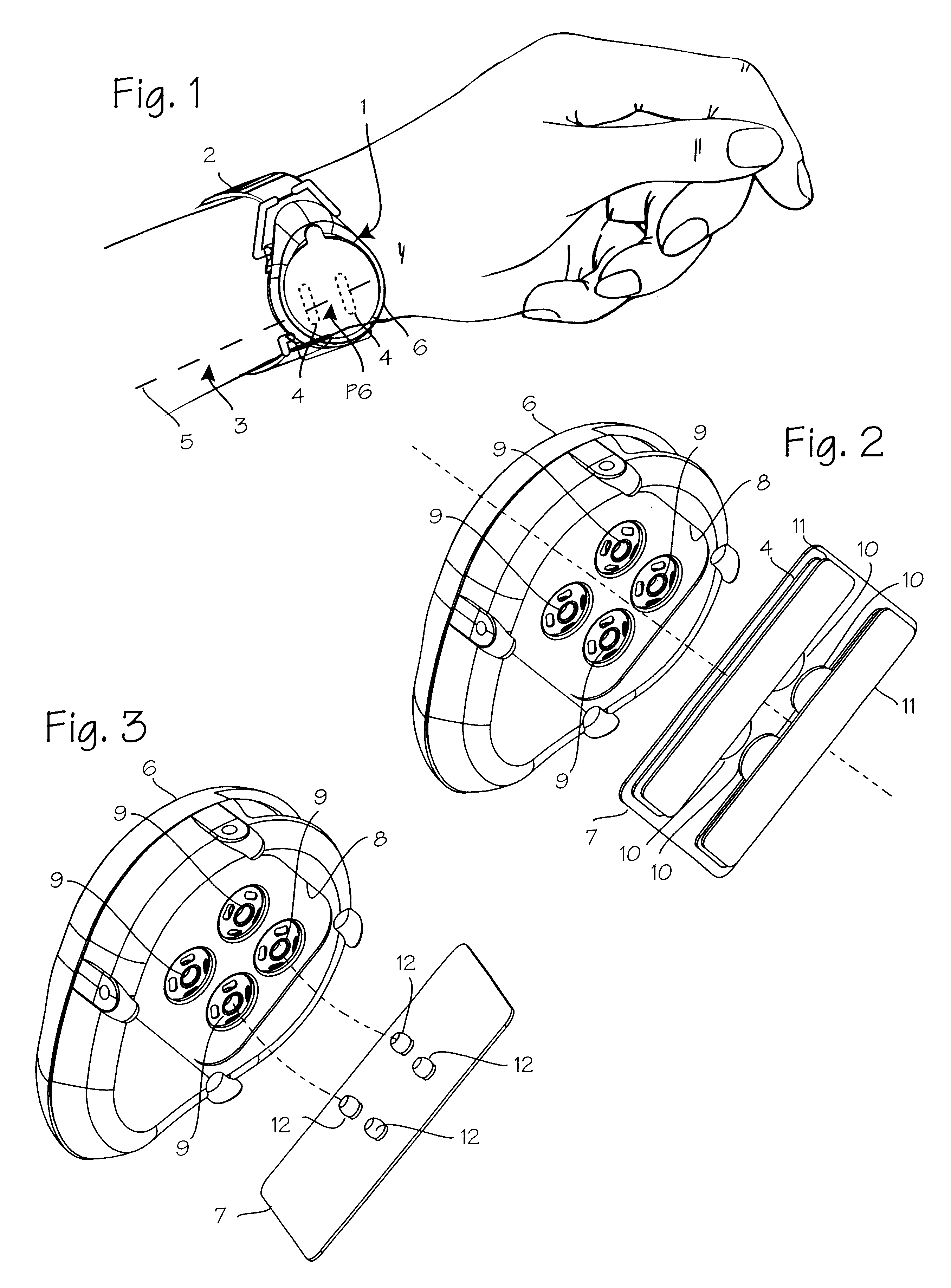
chemotherapy induced nausea. Our solution is to provide the device in modular form, with the watch-like housing manufactured in one unit and the electrodes manufactured as an attachable or insertable part which can be readily replaced by the patient.
The devices and methods described below provide for improved
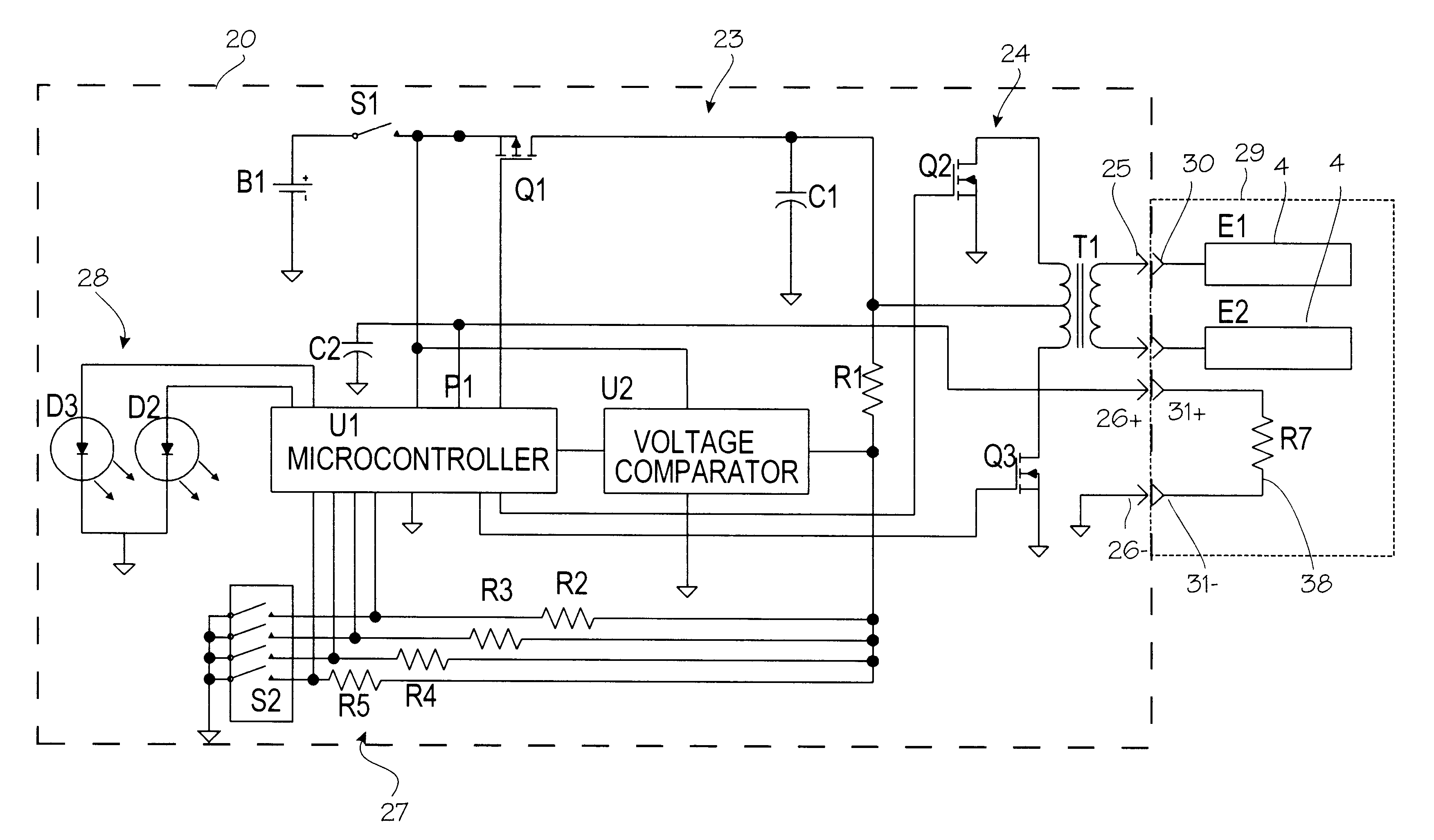
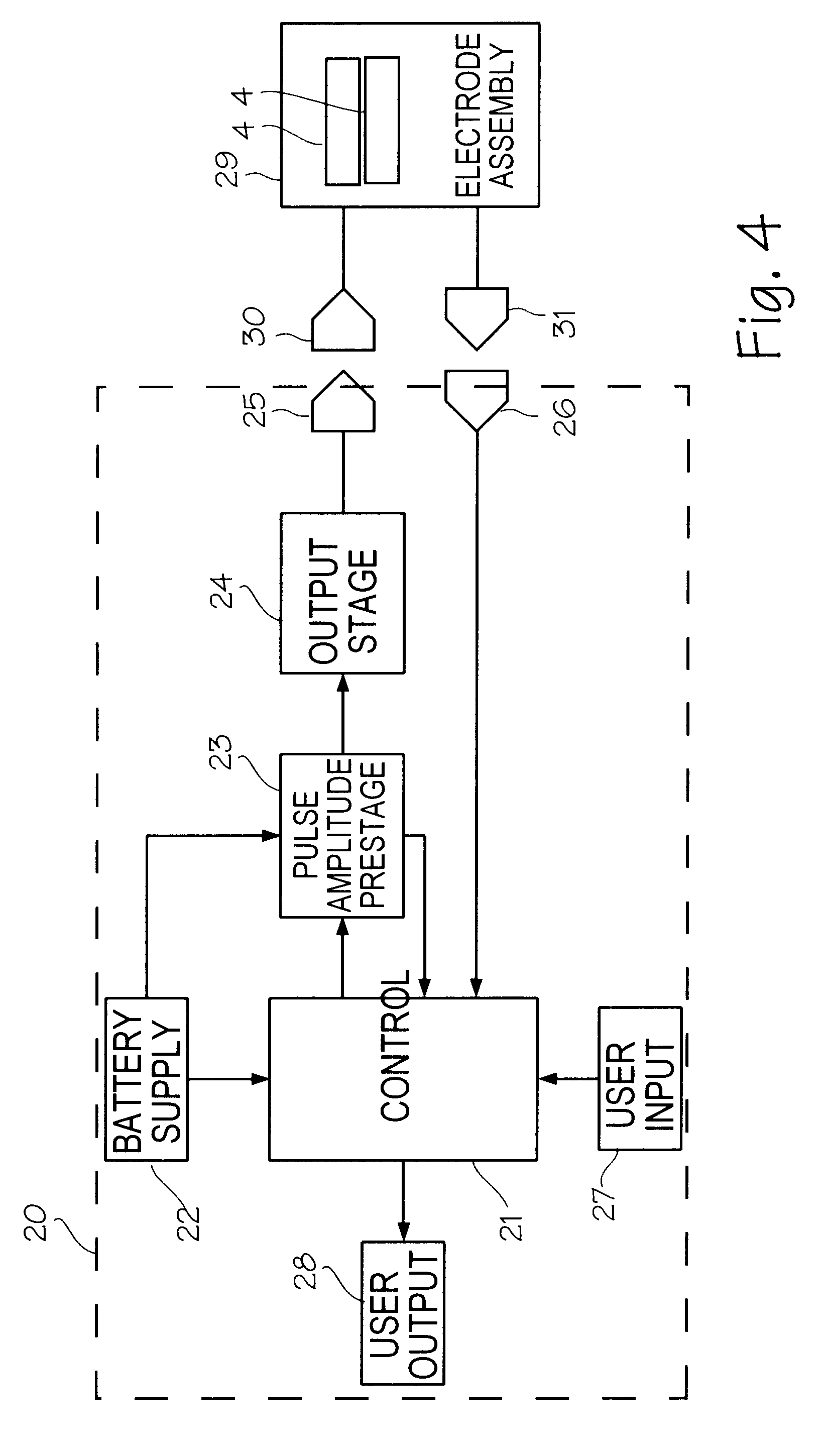
usability and control of electro-acupuncture devices in particular, and electrical stimulation devices in general. The electro-acupuncture device includes a pair of electrodes connected to control circuitry and a battery. The control circuitry operates to draw power from the battery and generate electro-acupuncture stimulation pulses to the electrodes. The control circuitry is housed in a housing, which, for application of stimulus to the P6 point on the wrist, is preferably a wrist-watch like housing that may be strapped on the wrist with watch band or the like. The electrodes are mounted to the inner face of the housing, so that they rest over the P6 point when the housing is worn on the inside of the wrist. The electrodes are provided on an assembly which is separable from the housing. The assembly may then be used to control the operation of the device, to provide for several
modes of therapy, by inclusion of configuration elements which contain unique parameters or digital information which as accessed by the
control circuit when the electrode assembly is secured to the base unit. The electrode assembly becomes a "smart electrode," capable of carrying information
usable by the
control circuit to configure the overall device. Additionally, the
impedance matching gel that is required for optimal performance of the device can be applied during manufacture (rather than during use), since it may be inexpensively replaced with a new electrode assembly.


 Login to View More
  Login to View More