
Device for vacuum-pressing of DVD substrates
a technology of vacuum pressing and substrate, which is applied in the direction of press ram, soldering device, auxiliary welding device, etc., can solve the problems of not being able to adjust, not being able to apply hot melt adhesive to gluing substrates, and not being able to distribute the contact pressing force produced by the weights evenly across the entire substrate surfa
- Summary
- Abstract
- Description
- Claims
- Application Information
AI Technical Summary
Benefits of technology
Problems solved by technology
Method used
Image

Examples
Embodiment Construction
[0027]The invention is directed to a device for vacuum-pressing of substrates, in particular DVD substrates.
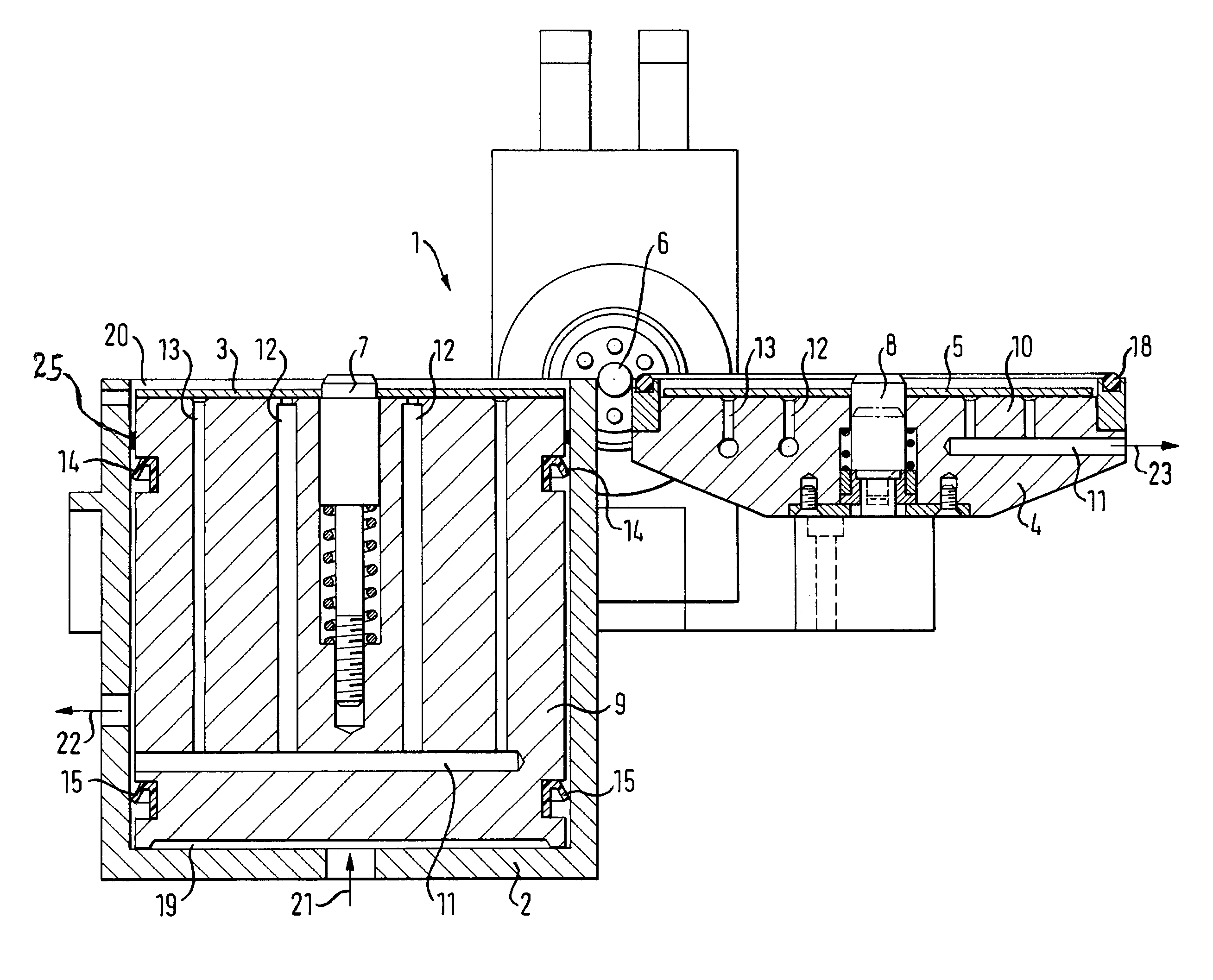
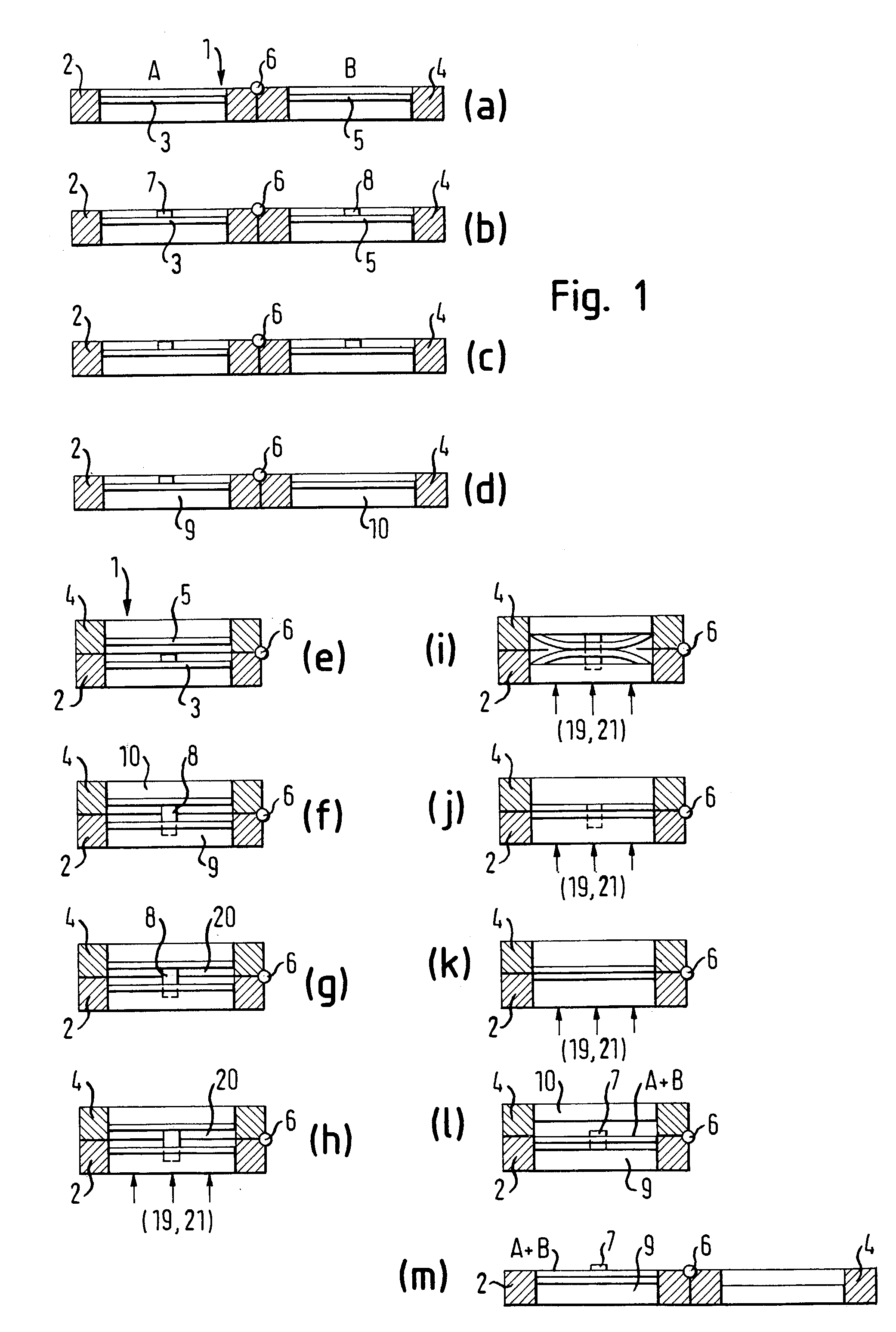
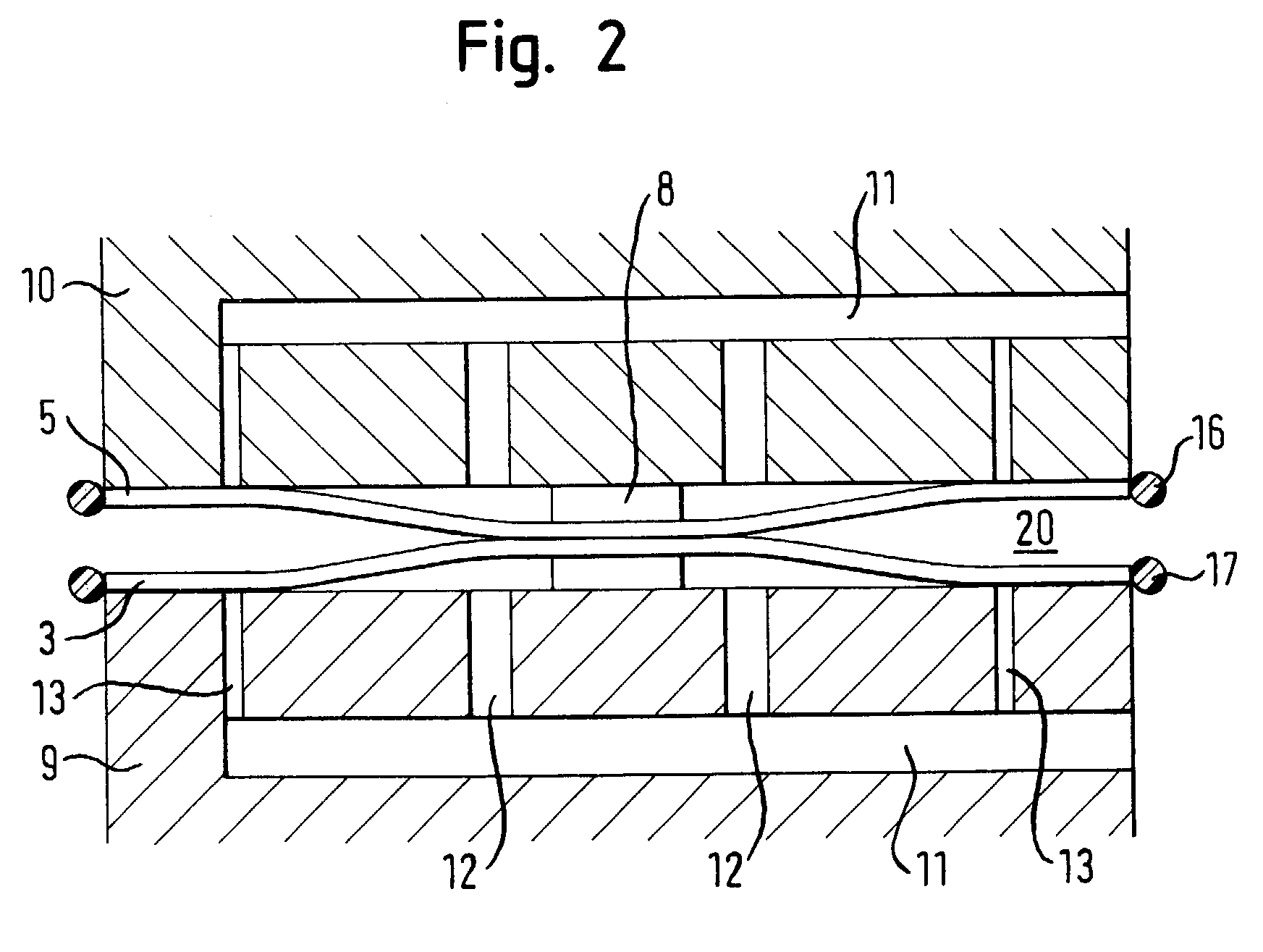
[0028]Referring first to FIG. 1, a vacuum chamber 1 includes a bottom section 2 for receiving a first (A) substrate 3 and a cover section 4 for receiving a second (B) substrate 5. The vacuum chamber can be closed by rotating the cover section 4 about an axis 6 that is perpendicular to the plane of the drawing sheet First, the DVD substrates 3 and 5, to which an adhesive has been applied, are inserted in the cover section and the bottom section (FIG. 1a), with the surface having the adhesive pointing upwardly. The substrates are positioned in the bottom section and the cover section on vacuum plates and are fixed in their position by the vacuum (holding vacuum). In the next step of the process (FIG. 1b), the holding vacuum on the A-substrate 3 and the holding vacuum on the B-substrate 5 are switched off, the centering pins 7 and 8 are extended so as to pass through the correspo...
PUM
| Property | Measurement | Unit |
|---|---|---|
| pressure | aaaaa | aaaaa |
| displacement | aaaaa | aaaaa |
| vacuum | aaaaa | aaaaa |
Abstract
Description
Claims
Application Information
 Login to View More