
Floor covering of an elastomer material having a textured surface
a technology of elastomer materials and textured surfaces, which is applied in the direction of sleeping rug, transportation and packaging, and so on, can solve the problems of difficult cleaning, substantial resistance to rolling, and perceived disadvantage, and achieves the effects of reducing luster, reducing luster, and ensuring safety for pedestrians
- Summary
- Abstract
- Description
- Claims
- Application Information
AI Technical Summary
Benefits of technology
Problems solved by technology
Method used
Image

Examples
Embodiment Construction
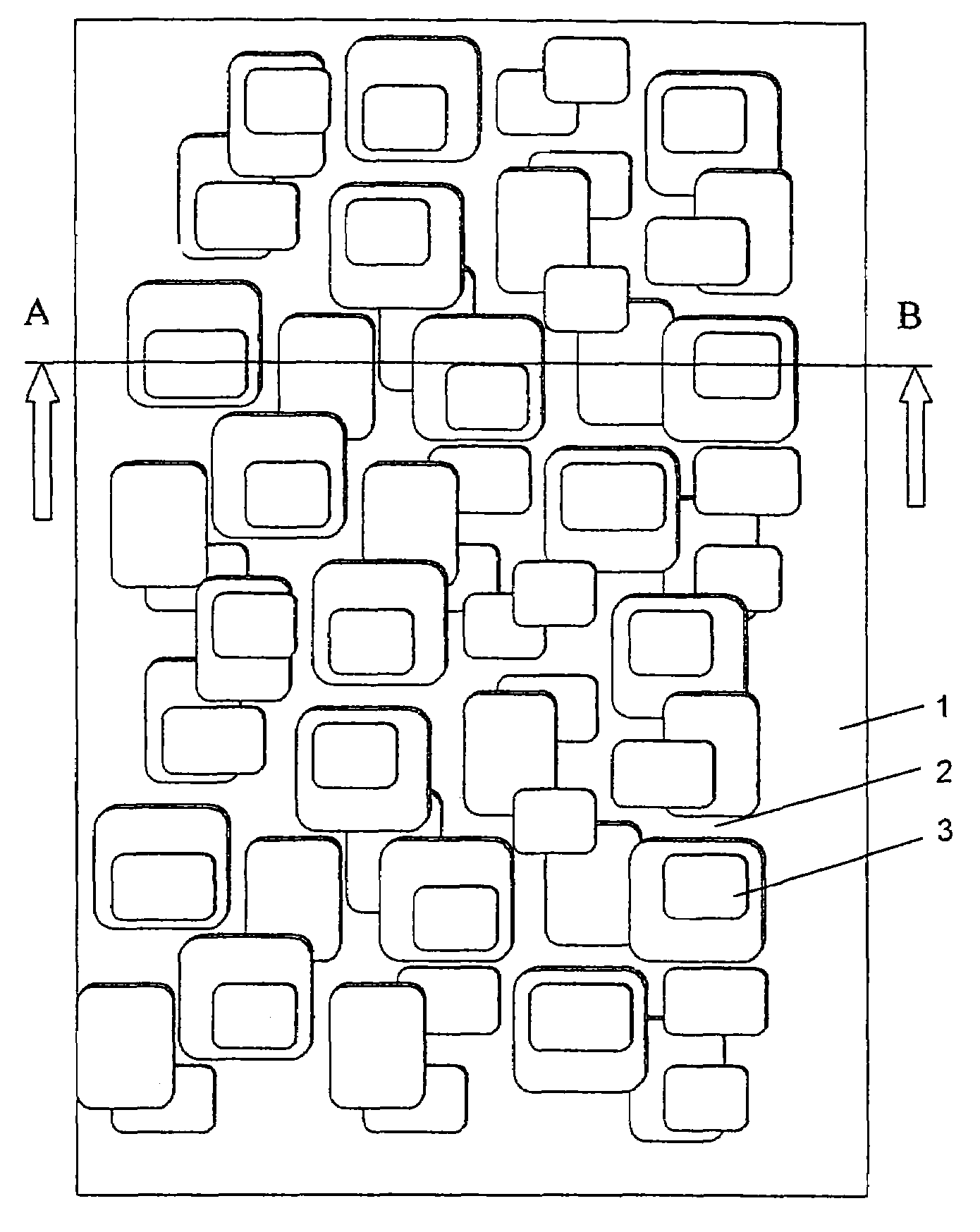
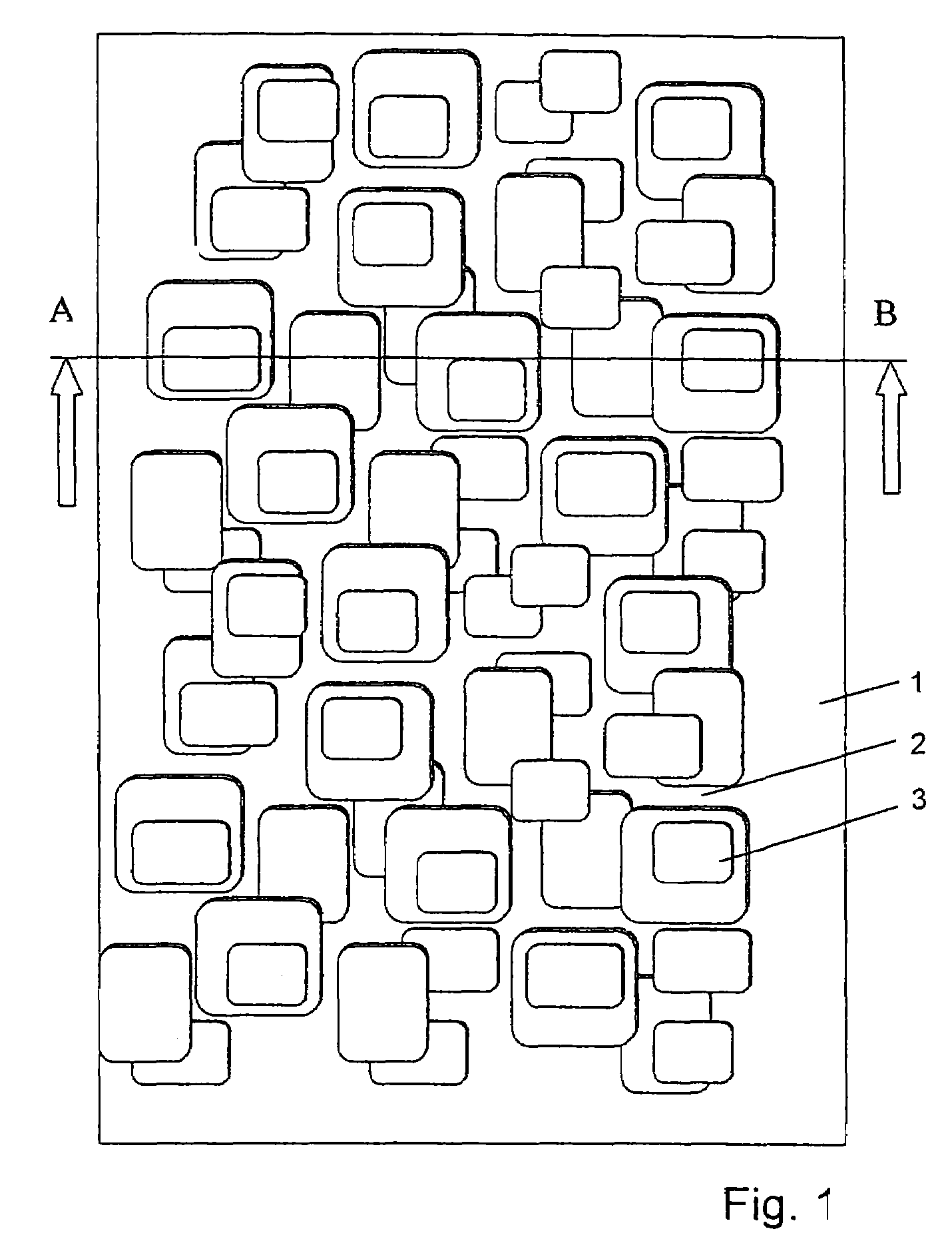
[0015]In the plan view, FIG. 1 shows a detail of floor covering 1 of an elastomer material. Thickness S of floor covering 1 is 3 mm. Its surface 2 is provided with unevenly distributed elevations 3, approximately 18 large (3.6 mm edge length), 10 medium (approximately 2.1 mm edge length), and 18 small (1.2 mm edge length) squares being arranged over 4 cm2. Alternatively, rectangles may also be used, whose length-to-width ratio is 5:1 at a maximum. Thus, a special case of such a rectangle is the square having a length-to-width ratio of 1:1.
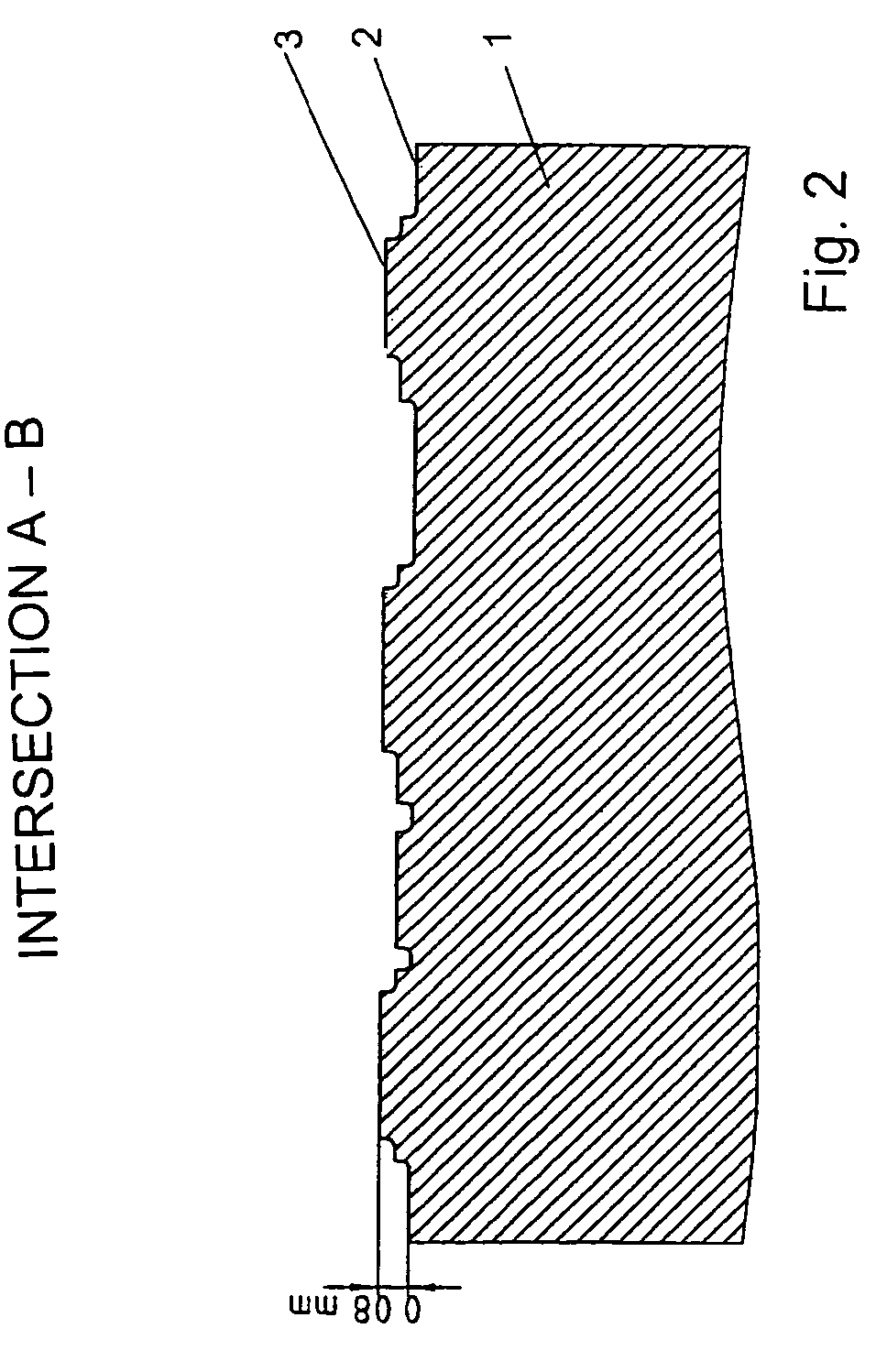
[0016]FIG. 2 shows the cross section along the line of intersection A-B of floor covering 1 of an elastomer material. Height H of unevenly distributed and partially overlapping elevations 3 on surface 2 of floor covering 1 is up to 0.08 mm.
PUM
| Property | Measurement | Unit |
|---|---|---|
| heights | aaaaa | aaaaa |
| heights | aaaaa | aaaaa |
| heights | aaaaa | aaaaa |
Abstract
Description
Claims
Application Information
 Login to View More