
Current bus and power lead assemblies for solid oxide fuel cell generators
a fuel cell and current bus technology, applied in the direction of electrochemical generators, cell components, cell component details, etc., can solve the problems of inability to meet the requirements of fuel cell cooling, etc., to achieve the effect of increasing the degree of relative motion
- Summary
- Abstract
- Description
- Claims
- Application Information
AI Technical Summary
Benefits of technology
Problems solved by technology
Method used
Image

Examples
Embodiment Construction
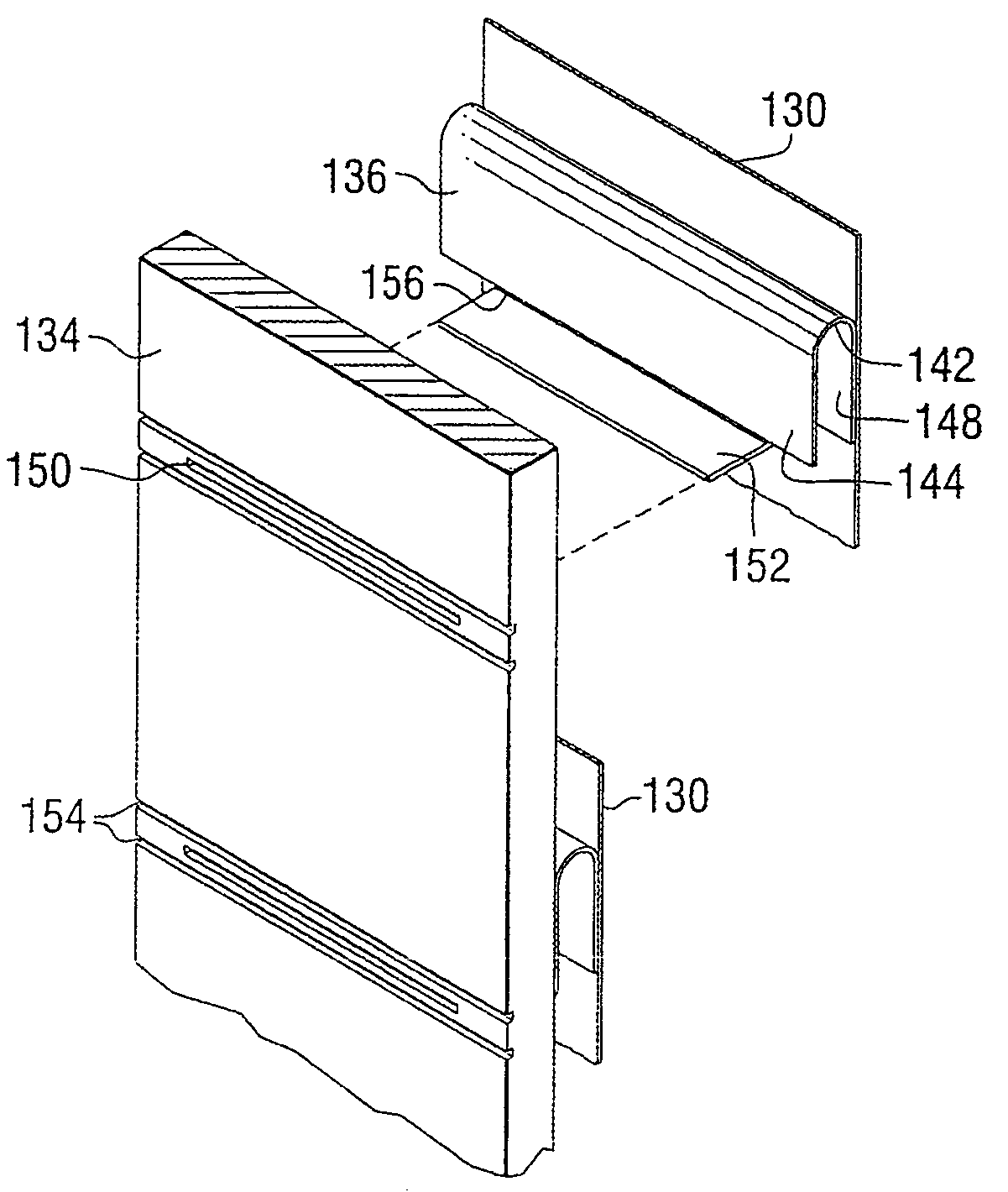
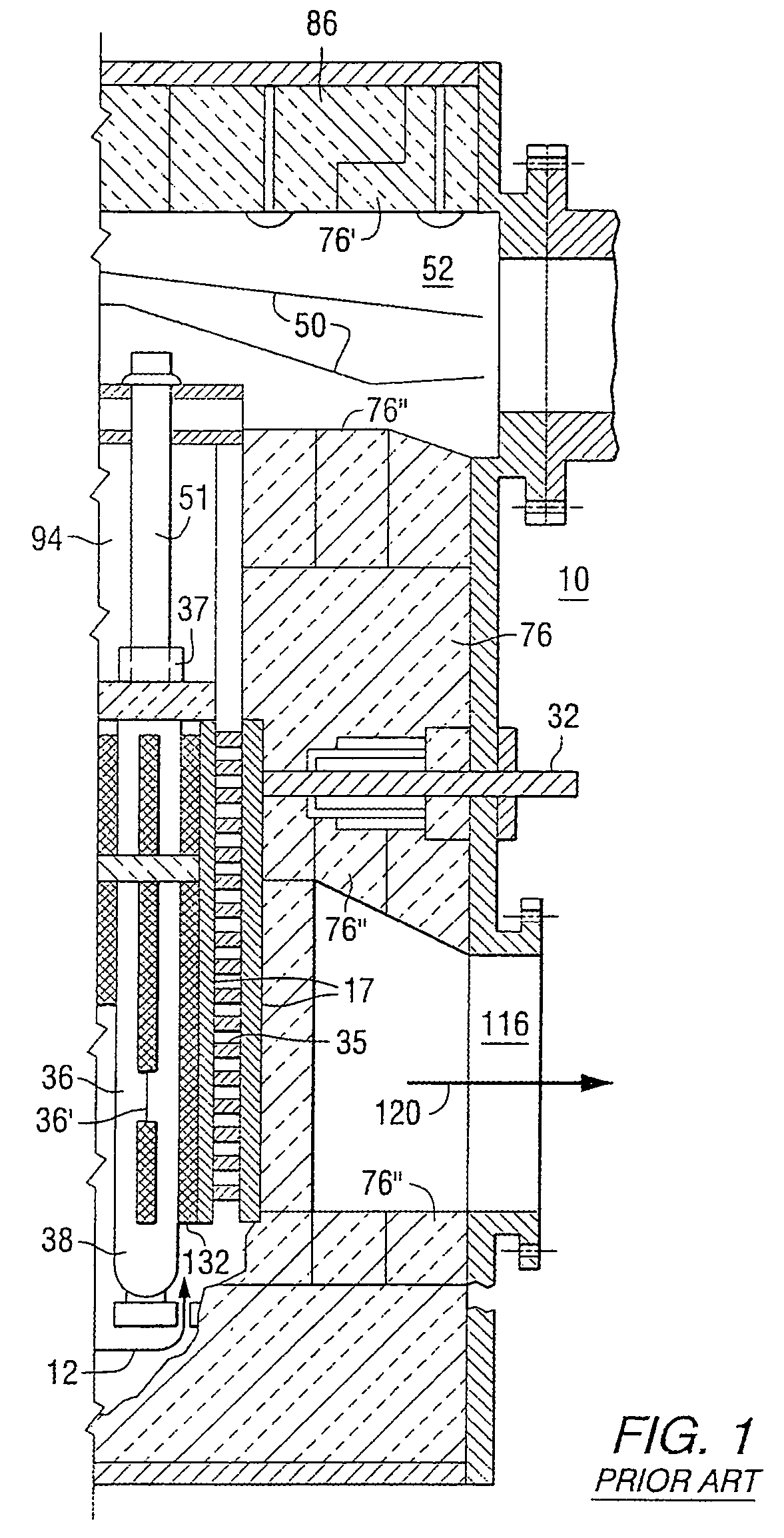
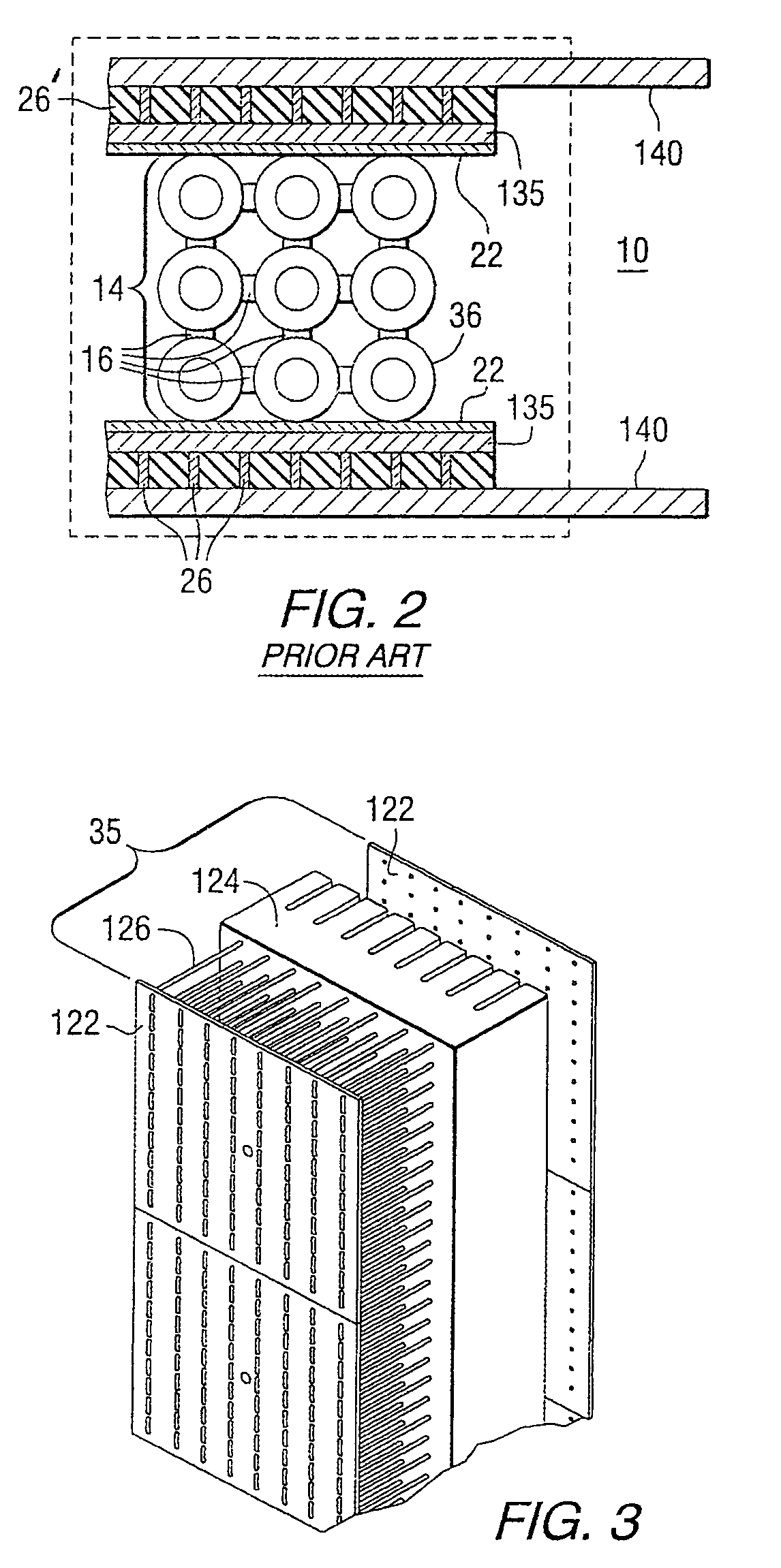
[0036]In order to better understand the preferred embodiments of this invention, it is advantageous to regress and discuss some similarities and dissimilarities vs. previous designs. Referring now to prior art FIG. 1, a side section of a solid oxide fuel cell generator 10 is shown. It contains a plurality of fuel cell stacks of fuel cells 36. Each fuel cell, in this embodiment, is in hollow, axially elongated form, preferably tubular as shown, having an open top end 37 and, as shown in this embodiment, a closed bottom end 38. Use of dual open ended fuel cells is also an option. The fuel cells contain interior self supporting air electrodes, usually of a nickel zirconia cermet, with solid electrolyte, usually comprising yttria stabilized zirconia, there between, as is well known in the art. The fuel cells operate on a feed oxidant 50, usually pre-heated air, and reformed fuel 12, usually internally or externally reformed to provide H2+CO anode gas, shown at the bottom of FIG. 1. The ...
PUM
| Property | Measurement | Unit |
|---|---|---|
| thickness | aaaaa | aaaaa |
| temperatures | aaaaa | aaaaa |
| thick | aaaaa | aaaaa |
Abstract
Description
Claims
Application Information
 Login to View More