
Systems and methods for backlighting image displays
a technology of image display and backlighting, which is applied in the field of image display, can solve the problems of compromising the battery life of a portable information handling system, and consuming more power than a single lamp, so as to increase the brightness of the display, increase the battery life, and increase the brightness. the effect of the brightness rang
- Summary
- Abstract
- Description
- Claims
- Application Information
AI Technical Summary
Benefits of technology
Problems solved by technology
Method used
Image

Examples
Embodiment Construction
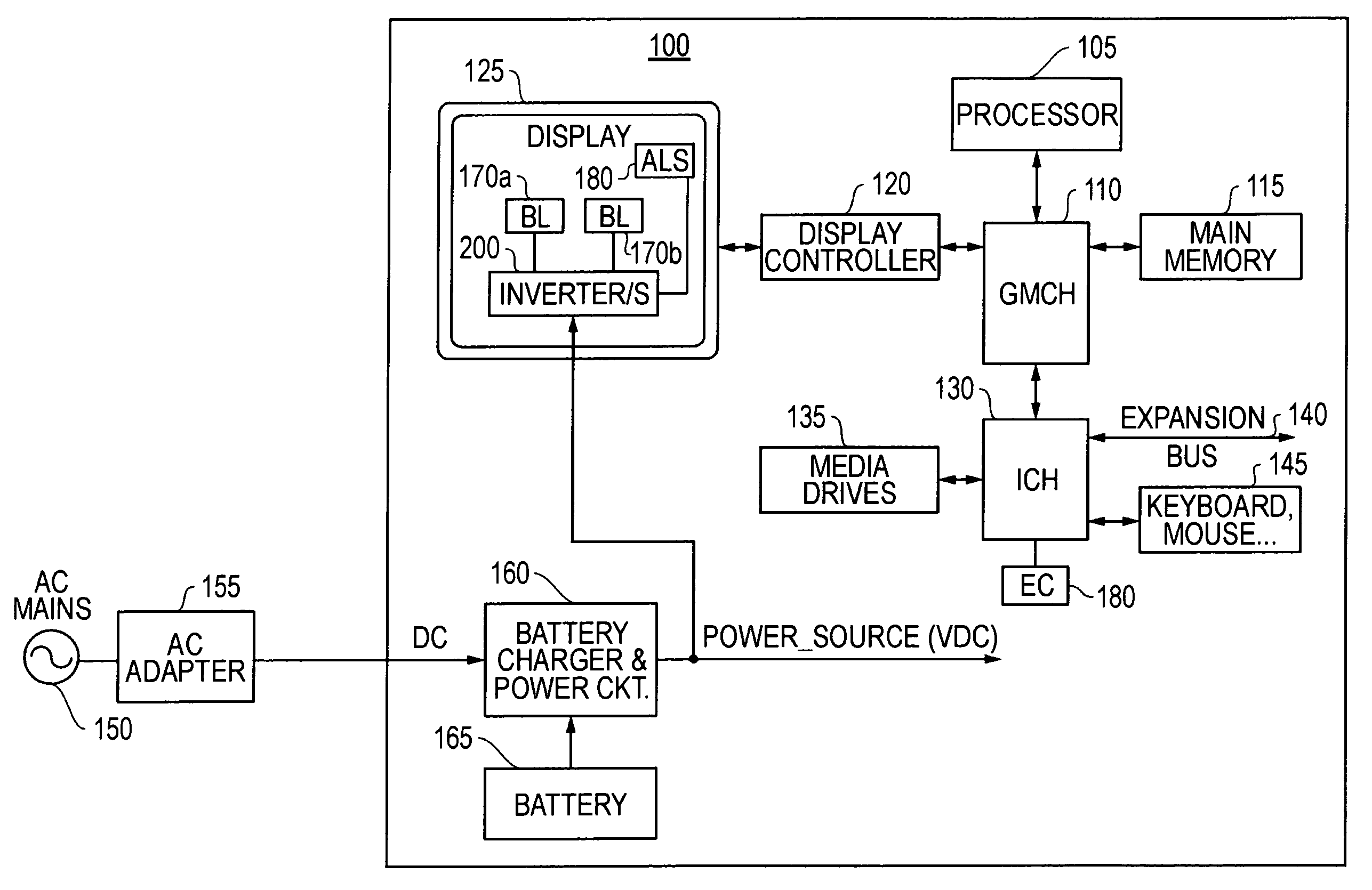
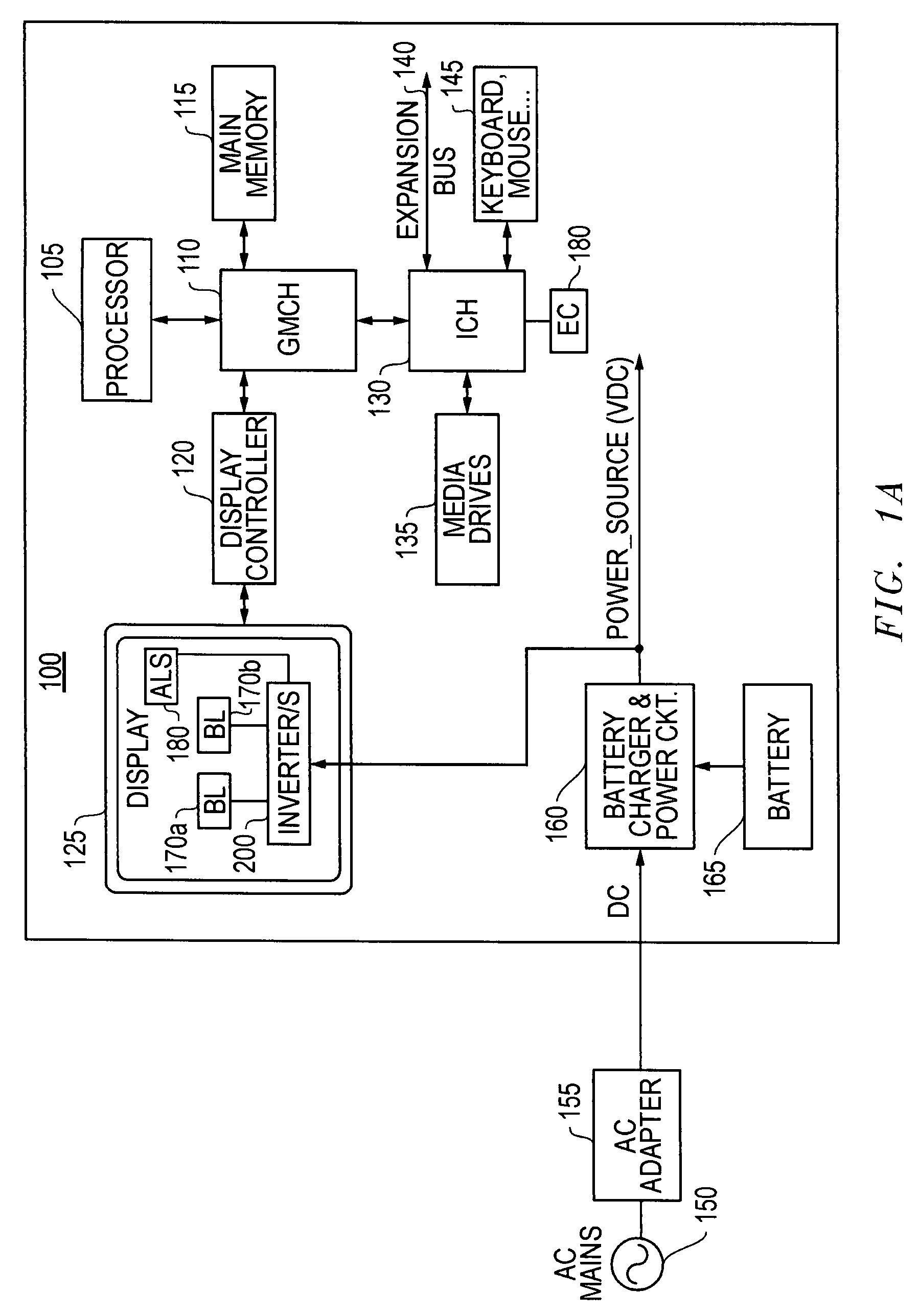
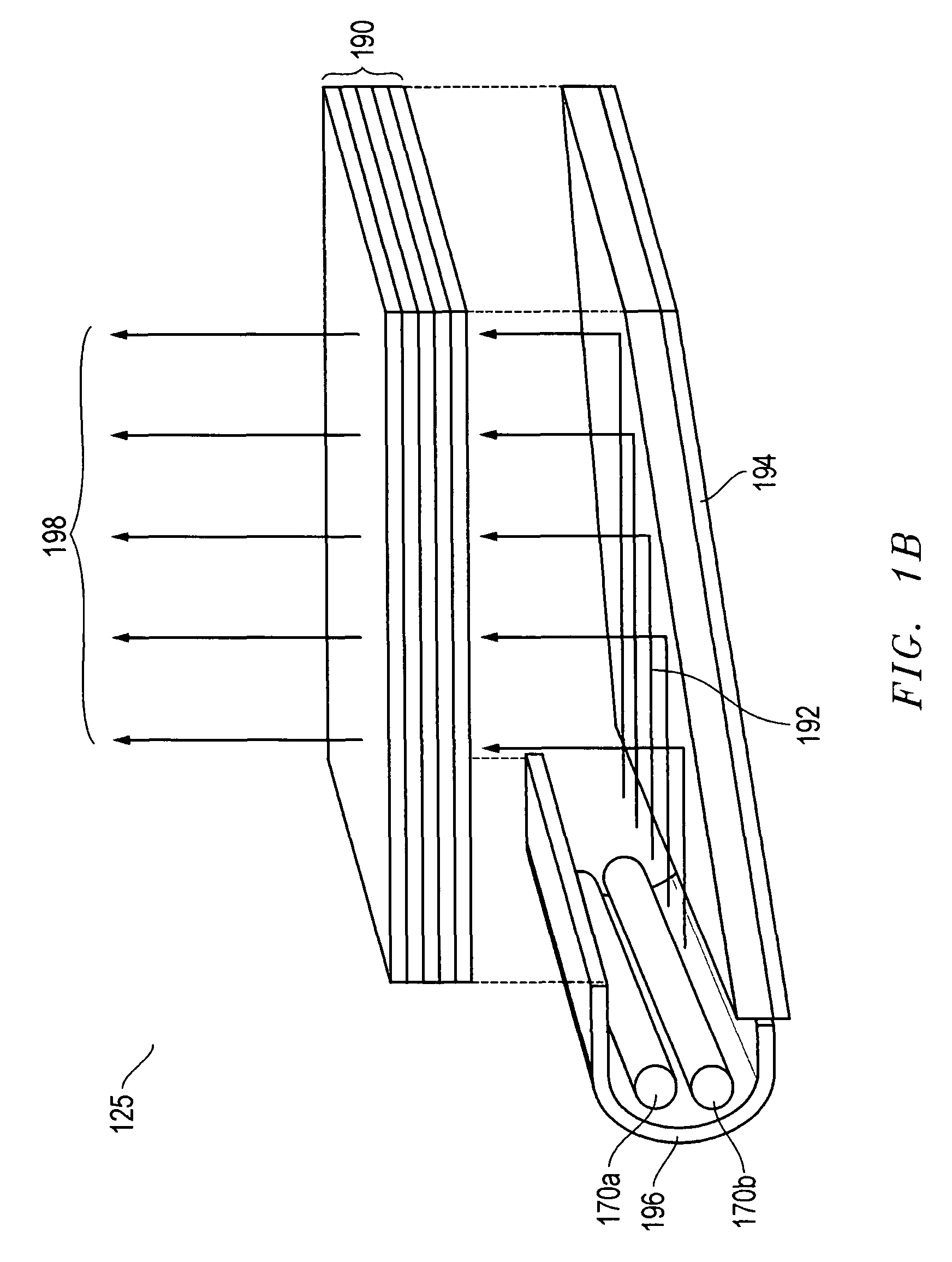
[0024]FIG. 1A is a block diagram of an information handling system 100 as it may be configured according to one exemplary embodiment of the disclosed systems and methods. For purposes of this disclosure, an information handling system may include any instrumentality or aggregate of instrumentalities operable to compute, classify, process, transmit, receive, retrieve, originate, switch, store, display, manifest, detect, record, reproduce, handle, or utilize any form of information, intelligence, or data for business, scientific, control, entertainment, or other purposes. For example, an information handling system may be a personal computer, a PDA, a consumer electronic device, a network storage device, or any other suitable device and may vary in size, shape, performance, functionality, and price. The information handling system may include memory, one or more processing resources such as a central processing unit (CPU) or hardware or software control logic. Additional components of...
PUM
 Login to View More
 Abstract
Description
Claims
Application Information
 Login to View More