
Method for the production of a foamed slag in a metal bath
a metal bath and foaming technology, applied in the direction of manufacturing tools, lighting and heating apparatus, furniture, etc., can solve the problems of foaming of slag of this type, inability to liquefy and foam slag, and bubble formation, so as to facilitate the handling of the mixture
- Summary
- Abstract
- Description
- Claims
- Application Information
AI Technical Summary
Benefits of technology
Problems solved by technology
Method used
Image

Examples
Embodiment Construction
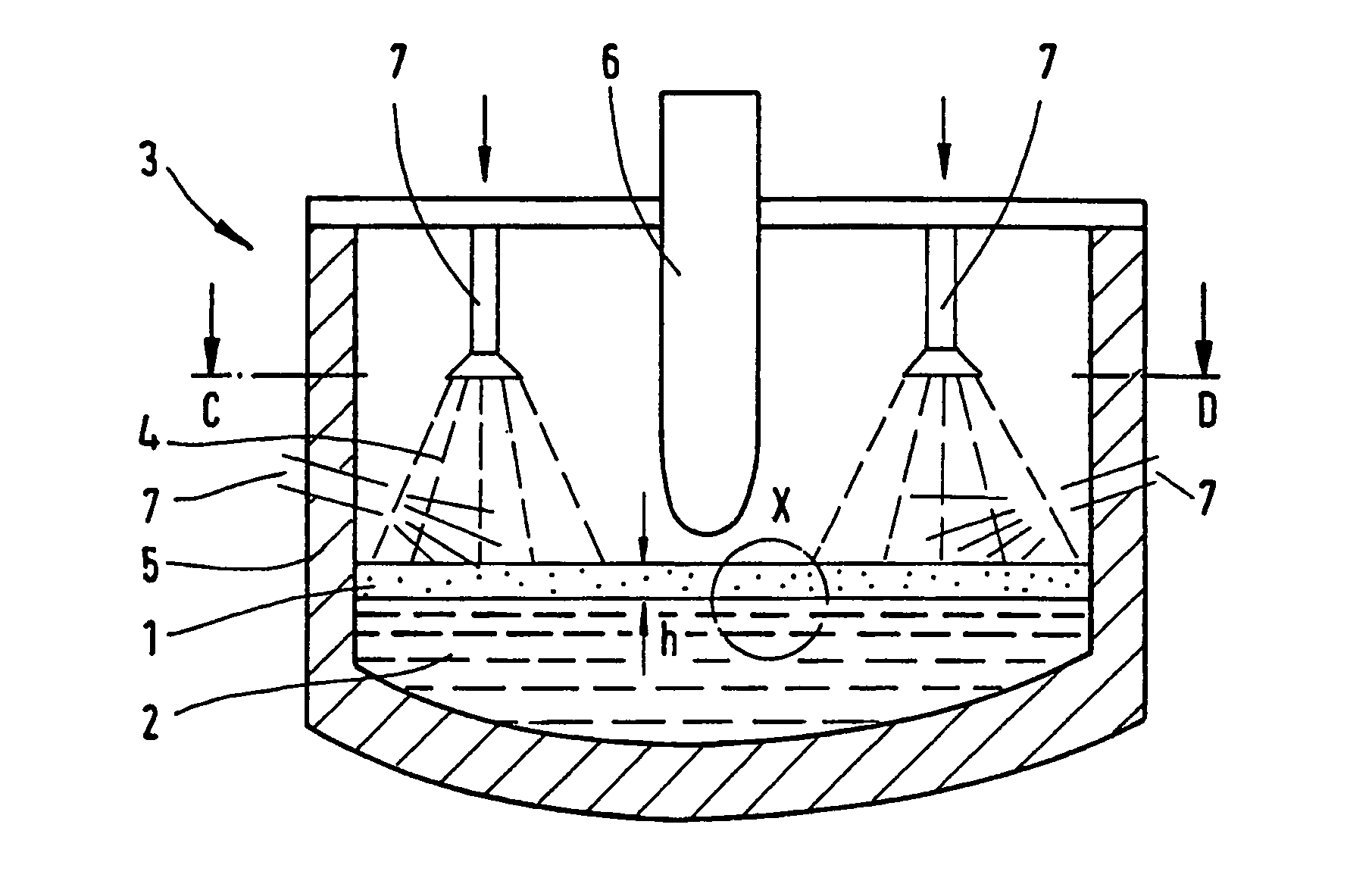
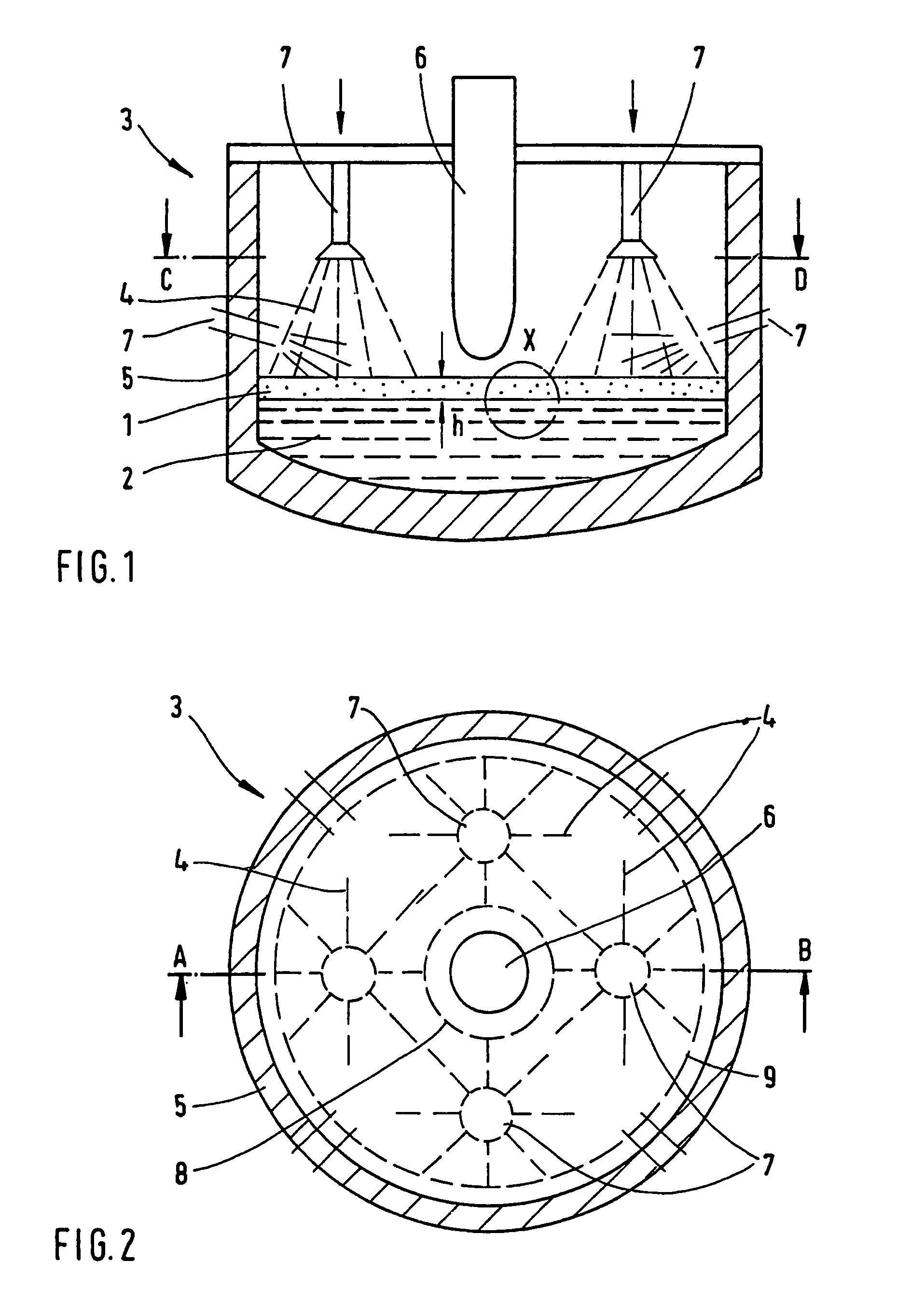
[0024]The electric arc furnace 3 illustrated in FIGS. 1 and 2 is used to melt a metal charge, i.e., to produce a metal bath 2. A layer of slag 1 is located on top of the metal bath 2. In the present case, the slag is to be foamed in order to realize the advantages cited above.
[0025]For this purpose, a mixture 4 that contains a metal oxide and carbon is added through suitable feeding devices 7. The mixture may also contain an iron-containing carrier material and a binder. The mixture is preferably compressed into briquettes or pellets. The broken lines running from the feeding devices 7 towards the metal bath 2 indicate how the pellets or briquettes are thrown down onto the surface of the slag or molten metal.
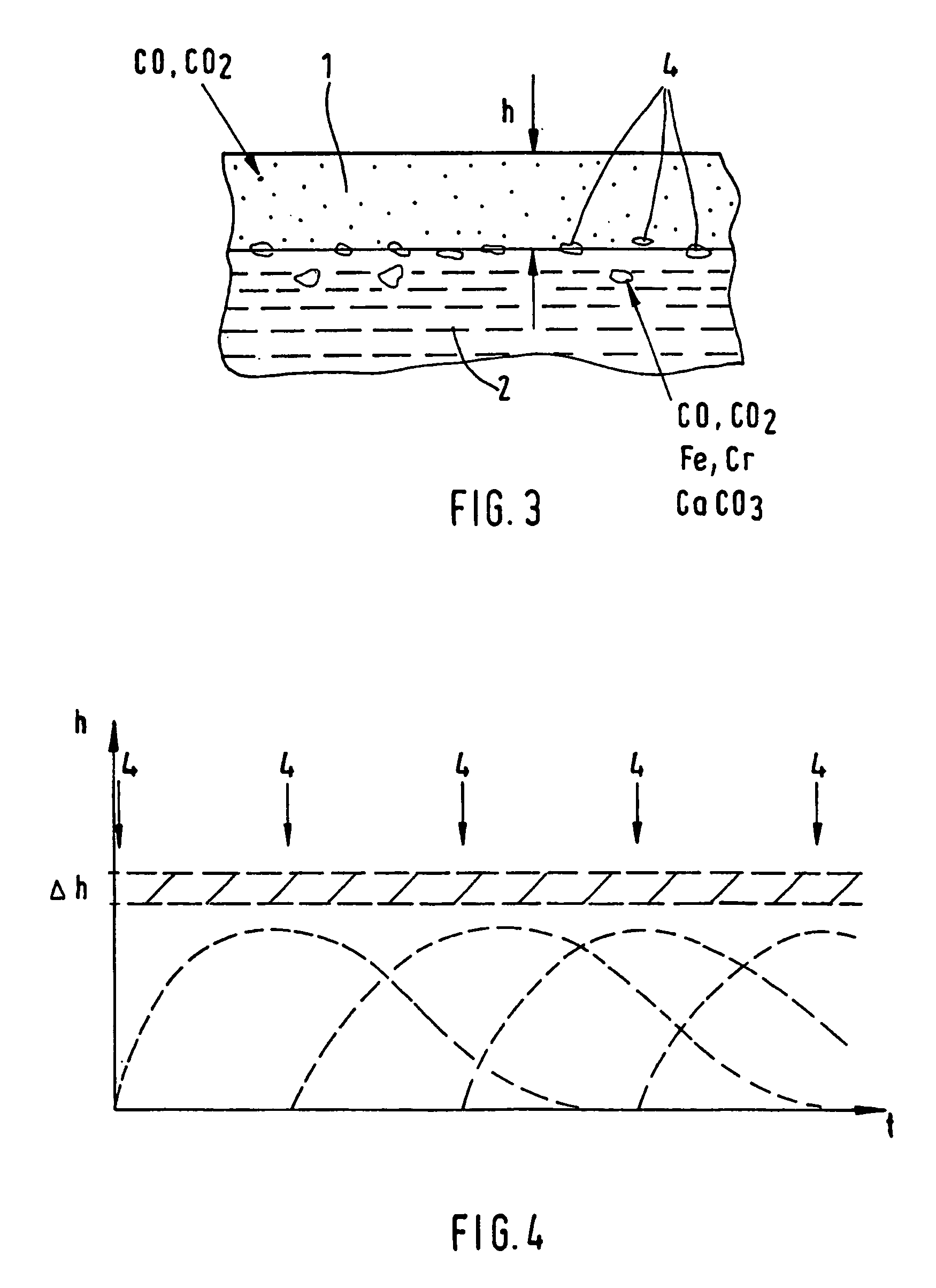
[0026]The specific gravity or compressed density of the mixture 4 is selected in such a way that optimum bubble formation occurs with respect to the intensity of the reaction and the duration of the process. In this regard, the specific gravity is selected in such a way that aft...
PUM
| Property | Measurement | Unit |
|---|---|---|
| height | aaaaa | aaaaa |
| heights | aaaaa | aaaaa |
| time | aaaaa | aaaaa |
Abstract
Description
Claims
Application Information
 Login to View More