Safety fastener for tissue apposition

a safe and fastener technology, applied in the direction of surgical staples, scarves, veterinary instruments, etc., can solve the problems of increasing the risk of collateral tissue damage during the procedure, tissue necrosis, and esophageal stricture, so as to prevent collateral tissue damage, and maintain compression force

US8114100B2Active Publication Date: 2012-02-14ETHICON ENDO SURGERY INC
21 Cites 1224 Cited by

Patent Information

Authority / Receiving Office
US · United States
Patent Type
Patents(United States)
Current Assignee / Owner
Publication Date
2012-02-14

Smart Images

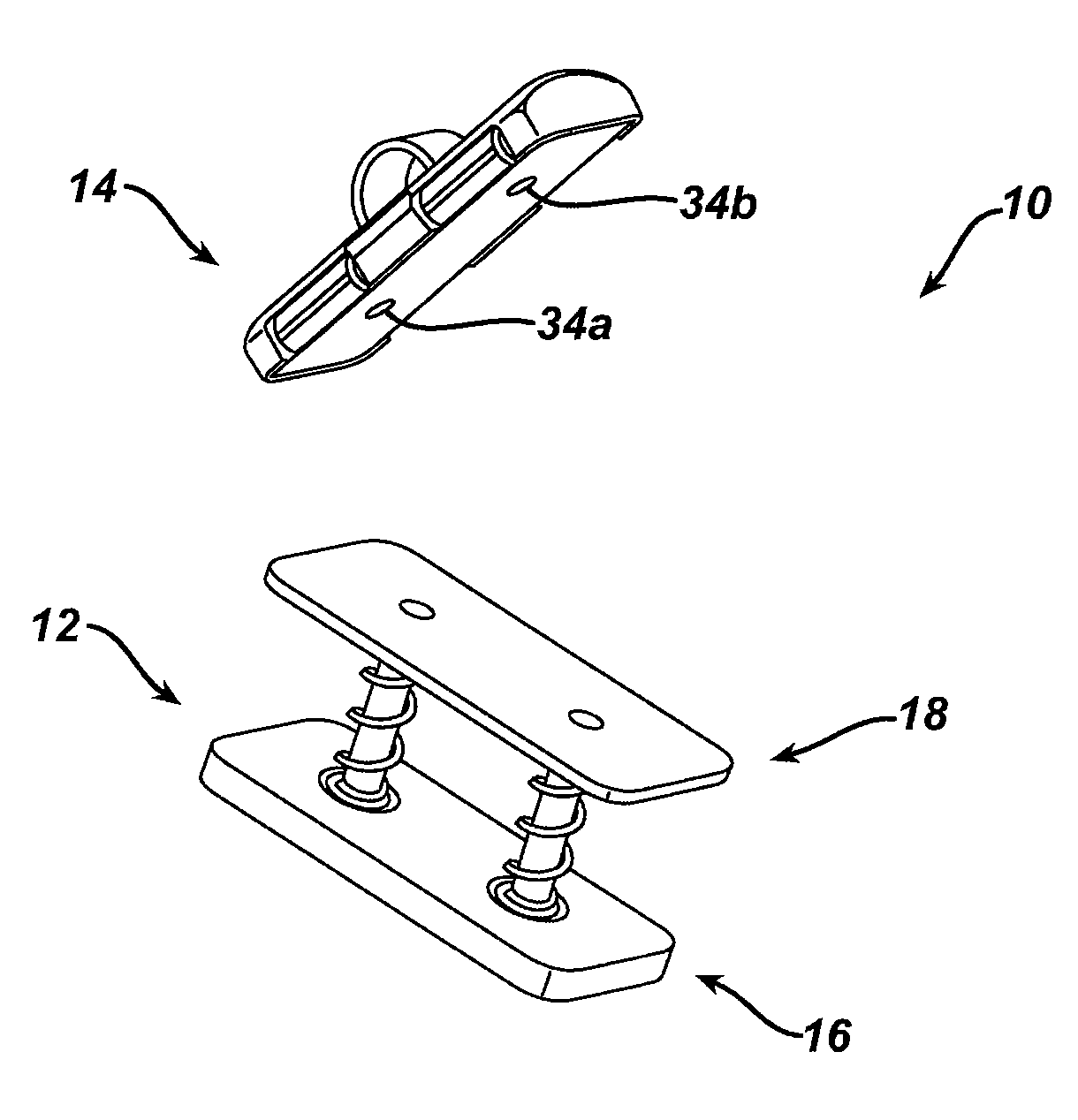
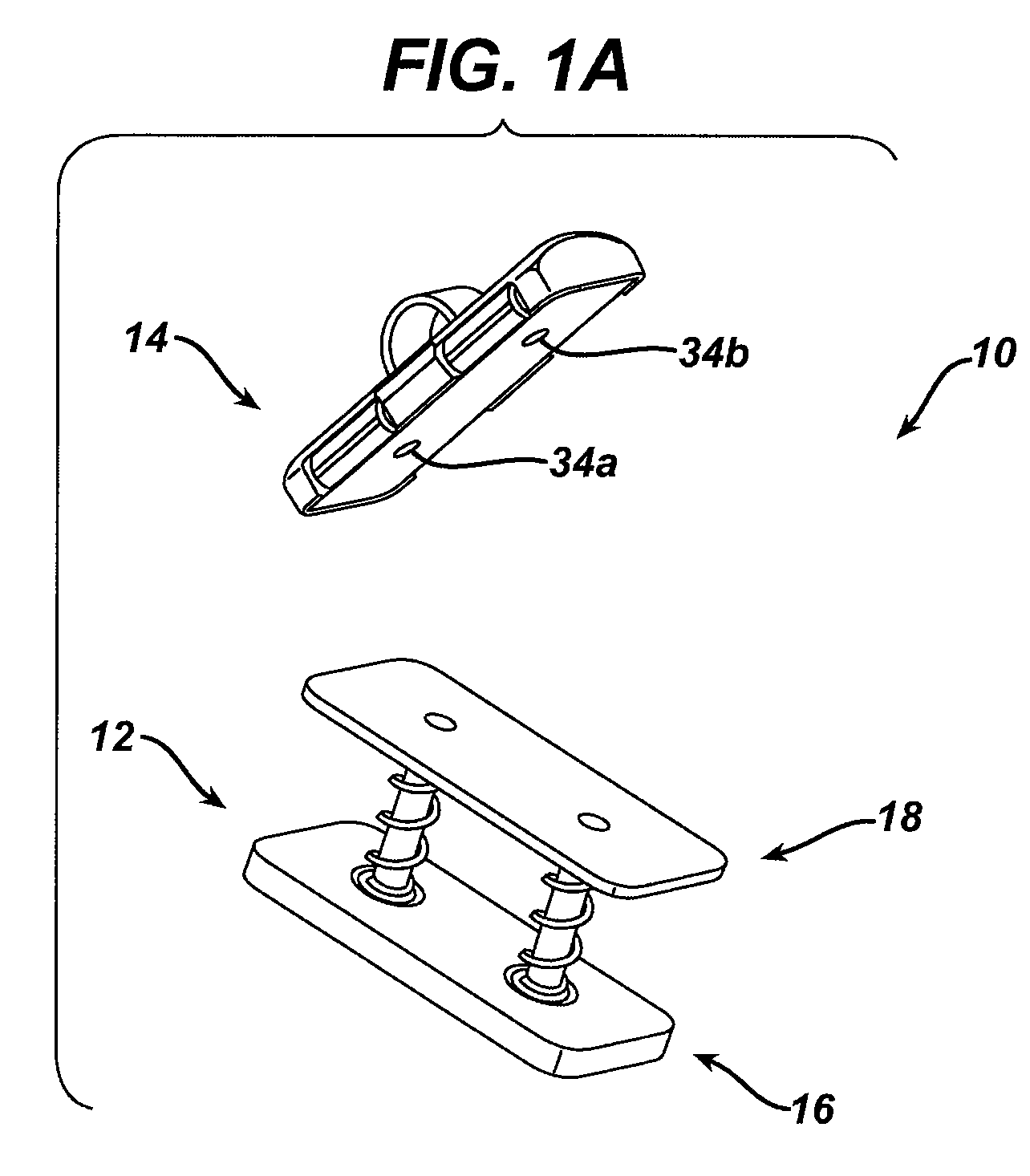
  • Figure 1
    Figure 1
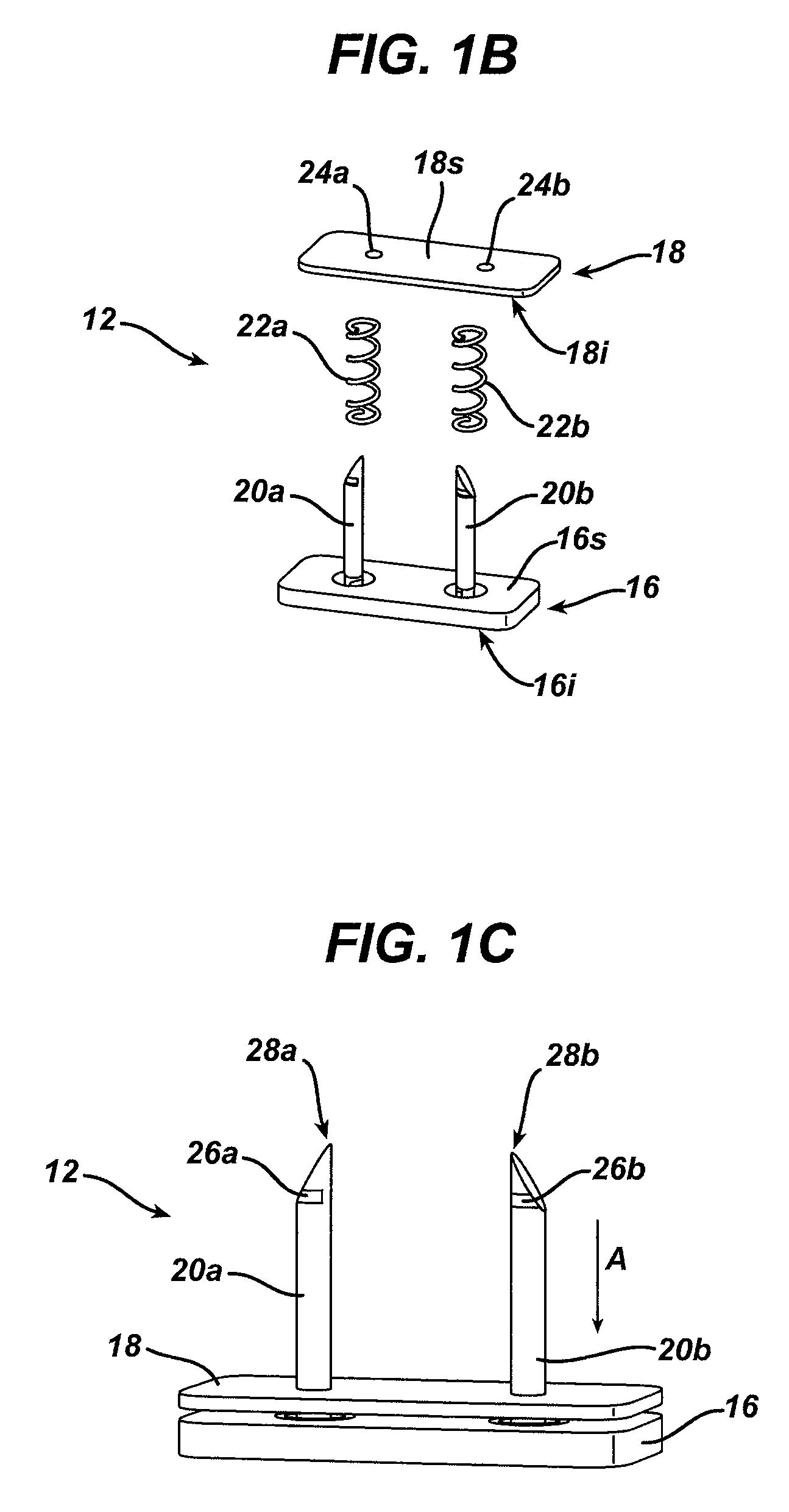
  • Figure 2
    Figure 2
  • Figure 3
    Figure 3
Patent Text Reader

Abstract

Methods and devices for fastening tissue are provided. In one exemplary embodiment, a tissue fastener is provided and includes a male fastening member having a base plate with at least one post extending therefrom and having a tissue-piercing tip. A protective member is coupled to the male fastening member and is movable between an open position in which the tissue-piercing tip is enclosed within the protective member such that the tissue-piercing tip is prevented from penetrating tissue, and a compressed position in which the tissue-piercing tip is exposed to penetrate tissue. A female fastening member is configured to mate to the male fastening member and to engage tissue therebetween.
Need to check novelty before this filing date? Find Prior Art

Description

FIELD OF THE INVENTION

[0001] The present invention relates to methods and devices for fastening tissue, and in particular to a fastener having a safety feature.BACKGROUND OF THE INVENTION

[0002] Gastroesophageal reflux disease (GERD) or persistent heartburn is caused by an improper relaxation of the lower esophageal sphincter (LES) that allows the frequent regurgitation of acidic stomach contents into the esophagus. If left untreated, chronic reflux may cause esophageal stricture, bleeding ulcers, perforation, and scarring. Continued reflux may cause changes in the cells that make up the esophagus, which can in turn lead to cancer. The current mode of treatment is primarily pharmacological, starting with antacids and progressing to proton pump inhibitors (PPIs). The pharmacological treatment ends with double and triple dosing of PPIs. At the point that the patient is not responding to PPIs, a surgical procedure to tighten the LES and make it less compliable is often recommended.

[0003] O...

Examples

Embodiment Construction

[0024]Certain exemplary embodiments will now be described to provide an overall understanding of the principles of the structure, function, manufacture, and use of the devices and methods disclosed herein. One or more examples of these embodiments are illustrated in the accompanying drawings. Those of ordinary skill in the art will understand that the devices and methods specifically described herein and illustrated in the accompanying drawings are non-limiting exemplary embodiments and that the scope of the present invention is defined solely by the claims. The features illustrated or described in connection with one exemplary embodiment may be combined with the features of other embodiments. Such modifications and variations are intended to be included within the scope of the present invention.

[0025]Various exemplary methods and devices are provided for fastening tissue. In general, the methods and devices allow tissue to be fastened while preventing collateral tissue damage. In o...