
Angioplasty cutting device and method for treating a stenotic lesion in a body vessel
a cutting device and stenotic technology, applied in the field of medical devices, can solve the problems of recurrence of arterial blockage, and achieve the effects of simple, efficient and cost effective, and reducing the likelihood of recurrence without the inherent risks of surgery
- Summary
- Abstract
- Description
- Claims
- Application Information
AI Technical Summary
Benefits of technology
Problems solved by technology
Method used
Image


Examples
Embodiment Construction
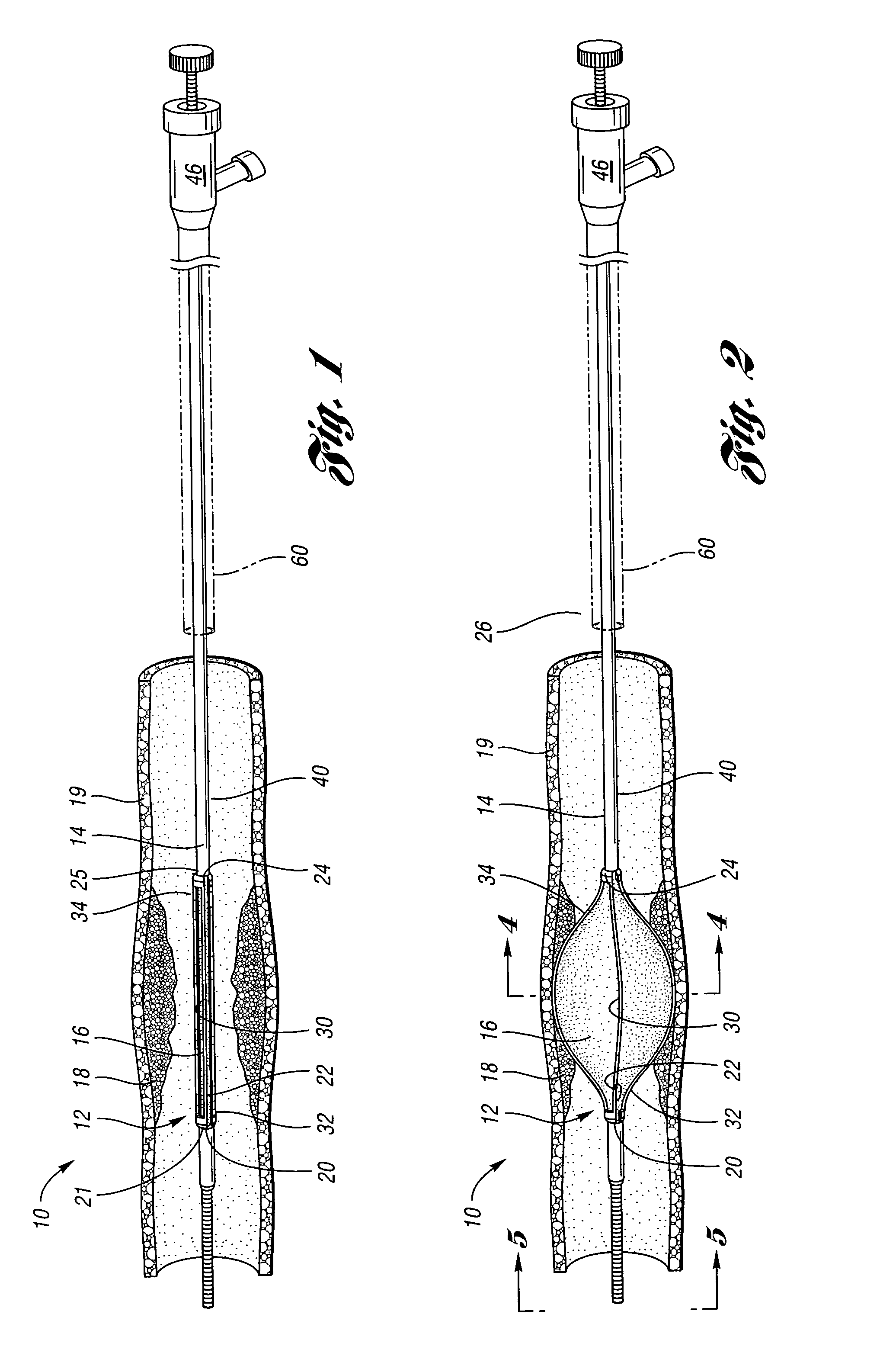
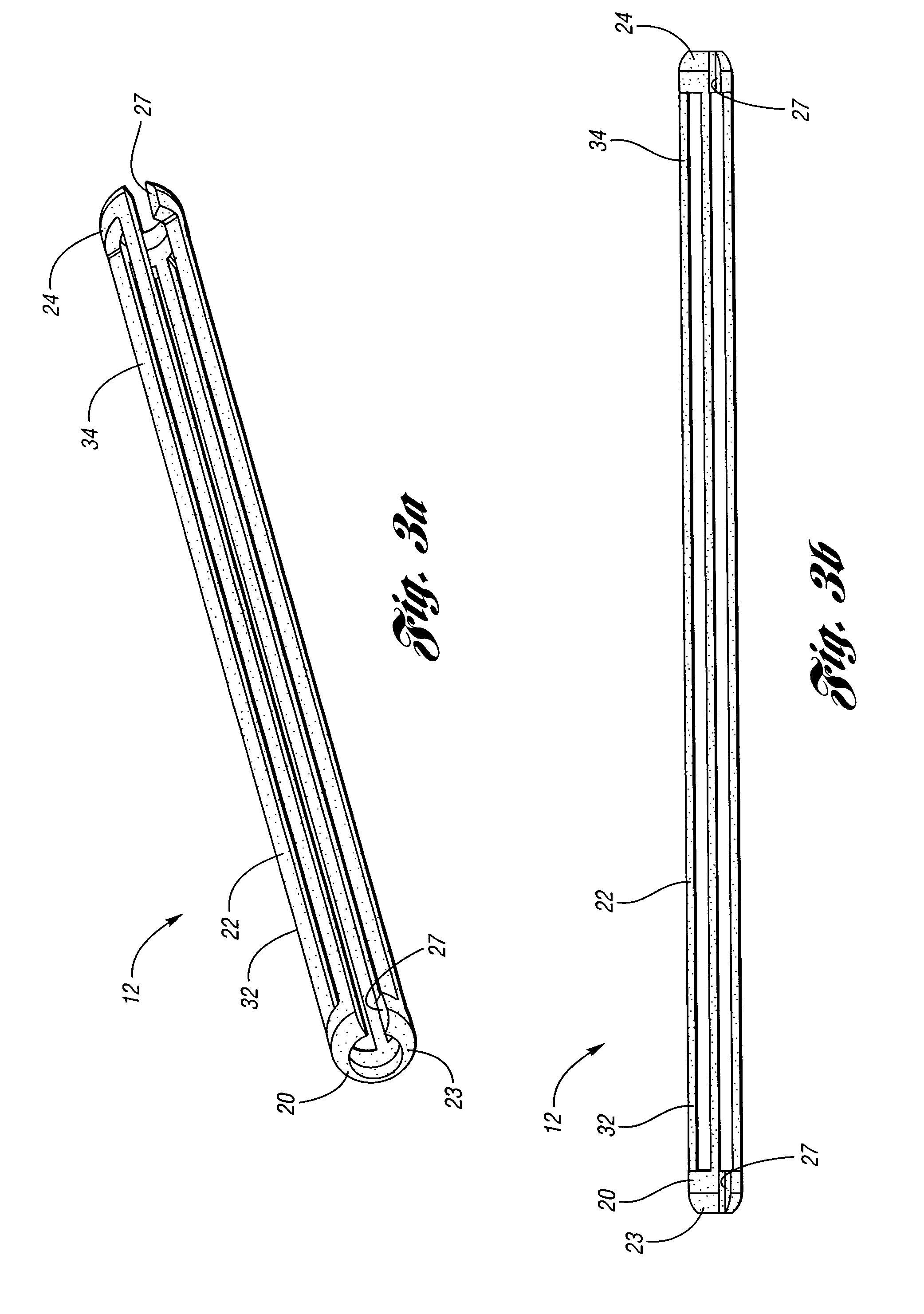
[0033]The present invention generally provides an improved cutting assembly, an integrally formed cutting device, and an improved method for treating a stenotic lesion of a body vessel. Embodiments of the present invention provide a more simple, efficient and cost effective way of treating atherosclerosis and stenosis of a body vessel. For example, the integrally formed cutting device includes distal and proximal collars having a C-shaped configuration and being integrated with a cutting body extending integrally therebetween. The device is configured to be disposed about one of a number of various-sized expandable balloons of a balloon catheter for angioplasty. The cutting body has one or a plurality of struts which expand as the expandable balloon is inflated. Each strut defines a focal point or a radial plane of fracture on the stenotic lesion whereat lacerations on the stenotic lesion are formed. Upon contact with the stenotic lesion, the struts break the plaque in a relatively ...
PUM
 Login to View More
 Abstract
Description
Claims
Application Information
 Login to View More