
Stimuli responsive compound, stimuli responsive compound polymer, actuator and method for manufacturing stimuli responsive compound
a technology of responsive compound and stimuli, applied in the direction of liquid crystal compositions, chemistry apparatus and processes, organic chemistry, etc., can solve the problems of many difficulties in high-speed response implementation, and achieve the effect of high deformation ra
- Summary
- Abstract
- Description
- Claims
- Application Information
AI Technical Summary
Benefits of technology
Problems solved by technology
Method used
Image

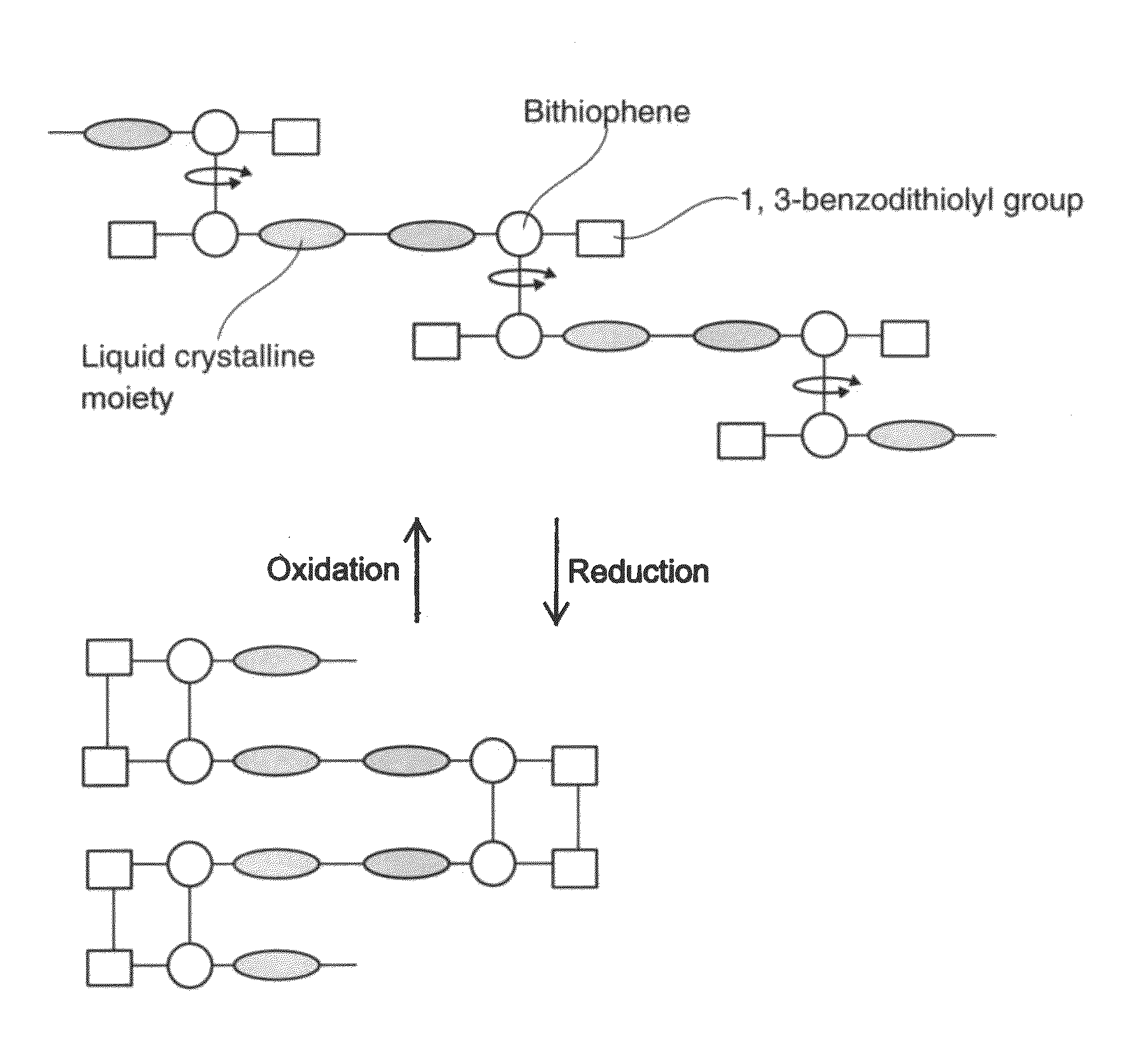
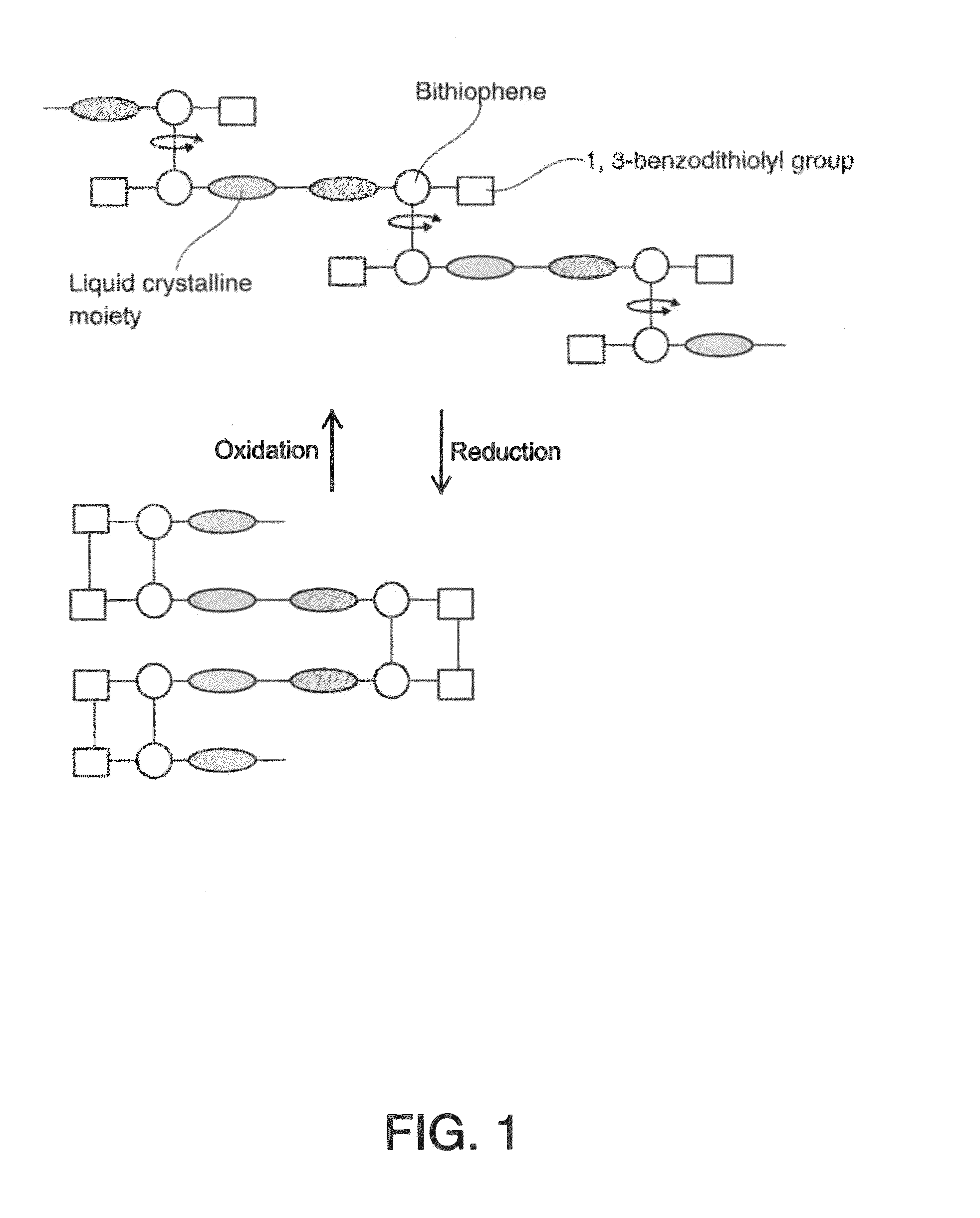
Examples
embodiment examples
[0044]The invention will be described below in greater detail using embodiment examples. However, it should be noted that the invention is not limited only to those embodiment example.
embodiment example
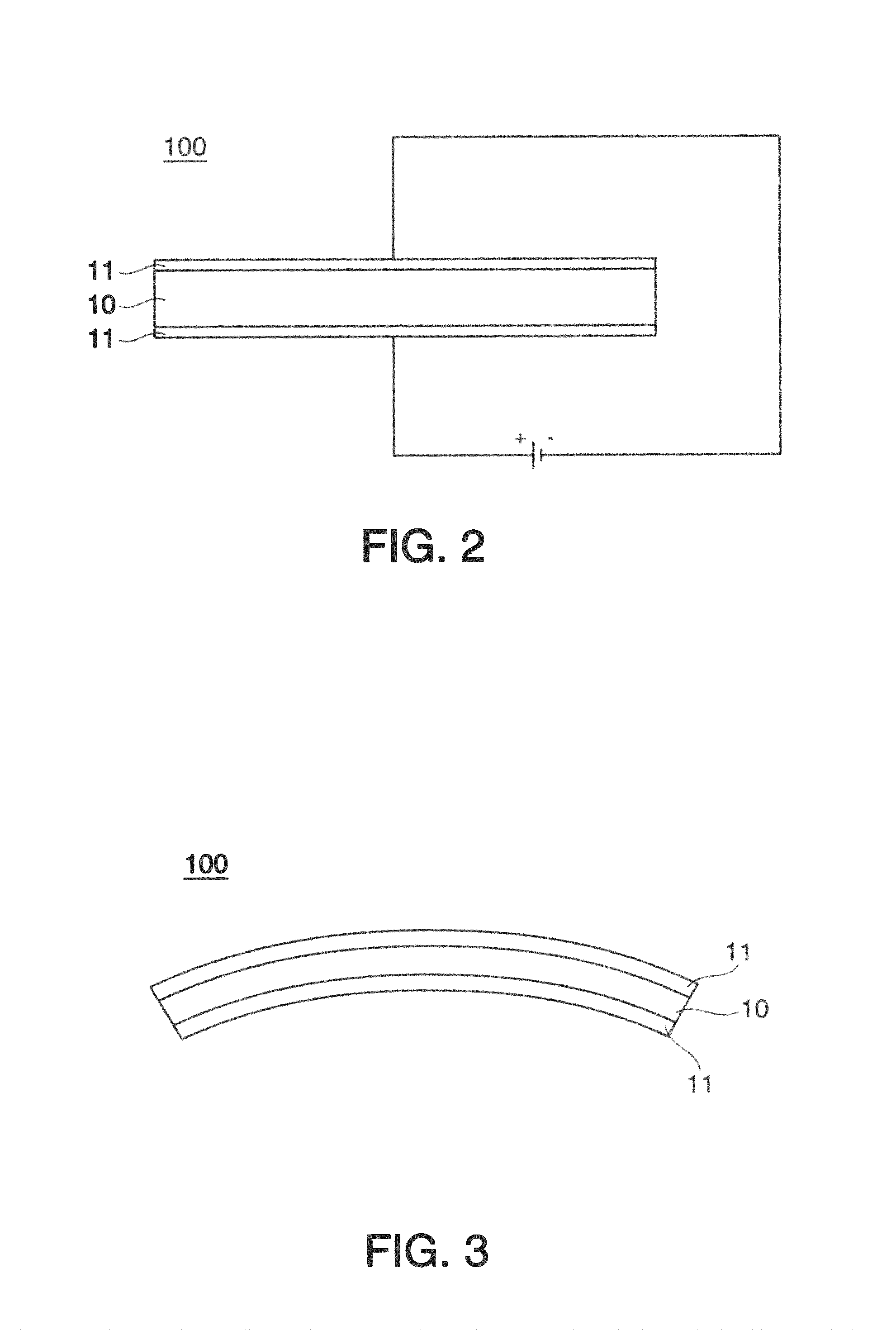
[0045]An actuator shown in FIG. 2 was manufactured, using the stimuli responsive compound. The actuator was obtained by the following procedure. Stimuli responsive compound was dissolved in a solvent to form a solution, the solution was coated and dried on a Petri dish to form a dried member, the dried member (a deforming layer) was cut into a size of 3 cm×2 cm, and gold was sputtered on two surfaces of the deforming layer by using a sputter machine for making a sample for a scanning electron microscope, with an applied current of 10 mA for 30 minutes per each surface. It is noted that the stimuli responsive compound was synthesized in the following manner.
Synthesis of Iodine Compound with Bithiophene Bonded to 1,3-Benzodithiolyl Groups
[0046]Dimerization and bromination using catalysts of zinc and nickel with bromo thiophene as a source material were conducted, and aldehyde groups were introduced (formylated) therein with DMF. Then, protection of the aldehyde groups was conducted, a...
PUM
| Property | Measurement | Unit |
|---|---|---|
| size | aaaaa | aaaaa |
| voltage | aaaaa | aaaaa |
| crystallinity | aaaaa | aaaaa |
Abstract
Description
Claims
Application Information
 Login to View More