
Plastic bottle with a champagne base and production method thereof
a technology of champagne base and plastic bottle, which is applied in the direction of bottles, containers, applications, etc., can solve the problems of stable bottle and relatively high weight of champagne base, and achieve the effects of reducing the weight of current base, constant weight, and increasing pressur
- Summary
- Abstract
- Description
- Claims
- Application Information
AI Technical Summary
Benefits of technology
Problems solved by technology
Method used
Image

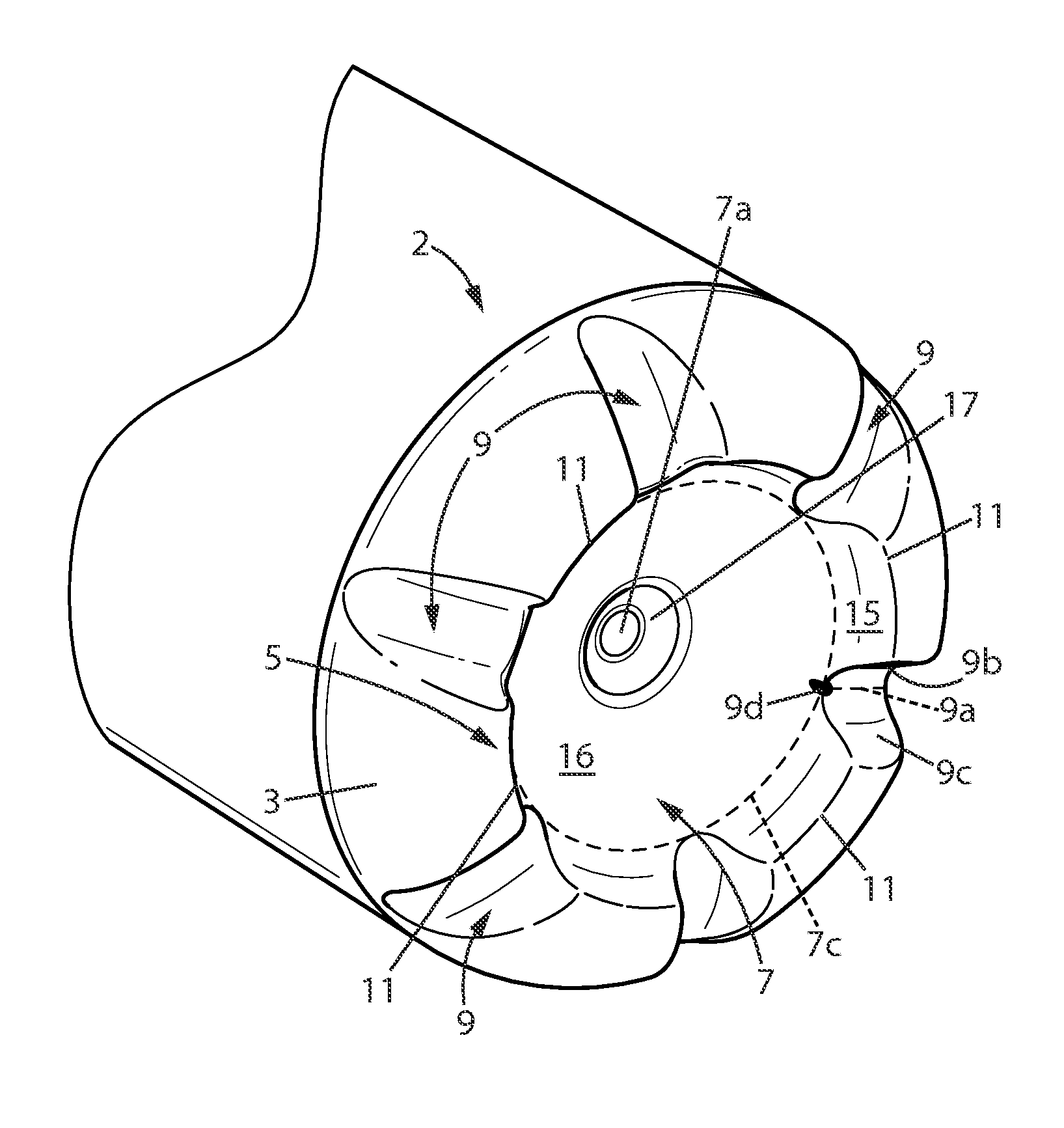
Examples
Embodiment Construction
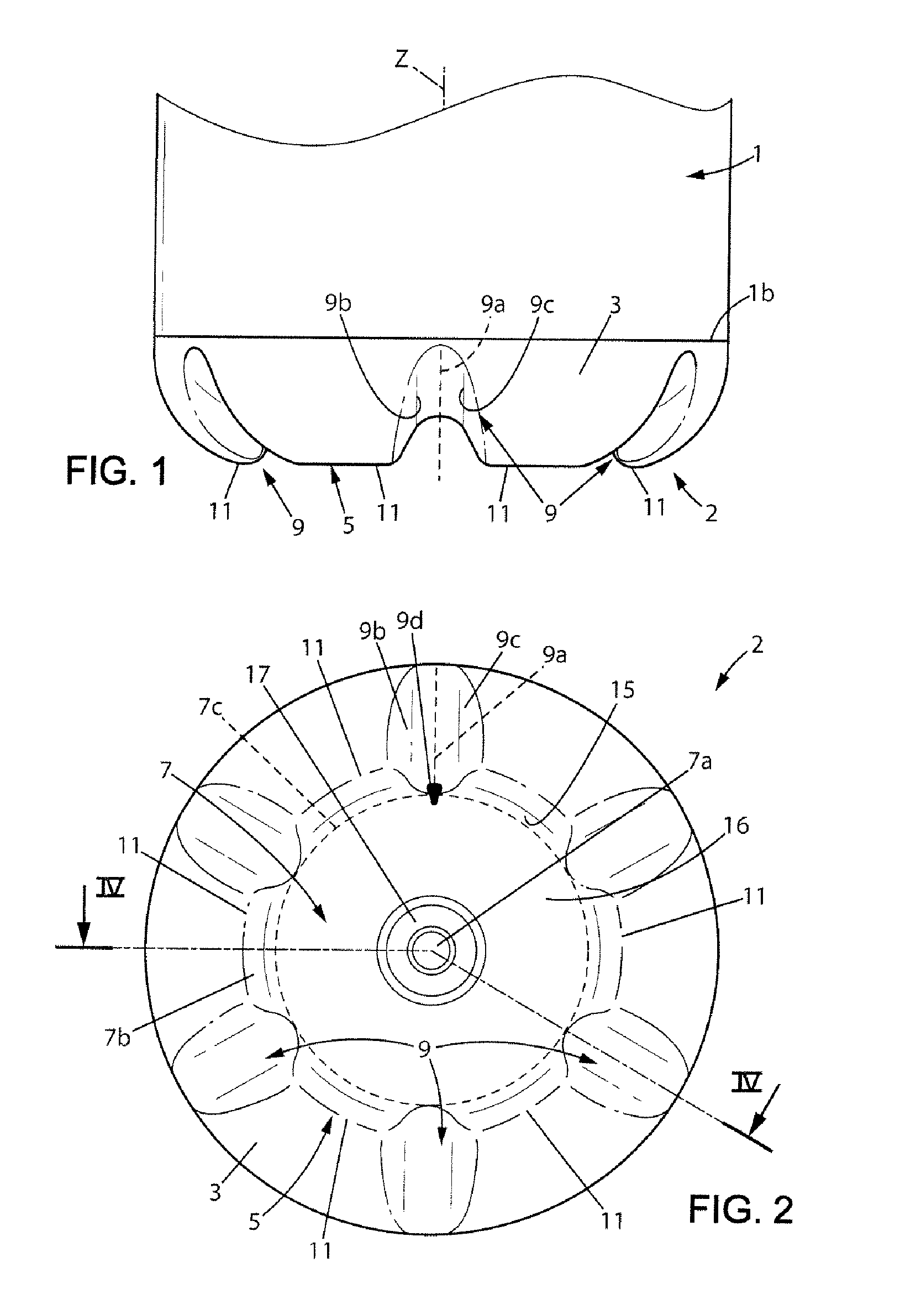
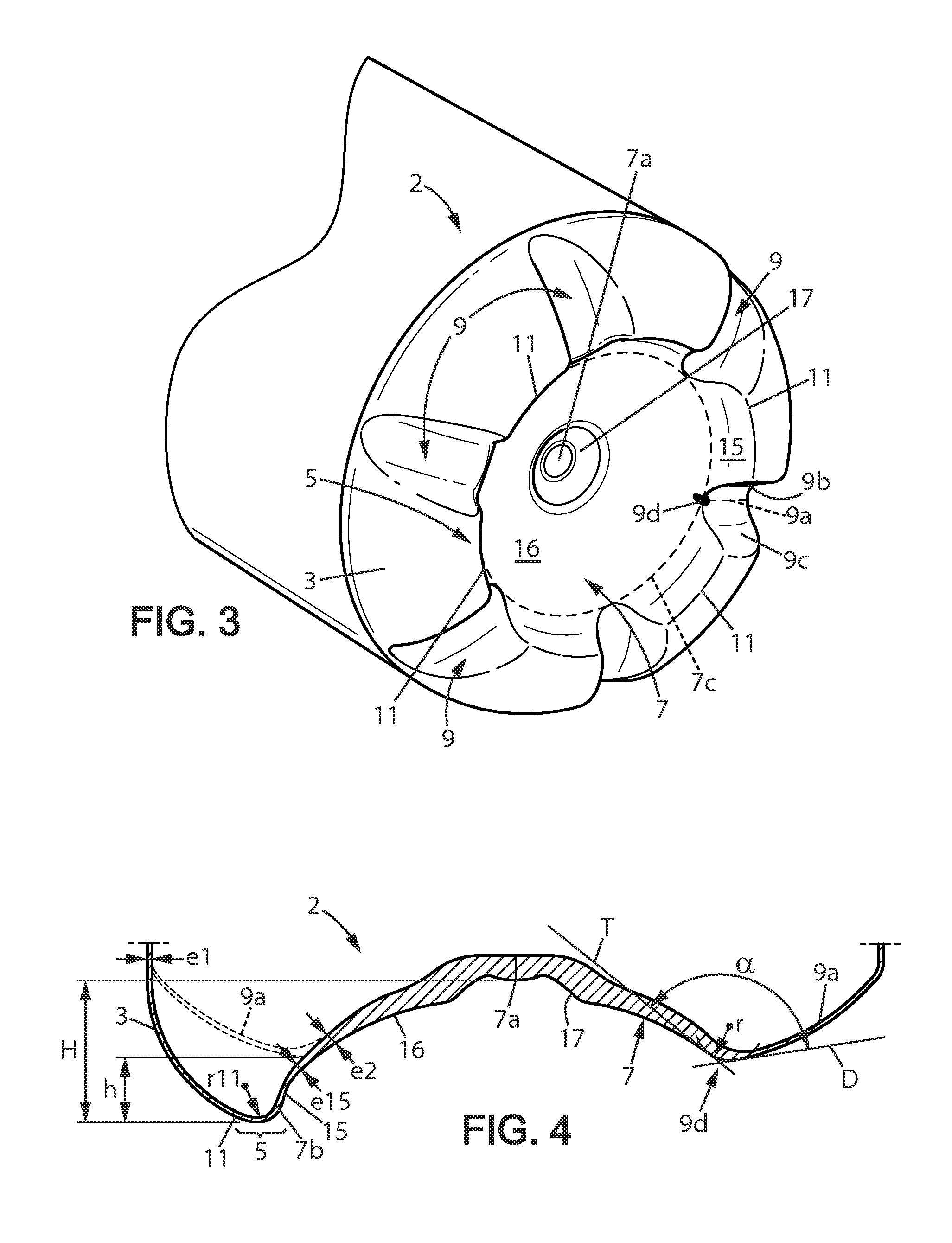
[0030]FIG. 1 represents partially a bottle designed to contain a carbonated drink. This bottle comprises a body 1 which extends longitudinally on a central vertical axis Z between a top end connected to a neck furnished with a closure system, not shown, and a lower end 1b. The lower end of the body 1b corresponds to the height of the body from which its cross section reduces in order to form a base 2. The body 1 has a uniform circular cross section, but it could comprise reliefs or flutes and consequently a cross section that is not constant over its whole height.
[0031]As can be better seen in FIG. 4, the body 1 is formed by a thin wall made of plastic, such as for example a polyester and more particularly PET. The body 1 has a thickness e1 hereinafter called the “predetermined thickness”, which is relatively reduced in order to economize on the plastic. As an example, in the embodiment shown, the predetermined thickness is 0.4 mm, but it could vary substantially depending on the in...
PUM
| Property | Measurement | Unit |
|---|---|---|
| angle | aaaaa | aaaaa |
| angle | aaaaa | aaaaa |
| angle | aaaaa | aaaaa |
Abstract
Description
Claims
Application Information
 Login to View More