
Photocatalytic nano composite catalyst and preparation method thereof
A nanocomposite and catalyst technology, applied in the field of photocatalytic nanomaterial synthesis, can solve the problems of low photocatalytic pure water splitting efficiency, high price, scarce reserves of precious metal catalysts, etc., and achieve good catalytic activity and stability, low price, The effect of mild reaction conditions
Patent Information
- Authority / Receiving Office
- CN · China
- Current Assignee / Owner
- Publication Date
- 2020-11-27
Smart Images
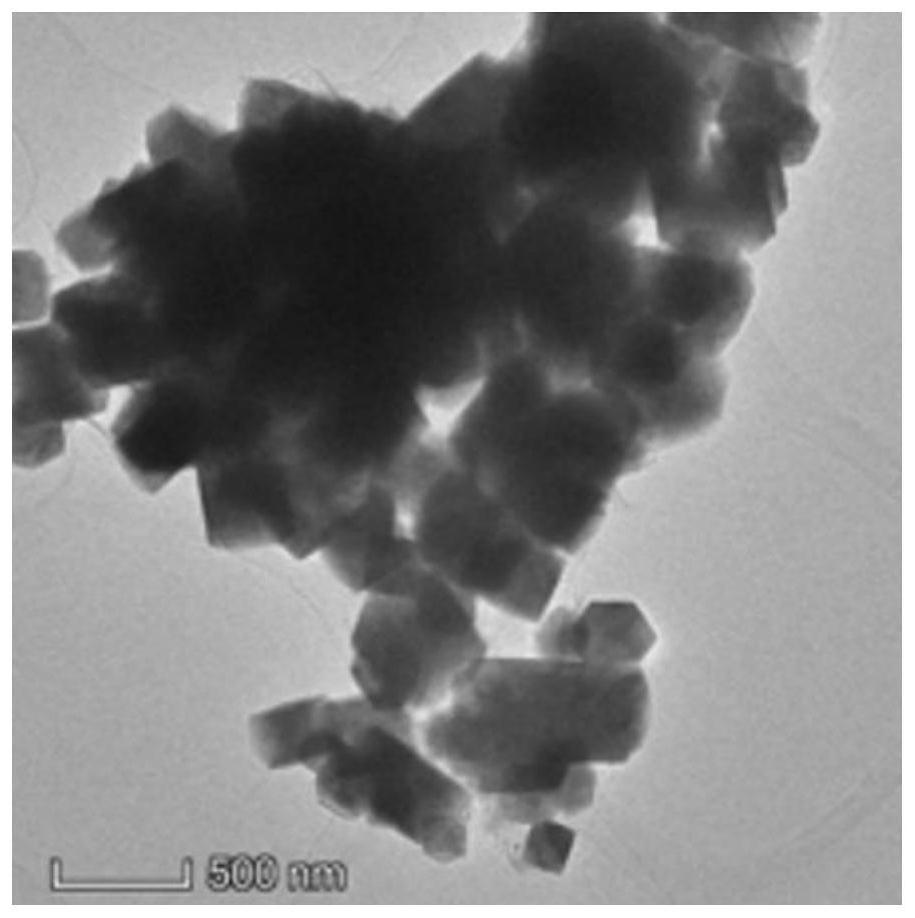
Figure 1 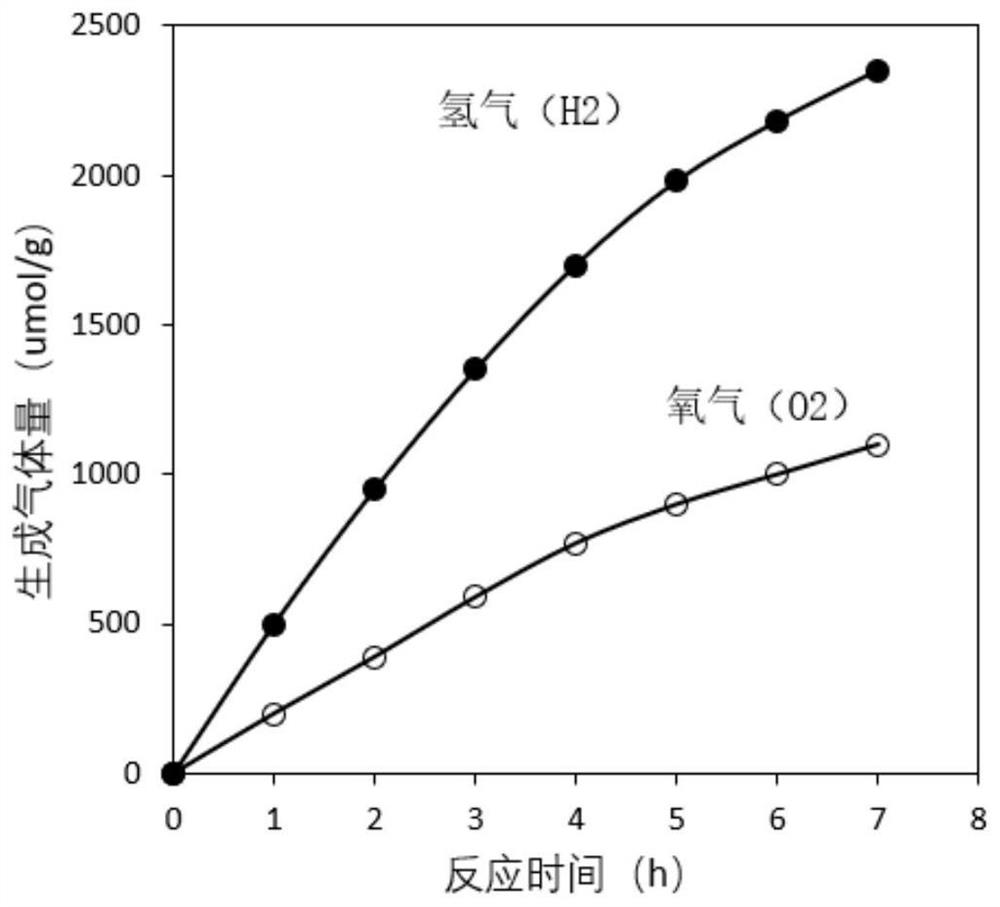
Figure 2
Abstract
Description
technical field
[0001] The invention belongs to the technical field of synthesis of photocatalytic nanomaterials, in particular to a photocatalytic nanocomposite catalyst and a preparation method thereof. Background technique
[0002] Semiconductor photocatalysis can facilitate a variety of difficult chemical reactions under mild conditions, such as photocatalytic degradation of organic matter, photocatalytic synthesis of ammonia, methanol and other high value-added chemical raw materials, photocatalytic water splitting, etc. A key technology for converting photon energy into chemical energy. Due to its high combustion calorific value and environmental friendliness, hydrogen is considered to be a clean alternative energy source. 2 mol of water can be split into 2 mol of hydrogen and 1 mol of oxygen. When storable hydrogen energy is available, photocatalytic pure water splitting technology may replace the pure consumption mechanism of fossil fuels at a high level, so it has ...
Examples
Embodiment 1
[0025] A preparation method of a photocatalytic nanocomposite catalyst, comprising the following steps:
[0026] Weigh 0.008mol of lanthanum nitrate, 0.008mol of aluminum nitrate and 0.084mol of SrTiO, respectively 3 , mixed and ground in an agate mortar for 1 hour, the ground mixture was placed in a ball mill, ball milled at 4000 revolutions for 10 hours, and then 1 mol of SrCl was added. 2 Continue ball milling for 1 hour; sieve and separate the ball-milled mixture, place it in a muffle furnace, keep it at 800 degrees for 12 hours, take it out, filter and wash it with a large amount of deionized water, and then place the material in a drying box at 80 degrees Dry overnight to obtain La,Al-SrTiO 3 Nanoparticles; La,Al-SrTiO 3 With the mass ratio of 2.0wt% (NH 4 ) 2 WS 4 WS formed after 800 degree pyrolysis peeling 2The nanosheets and chromium salts were uniformly ground and mixed for 4 hours, and kept at 500 degrees for 4 hours under the protection of inert gas to obtai...
Embodiment 2
[0029] A preparation method of a photocatalytic nanocomposite catalyst, comprising the following steps:
[0030] Weigh 0.005mol of lanthanum nitrate, 0.005mol of aluminum nitrate and 0.09mol of SrTiO respectively 3 , mixed and ground in an agate mortar for 1 hour, the ground mixture was placed in a ball mill, ball-milled at 4000 revolutions for 24 hours, and then 1 mol of SrCl was added. 2 Continue ball milling for 1 hour; sieve and separate the ball-milled mixture, place it in a muffle furnace, and keep it at 1000 degrees for 8 hours; after taking it out, filter and wash it with a large amount of deionized water, and then place the material in a drying box at 80 degrees Dry overnight to obtain La,Al-SrTiO 3 Nano catalyst material; La,Al-SrTiO 3 With the mass ratio of 1.0wt% (NH 4 ) 2 WS 4 WS formed after 400 degree pyrolysis peeling 2 The nanosheets and the chromium salt were uniformly ground and mixed for 4 hours, and kept at 400 degrees for 2 hours under the protectio...
Embodiment 3
[0032] A preparation method of a photocatalytic nanocomposite catalyst, comprising the following steps:
[0033] Weigh 0.001mol of lanthanum nitrate, 0.001mol of aluminum nitrate and 0.098mol of SrTiO respectively 3 , mixed and ground in an agate mortar for 1 hour, the ground mixture was placed in a ball mill, ball-milled at 4000 revolutions for 24 hours, and then 1 mol of SrCl was added. 2 Continue ball milling for 1 hour; sieve and separate the ball-milled mixture, place it in a muffle furnace, and keep it at 800 degrees for 4 hours; after taking it out, filter and wash it with a large amount of deionized water, and then place the material in a drying box at 80 degrees Dry overnight to obtain La,Al-SrTiO 3 Nano catalyst material; La,Al-SrTiO 3 with a mass ratio of 0.5wt% (NH 4 ) 2 WS 4 WS formed after 400 degree pyrolysis peeling 2 The nanosheets and chromium salts were uniformly ground and mixed for 4 hours, and kept at 500 degrees for 4 hours under the protection of ...