
Method for producing isopropanol and recombinant yeast capable of producing isopropanol
Patent Information
- Authority / Receiving Office
- US · United States
- Current Assignee / Owner
- Publication Date
- 2013-07-11
Smart Images
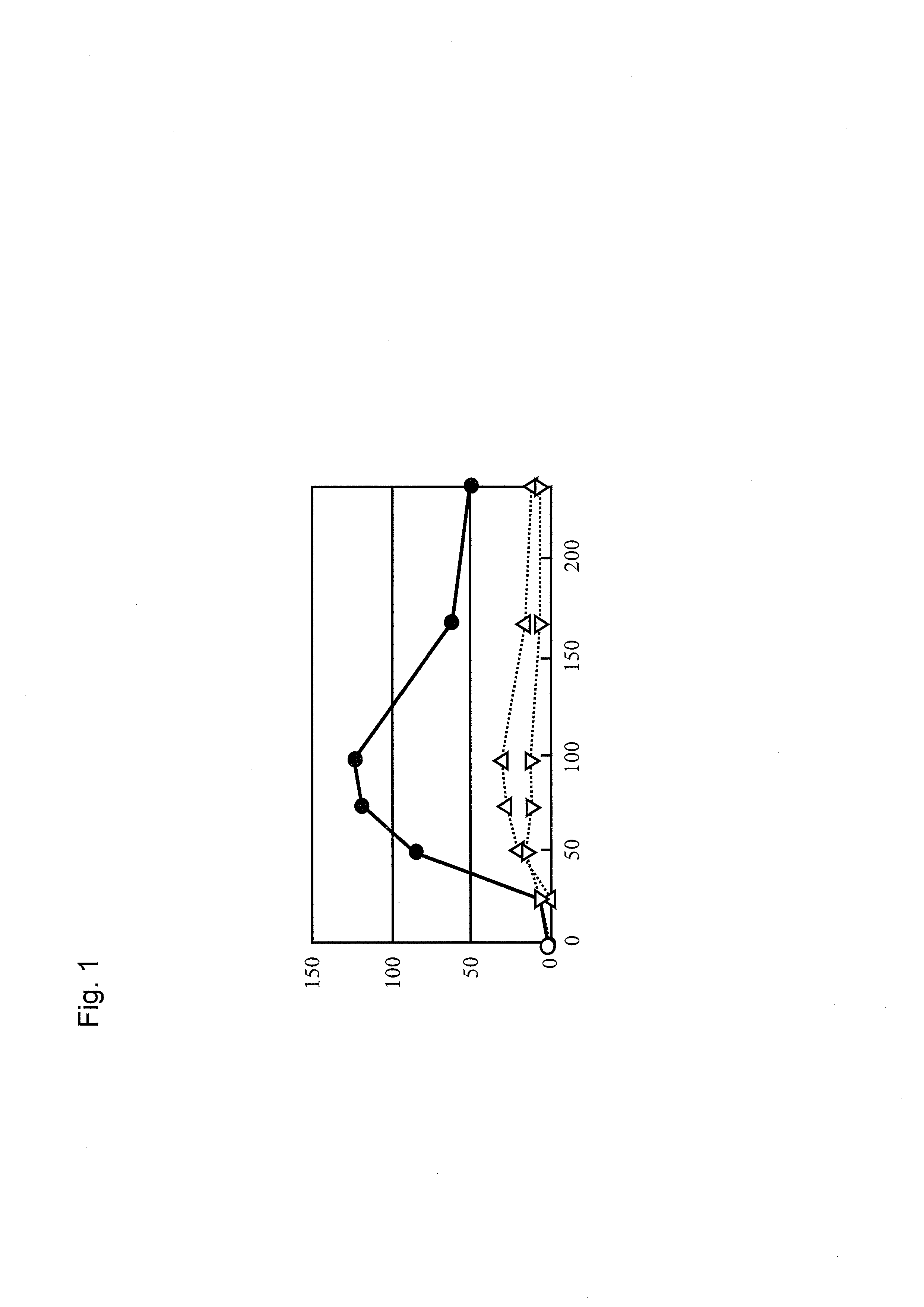
Figure 1
Abstract
Description
TECHNICAL FIELD
[0001] The present invention relates to a method for producing isopropanol using recombinant yeast capable of producing isopropanol, in which an isopropanol-biosynthesis-related gene group has been incorporated, and the recombinant yeast.BACKGROUND ART
[0002] In recent years, depletion of oil resources and global reduction of the amounts of carbon dioxide gas generated have been the subjects of dispute. Rising oil prices are predicted in the future and thus the development of alternative materials to petroleum has been required. For example, one such attempt has already been launched, involving the bioconversion of biomass, sugar, starch, fat and oil, proteins, and the like produced by plants from water and carbon dioxide gas via solar power so as to use the resultants as alternative materials to petroleum. For example, technology for producing plant-derived polylactic acid or polybutylene succinate as an alternative material to plastic produced using petroleum has been ...
Examples
example 1
[0053]In the example, recombinant yeast was prepared by introducing a Streptomyces sp. CL190 strain-derived ORFn gene or a Saccharomyces-cerevisiae-derived ERG10 gene as an acetoacetyl CoA synthase gene, Clostridium-acetobutylicum-derived ctfA gene and ctfB gene as acetoacetyl CoA transferase gene, a Clostridium-acetobutylicum-derived adc gene as acetoacetic acid decarboxylase, and a Clostridium-beijerinckii-derived pdh gene as an isopropanol dehydrogenase gene, and then examined for its capacity to produce isopropanol.
[0054]In addition, the ORFn gene encodes acetoacetyl CoA synthase having activity of synthesizing acetoacetyl CoA from malonyl CoA and acetyl CoA. The ERG10 gene encodes acetoacetyl CoA synthase having activity of synthesizing acetoacetyl CoA from two molecules of acetyl CoA.
[0055]In the example, first, the ctfA gene, the ctfB gene and the adc gene were introduced into a chromosome using an expression vector (pEXP(Ura)-ADC-CTFA-CTFB) containing these genes, and then r...
reference example 1
[0133]In this reference example, Escherichia coli was used as a host. Specifically, an acetoacetyl CoA synthase gene was further introduced into recombinant Escherichia coli in which an isopropanol-biosynthesis-related gene group associated with a metabolic pathway for synthesis of isopropanol from acetoacetyl CoA had been introduced, so as to prepare the recombinant Escherichia coli, and then isopropanol productivity was evaluated.
[0134]The Clostridium acetobutylicum ATCC (824) strain was anaerobically cultured according to a conventional method in 3 ml of reinforced Clostridium medium (Difco) at 30 degree C. for 2 days. Genomic DNA was prepared from 1.5 ml of the culture solution using a genomic DNA preparation kit (Gentra Puregene Yeast / Bact.kit (QIAGEN)).
[0135]A thiA gene that is a Clostridium-acetobutylicum-derived thiolase gene was cloned as follows. First, PCR was performed using the following primers.
CAC2873-F:(SEQ ID NO: 38)5′-ATG AAA GAA GTT G...