
Method of producing triazine-based graphitic carbon nitride films
a graphitic carbon nitride and triazine technology, applied in the field of triazine-based graphitic carbon nitride films, can solve the problems of limited energy capacity of lithium ion batteries, bottlenecks, and challenges, and achieve excellent cycling stability, high specific capacity, and excellent materials
Patent Information
- Authority / Receiving Office
- US · United States
- Patent Type
- Applications(United States)
- Current Assignee / Owner
- Publication Date
- 2016-08-18
Smart Images
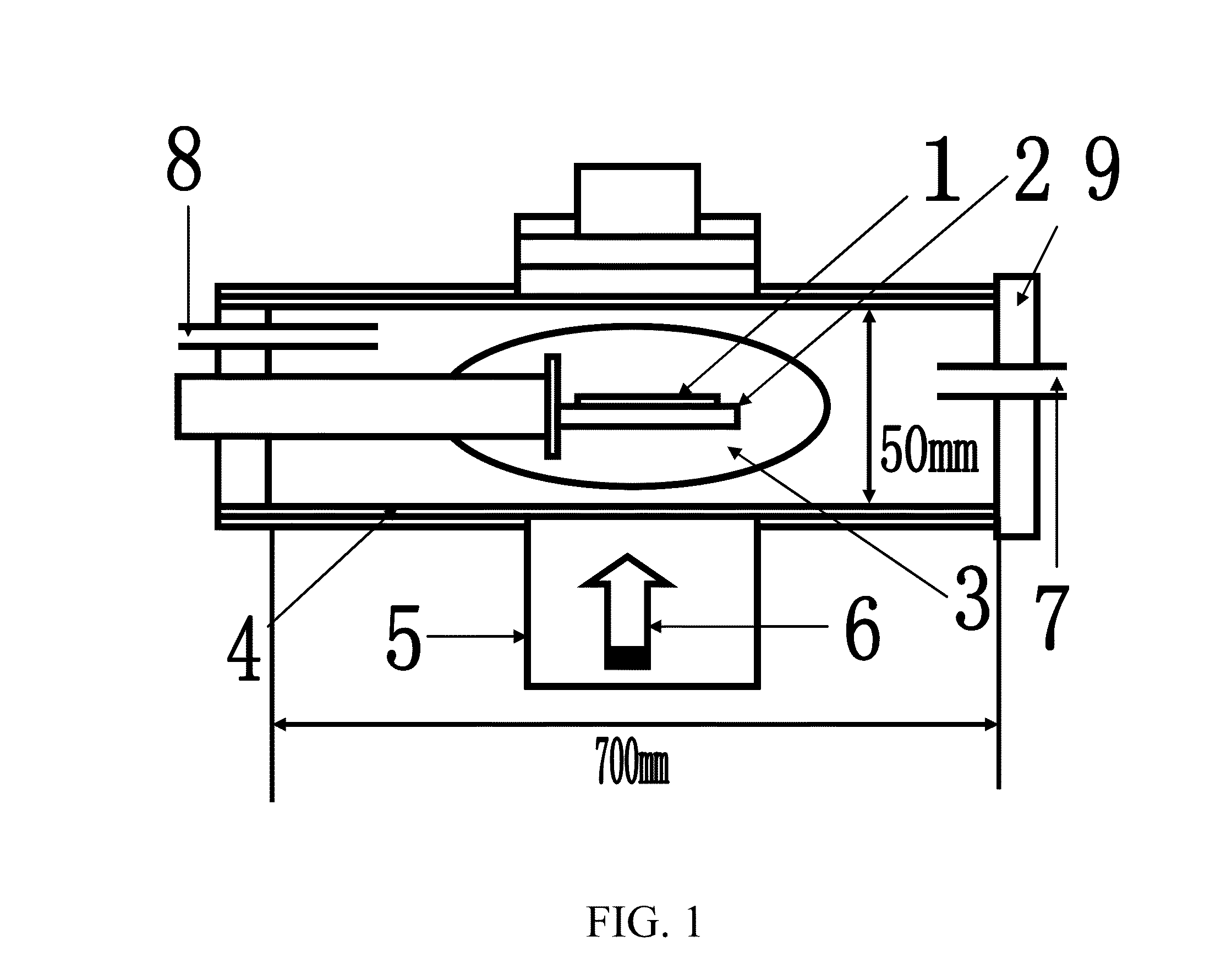
Figure 1 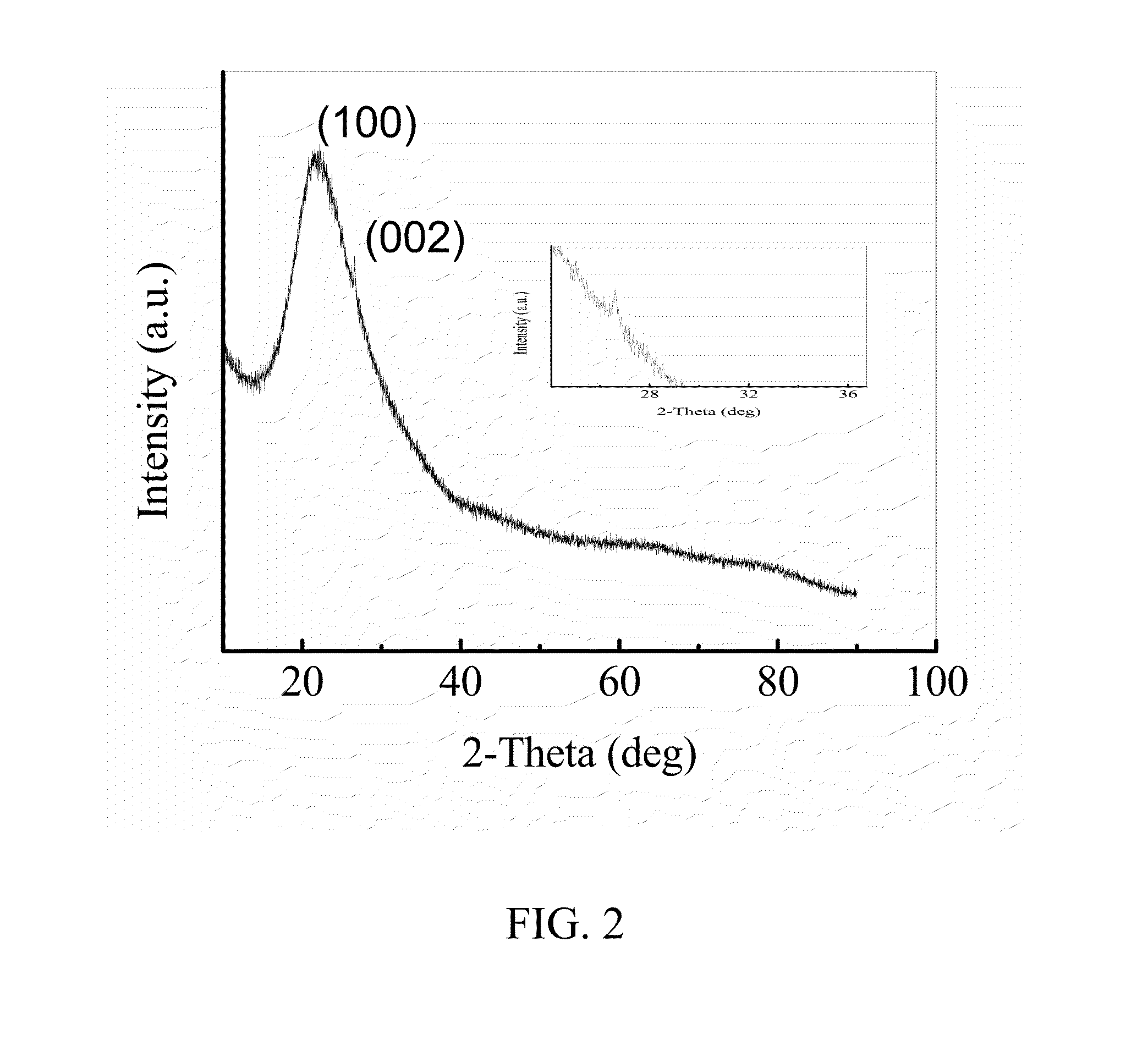
Figure 2 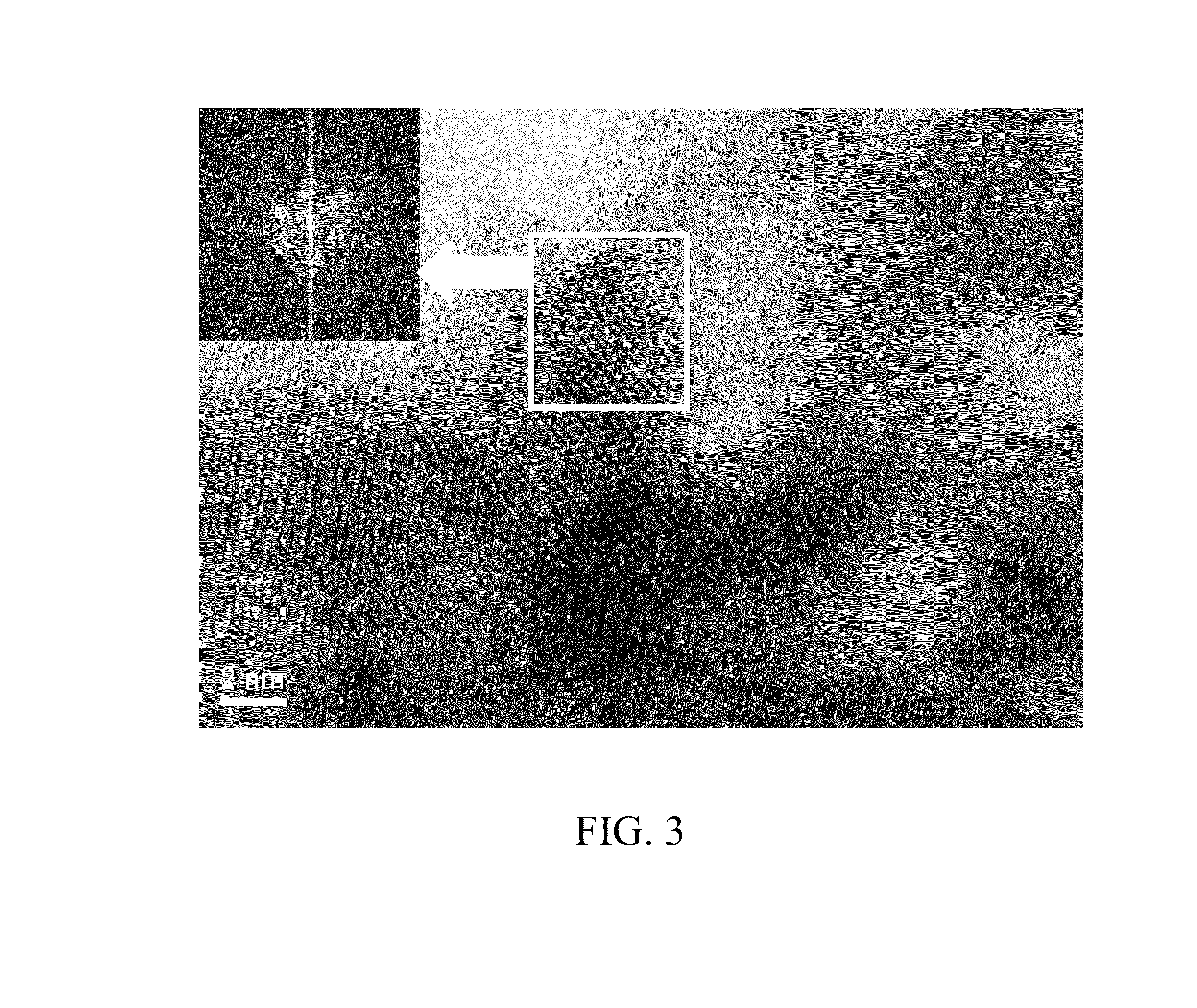
Figure 3
Abstract
Description
BACKGROUND OF INVENTION
[0001] Energy capacity limitation of lithium ion battery (LiBs) has become a bottleneck problem to the emerging field of portable digital electronic devices, moveable electronic devices, and electric vehicles. Although many efforts have been devoted to developing novel anode materials aimed at improving the performance and increasing the capacity of LIBs, including nanostructured silicon, it remains a challenging problem. Recent works have shown that nitrogen-doped graphene can have high reversible capacity and good cycling stability due to high thermal conductivity, high electrical conductivity, good chemical stability, and a high number of activated defects induced by the way the nitrogen atoms are incorporated into the sp2 hybridized carbon network. However, an efficient strategy to achieve a nitrogen-containing carbon nanomaterial with a suitable microstructure and controllable chemical environment for high performance LiBs remains elusive, Graphitic carbon...
Examples
example 1
[0028]A silk fibroin solution was prepared as follows: silk fibroin powder (average diameter: ˜2 micrometer) was dissolved in a 9.3 M LiBr (Sigma-Aldrich, >99%) aqueous solution at 60° C. for 4 hours yielding a 20% (w / v) solution. Then the solution was dialyzed in water using Slide-a-Lyzer dialysis cassettes (Pierce, MWCO 3500) for 48 hours. The final concentration of the aqueous silk fibroin solution obtained was 6.57 wt %.
[0029]A substrate (copper foil and quartz) was coated using the silk fibroin solution by dipping or spin coating. The substrate was placed in a petri dish for over 24 hours for natural drying. Before the sample was treated, the surface of the sample was covered by a stainless steel disk of the size same as the substrate (diameter: 14 mm). On the opposite edge of the copper substrate, two stainless steel screws were used for tightening. Then, the dried Silk fibroin coated copper sample was put in a plasma reactor center for following plasma treatment. The conditio...
example 2
[0030]X-ray diffraction (XRD) was used on the triazene-based graphitic carbon nitride (TGCN) produced in Example 1. XRD can be used as a direct tool to identify the crystal structure of the TGCN. FIG. 2 shows the XRD pattern of the TGCN produced in Example 1. Referring to FIG. 2, the XRD pattern shows two peaks centered at 20.78 degrees and 26.5 degrees, with corresponding d values of 0.43 mn and 0.336 nm, respectively. These peaks were assigned to the (100) plane and (002) plane diffractions of the TGCN crystal, which matcheswell the theoretical prediction for triazine-based graphitic carbon nitride crystal (P6m2 space group (no.187)). The insert in FIG. 2 is an enlarged diffraction peak assigned to the (002) plane.
[0031]High-resolution transmission electron microscope (HRTEM) images gave further confirmation that the substance produced in Example 1 was TGCN. FIG. 3 shows HRTEM images of the TGCN produced in Example 1. Referring to FIG. 3, the HRTEM images show a hexagonal 2D honey...
example 3
[0034]Electrochemical testing was performed on the triazine-based graphitic carbon nitride prepared in Example 1. The electrochemical testing of the triazine-based graphitic carbon nitride prepared on a copper collector (Example 1) without using any binder or conductive additives was carried out using coin cells (CR2032) with a metallic lithium counter electrode. The Celgard (2500) membrane was used as a separator between two electrodes. The lithium salt electrolyte used for this testing was LiPF6 at a concentration of 1 M dissolved in a mixture of ethylene carbonate (EC) and diethylcarbonate (DEC) (1:1 by volume). The cells were assembled and sealed in an argon-filled glove box. Charge-discharge characteristics of the cells were galvanostatically tested using a Battery Testing System in the range of 0.01-3.0 V at a constant current density of 50 mA / g. A cell featuring such a film anode delivers a very high specific capacity (several times higher than that of the theoretical capacit...