
Esterified acrylie-ester high-polymer, its synthesis and use
A technology of acrylates and acrylates, used in the synthesis of special additives, the formulation of cationic photopolymerization systems, and the field of free radicals. It can solve problems such as difficult surface coating, and achieve easy operation, good solubility and simple synthesis Effect
- Summary
- Abstract
- Description
- Claims
- Application Information
AI Technical Summary
Problems solved by technology
Method used
Image

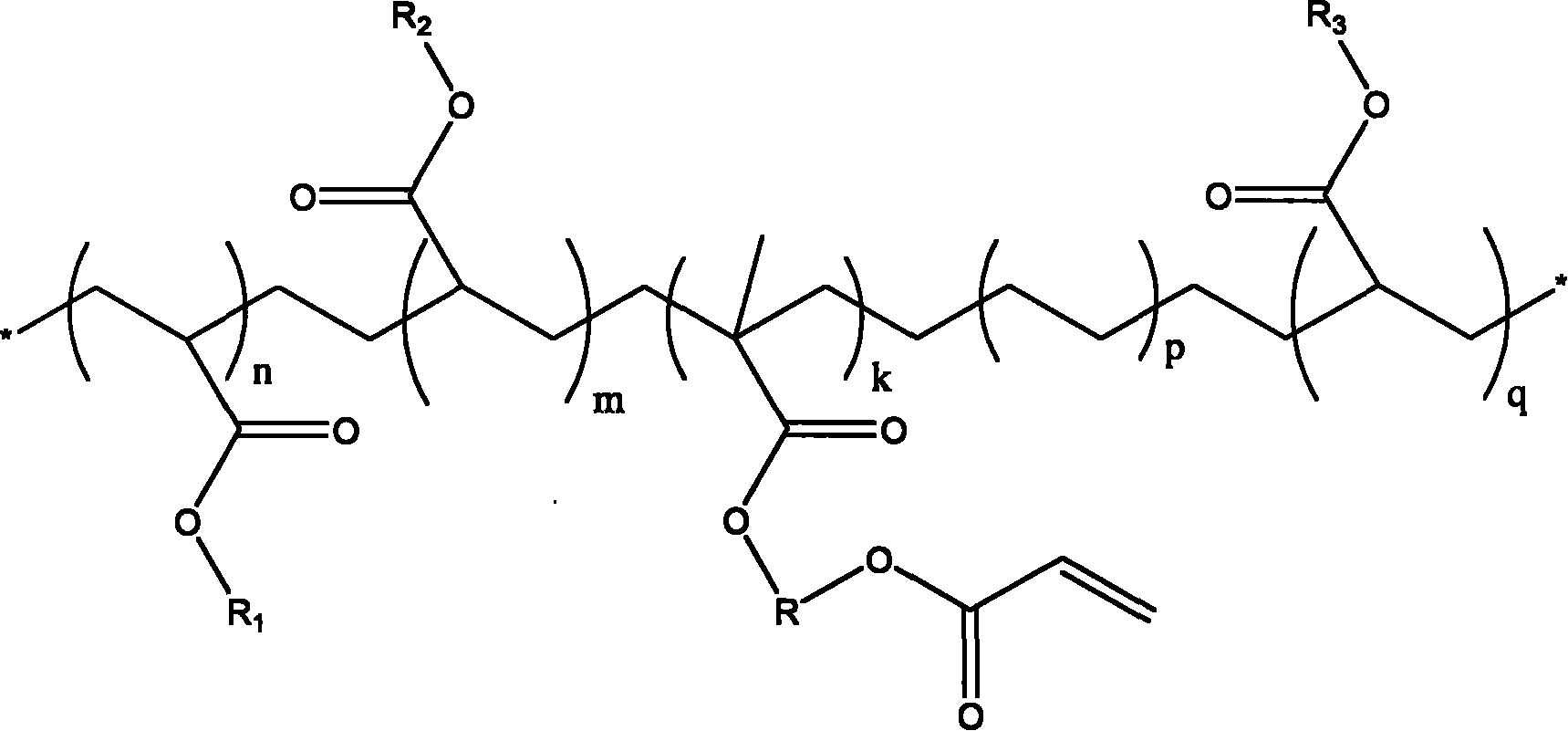
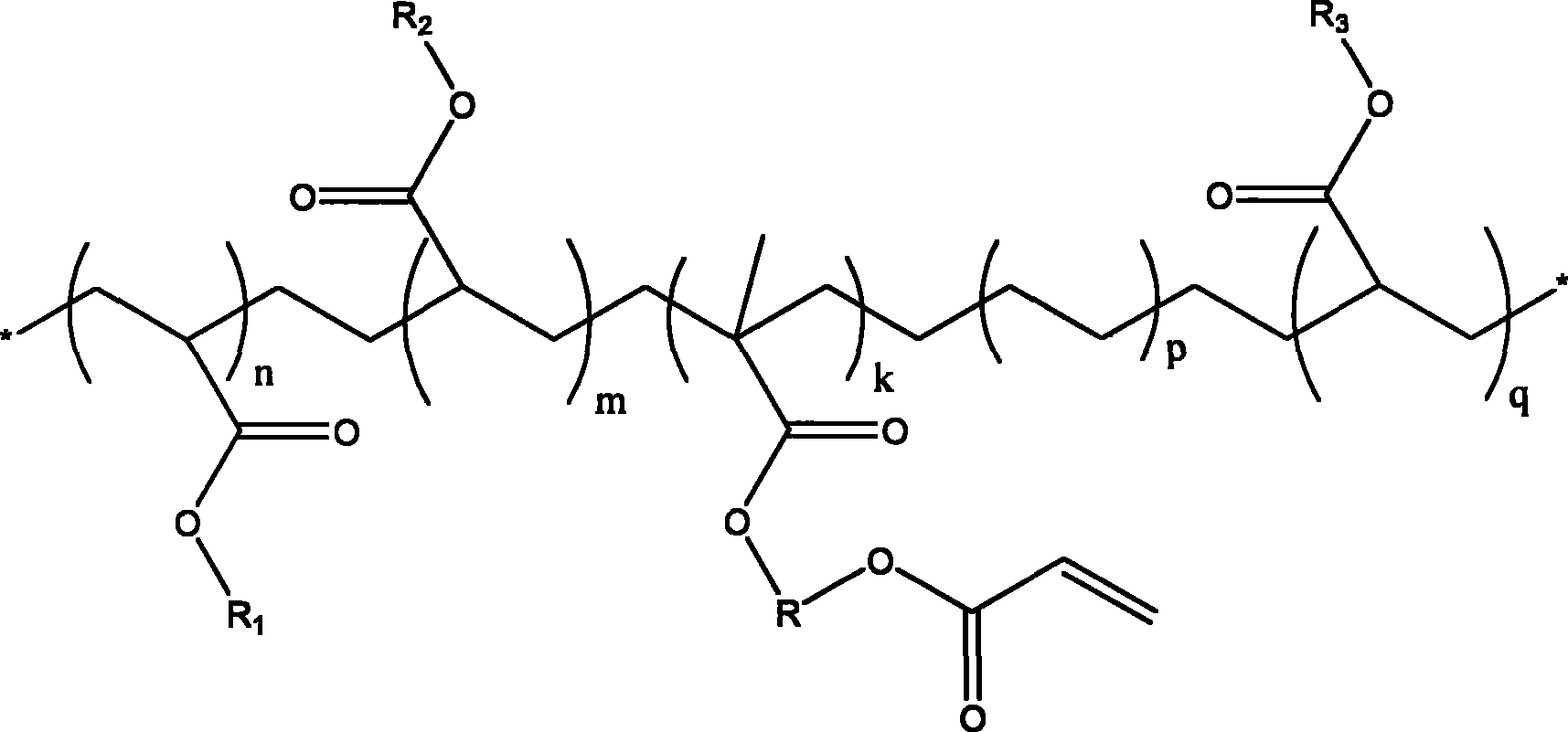
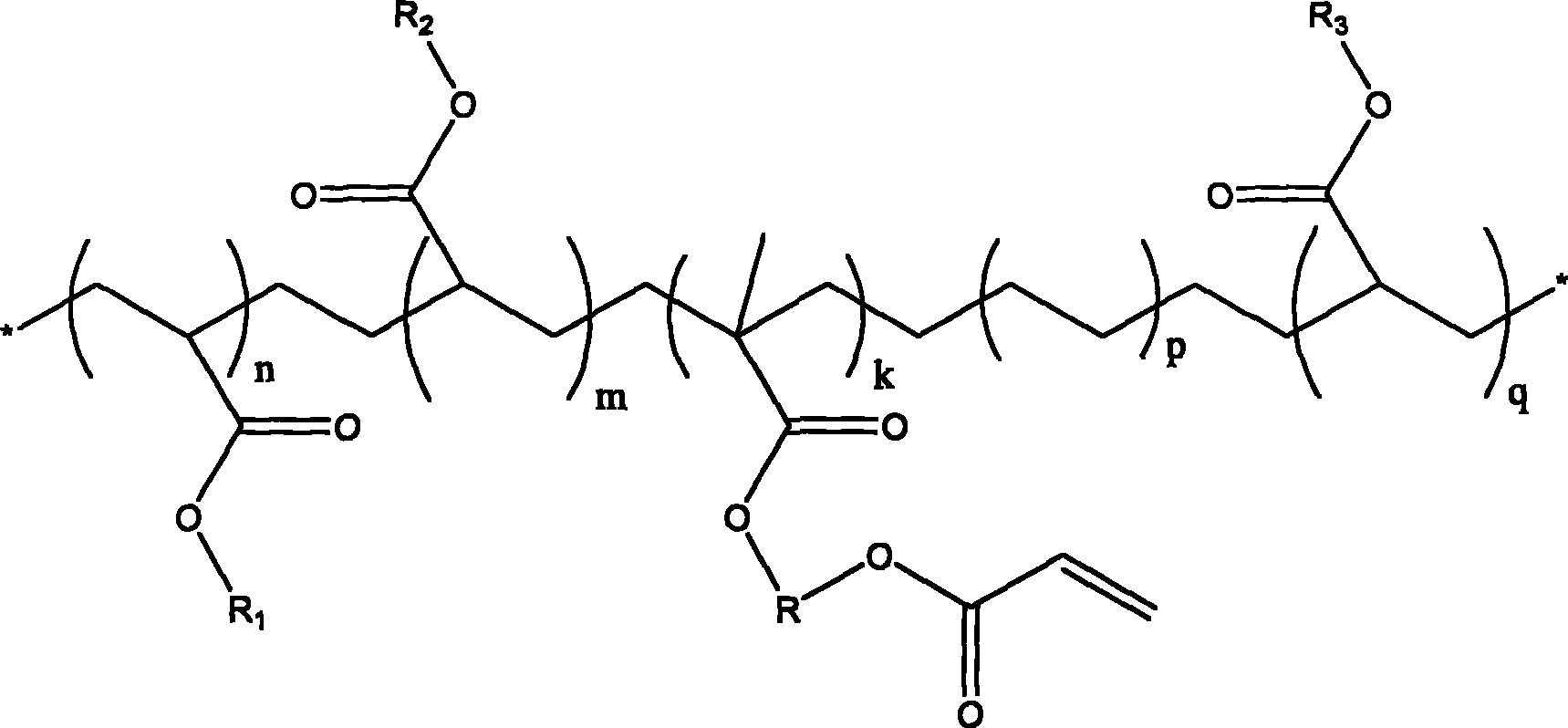
Examples
preparation example Construction
[0027] One, the preparation method of acrylate polymer:
[0028] Under the conditions of stirring and nitrogen protection, thermal polymerization reaction of thermal initiator benzoyl peroxide and acrylate mixture with a monomer content of 0.1-3% in a toluene solution with a concentration of 30-70% An acrylic polymer; wherein, the polymerization temperature is 65-100° C., and the polymerization time is 3-10 hours.
[0029] The above-mentioned acrylate is ethyl acrylate, or butyl acrylate, or glycidyl methacrylate, or octyl acrylate, or acrylic acid, or lauryl acrylate, or octadecyl acrylate, or hydroxyethyl acrylate, or hydroxy acrylate Propyl ester, or propyl acrylate, or at least any one of methyl acrylate.
Synthetic example 1
[0031] Ethyl Acrylate (25% by weight), Butyl Acrylate (20%), Glycidyl Methacrylate (5%), Octadecyl Acrylate (5%), Hydroxyethyl Acrylate (20%), Methyl Acrylate A total of 100 grams of ester (25%) was added in 100 grams of toluene, 0.1 gram of benzoyl peroxide was added, the temperature was raised to 80° C., and the product was used for further reaction after 10 hours of reaction.
Synthetic example 2
[0033] Octyl Acrylate (30%), Butyl Acrylate (20%), Glycidyl Methacrylate (10%), Lauryl Acrylate (5%), Hydroxypropyl Acrylate (20%), Propyl Acrylate (15%) %)) was added into 50 grams of toluene in total, 0.5 gram of benzoyl peroxide was added, the temperature was raised to 65° C., and the product was used for further reaction after 6 hours of reaction.
PUM
 Login to View More
 Abstract
Description
Claims
Application Information
 Login to View More