Nuclear pollution detecting method based on remote operating mobile robot

A mobile robot and pollution detection technology, applied in chemical method analysis, instruments, measuring devices, etc., can solve problems such as low reliability, high risk for nuclear chemical processing personnel, and inability to enter the building for inspection, so as to improve work efficiency and methods flexible effects

CN101377547BInactive Publication Date: 2011-02-16江苏亚星波纹管有限公司 +1
0 Cites 1 Cited by

Patent Information

Authority / Receiving Office
CN · China
Patent Type
Patents(China)
Current Assignee / Owner
Publication Date
2011-02-16
Estimated Expiration
Not applicable · inactive patent

Smart Images

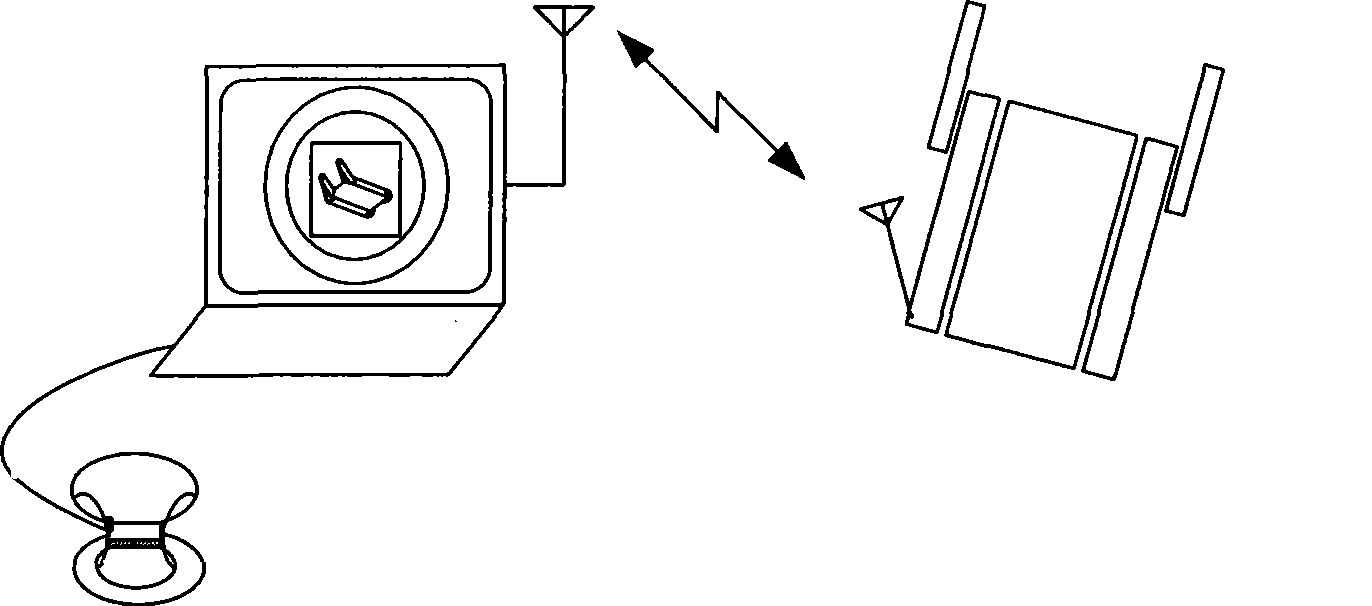
  • Figure 1
    Figure 1
  • Figure 2
    Figure 2
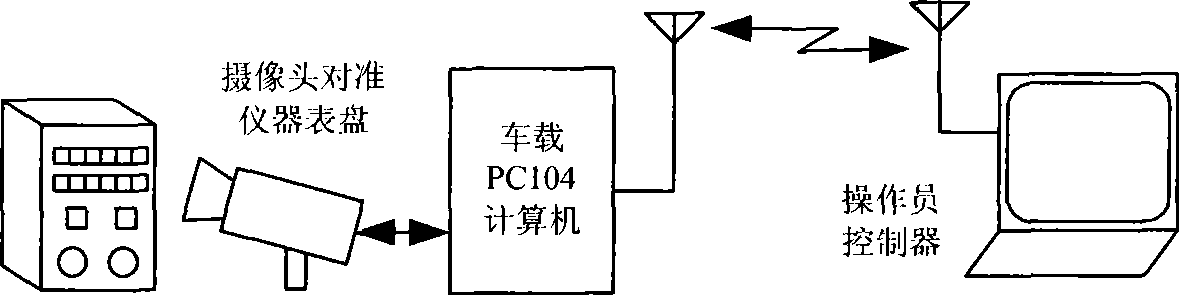
  • Figure 3
    Figure 3
Patent Text Reader

Abstract

The invention provides a method for testing nuclear pollution and chemical pollution with a remote-controlled movable robot, which aims at the problem of automatic testing under the circumstances of nuclear pollution and chemical pollution. The invention has the following main points: a remote-controlled robot enters a polluted site under the remote wireless control by the operator and transmits the information of an accident site back to a local operation platform through wireless transmission; the movable robot is provided with a nuclear detector and an instrument cabinet; a chemical gas detector, a camera and an illuminating lamp are arranged in the instrument cabinet, and a camera captures the images of the indication panel of a chemical gas detector and transmits the images back to the local operation platform; the pollution source is removed or sampled by mechanical arms after being found; and the movable robot is provided with a GPS navigator to position the pollution source. The invention has the advantages of zero casualty, flexible replacement of instruments in the instrument cabinet and the like, and can be used in highly dangerous accident sites with nuclear pollution and chemical leakage, which can not be detected with normal means.
Need to check novelty before this filing date? Find Prior Art

Description

technical field

[0001] The invention relates to the field of mobile robot technology and nuclear pollution and chemical pollution detection. Specifically, a detection method for nuclear and chemical pollution based on a teleoperated mobile robot platform is proposed. Background technique

[0002] In the event of nuclear pollution and chemical leakage accidents, it is often encountered in areas where the situation is unknown, highly dangerous, inaccessible to personnel, and detection cannot be carried out using common means. In this case, there are two main detection methods at present: one is to send nuclear chemical processing personnel to carry testing instruments into the contaminated area for measurement, or to send nuclear chemical processing personnel to carry video recorders to record the scene to provide a basis for accident handling. This method is not only inefficient and unreliable, but more importantly, nuclear chemical processing personnel are extremely dangero...

Examples

Embodiment Construction

[0017] The nuclear pollution detection method based on the remote operation mobile robot of the present invention will be described in detail below in conjunction with the accompanying drawings and specific embodiments.

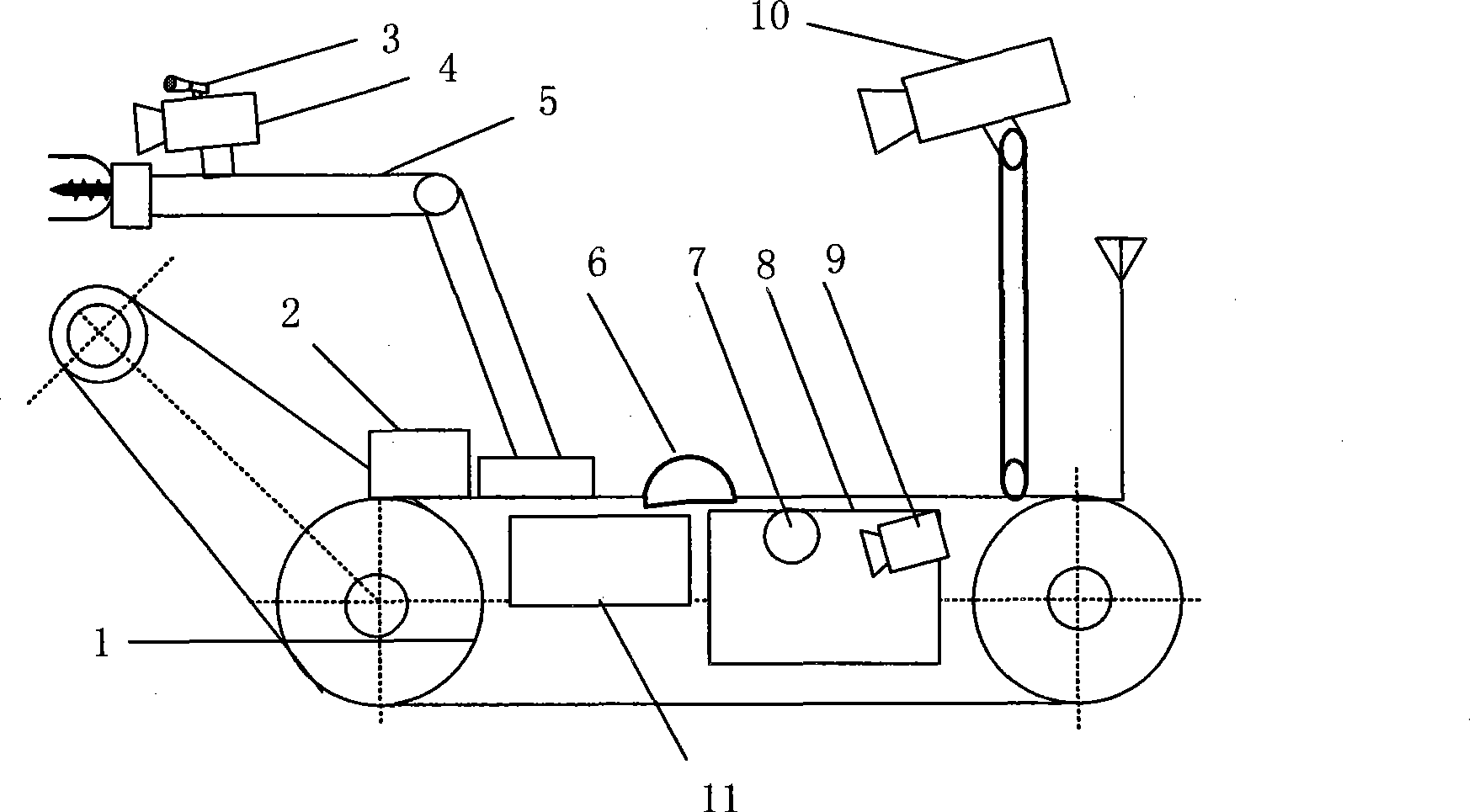
[0018] Such as figure 2 As shown, the nuclear pollution detection method based on the teleoperation mobile robot includes a teleoperation mobile robot 1, a nuclear detector 2 installed on the robot body, an instrument cabin 8, a sampling manipulator 5, an Internet radio station 11, and a radio station installed above the manipulator. Microphone 3, also have the first video camera 4 that is respectively positioned at sampling mechanical arm top, the second video camera 10 above the tail bracket, the 3rd video camera 9 and the GPS positioning navigator 6 in the instrument cabin 8.

[0019] The functions of each part are described as follows:

[0020] (1) Nuclear radiation analysis detector 2: used to detect the intensity of nuclear radiation at the accident s...