Process for preparing calcium-based sorbent through normal pressure dry slaking

A preparation process and a desulfurization agent technology, which are applied in the field of semi-dry lime digestion process, can solve the problems of low utilization rate and desulfurization efficiency of desulfurizer, unfavorable effective utilization of desulfurizer and improvement of desulfurization efficiency, and reduction of desulfurization reaction rate, etc. Achieve rapid and sufficient contact reaction, shorten digestion reaction time, and realize the effect of waste utilization

CN102059044AInactive Publication Date: 2011-05-18WUHAN IRON & STEEL (GROUP) CORP +1
4 Cites 1 Cited by

Patent Information

Authority / Receiving Office
CN · China
Current Assignee / Owner
Publication Date
2011-05-18
Estimated Expiration
Not applicable · inactive patent

Smart Images

  • Figure 1
    Figure 1
  • Figure 2
    Figure 2
  • Figure 3
    Figure 3
Patent Text Reader

Abstract

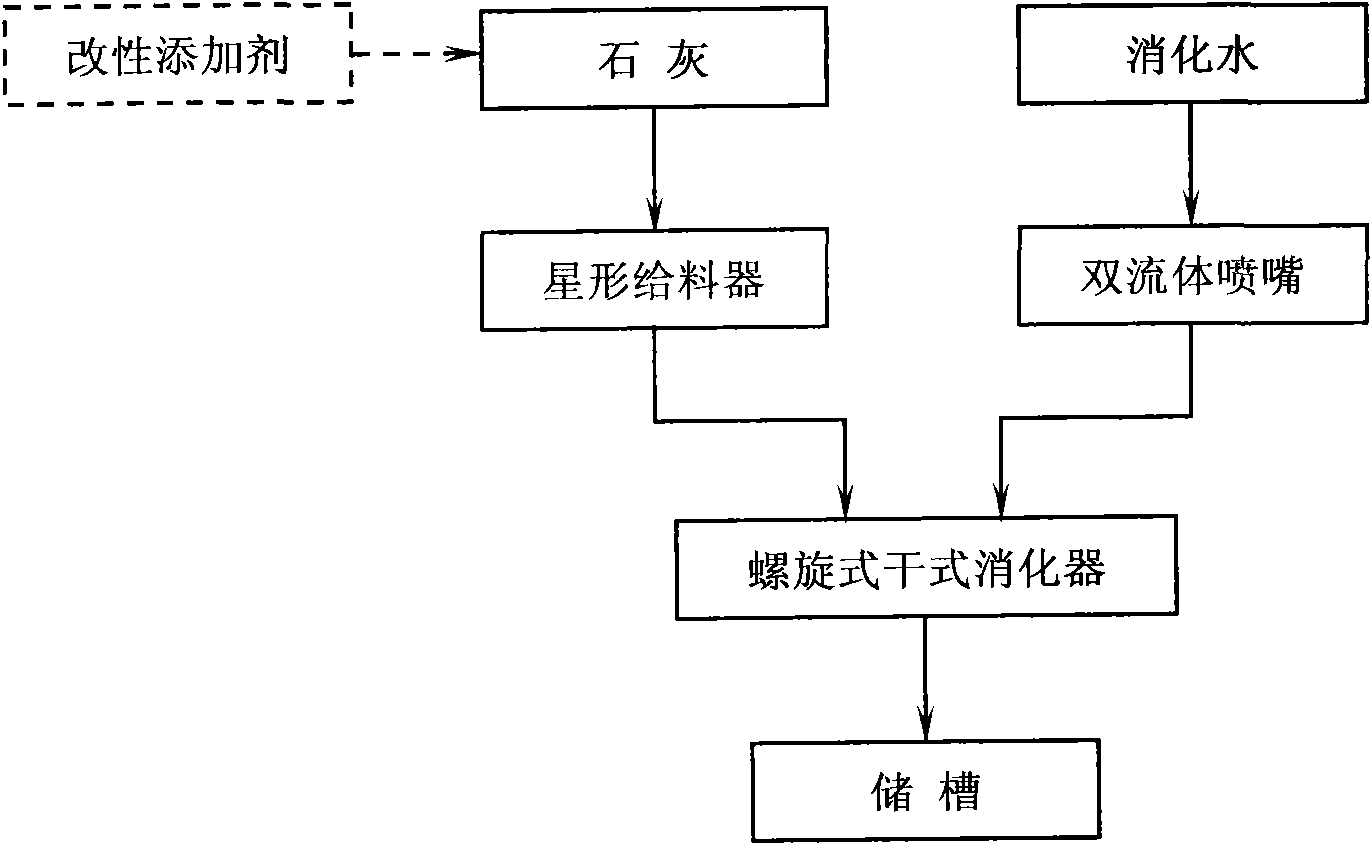
The invention discloses a process for preparing a calcium-based sorbent through normal pressure dry slaking, which comprises the following steps of: mixing a modified additive and a raw material CaO in a raw material storage bay, and adding into a continuous slaking system; and supplying slaking water to the slaking system through two-fluid spray nozzles at three water distribution points, making the raw material fully contacted with water to perform slaking reaction in the process of spirally stirring and proceeding so as to generate dry Ca(OH)2 with certain water content. In the slaking process of the raw material CaO, the influence of the water / ash ratio, slaking water initial temperature, stirring speed and slaking time on the slaking process is mainly considered, and according to small tests and pilot tests of a laboratory system, the technological process for generating the Ca(OH)2 through dry slaking of the CaO is optimized by taking the specific surface area, the porosity and reactivity as slaking product indexes. The process is simple; wastes can be utilized; and the slaking effect of the sorbent is improved, and the desulfurization efficiency is improved and the desulfurization operating cost is reduced further.
Need to check novelty before this filing date? Find Prior Art

Description

technical field

[0001] The invention relates to a production process for preparing a dry calcium-based desulfurizer, in particular to a semi-dry lime digestion process suitable for sintering flue gas desulfurization. Background technique

[0002] my country has been plagued by air pollution for a long time, especially SO 2 Pollution is more serious. Over the years, my country has carried out research and application of various desulfurization technologies, among which flue gas SO 2 More flue gas desulfurization technology is used to control.

[0003] Flue gas desulfurization technology mainly uses alkaline substances to absorb or absorb SO in flue gas 2 , and convert it into a relatively stable sulfur-containing compound or elemental sulfur that can be separated, so as to control SO 2 escape purpose. According to the morphological characteristics of desulfurization agent and desulfurization products, flue gas desulfurization is generally divided into wet method, dry met...

Examples

Embodiment Construction

[0045] The present invention will be further described below in conjunction with the accompanying drawings and examples, but the examples should not be construed as limiting the present invention.

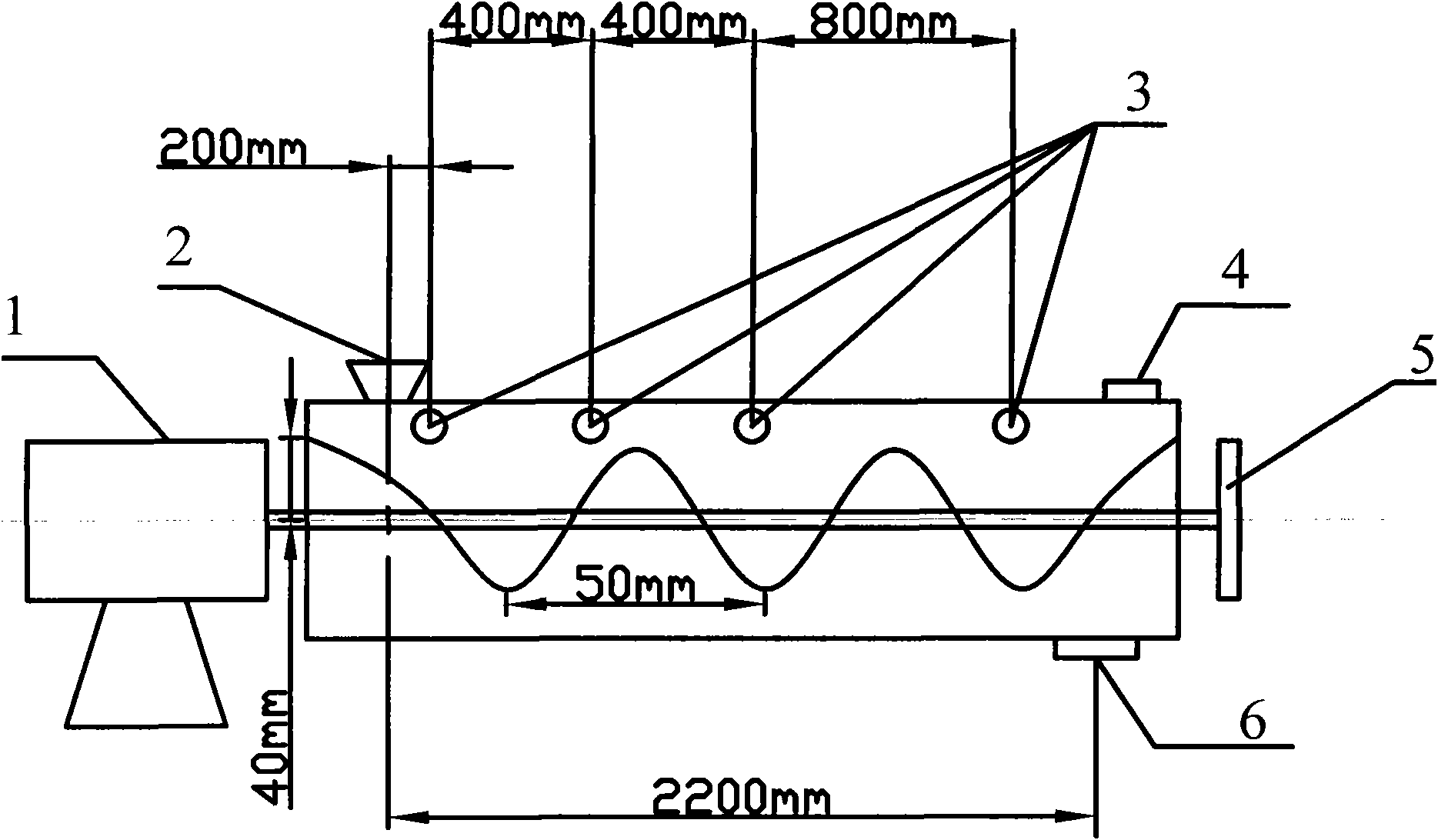
[0046] In the figure, the corresponding relationship between each label and parts is as follows: 1-motor; 2-filling port; 3-water injection hole; 4-venting hole;

[0047] During implementation, the quicklime is passed through a star-shaped feeder, and after being modified, it is sent into the main body of the digester, and the raw material quicklime is controlled to have a purity of more than 83% and an average particle size of 60 μm. Enter the digester cavity at a speed of 40r / min. Digested water at 25°C is sprayed through a two-fluid nozzle with a water-cement ratio of 1.8 through a metering pump. The first nozzle injects digested water with a mass fraction of 60% to make 90% of CaO participate in the reaction; the second nozzle injects digested water with a mass fraction of 30%...