
User operation discovery method of file system and synchronous system utilizing the same
A file system and discovery method technology, applied in the field of computer networks, can solve problems such as a lot of burden and unsatisfactory effects, and achieve the effects of reducing network traffic consumption, reducing the amount of synchronization operations, and ensuring reliability.
- Summary
- Abstract
- Description
- Claims
- Application Information
AI Technical Summary
Problems solved by technology
Method used
Image

Examples
Embodiment Construction
[0046] Specific embodiments of the present invention will be described in detail below in conjunction with the accompanying drawings.
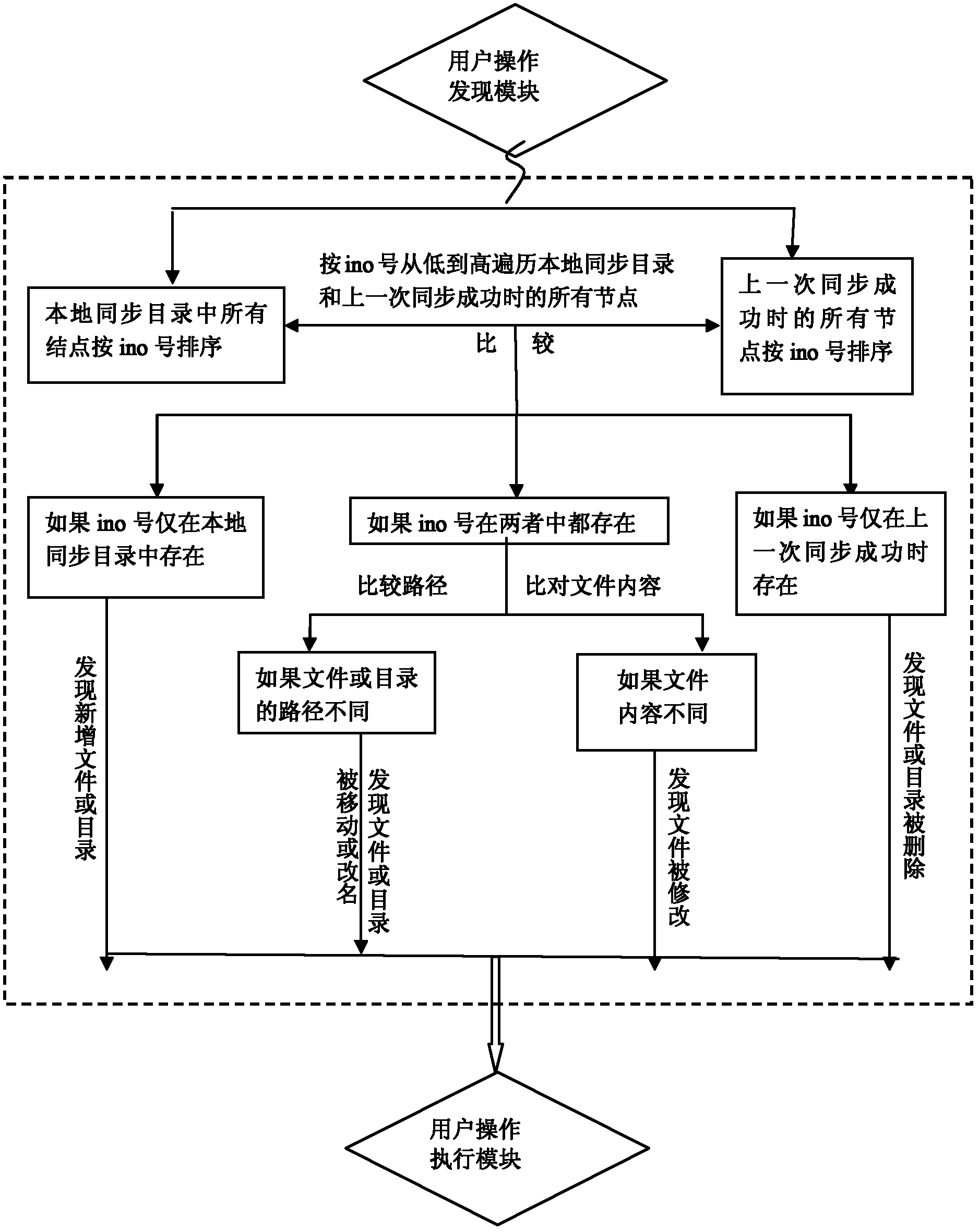
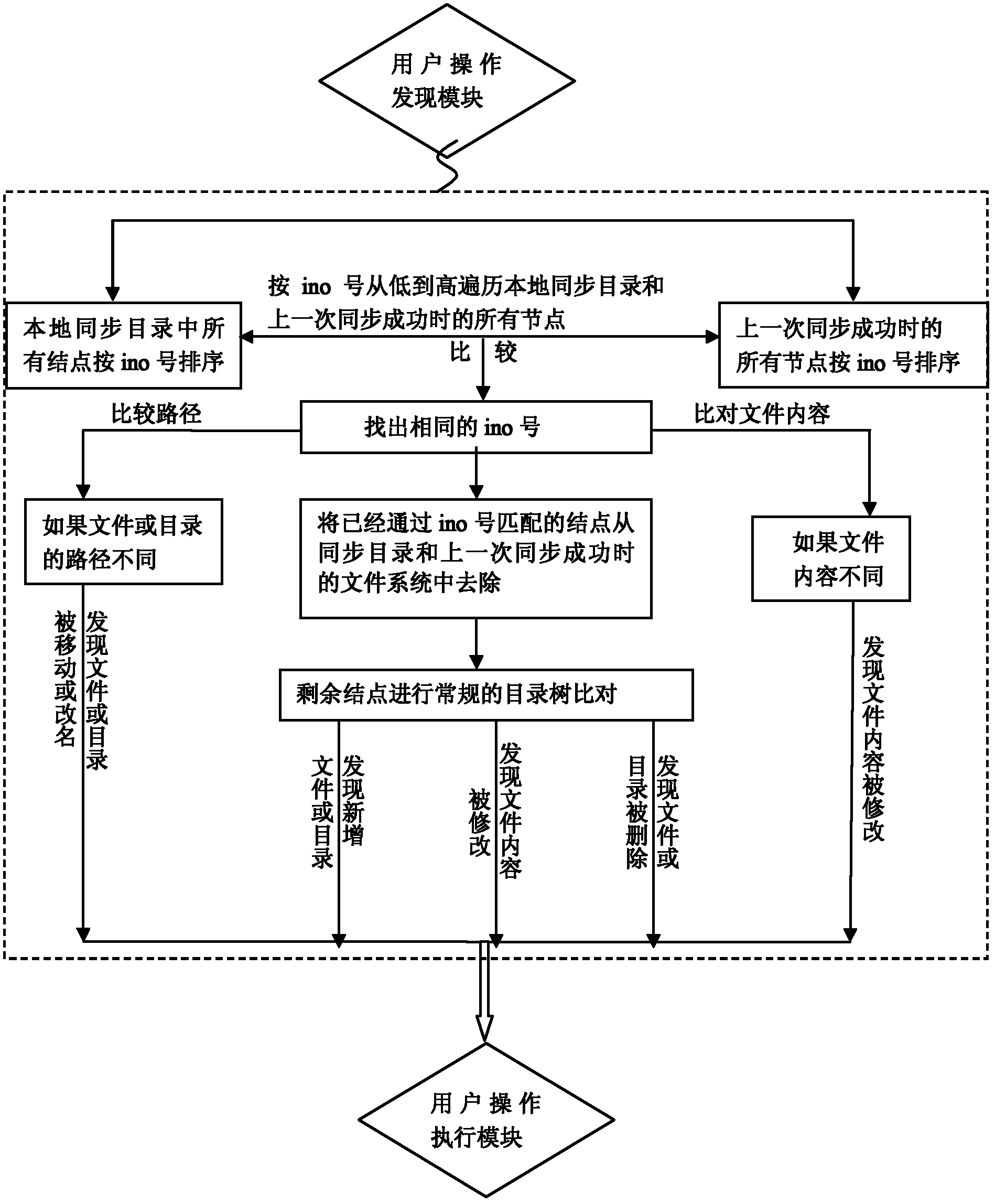
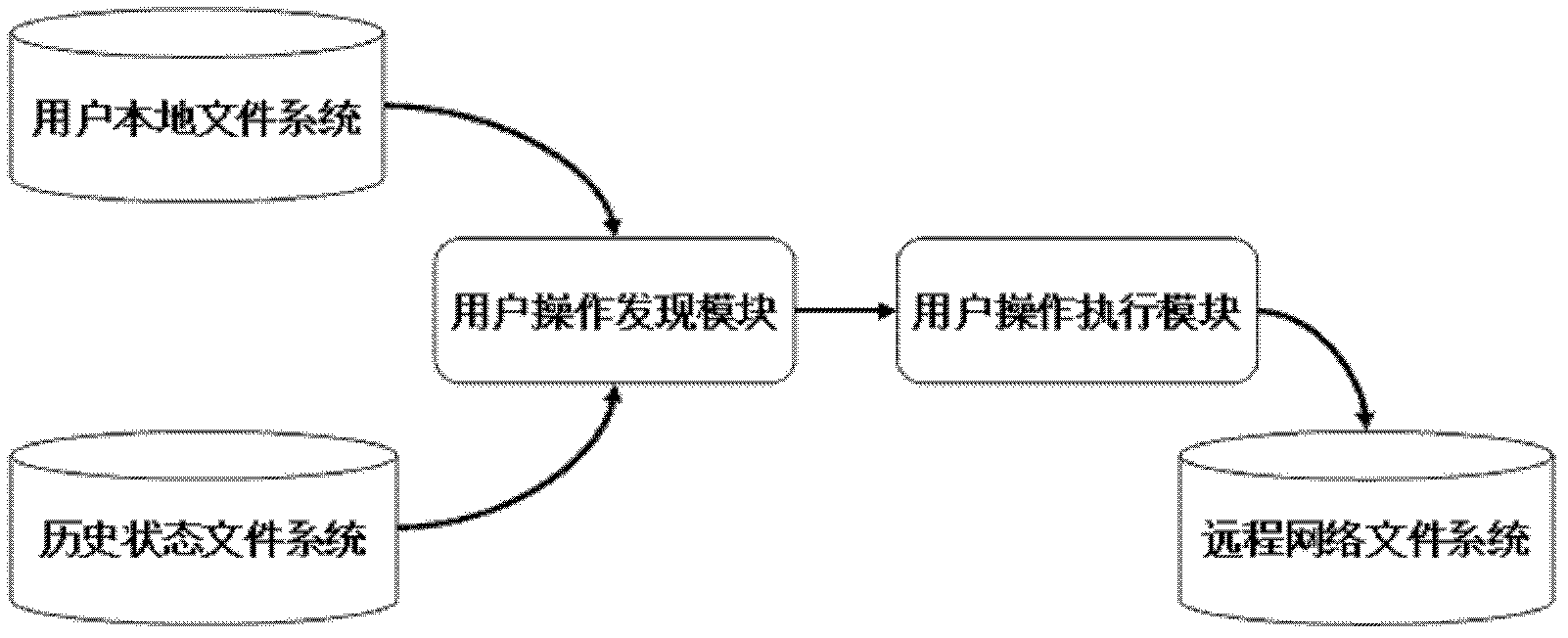
[0047] First, let's introduce the background knowledge. Generally speaking, the file system is the place where users store data. Although they are all physically hard disks, there are actually many forms of file systems. The file system organizes information in a tree form, which can be called "directory" or "folder" with sub-nodes (collectively referred to as "directory" in this article); the storage of data content is called "file". Both directories and files are "nodes" in the file system. Under Windows, the two most popular file systems are NTFS and FAT32; under Linux, it is the EXT3 file system.
[0048] According to the characteristics of the file system, the file system can be divided into two categories:
[0049] One category is that the "node" of the file system itself has a unique identifier; for example, the NTFS and EXT3 file sys...
PUM
 Login to View More
 Abstract
Description
Claims
Application Information
 Login to View More