Low-complexity Femtocell spectrum resource distribution method based on cognition

A spectrum resource allocation and home base station technology, which is applied in the field of cognitive-based spectrum allocation and heterogeneous network resource allocation, can solve problems such as high cost of high-power nodes, infeasibility of cell splitting, and limited gain, so as to avoid interference, The effect of improving spectrum utilization efficiency and low complexity

CN104320786AActive Publication Date: 2015-01-28TSINGHUA UNIV
4 Cites 3 Cited by

Patent Information

Authority / Receiving Office
CN · China
Patent Type
Applications(China)
Current Assignee / Owner
Publication Date
2015-01-28

Smart Images

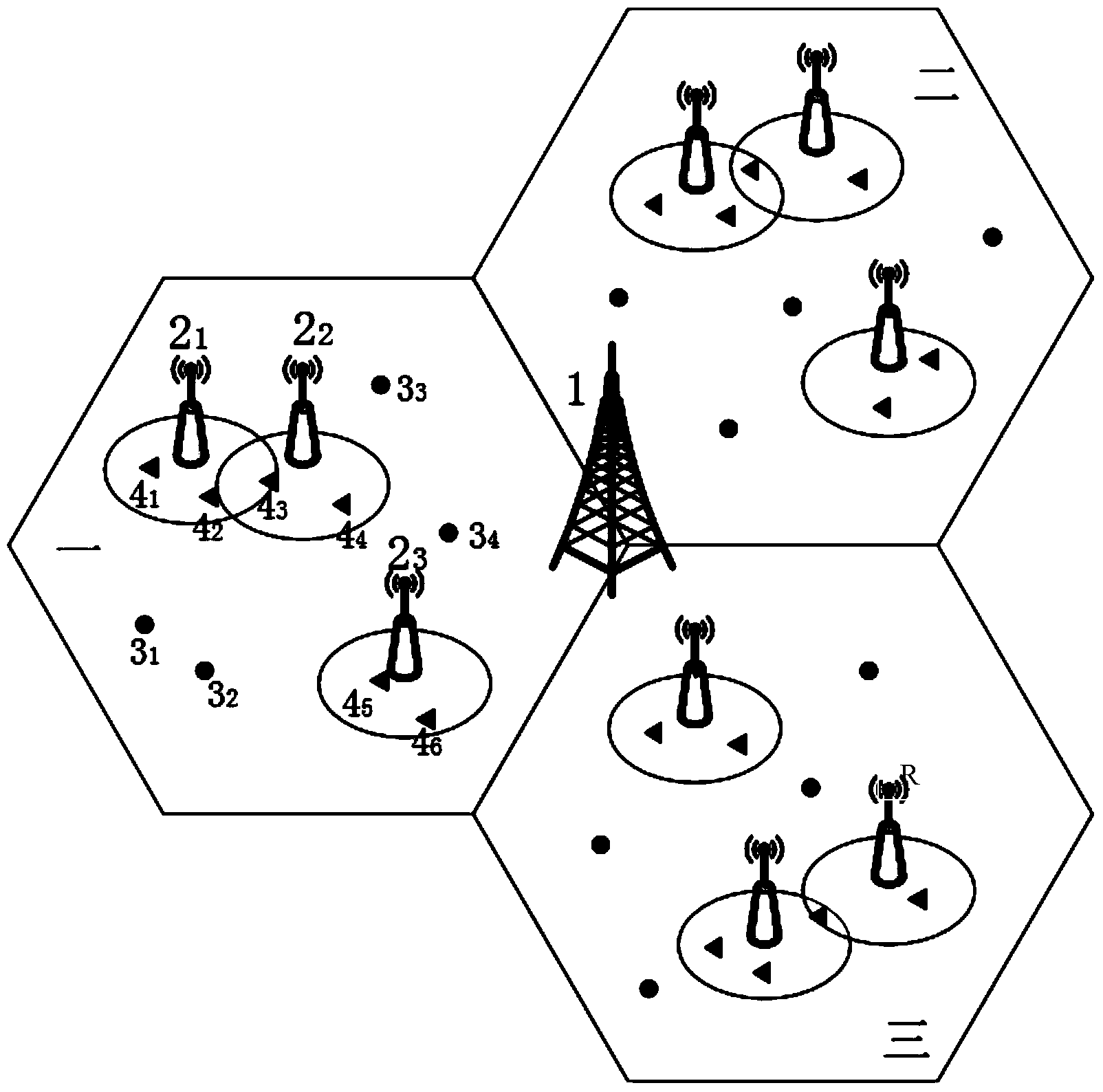
  • Figure 1
    Figure 1
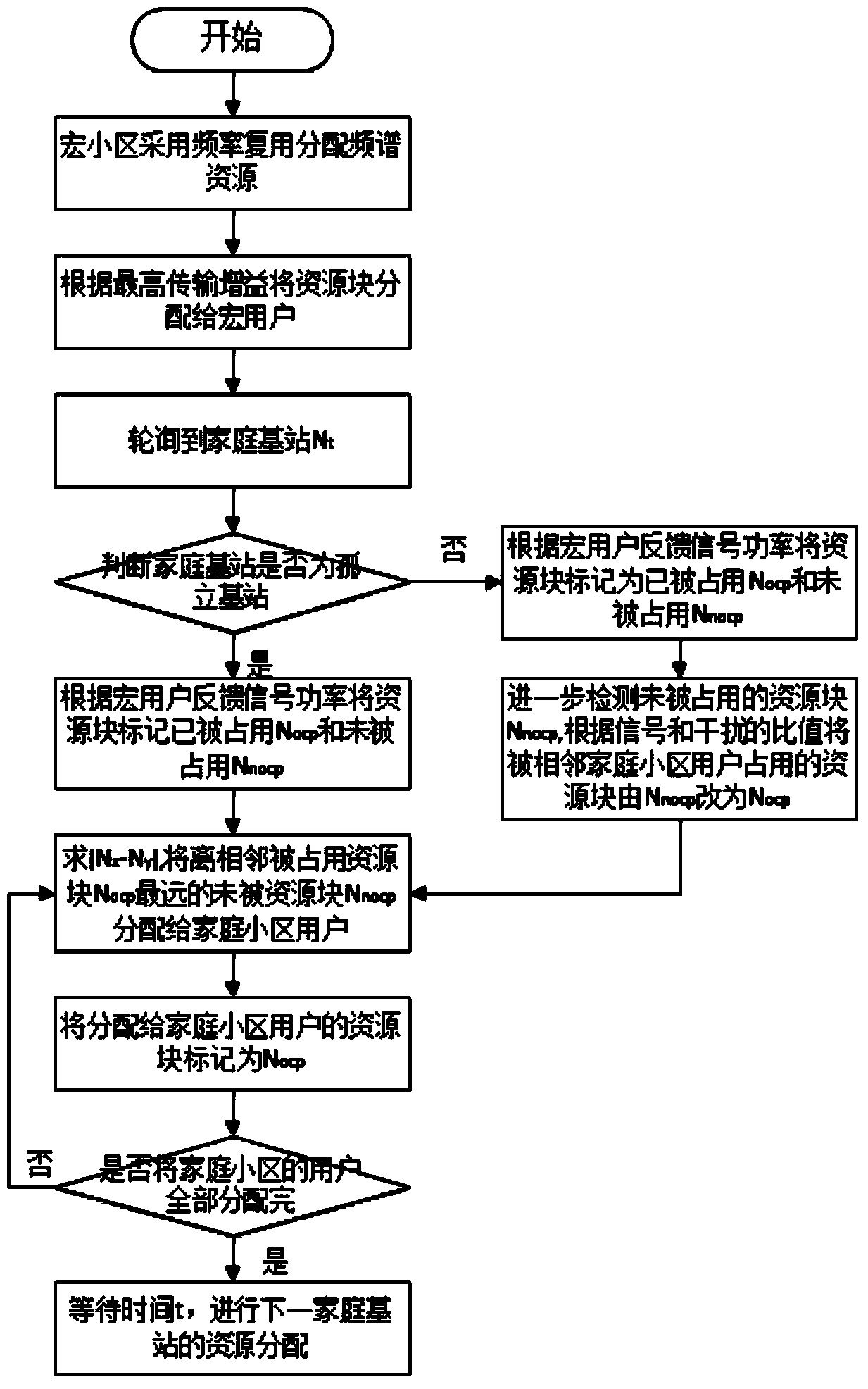
  • Figure 2
    Figure 2
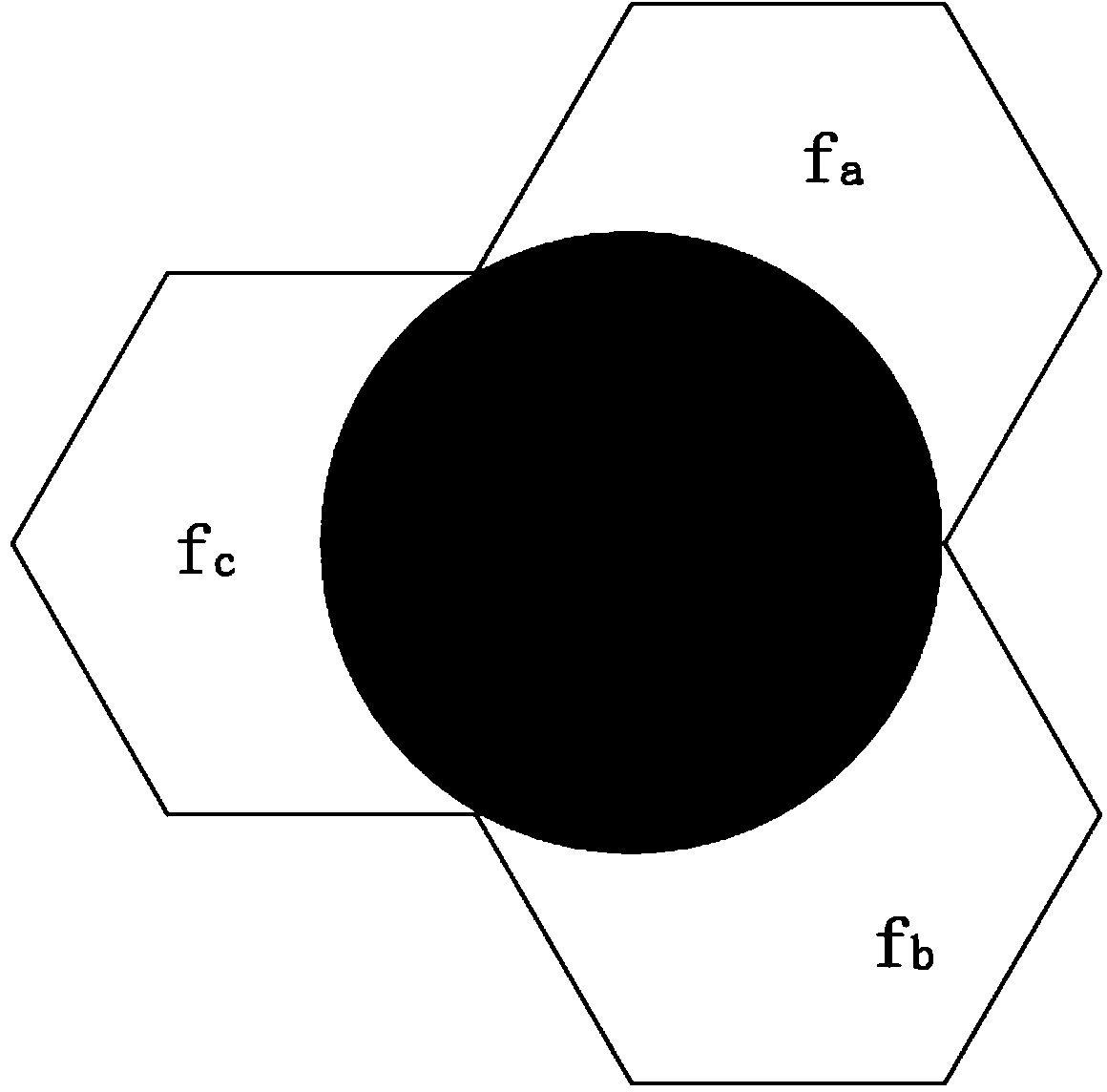
  • Figure 3
    Figure 3
Patent Text Reader

Abstract

The invention relates to a low-complexity Femtocell spectrum resource distribution method based on cognition, and belongs to the field of wireless communication. The method includes the steps that a macro cell is divided into a central region and marginal regions by a macro cell layer of a network through the fractional frequency reuse method, the whole frequency spectrum is used by the central region, and three orthogonal frequency sub-bands of the frequency spectrum are used by the marginal regions respectively; resource distribution is conducted on domestic users in a home cell in the Femtocell in the polling mechanism sequence, and the whole frequency spectrum is used for the domestic users; the Femtocell is an isolated base station, and only the interference of the users in the macro cell on the home cell needs to be considered in the resource distribution process; otherwise, the interference of users in a home cell, overlapping the home cell where the Femtocell Nj is located, on the home cell needs to be considered besides the interference of the users in the macro cell on the home cell in the resource block distribution process. The method is low in complexity, easy to operate and capable of effectively avoiding interference and improving the frequency spectrum utilization efficiency.
Need to check novelty before this filing date? Find Prior Art

Description

technical field

[0001] The invention belongs to the field of frequency spectrum resource allocation of wireless communication, in particular to a low-complexity cognitive-based frequency spectrum allocation method for resource allocation of heterogeneous networks. Background technique

[0002] In traditional cellular networks, the spectral efficiency of point-to-point links is close to the theoretical limit, but people's requirements for high-quality services and large data traffic continue to increase, so it is necessary to further increase network capacity to meet people's needs. However, in the case where the current network has been deployed relatively densely, the interference between cells severely limits the gain obtained through cell splitting technology, and due to the high cost of high-power nodes, this further makes the method of cell splitting unfeasible . Therefore, the technology of significantly improving the network capacity by changing the topology of the n...

Examples

Embodiment Construction

[0028] A low-complexity cognition-based home base station spectrum allocation method proposed by the present invention is described in detail in conjunction with the accompanying drawings and embodiments as follows:

[0029] The present invention proposes a low-complexity cognitive-based home base station spectrum resource allocation method, which specifically includes the following steps:

[0030] (1) The macro cell layer of the network adopts the method of partial frequency reuse. With the location of the macro base station as the center and R meters as the radius, a circle is made to divide the macro cell into a central area and an edge area. The area outside the circle is defined as the edge area. Defined as the central area, the central area uses the entire spectrum B, and the edge areas use three orthogonal sub-bands f of the spectrum B respectively a , f b , f c , the minimum wireless resource allocated to the user is defined as a resource block, and the resource bloc...