
Double-stage compressor
A two-stage compressor, one-stage technology, applied in the direction of mechanical equipment, machine/engine, pump combination for elastic fluid rotary piston type/oscillating piston type, etc., can solve the problem of insufficient air intake of high-pressure stage cylinders, compressors Problems such as limited displacement and impact on compressor performance, to achieve the effect of keeping the suction and exhaust process smooth and avoiding pulsation
- Summary
- Abstract
- Description
- Claims
- Application Information
AI Technical Summary
Problems solved by technology
Method used
Image

Examples
Embodiment 1
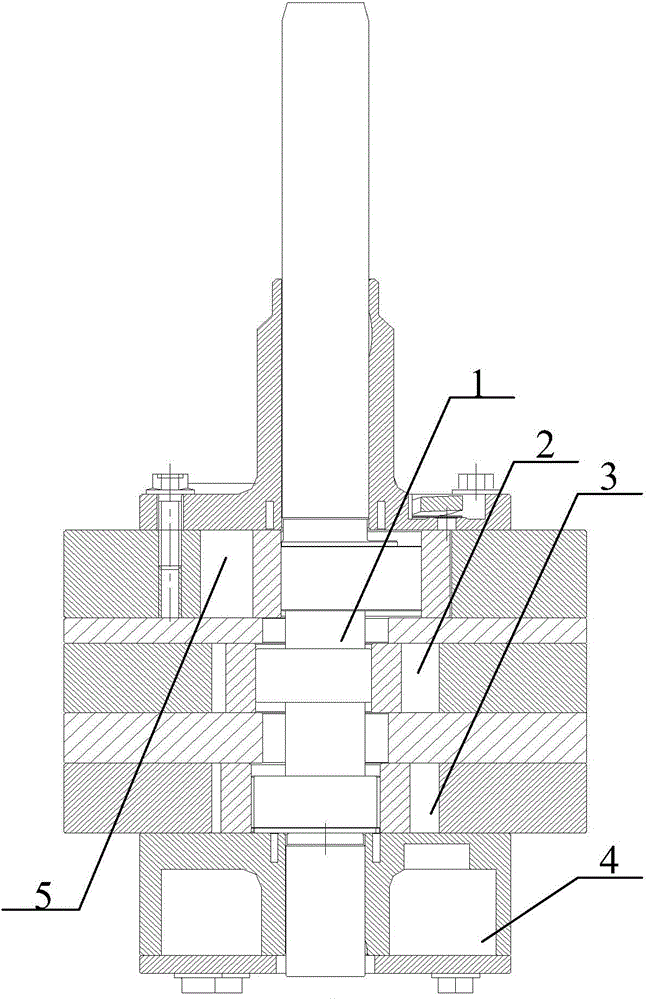
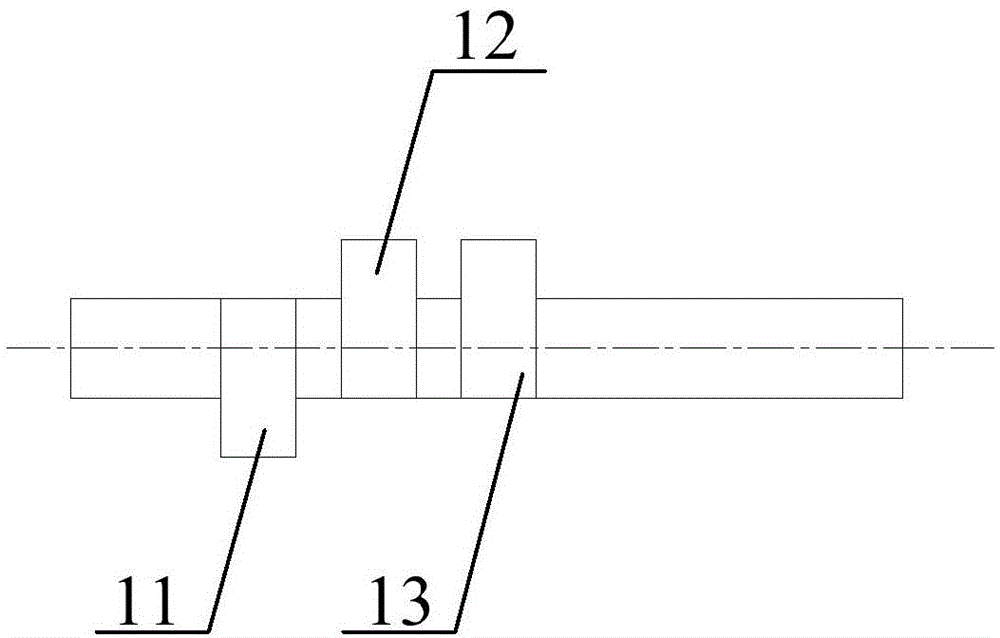
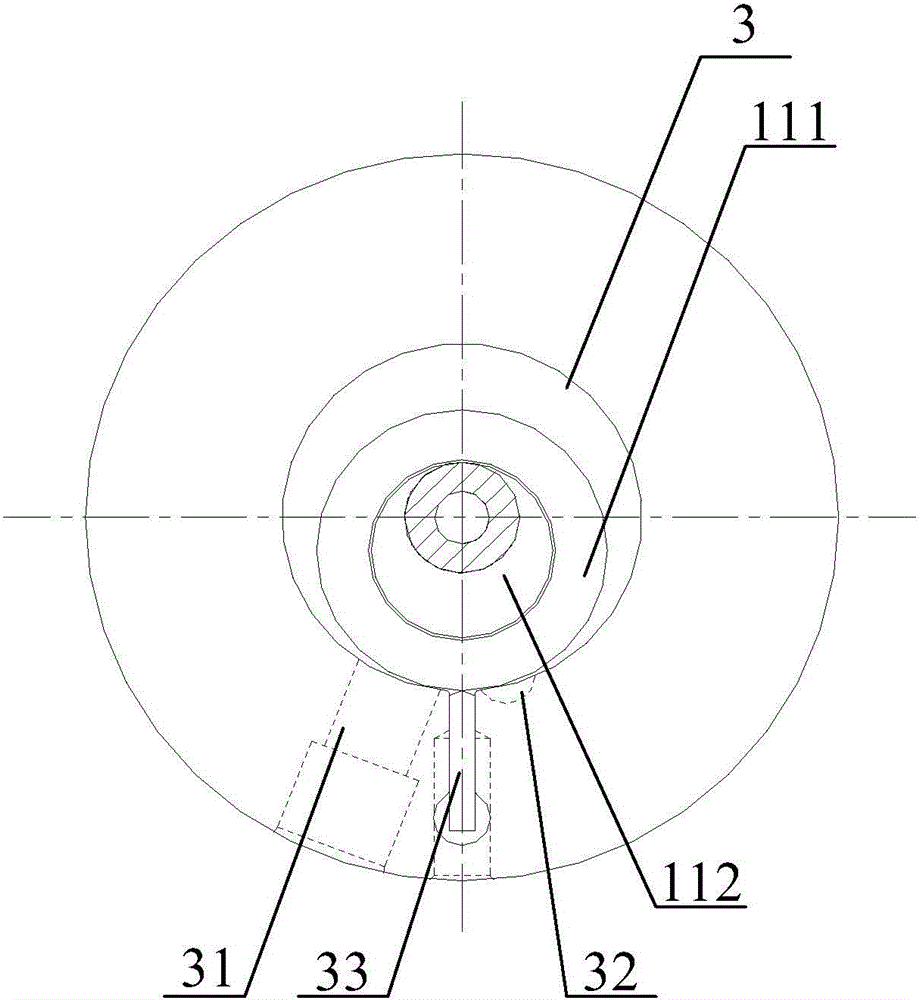
[0048] Please refer to Figure 1 to Figure 5 , figure 1 Is a partial cross-sectional schematic diagram of a two-stage compressor, figure 2 Is a schematic diagram of the crankshaft in the first embodiment, image 3 Is a schematic top view of the first cylinder in the first embodiment, Figure 4 Is a schematic top view of the second cylinder in the first embodiment, Figure 5 It is a schematic top view of the high-pressure cylinder in the first embodiment.
[0049] In the embodiment of the present invention, for convenience of description, the eccentric part in the first eccentric assembly 11 in the first cylinder 3 is named the first eccentric part 112, and the eccentric part in the second eccentric assembly 12 in the second cylinder 2 is named The eccentric part is named the second eccentric part 122, and the eccentric part in the high-pressure eccentric assembly 13 in the high-pressure stage cylinder 5 is named the high-pressure eccentric part 132; the first eccentric assembly 11...
Embodiment 2
[0053] Such as Image 6 As shown in the figure, taking the first eccentric portion 112 as a reference, the angle between the second eccentric portion 122 and the first eccentric portion 112 is 180°, and the angle between the high-voltage eccentric portion 132 and the second eccentric portion 122 is 180° °. It should be noted that the top view of the first cylinder 3 and the top view of the second cylinder 2 in this embodiment are the same as those in the first embodiment, so please refer to the top view of the first cylinder 3 in this embodiment image 3 , Please refer to the top view of the second cylinder 2 Figure 4 .
[0054] Please also refer to Figure 7 , Figure 7 This is a schematic top view of the high-pressure stage cylinder in the second embodiment. Because the angle between the second eccentric portion 122 and the first eccentric portion 112 is 180°, in order to ensure that the first cylinder 3 and the second cylinder 2 start air intake The phase difference is 180° t...
Embodiment 3
[0057] Such as Figure 8 As shown in the figure, taking the first eccentric portion 112 as a reference, the angle between the second eccentric portion 122 and the first eccentric portion 112 is 0°, and the angle between the high-voltage eccentric portion 132 and the first eccentric portion 112 is 180 °. It should be noted that the top view schematic view of the first cylinder 3 in this embodiment is the same as that in the first embodiment, and the top view schematic view of the high-pressure stage cylinder 5 is the same as that in the first embodiment. Please refer to the top view image 3 , Please refer to the top view of the high-pressure cylinder 5 Figure 5 .
[0058] Please also refer to Picture 9 , Picture 9 This is a schematic top view of the second cylinder in the third embodiment. Because the angle between the second eccentric portion 122 and the first eccentric portion 112 is 0°, in order to ensure that the first cylinder 3 and the second cylinder 2 start air intake ...
PUM
 Login to View More
 Abstract
Description
Claims
Application Information
 Login to View More