
Cultivation method of aromatic high-quality rice sterile line
A cultivation method and sterile line technology are applied in the field of cultivation of aroma-type high-quality sterile lines of rice to achieve the effects of speeding up breeding, improving quality selection efficiency, and reinforcing homozygous stability
- Summary
- Abstract
- Description
- Claims
- Application Information
AI Technical Summary
Problems solved by technology
Method used
Image

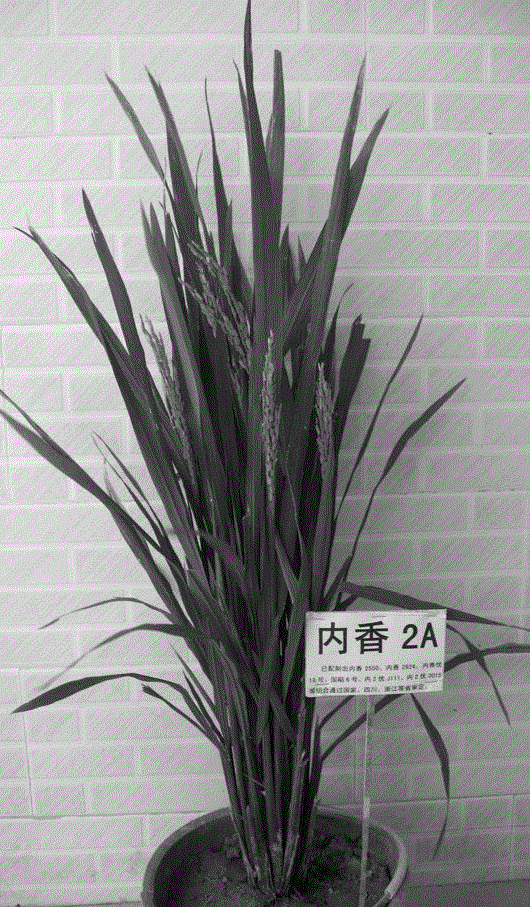
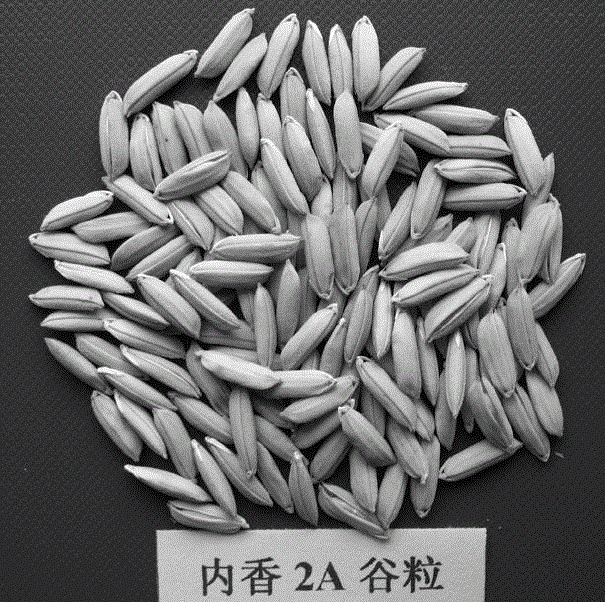
Examples
Embodiment Construction
[0030]In order to more clearly understand the purpose, technical solutions and beneficial effects of the present invention, the invention will be further described below in conjunction with specific examples, but the protection scope of the present invention is not limited to the following examples.
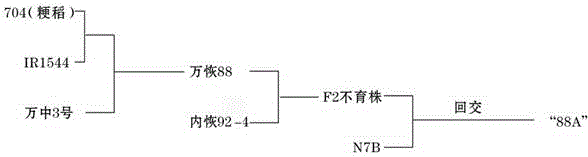
[0031] (1) Breeding of 88-type cytoplasm: from "Hui×Hui" F 2 Found a sterile cytoplasm with Yunnan japonica relatives, and kept the species for propagation.
[0032] In 1996, Wanhui 88 with Yunnan japonica relatives introduced from Chongqing Wanxian Institute of Agricultural Sciences (now Chongqing Three Gorges Institute of Agricultural Sciences) was used (recross combination "704 (Yunnan indica and japonica intermediate rice species, partial japonica with awns) / IR1544 / / Wanzhong 3") and self-bred Neihui 92-4, Neihui 94-4, Neihui 94-11 and other high-quality disease-resistant restorer lines were used to prepare reciprocal cross hybrid combinations to breed new restorer lines. In...
PUM
 Login to View More
 Abstract
Description
Claims
Application Information
 Login to View More