
Water-soluble surfactant composition and ink composition containing the composition
A surfactant and composition technology, applied in the field of water-soluble surfactant composition, can solve problems such as insufficient, poor fluid characteristics, and incapable of high-speed coating, and achieve practical benefits, small contact angle, and low dynamic surface tension Effect
- Summary
- Abstract
- Description
- Claims
- Application Information
AI Technical Summary
Problems solved by technology
Method used
Image

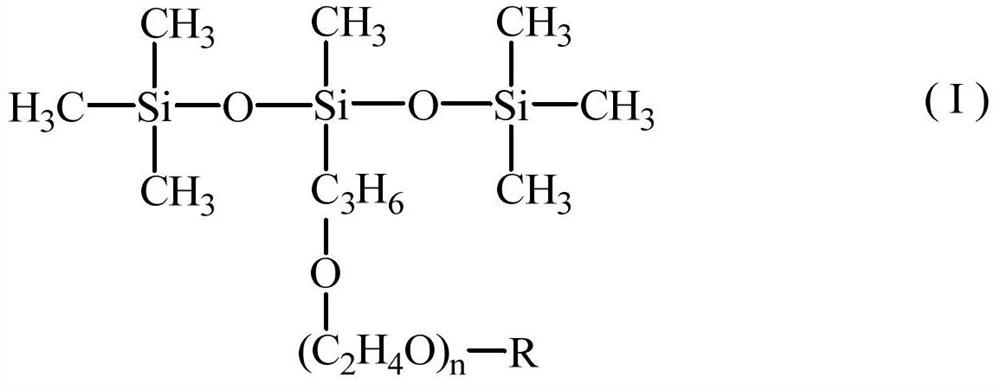
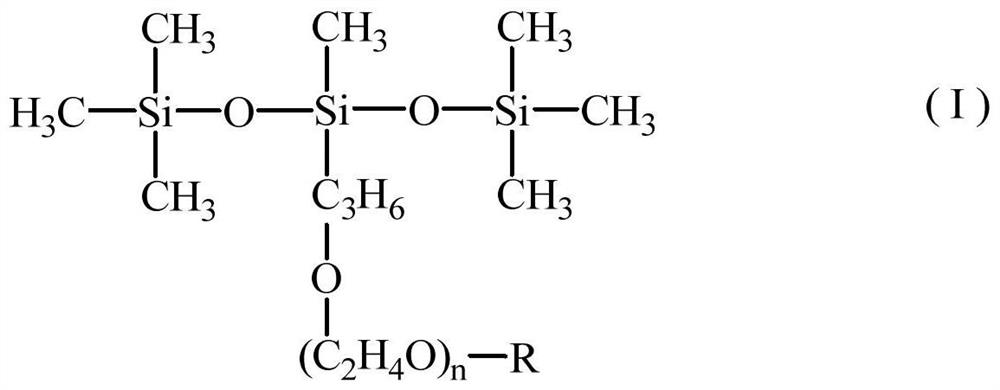
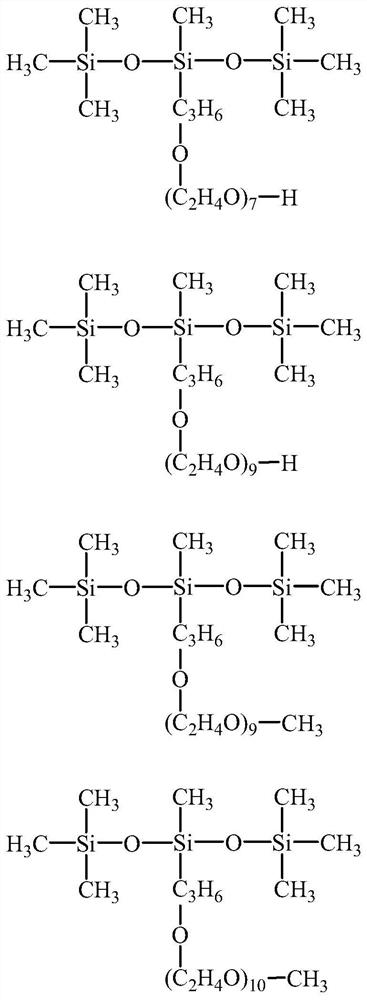
Examples
Embodiment 1
[0061] 80 parts of (A-1) heated to 50° C. were put into a container with a blade stirrer, 10 parts of propylene glycol and 10 parts of water were slowly added, and stirred for 1 hour to obtain a surfactant composition (hereinafter referred to as called M-1).
[0062] 【Chemical 4】
[0063]
Embodiment 2~4、 comparative example 1~9
[0065] Surfactant compositions M-2 to M-13 were obtained in the same manner as in Example 1 with the compounding compositions shown in Table 1.
[0066] 【Chemical 5】
[0067]
[0068] 【Chemical 6】
[0069]
[0070] 【Table 1】
[0071]
[0072] In addition, the measurement of each physical property was performed as follows. The results are shown in Table 2.
[0073]
[0074] The appearance of the aqueous solution and the presence or absence of insoluble matter were checked.
[0075] ○: The aqueous solution is transparent, and no insoluble matter is found
[0076] △: The aqueous solution was cloudy, but no insoluble matter was found
[0077] ×: A part of insoluble matter was found
[0078]
[0079]The dynamic surface tension at 1 Hz and 10 Hz of a 0.1% aqueous solution of the surfactant composition was measured using a bubble pressure type dynamic surface tensiometer Kruss BP-100 manufactured by KRUSS Corporation.
[0080]
[0081] The contact angle after dr...
Embodiment 5
[0086] As the ink, after slowly adding 5 parts of Kara Bradke S170 (manufactured by Degussa Co., Ltd.) as a black pigment to 70 parts of ion-exchanged water while stirring with a blade mixer, add 1 part of surfactant composition M-1, 10 1 part polyethylene glycol (molecular weight 200), 15 parts glycerin, and after stirring for 1 hour, a black ink composition (hereinafter referred to as ℓ-1) was obtained.
[0087] Furthermore, a magenta pigment (C.I. Pigment Red 122), a cyan pigment (C.I. Pigment Blue 15:3), and a yellow pigment (C.I. Pigment Yellow 74) were used instead of the above-mentioned black pigment, and magenta (C.I. Pigment Yellow 74) was produced in the same manner as above. M), cyan (C), yellow (Y) ink.
PUM
| Property | Measurement | Unit |
|---|---|---|
| surface tension | aaaaa | aaaaa |
Abstract
Description
Claims
Application Information
 Login to View More