Supercharge Your Innovation With Domain-Expert AI Agents!

A Surface Treatment Method of Anti-Ice Covering Composite Insulator

A composite insulator and surface treatment technology, applied in insulators, electrical components, circuits, etc., can solve the problems of power grid stability, worker safety threats, operator safety cannot be guaranteed, etc., to ensure surface uniformity and improve anti-overlap. Effect of Ice Ability

Active Publication Date: 2017-10-17
ELECTRIC POWER RES INST OF GUANGDONG POWER GRID
View PDF9 Cites 0 Cited by
  • Summary
  • Abstract
  • Description
  • Claims
  • Application Information

AI Technical Summary

Problems solved by technology

In 2008, large-scale snowfall in the south caused 19 provinces and regions to be affected to varying degrees, and the economic loss was nearly 60 billion yuan. In addition, during the deicing process of the transmission line, the safety of the staff was also greatly threatened.
However, in addition to the low efficiency of manual mechanical deicing, the safety of operators cannot be guaranteed; while thermodynamic deicing currently has few domestic devices, and it may have an impact on the stability of the power grid.

Method used

the structure of the environmentally friendly knitted fabric provided by the present invention; figure 2 Flow chart of the yarn wrapping machine for environmentally friendly knitted fabrics and storage devices; image 3 Is the parameter map of the yarn covering machine
View more

Image

Smart Image Click on the blue labels to locate them in the text.
Viewing Examples
Smart Image
  • A Surface Treatment Method of Anti-Ice Covering Composite Insulator
  • A Surface Treatment Method of Anti-Ice Covering Composite Insulator
  • A Surface Treatment Method of Anti-Ice Covering Composite Insulator

Examples

Experimental program
Comparison scheme
Effect test

Embodiment 1

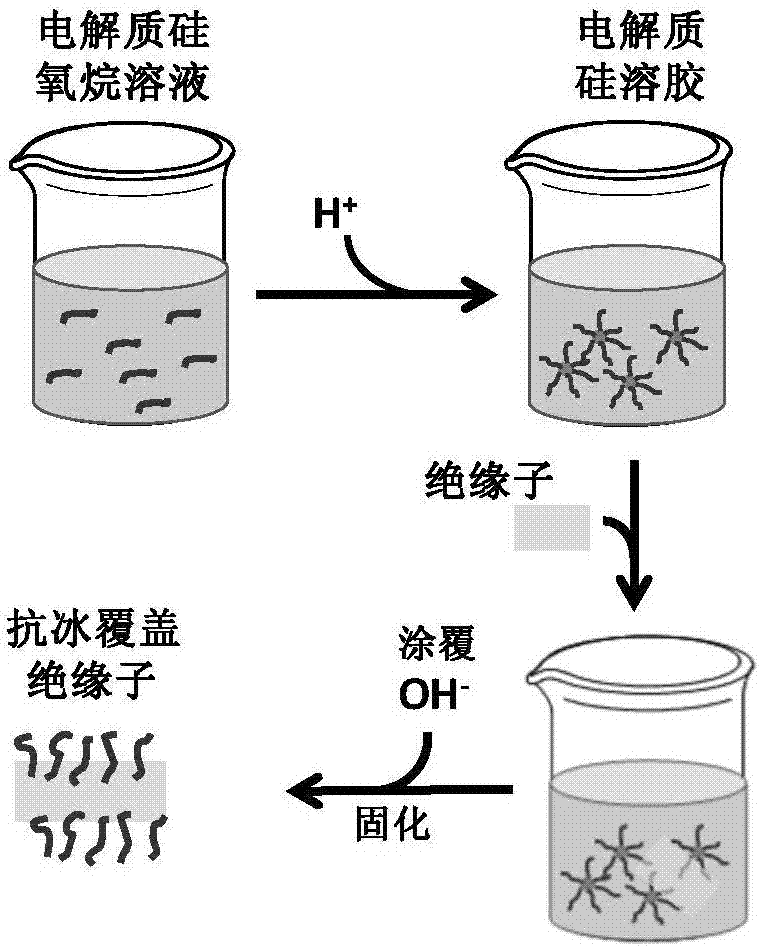
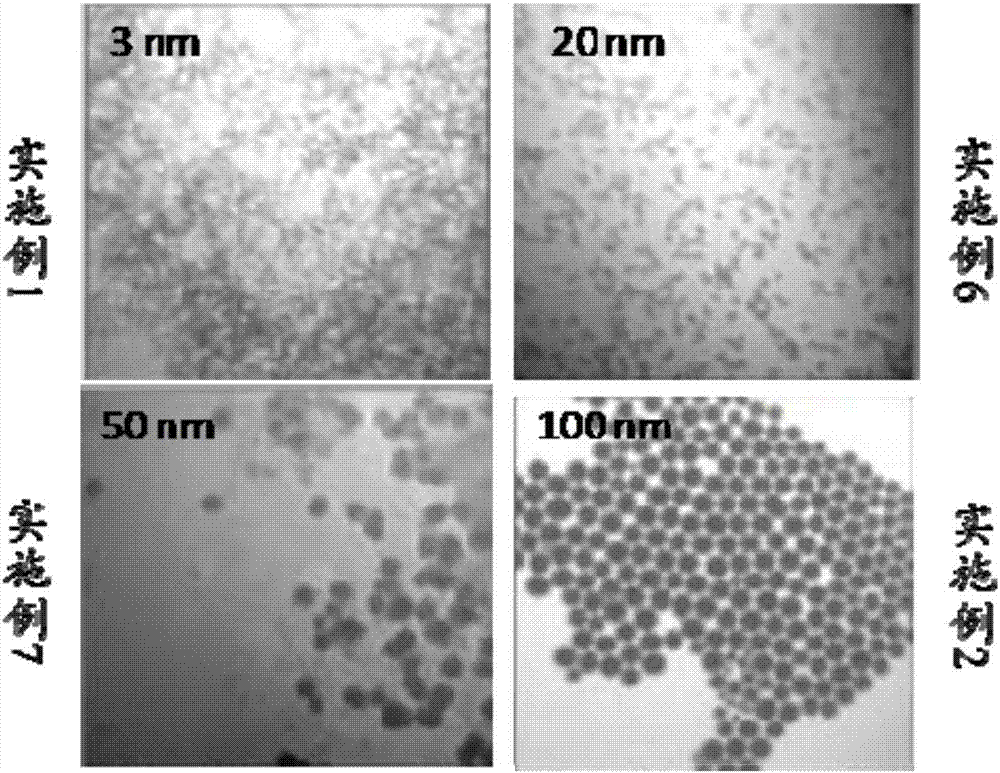
[0028] 1) Preparation of electrolyte-modified organosilicon sol: Dissolve 2g (trimethoxysilylpropyl) octadecyldimethylammonium chloride in 100mL deionized water to prepare a 20g / L solution. Slowly add 0.01mol / L of hydrochloric acid to the pH value of the solution to 3.5, and continue to stir for 30min to obtain a silicon oxide particle size of about 3nm (such as figure 2 Shown in the electron micrograph) the electrolyte-modified organosilicon sol;

[0029] 2) Coating of the electrolyte layer on the surface of the composite insulator: soak the cleaned and cut composite insulator into the silica sol prepared in step 1), adjust the pH value to 11.0 with 0.01mol / L NaOH solution, and continue soaking 4h;

[0030] 3) Curing of the electrolyte layer on the surface of the composite insulator: Take out the composite insulator soaked in step (2), dry it at room temperature, place it in an oven preheated to 140°C for 30 minutes, and wash it with deionized water to obtain an anti-icing ...

Embodiment 2

[0034] 1) Preparation of electrolyte-modified organosilicon sol: Dissolve 20g (trimethoxysilylpropyl) octadecyldimethylammonium chloride in 100mL deionized water to prepare a 200g / L solution. Slowly add the hydrochloric acid of 0.01mol / L to the pH value of solution to 1.0, continue to stir for 30min, obtain the organosilicon sol (as figure 2 as shown in the electron microscope photo);

[0035] Step 2) and step 3) are the same as in Example 1.

[0036] The roadmap of the preparation method is as follows figure 1 shown.

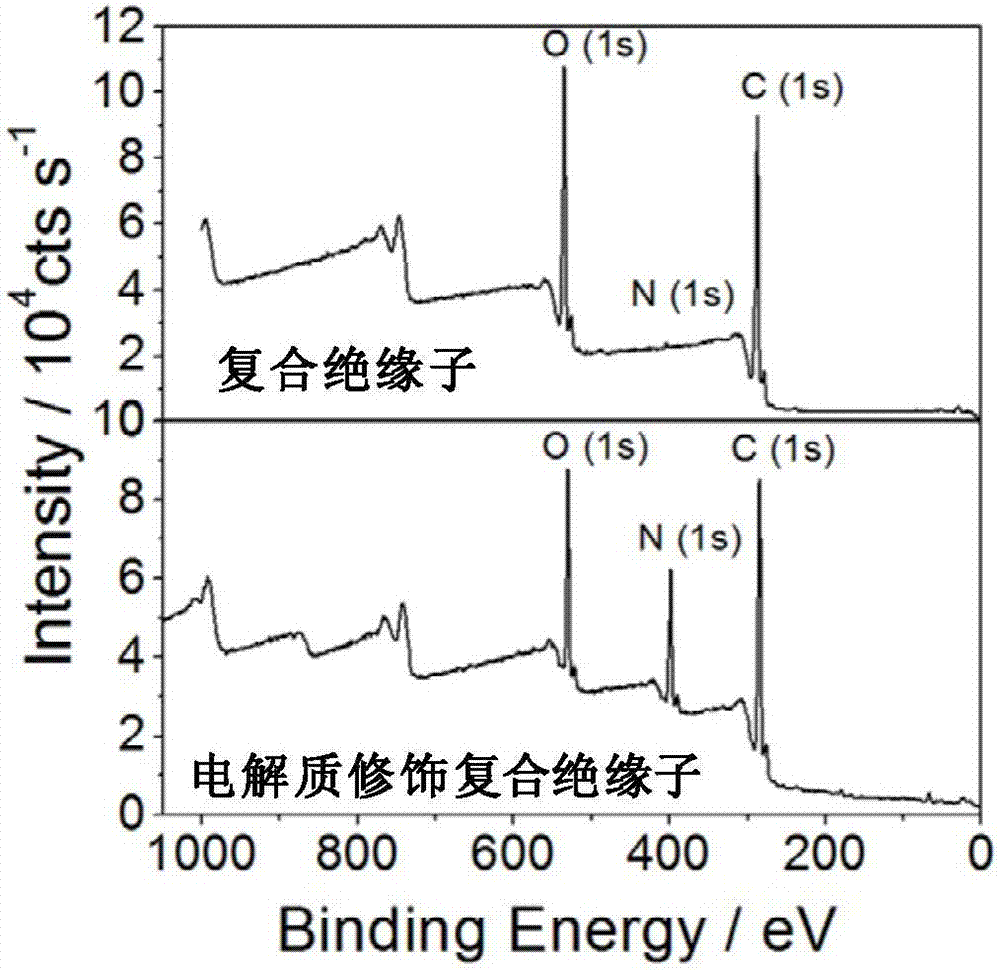
[0037] The photoelectron spectroscopy analysis results of Example 2 are the same as Example 1, and the electrolyte is successfully coated.

[0038] Similar to Example 1, the hydrophilicity of the surface of the insulator after coating with the electrolyte increases, and the contact angle of water droplets on the surface of the coated insulator is smaller than that of the uncoated insulator.

[0039] After testing, the water droplets on the surface of the i...

Embodiment 3

[0041] Step 1) is the same as in Example 1.

[0042] 2) Coating of the electrolyte layer on the surface of the composite insulator: Soak the cleaned and cut composite insulator into the silica sol prepared in step 1), adjust the pH value to 7.5 with 0.01mol / L NaOH solution, and continue soaking 48h;

[0043] Step 3) is the same as in Example 1.

[0044] The roadmap of the preparation method is as follows figure 1 shown.

[0045] The photoelectron spectroscopy analysis results of Example 3 are the same as those of Example 1, and the electrolyte is successfully coated.

[0046] Similar to Example 1, the hydrophilicity of the surface of the insulator after coating with the electrolyte increases, and the contact angle of water droplets on the surface of the coated insulator is smaller than that of the uncoated insulator.

[0047] After testing, the water droplets on the surface of the ice-resistant composite insulator prepared in Example 3 are still in a liquid state at -18°C....

the structure of the environmentally friendly knitted fabric provided by the present invention; figure 2 Flow chart of the yarn wrapping machine for environmentally friendly knitted fabrics and storage devices; image 3 Is the parameter map of the yarn covering machine
Login to View More

PUM

PropertyMeasurementUnit
particle diameteraaaaaaaaaa
Login to View More

Abstract

The invention relates to the field of an insulator and discloses a surface treatment technology for an anti-icing composite insulator. The surface treatment technology for the anti-icing composite insulator comprises the following steps: 1) preparing an organic silicon sol modified with an electrolyte; 2) coating an electrolyte layer on the surface of the composite insulator; and 3) curing the electrolyte layer on the surface of the composite insulator. According to the surface treatment technology for the anti-icing composite insulator, disclosed by the invention, a layer of stable electrolyte film can be formed on the surface of the composite insulator, so that the anti-icing capacity of the insulator can be promoted; and the treating process is simple and easy, and the popularization and application are facilitated.

Description

technical field [0001] The invention relates to the field of insulators, in particular to a surface treatment method for ice-resistant composite insulators. Background technique [0002] Affected by the macro-climate, micro-topography, and micro-meteorological conditions in my country, ice and snow disasters occur frequently. In 2008, large-scale snowfall in the south caused 19 provinces and regions to be affected to varying degrees, and the economic loss was nearly 60 billion yuan. In addition, during the deicing process of power transmission lines, the safety of staff was also greatly threatened. In 2003, the unplanned outage of 500kV lines in my country due to ice flash of insulators accounted for 23% of the total outage lines. In recent years, there have been many ice flashover accidents in Central my country. [0003] Composite insulators are widely used in power systems because of their light weight, high mechanical strength, and good hydrophobicity, which can effect...

Claims

the structure of the environmentally friendly knitted fabric provided by the present invention; figure 2 Flow chart of the yarn wrapping machine for environmentally friendly knitted fabrics and storage devices; image 3 Is the parameter map of the yarn covering machine
Login to View More

Application Information

Patent Timeline
no application Login to View More
Patent Type & Authority Patents(China)
IPC IPC(8): H01B19/04
CPCH01B19/04
Inventor 张凯李丽盘思伟吴佩琪
Owner ELECTRIC POWER RES INST OF GUANGDONG POWER GRID
Features
  • R&D
  • Intellectual Property
  • Life Sciences
  • Materials
  • Tech Scout
Why Patsnap Eureka
  • Unparalleled Data Quality
  • Higher Quality Content
  • 60% Fewer Hallucinations
Social media
Patsnap Eureka Blog
Learn More