
Microbial agent containing bacillus bataviensis HJ-1 and application of microbial agent
A technology of bacillus and bacterial agents, applied in the field of microbial remediation of heavy metal-contaminated soil, can solve the problems of unstable effect, large application amount, and difficulty in meeting remediation standards
- Summary
- Abstract
- Description
- Claims
- Application Information
AI Technical Summary
Problems solved by technology
Method used
Image

Examples
Embodiment 1
[0082] Hydrogen sulfide production experiment of the present invention (lead acetate test paper verification experiment).
[0083] 1. Preliminary determination of hydrogen sulfide production by Bacillus bataviensis HJ-1
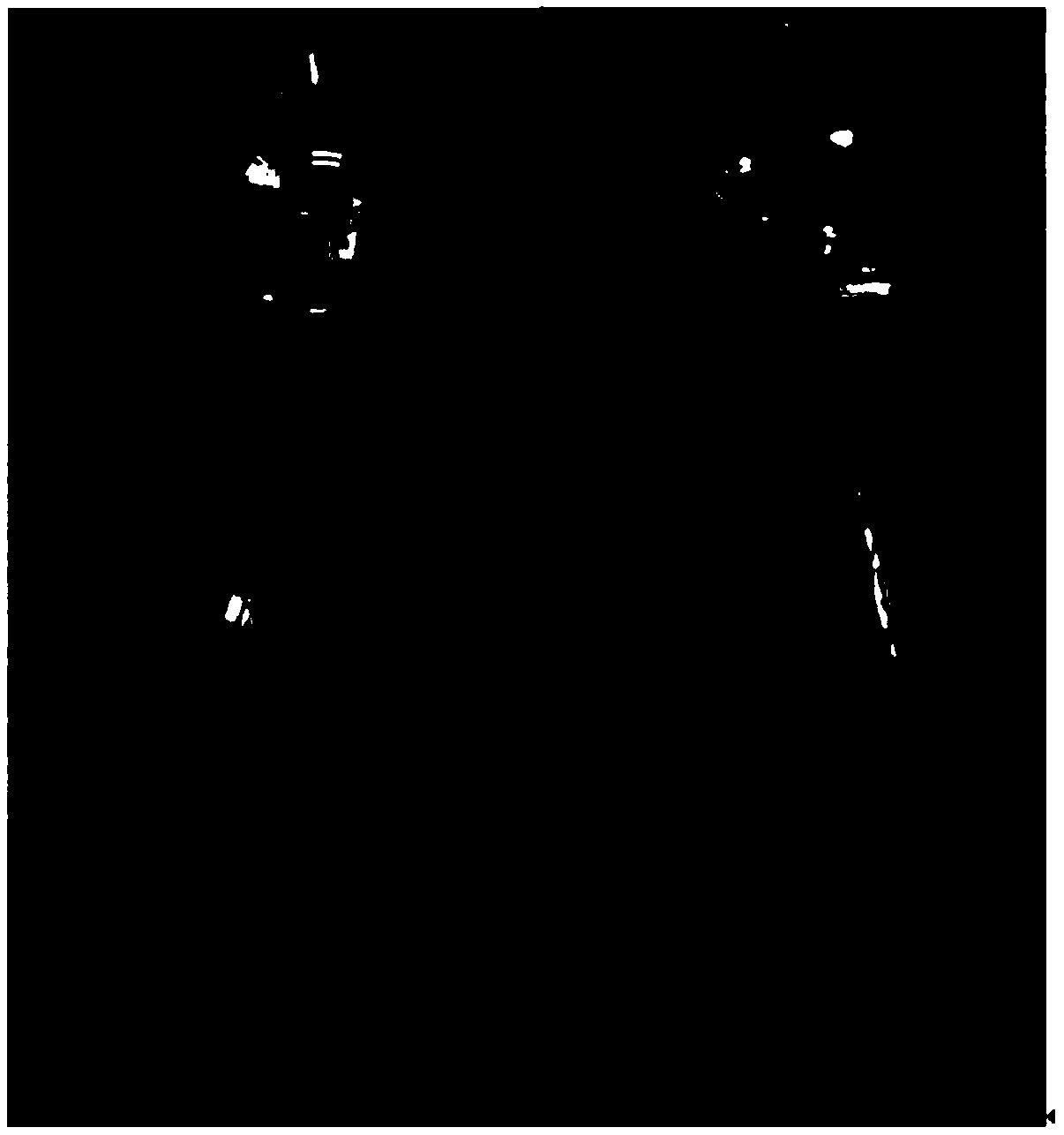
[0084] The activated strain HJ-1 was preliminarily screened for hydrogen sulfide production in LB medium by lead acetate test paper.
[0085] Results: The triangular flask was tightly sealed with a ground mouth. After the strain was inserted, it was first cultured on a shaker with a sealing film until the strain grew slightly, and then replaced with a ground sieve under aseptic conditions, and the lead acetate test paper was fixed and hung to continue the culture. The results showed that after overnight cultivation, the lead acetate test paper turned black, showing that the strain could produce hydrogen sulfide, resulting in black lead sulfide. see results figure 1 .
[0086] 2. CdS production experiment after culturing strain HJ-1 in cadmium solution.
...
Embodiment 2
[0089] Fourier transform infrared (FT-IR) spectroscopic analysis of strain HJ-1.
[0090] After the HJ-1 strain was cultured, it was freeze-dried and analyzed by Fourier transform infrared spectroscopy (FT-IR). See image 3 .
[0091] The results show that the wavelength is 3414cm -1 The bands indicate that the strain contains the groups -NH and -OH at wavelengths of 1649, 1545, 1454, 1237 and 1056 cm -1 The bands indicated that the strain contained -NH twist group or carbonyl group. The surface of this strain contains groups such as -NH, -OH and C-O.
Embodiment 3
[0093] Add cadmium (II), lead (II), and arsenic (III) mother solutions to the triangular flasks with sterile medium, so that the final concentrations of cadmium (II), lead (II), and arsenic (III) respectively reach 100 mg / L, under aseptic conditions, were inoculated with Batavia bacillus HJ-1 with 2% inoculum, and the control CK was not inoculated. After inoculation, shake (180rpm) at 30°C for 48h, then centrifuge at 6000rpm for 10min, and measure the contents of cadmium(II), lead(II) and arsenic(III) in the supernatant respectively. The results are shown in Table 2.
[0094] Table 2. The adsorption effect of strain HJ-1 on cadmium (II), lead (II) and arsenic (III) in culture medium
[0095]
PUM
| Property | Measurement | Unit |
|---|---|---|
| specific surface area | aaaaa | aaaaa |
Abstract
Description
Claims
Application Information
 Login to View More