
A Method for Determining Relative Gas Permeability of Tight Gas Reservoirs
A relative permeability and determination method technology, which is applied in the field of oil and gas reservoir development, can solve the problems of time-consuming, gas relative permeability correction, slippage effect, etc.
- Summary
- Abstract
- Description
- Claims
- Application Information
AI Technical Summary
Problems solved by technology
Method used
Image


Examples
Embodiment 1
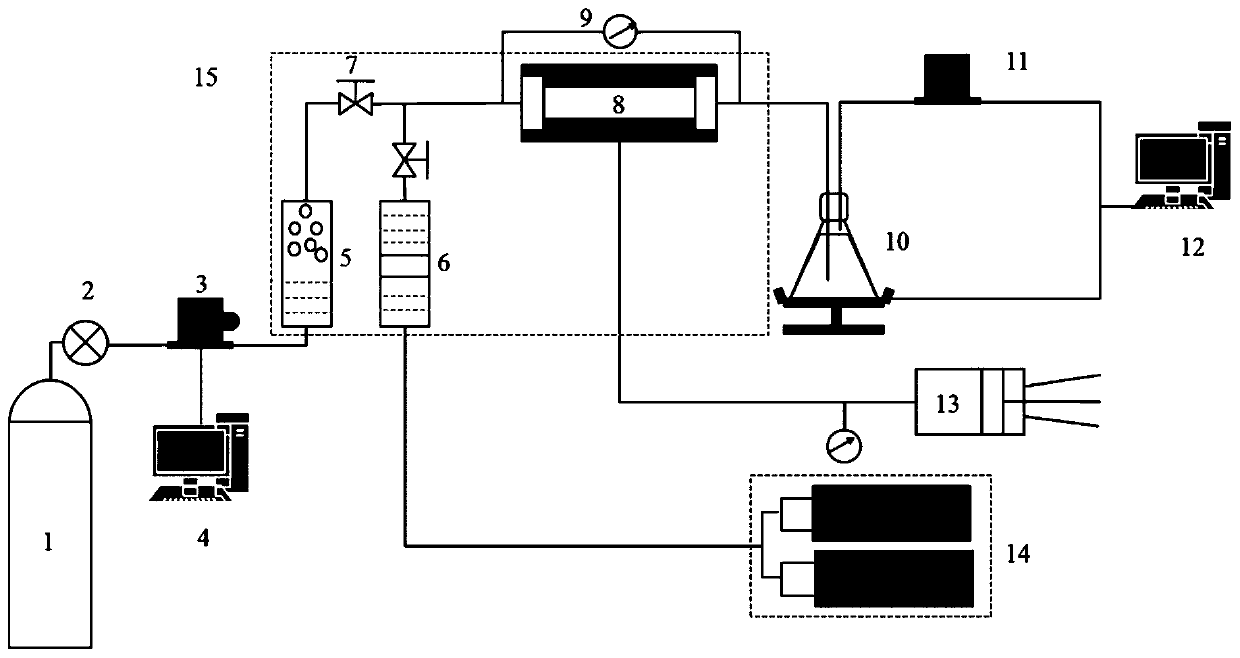
[0068] This embodiment provides a method for determining the relative gas permeability of tight gas reservoirs, which may include the following steps:
[0069] 1. Core preparation
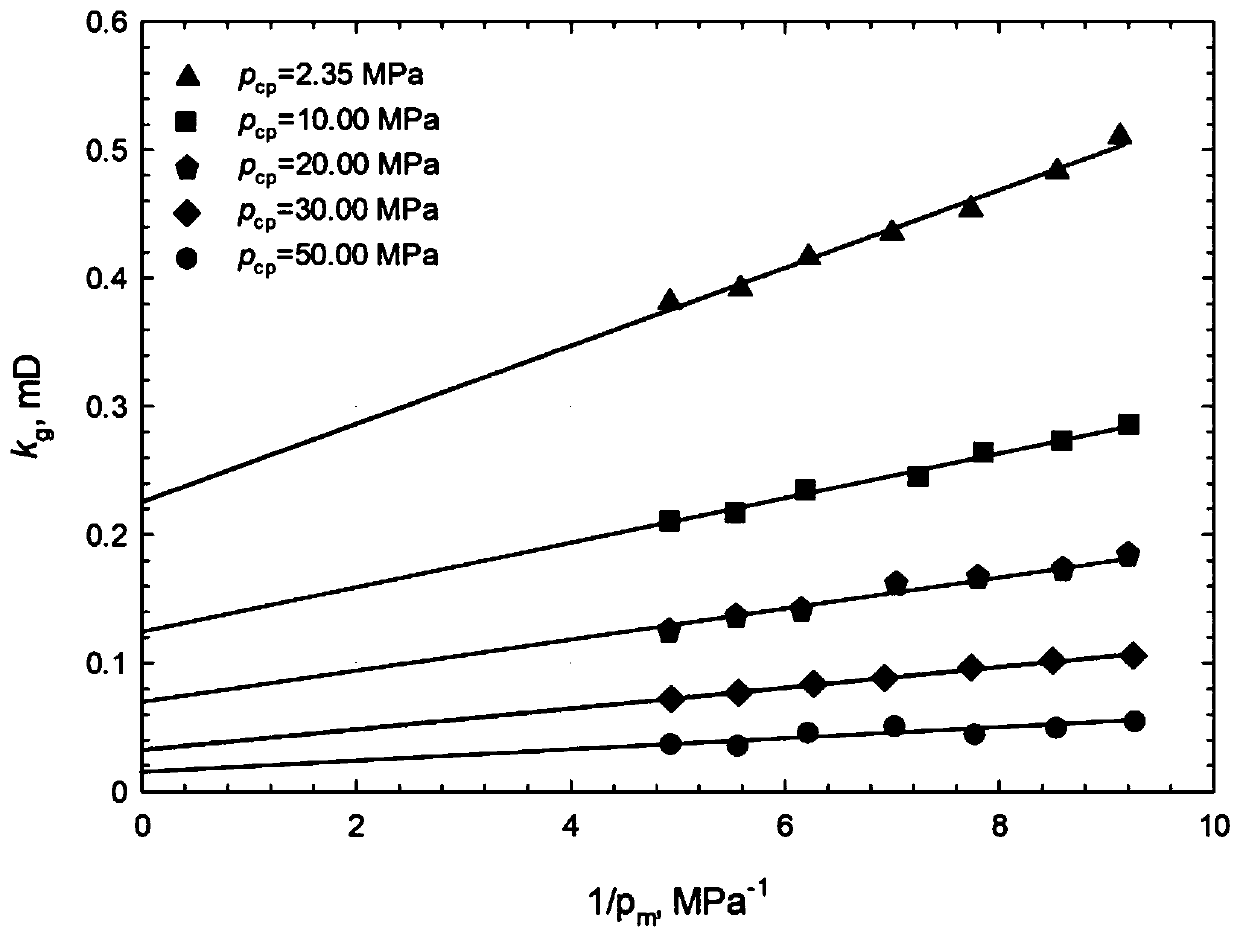
[0070] In order to simulate reservoir conditions in the laboratory, the experimental temperature is set at 25°C-90°C, and the experimental confining pressure is 2.35MPa-50.00MPa.
[0071] The gas permeability, porosity and geometric parameters of the six core samples used in the experiment are listed in Table 1. The gas permeabilities in Table 1 were measured by using gas (nitrogen) under laboratory conditions.
[0072] The steps for measuring porosity are as follows: (1) Dry the rock sample at 110°C for 8 hours; (2) Weigh the dried rock sample; (3) Make the rock sample vacuum; (4) Saturation with synthetic brine Vacuum the rock samples, and weigh the wet rock samples; (5) Calculate the porosity by using the difference in weight between the dry and wet rock samples.
[0073] Table 1
[0074] ...
PUM
 Login to View More
 Abstract
Description
Claims
Application Information
 Login to View More