Method for screening cattle high altitude hypoxia adaptation molecular markers and application thereof

A high-altitude hypoxia and molecular marker technology, applied in biochemical equipment and methods, microbial measurement/inspection, instruments, etc., can solve the problems of unknown history of origin and domestication, and achieve cost savings and time for characteristic germplasm cultivation , The application is easy to operate, and the effect of good economic and social benefits

CN109994153AActive Publication Date: 2019-07-09DAIRY CATTLE RES CENT SHANDONG ACADEMY OF AGRI SCI +1
8 Cites 12 Cited by

Patent Information

Authority / Receiving Office
CN · China
Patent Type
Applications(China)
Current Assignee / Owner
Publication Date
2019-07-09

Smart Images

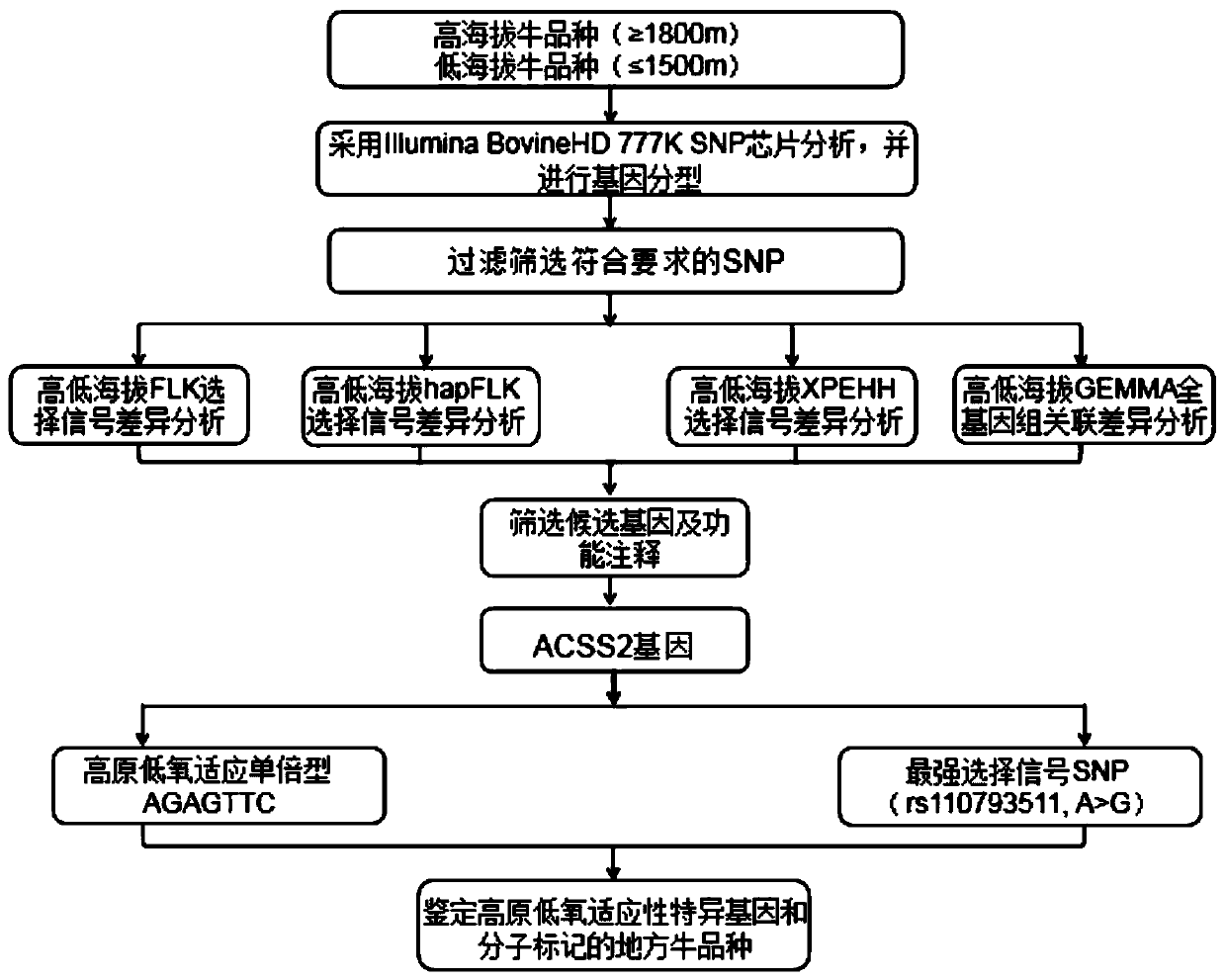
  • Figure 1
    Figure 1
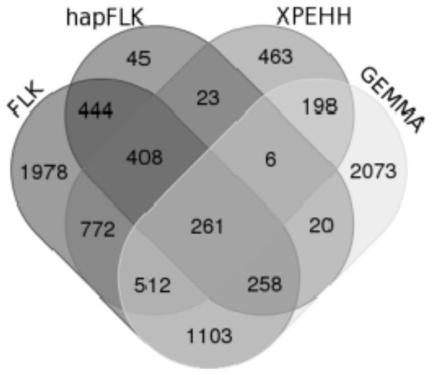
  • Figure 2
    Figure 2
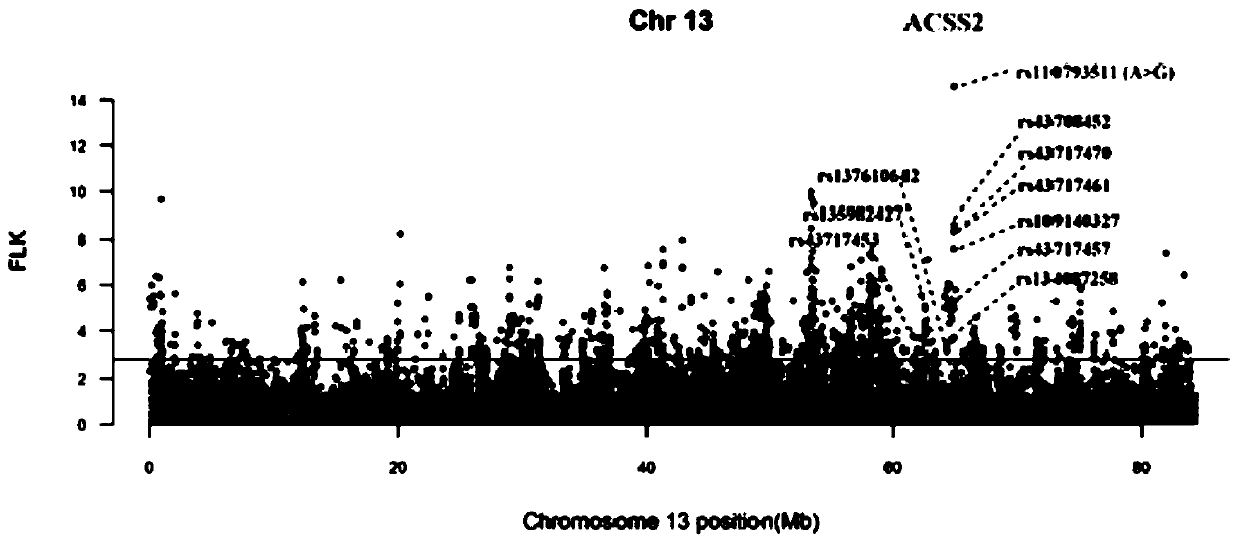
  • Figure 3
    Figure 3
Patent Text Reader

Abstract

The invention provides a method for screening cattle high altitude hypoxia adaptation specific molecular marker, and furthermore a cattle kind or individual which is suitable for high altitude hypoxiasurvival is screened through the specific marker. The method aims at a high altitude hypoxia adaptation heredity characteristic of a kettle kind, and selects local cattle kinds which are distributedin high altitude regions at aspects of genome evolution, selecting and adapting. Multiple genome selecting signals, a full-genome association analysis method and a strategy are combined. Key genes andmolecular makers which are suitable for high altitude hypoxia are efficiently and accurately screened. Reasonable method designed is realized. The detecting method according to the key gene and marker designing has advantages of high accuracy, and convenient application operation. According to the method of the invention, through analyzing different altitude cattle kinds, a gene ACSS2 which is related with high altitude hypoxia adaptation and a haplotype thereof are found; and furthermore a specific SNP which bears a strongest selecting signal is positioned; and the method realizes an important meaning and a high practicability value for cattle molecule breeding operation.
Need to check novelty before this filing date? Find Prior Art

Description

technical field

[0001] The invention belongs to the technical field of animal molecular breeding, and in particular relates to a method for screening molecular markers for adaptation to plateau hypoxia in cattle and an application thereof. Background technique

[0002] The information disclosed in this background section is only intended to increase the understanding of the general background of the present invention, and is not necessarily taken as an acknowledgment or any form of suggestion that the information constitutes the prior art already known to those skilled in the art.

[0003] Cattle are listed among the "six animals". The ancient people of our country used them for sacrifice, divination (scapula), plowing, pulling carts, riding and participating in wars. my country has a long history of domestication of cattle. The ancient poem "The Book of Songs. Xiaoya. No Sheep", which describes the early Western Zhou Dynasty to the middle of the Spring and Autumn Period (1...

Examples

Embodiment 1

[0087] 1. Collection of local cattle samples

[0088] Select 42 cattle breeds (including 25 local cattle breeds at different altitudes in China and 17 foreign cattle breeds), a total of 580 heads, including ordinary cattle, zebu, and their mixed breeds, and extract blood separately DNA. Among them, the cattle breeds distributed at altitudes below 1500 meters constitute the low-altitude group, and the cattle breeds distributed at altitudes above 1800 meters constitute the high-altitude group. In addition, a total of 44 individuals from 3 yak breeds were sampled to analyze the origin of alleles. Cattle breeds and grouping information are as follows:

[0089]

[0090] 2. Genotyping using Illumina BovineHD 777KSNP chip

[0091] The array had a total of 777,962 SNP markers, and 40,497 SNPs on the X, Y, and mitochondrial chromosomes as well as SNPs that did not uniquely map to UMD3.1 were removed from the data. The SNP data was filtered using Plink1.9 software, and after filt...