
Image emotion classification method based on LSTM network and attention mechanism
A technology of emotion classification and attention, applied in the field of image processing, can solve the problem of low precision and achieve the effect of reducing the impact of semantic gap
- Summary
- Abstract
- Description
- Claims
- Application Information
AI Technical Summary
Problems solved by technology
Method used
Image

Examples
Embodiment 1
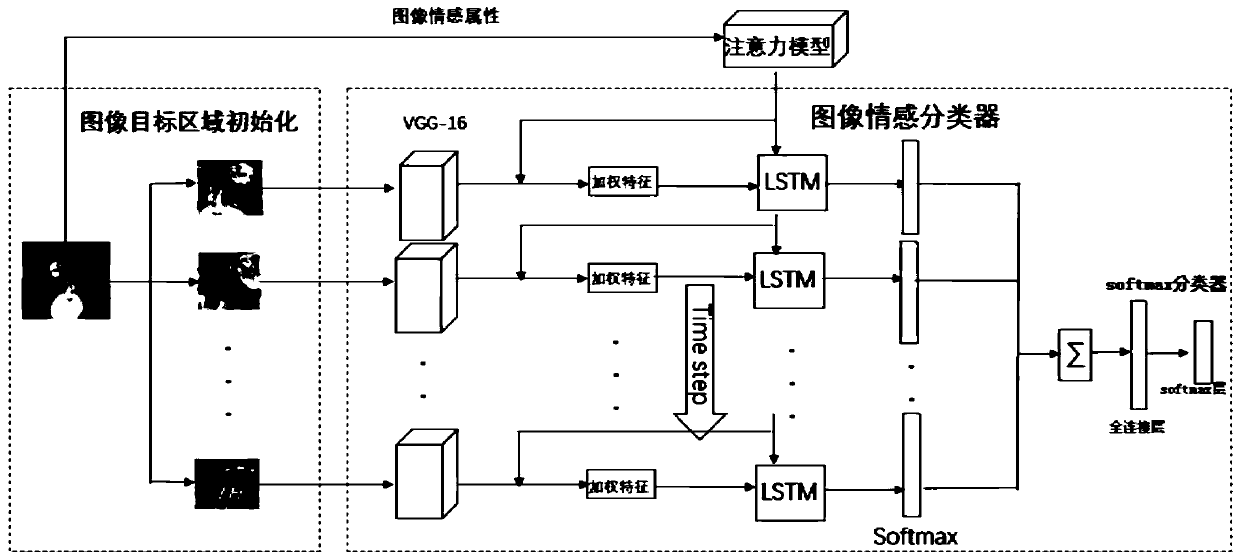
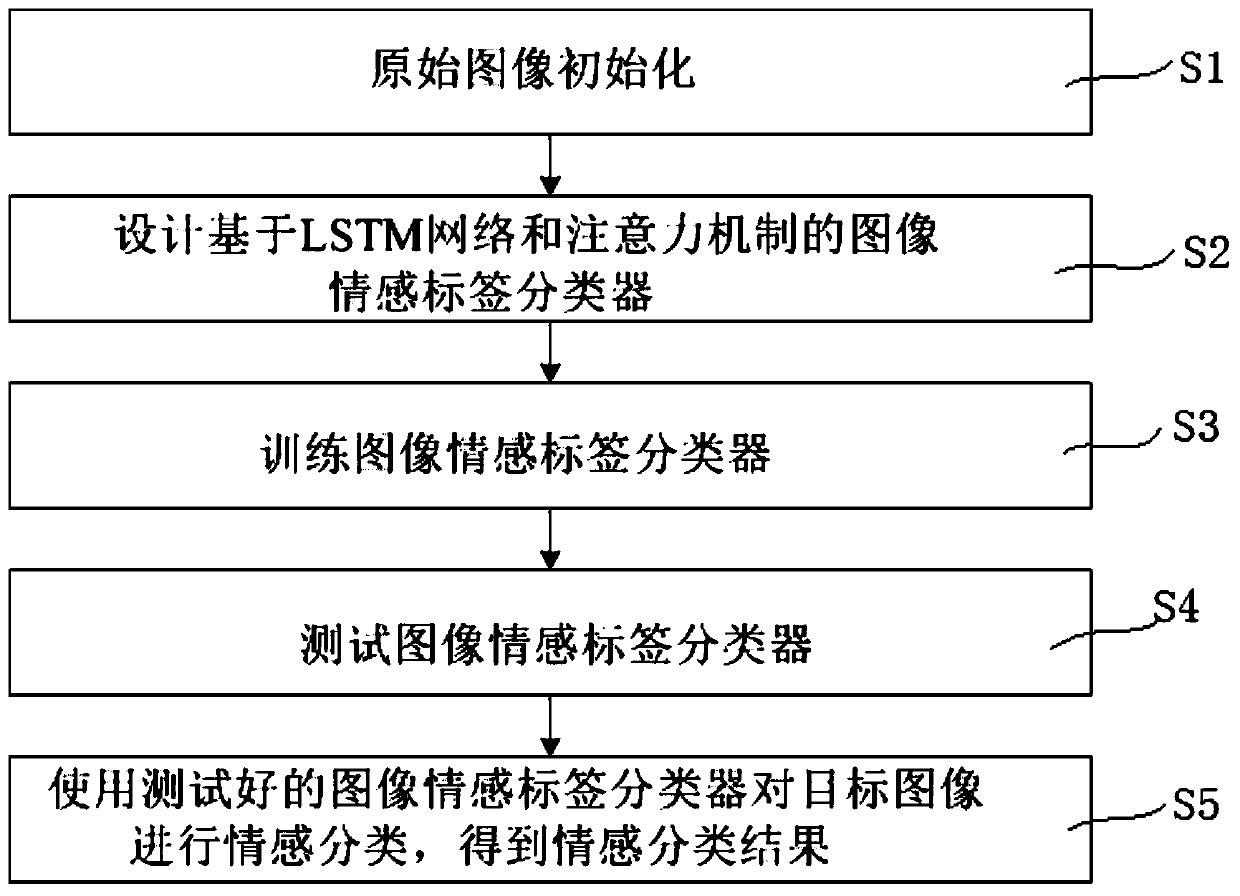
[0054] An image sentiment classification method based on LSTM network and attention mechanism, such as figure 1 , 2 As shown, including the following steps:
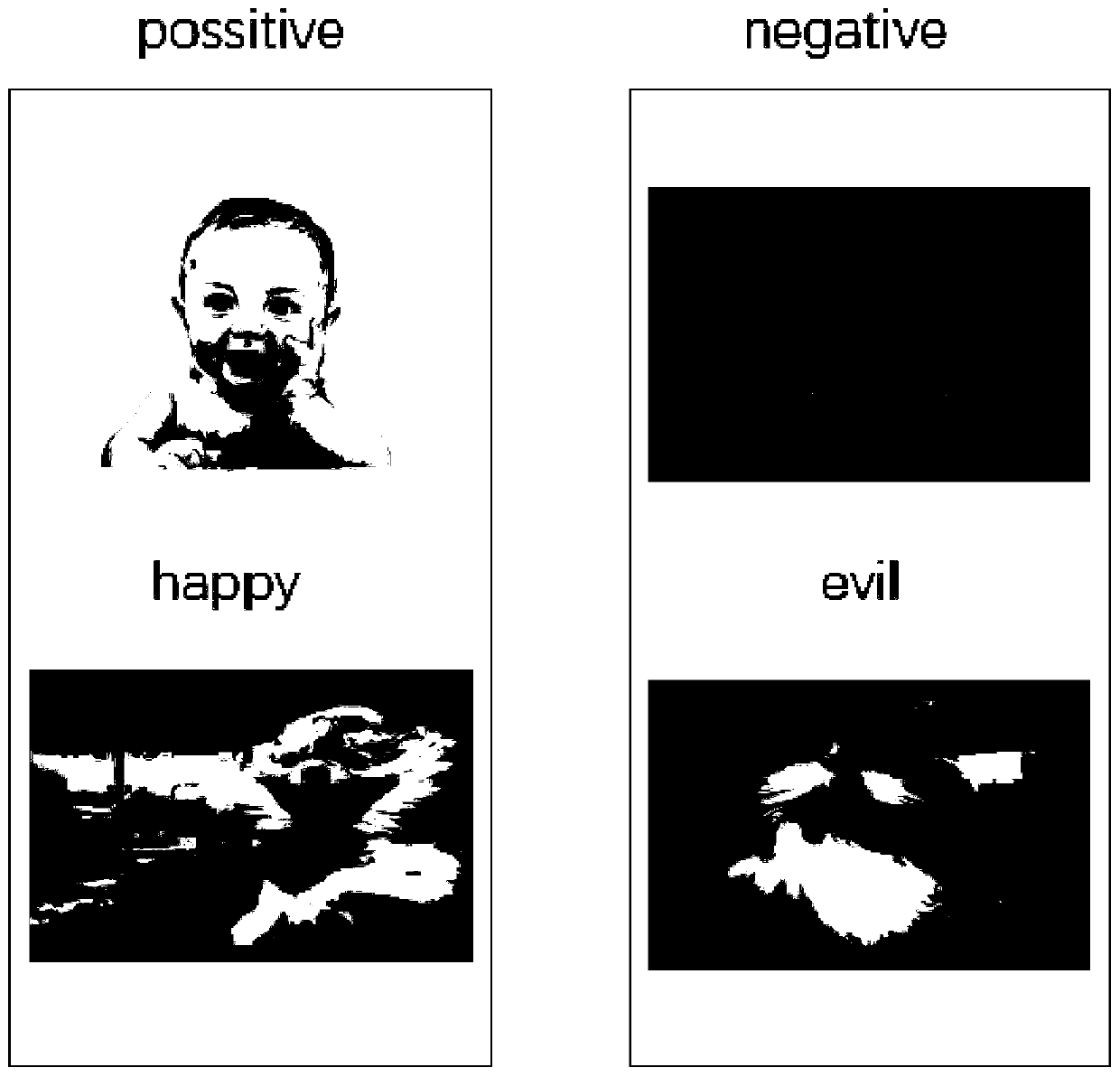
[0055] S1. Original image initialization: Obtain the original image from the image emotion database, divide the original image into a training image, a test image, and a target image, and initialize the original image to generate a corresponding image target area; Each of the original images corresponds to an emotional attribute and an emotional label; each image in the data set corresponds to an emotional attribute and an emotional label. This embodiment 1 uses the vso image emotion database, in which each picture corresponds to an emotion attribute and an emotion label; image 3 As shown, the happy baby in the upper left of the figure has an emotional attribute of happy and an emotional label of positive.
PUM
 Login to View More
 Abstract
Description
Claims
Application Information
 Login to View More