
Air disinfection and purification device based on plasma in-situ coupling nano-catalysis
A nano-catalysis and air disinfection technology, applied in the direction of air quality improvement, air conditioning system, space heating and ventilation, etc., can solve the problems of low disinfection and purification efficiency, high energy consumption and cost, large device volume, etc., to improve disinfection and purification. ability, the effect of promoting the surface decomposition of ozone
- Summary
- Abstract
- Description
- Claims
- Application Information
AI Technical Summary
Problems solved by technology
Method used
Image

Examples
Embodiment
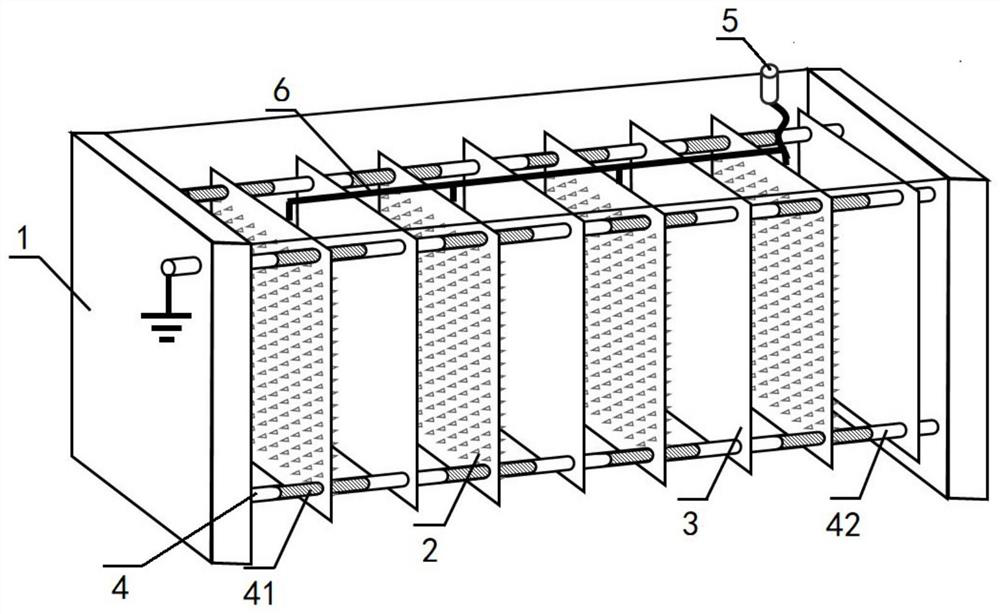
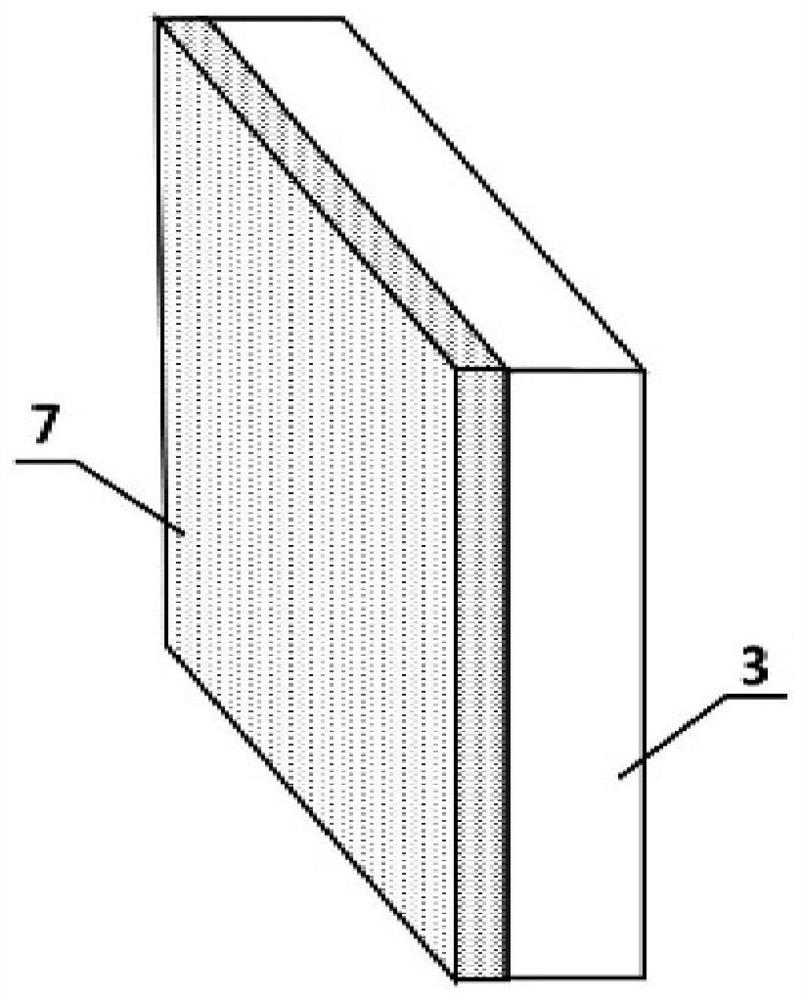
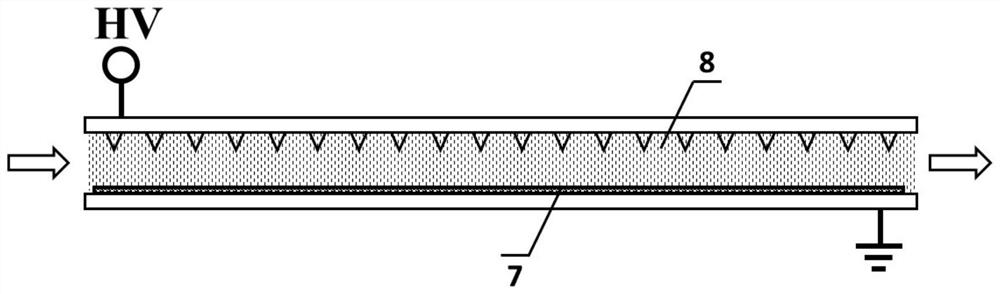
[0038] Such as Figure 1-3As shown, an air disinfection and purification device based on plasma in-situ coupling nano-catalysis includes a housing 1, a power supply 5, a connector 4 and at least one catalytic discharge unit, and the connector 4 and the catalytic discharge unit are located in the housing 1 , the connector 4 is connected to the housing 1 , the catalytic discharge unit is connected to the connector 4 and fixed in the housing 1 through the connector 4 . The catalytic discharge unit comprises a first electrode assembly 2 and a second electrode assembly 3 oppositely arranged, and the first electrode assembly 2 and the second electrode assembly 3 are respectively connected to a power supply 5 through a wire 6, so that the first electrode assembly 2 and the second electrode assembly 3 as the positive and negative electrodes, so that a plasma field is generated between the positive and negative electrodes, that is, the plasma region 8 is formed. A nano-catalyst 7 is a...
PUM
 Login to View More
 Abstract
Description
Claims
Application Information
 Login to View More