
System and method for interaction with a computer implemented interactive application using a depth aware camera
a technology of depth awareness and interactive application, applied in image data processing, sport apparatus, video games, etc., can solve the problems of imposing some constraints on the aesthetics of the passive magic wand, limiting the applicability of the implementation, and high computational cost, and achieve high processing speed and high reliability
- Summary
- Abstract
- Description
- Claims
- Application Information
AI Technical Summary
Benefits of technology
Problems solved by technology
Method used
Image

Examples
Embodiment Construction
Depth Aware Cameras
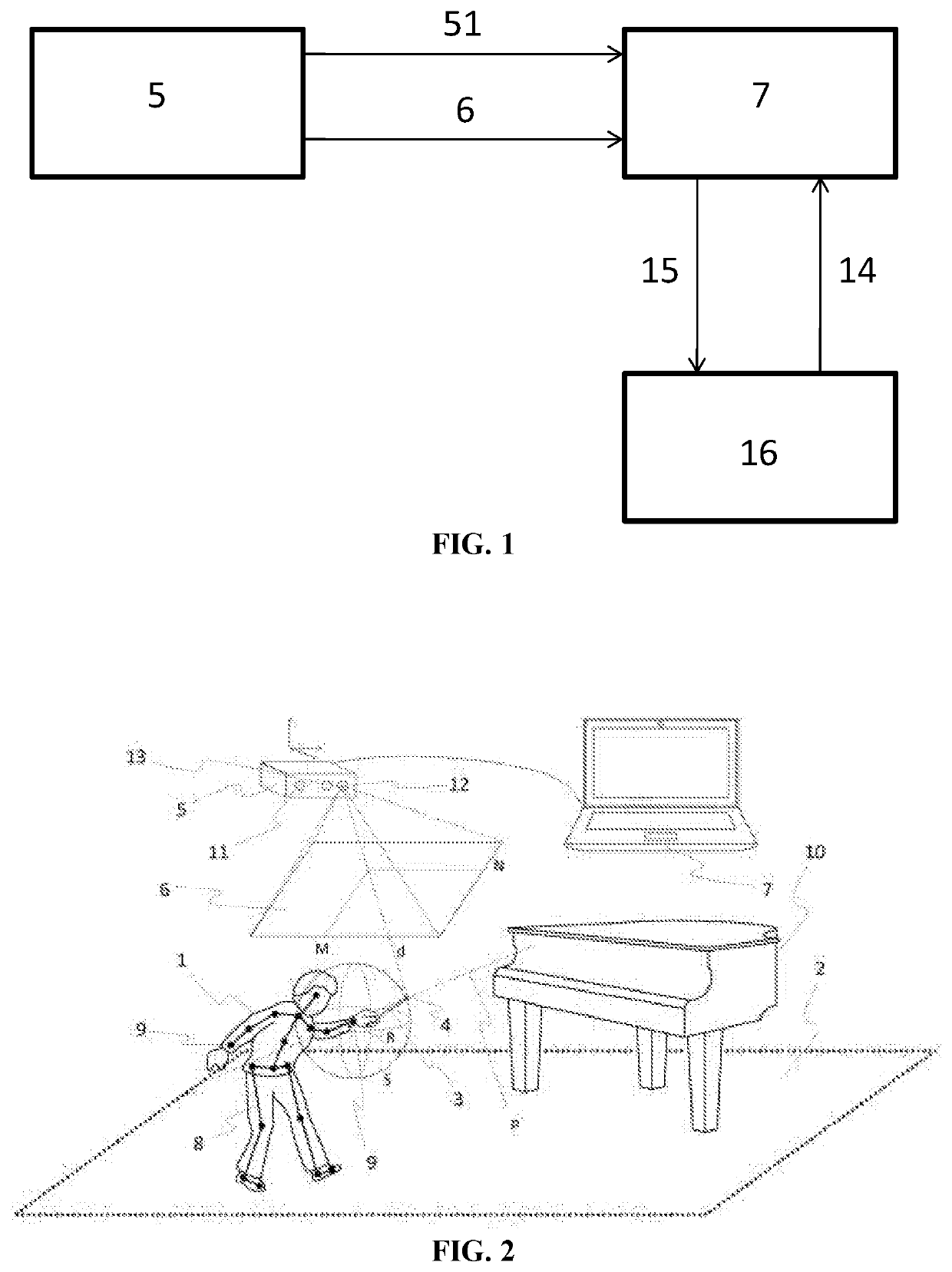
[0038]A depth aware camera is thus a camera showing the distance to points in a scene from a specific point associated with a sensor of said camera. There exist several technologies to implement depth aware cameras.
[0039]Range gated time-of-flight cameras implement a method wherein an irradiating source sends pulsed light, typically infrared light, towards objects in a scene. The pulsed light travels to the body and is reflected back to a video camera that is equipped with a shutter to control the timing of receipt of light onto its sensor. Because part of every returning pulse is blocked by the shutter according to its time of arrival, the amount of light received relates to the distance the pulse has travelled. Accordingly, the amount of energy which is collected by the sensor is inversely proportional to the distance of the point from the sensor.
[0040]Direct time-of-flight imagers measure the direct time-of-flight required for a single laser pulse to leave the ...
PUM
 Login to View More
 Abstract
Description
Claims
Application Information
 Login to View More