
System and method to calculate the value of a non-tradable option such as an employee stock option, considering characteristics such as term structure in interest rates, volatility and dividends, constraints such as vesting and black-out periods as well as voluntary and involuntary early exercise patterns prescribed as a function of stock price, time or both
a non-tradable option and employee stock option technology, applied in the field of valuation of non-tradable options, can solve the problems of limiting exercise, traditional techniques such as black-scholes are not directly applicable in the valuation of these options, and all companies will be required to expense them in their financial statements
- Summary
- Abstract
- Description
- Claims
- Application Information
AI Technical Summary
Benefits of technology
Problems solved by technology
Method used
Image

Examples
Embodiment Construction
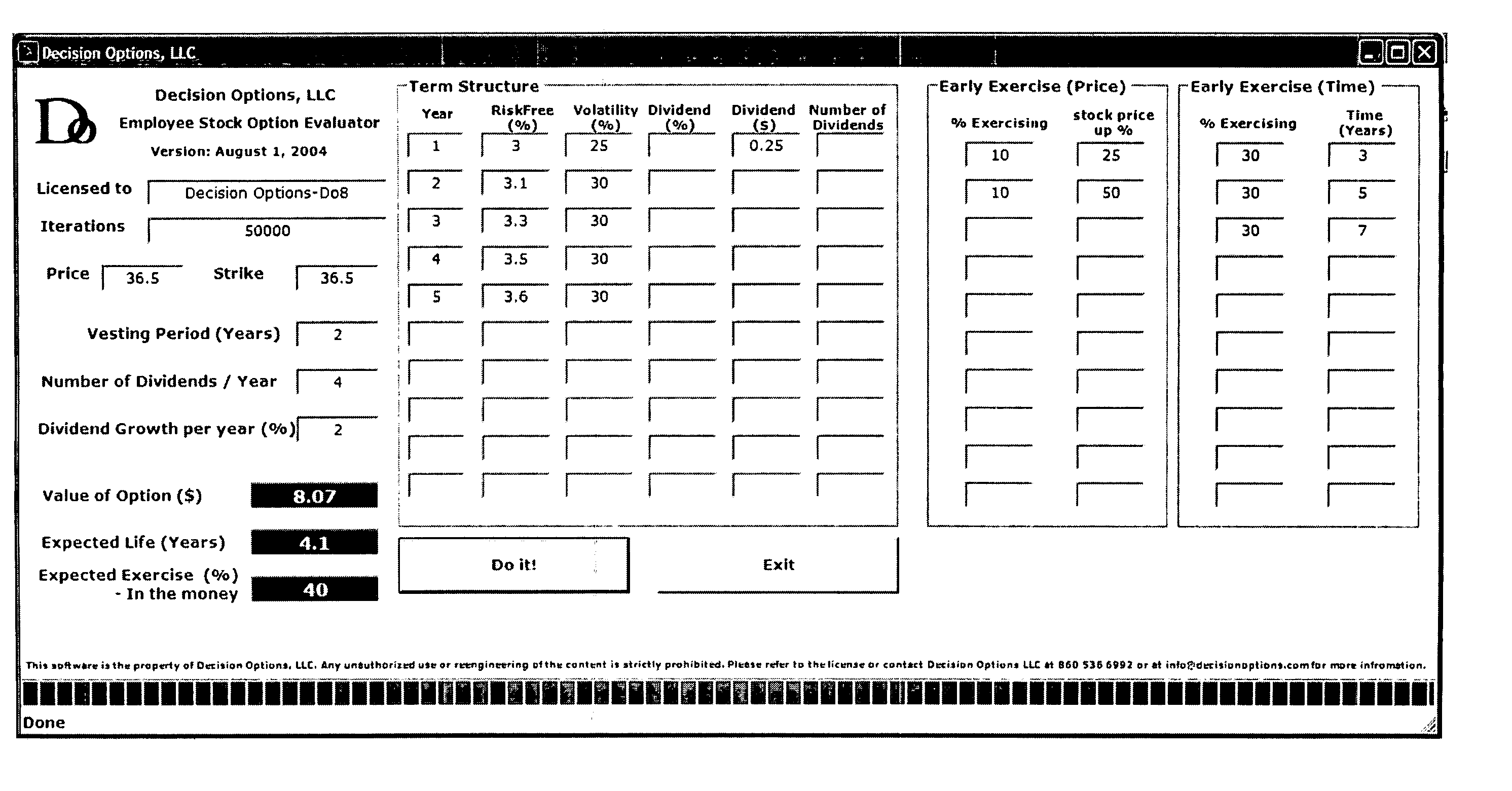
[0020] The invention relates generally to the field of valuation of non-traded options such as Employee Stock Options Valuation. More particularly, the invention relates to a method and system to value non-traded options considering voluntary and involuntary early exercise, exercise constraints such as vesting periods and black-out periods and the expected changes (term structure) in interest rates, volatility and dividends. The invention disclosed herein is, of course, susceptible to embodiment in many different forms. Shown in the drawings and described herein below in detail are preferred embodiments of the invention. It is to be understood, however, that the present disclosure is an exemplification of the principles of the invention and does not limit the invention to the illustrated embodiments.
[0021] The method of valuing non-exchange traded options such as Employee Stock Options considering price and time dependent voluntary and involuntary exercise behavior, exercise constr...
PUM
 Login to View More
 Abstract
Description
Claims
Application Information
 Login to View More