
Apparatus and system for adjusting settings of a power system device using a magnetically coupled actuator
a technology of magnetically coupled actuators and actuators, which is applied in emergency protective circuit arrangements, transmissions, instruments, etc., can solve the problems of system vulnerability to phone network outages, high cost of underground site techniques, and substantial time and money spent by electric utilities determining
- Summary
- Abstract
- Description
- Claims
- Application Information
AI Technical Summary
Benefits of technology
Problems solved by technology
Method used
Image

Examples
Embodiment Construction
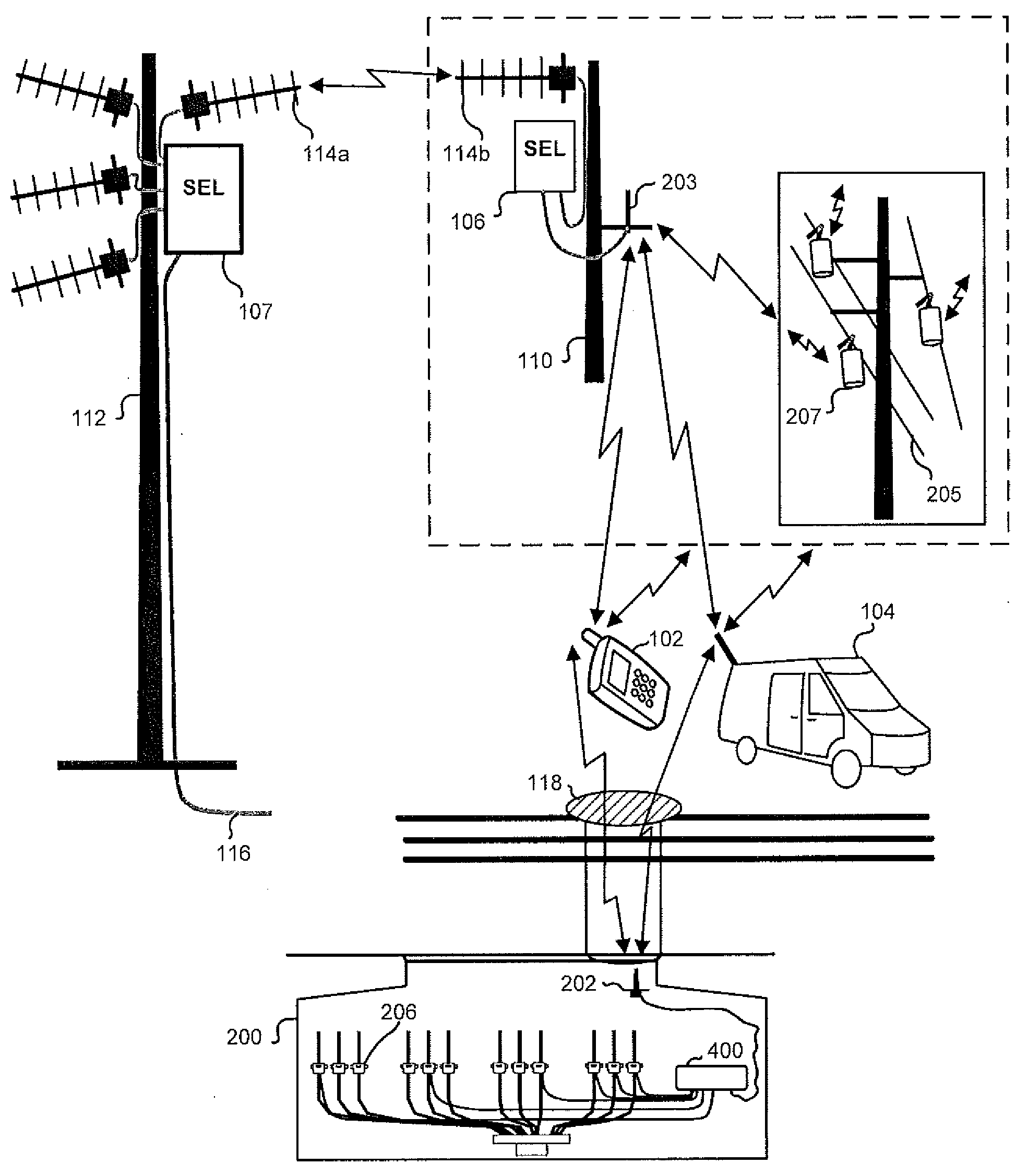
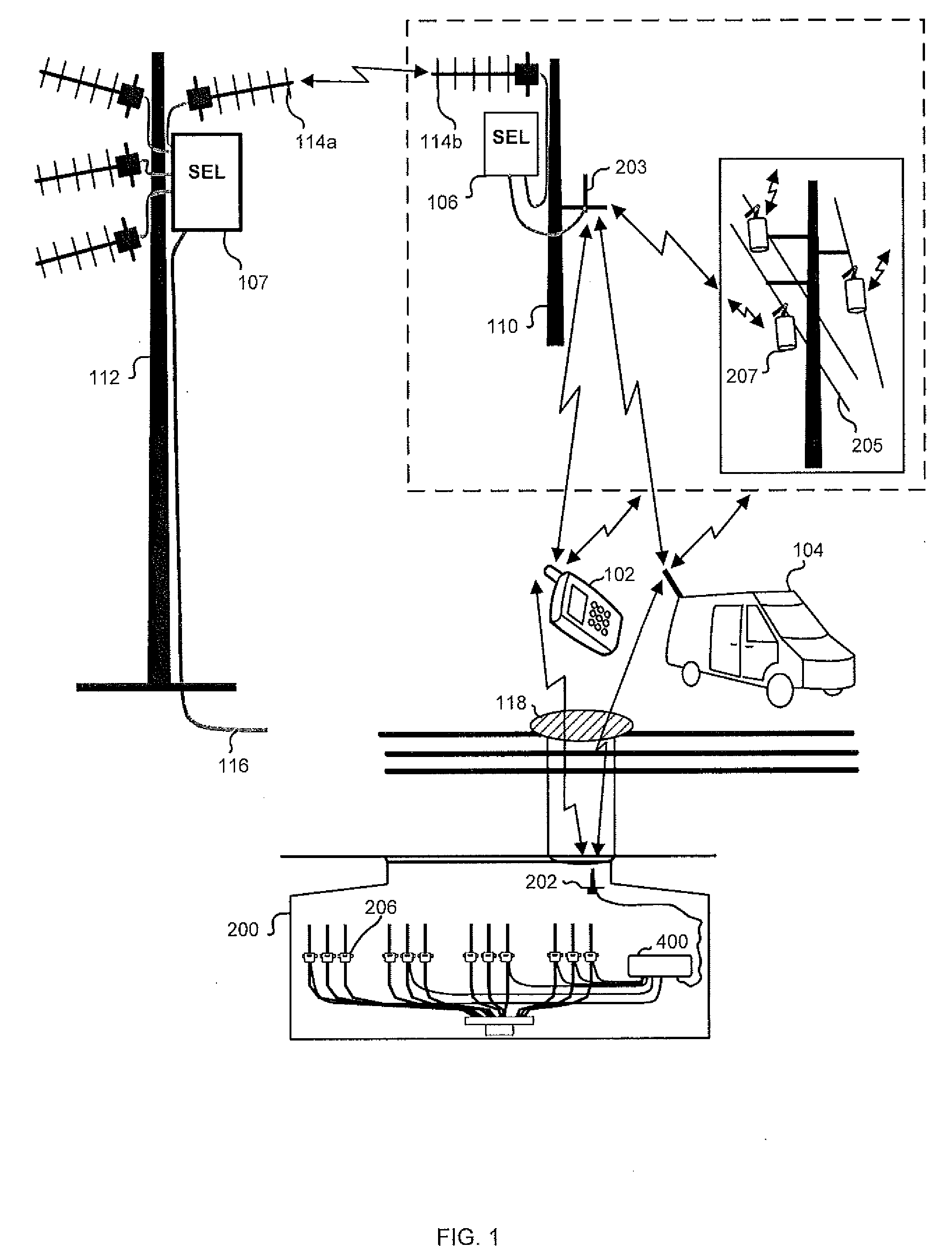
[0023]FIG. 1 illustrates a FCI monitoring system in accordance with an aspect of the present invention. A number of overhead FCIs 207 each contain a two-way radio that communicates the occurrence of a fault via a short range antenna 203 to a local site 110 having an intelligent module 106 installed within radio range of the FCIs 207. The intelligent module 106 then uses the existing wired telephone network (not shown) to communicate the fault occurrence to a remote site 112. Alternatively, the intelligent module may include a radio interface unit associated therewith for communication with an antenna 114b to communicate the fault occurrence to a remote site 112 having another long range RF antenna 114a. The remote site 112 includes a remote intelligent module 107, which may be connected to another site (not shown) via a wired connection 116. When a fault is detected by a FCI, the occurrence is relayed in the manner described above to the remote site 112, triggering the dispatch of a...
PUM
 Login to View More
 Abstract
Description
Claims
Application Information
 Login to View More