
Device, system and method for color display
a color display and display device technology, applied in the direction of color signal processing circuits, identification means, instruments, etc., can solve the problems of chromaticity alone not fully representing all visible color variations, non-portable devices also use lcd technology, and cannot display many colors perceived by humans, etc., to achieve wide color gamut, wide color gamut, and high luminous efficiency
- Summary
- Abstract
- Description
- Claims
- Application Information
AI Technical Summary
Benefits of technology
Problems solved by technology
Method used
Image

Examples
Embodiment Construction
[0056] In the following description, various aspects of the invention are described, with reference to specific embodiments that provide a thorough understanding of the invention; however, it will be apparent to one skilled in the art that the present invention is not limited to the specific embodiments and examples described herein. Further, to the extent that certain details of the devices, systems and methods described herein are related to known aspects of color display devices, systems and methods, such details may have been omitted or simplified for clarity.
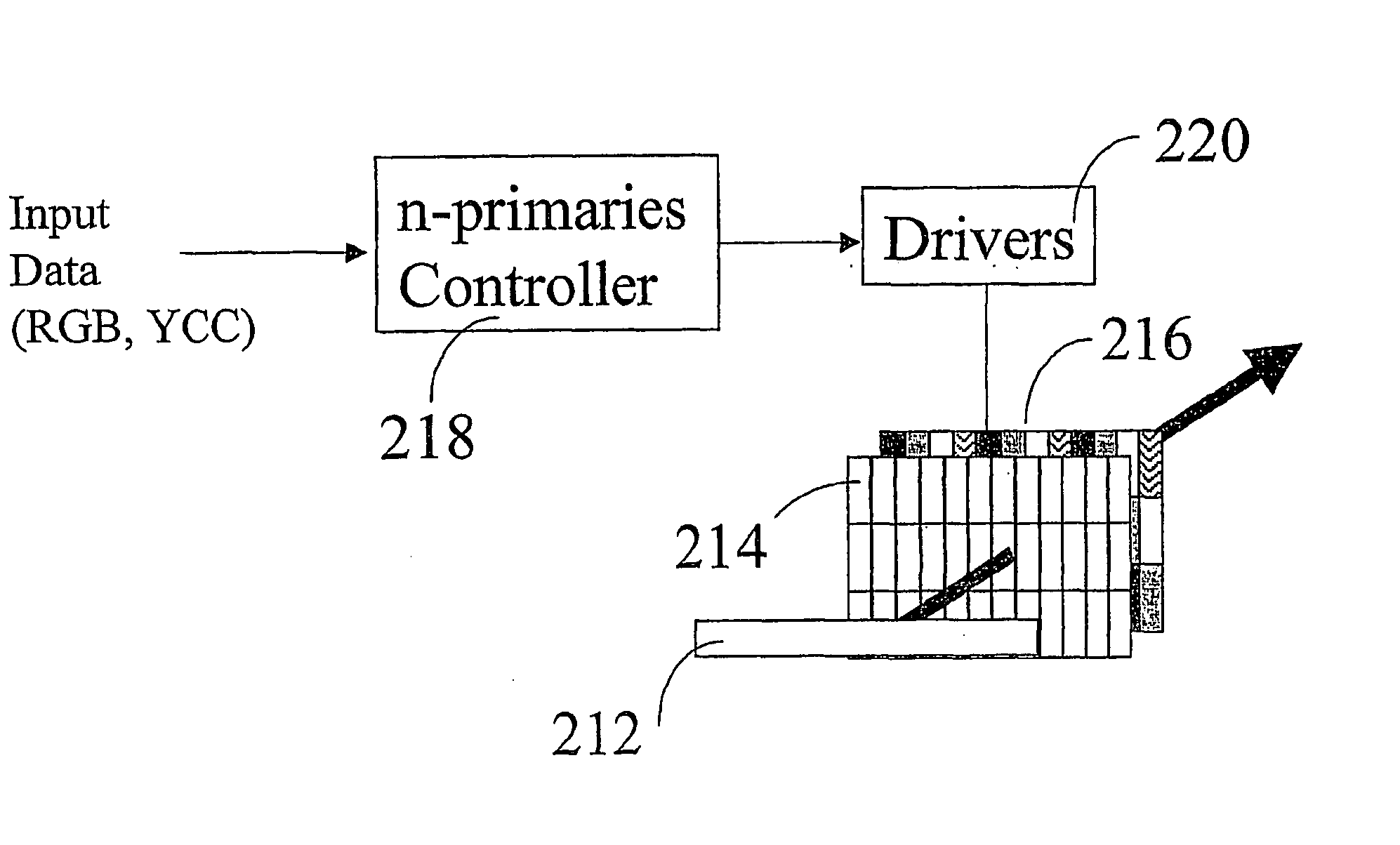
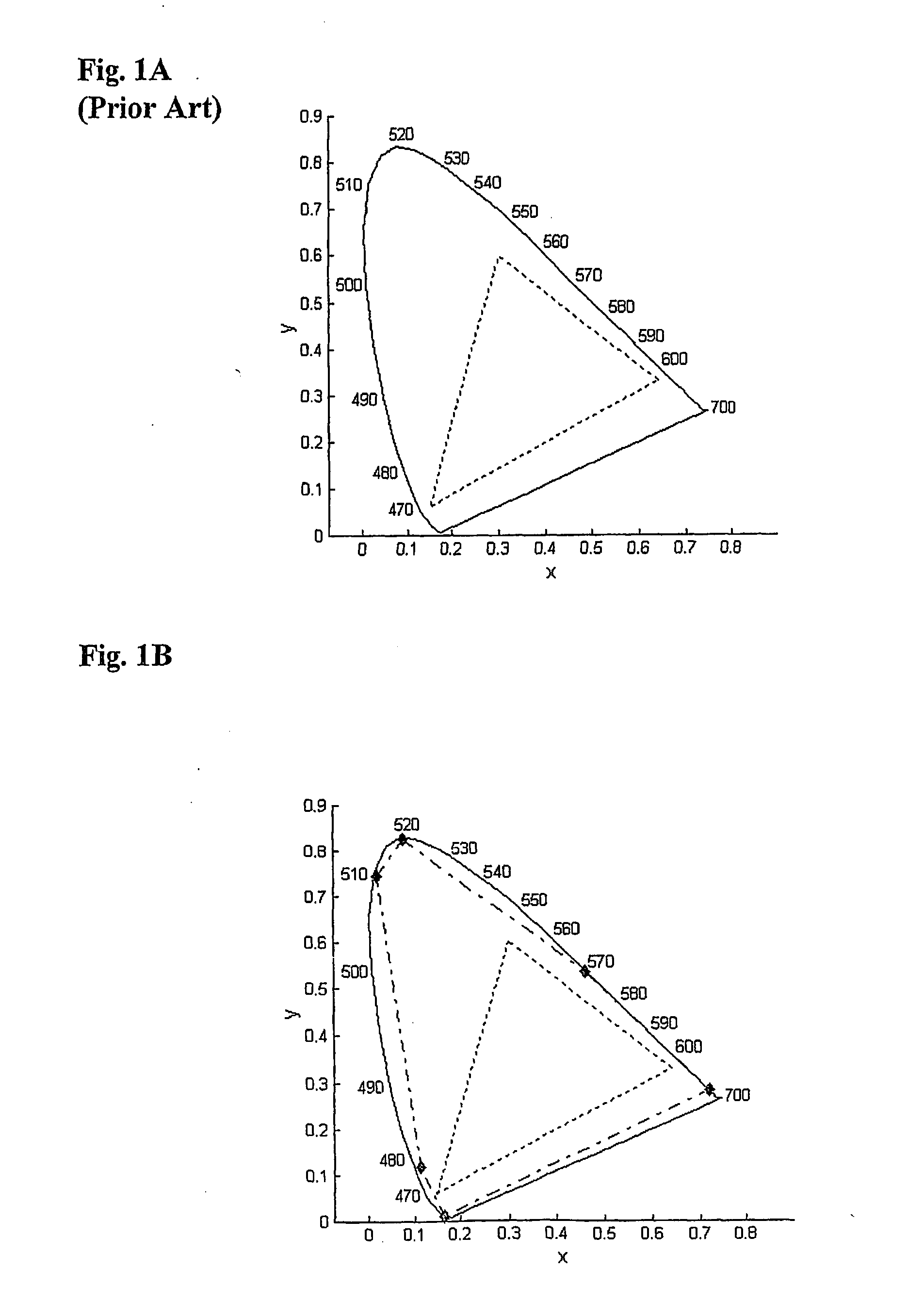
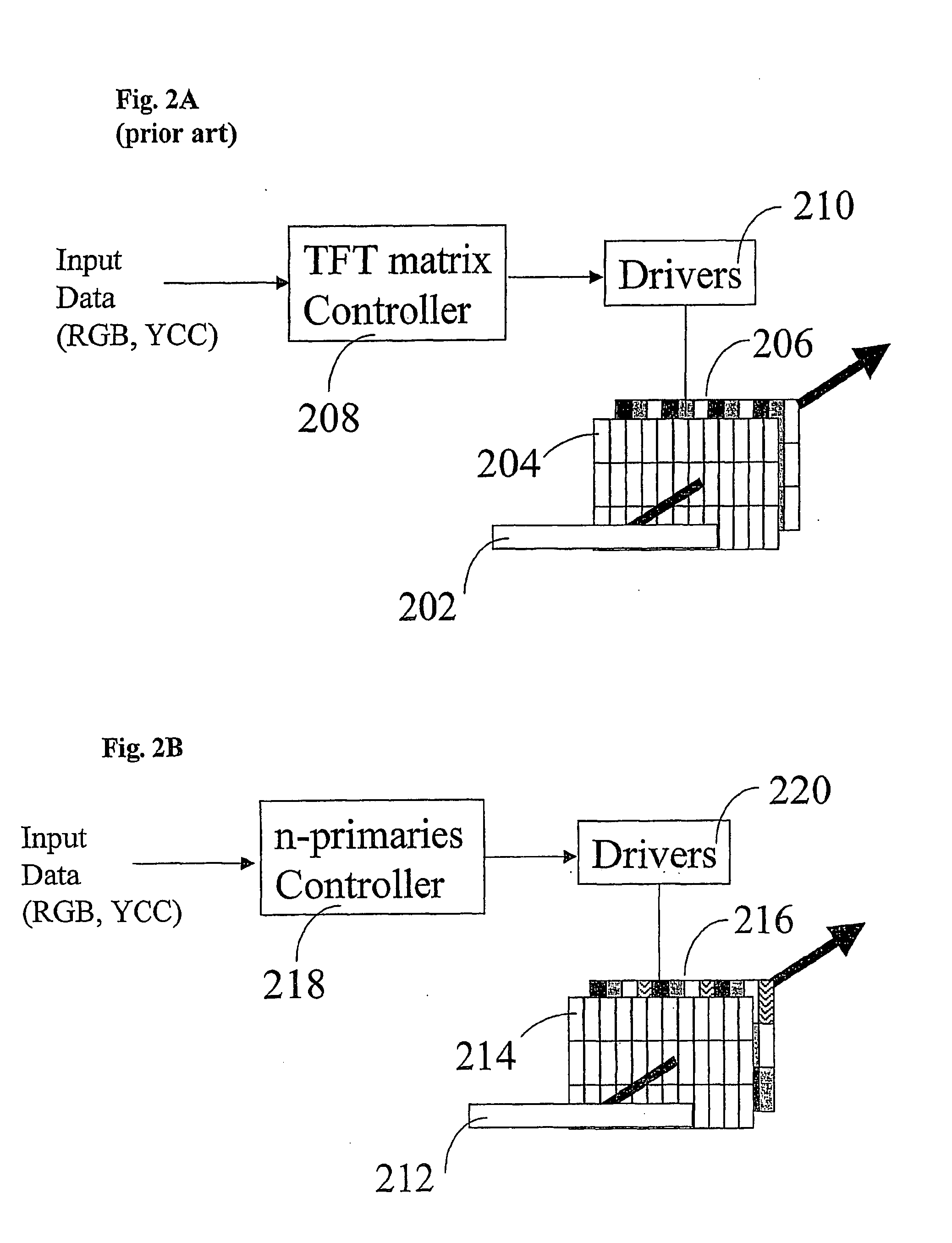
[0057]FIG. 1B schematically illustrates a color gamut of a more-than-three-primary display in accordance with an embodiment of the invention, enclosed by a horseshoe diagram representing the perceivable color gamut of the human eye, on a chromaticity plane. The six-sided shape in FIG. 1B represents the color gamut of a six-primary display in accordance with an exemplary embodiment of the invention. This color gamut is sign...
PUM
| Property | Measurement | Unit |
|---|---|---|
| wavelengths | aaaaa | aaaaa |
| aspect ratio | aaaaa | aaaaa |
| aspect ratio | aaaaa | aaaaa |
Abstract
Description
Claims
Application Information
 Login to View More