
Scalable Filtering and Policing Mechanism for Protecting User Traffic in a Network
- Summary
- Abstract
- Description
- Claims
- Application Information
AI Technical Summary
Benefits of technology
Problems solved by technology
Method used
Image

Examples
Embodiment Construction
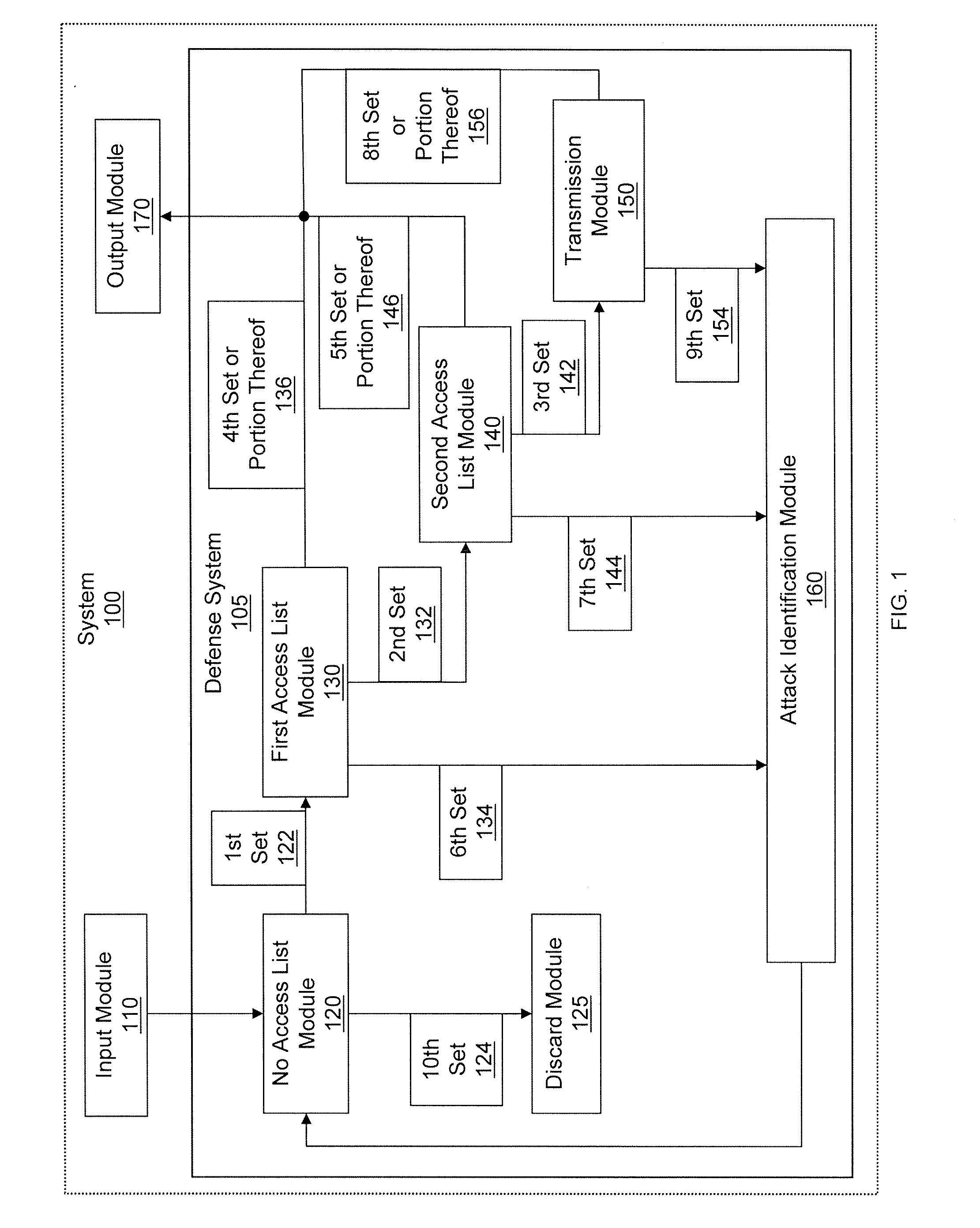
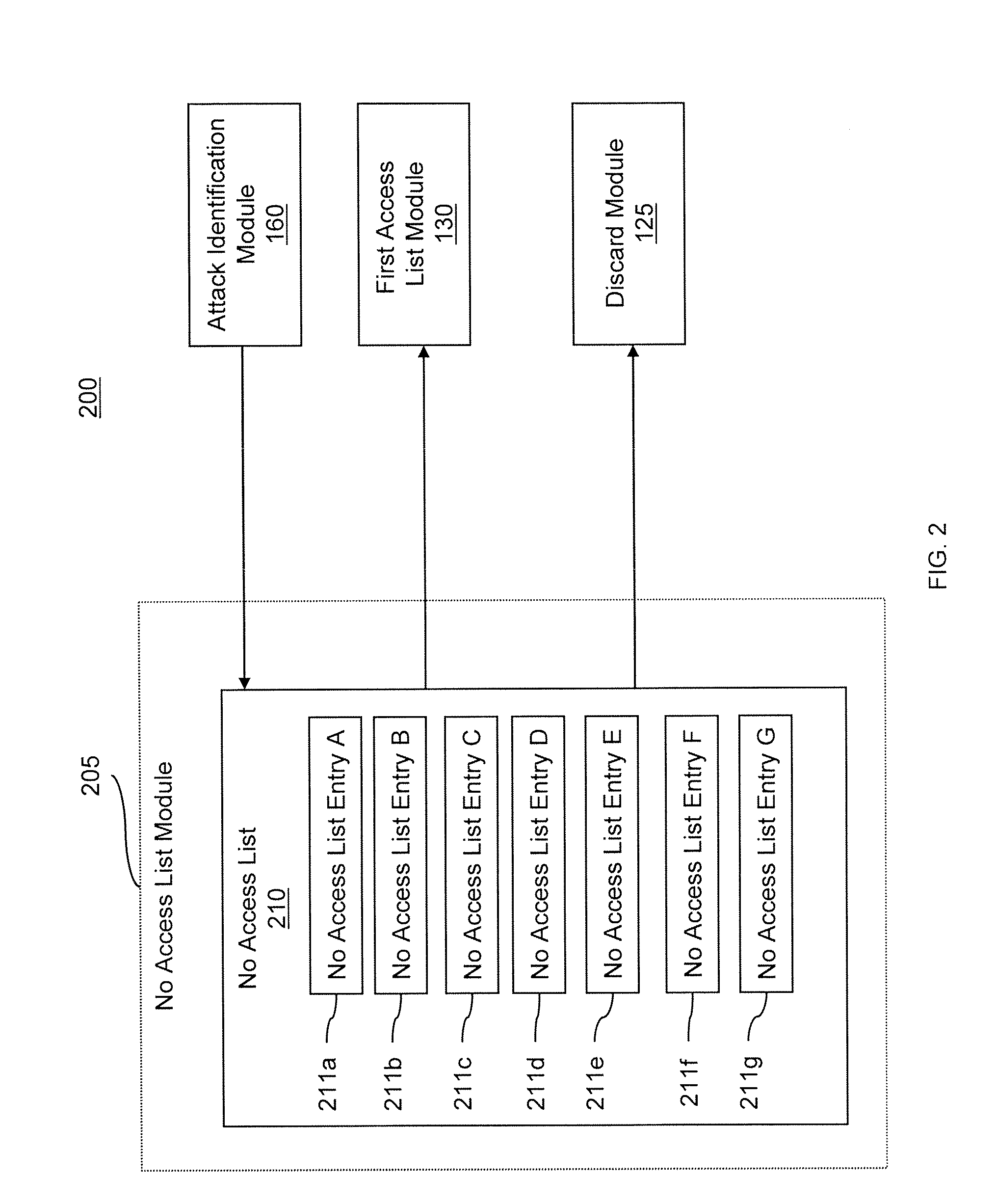
[0058]In general overview, data packets are filtered by a multi-tiered filtering and transmission system. The data packets matching the first tier filter (e.g., no access list) are discarded and the remaining data packets are transmitted to the second tier. The data packets matching the second tier filter (e.g., first access list) are transmitted to an output module based on a criterion (e.g., rate limit). If the matched data packets are outside of the criterion, then those data packets are transmitted to an attack identification module for analysis. The data packets not matching the second tier filter are transmitted to the third tier.
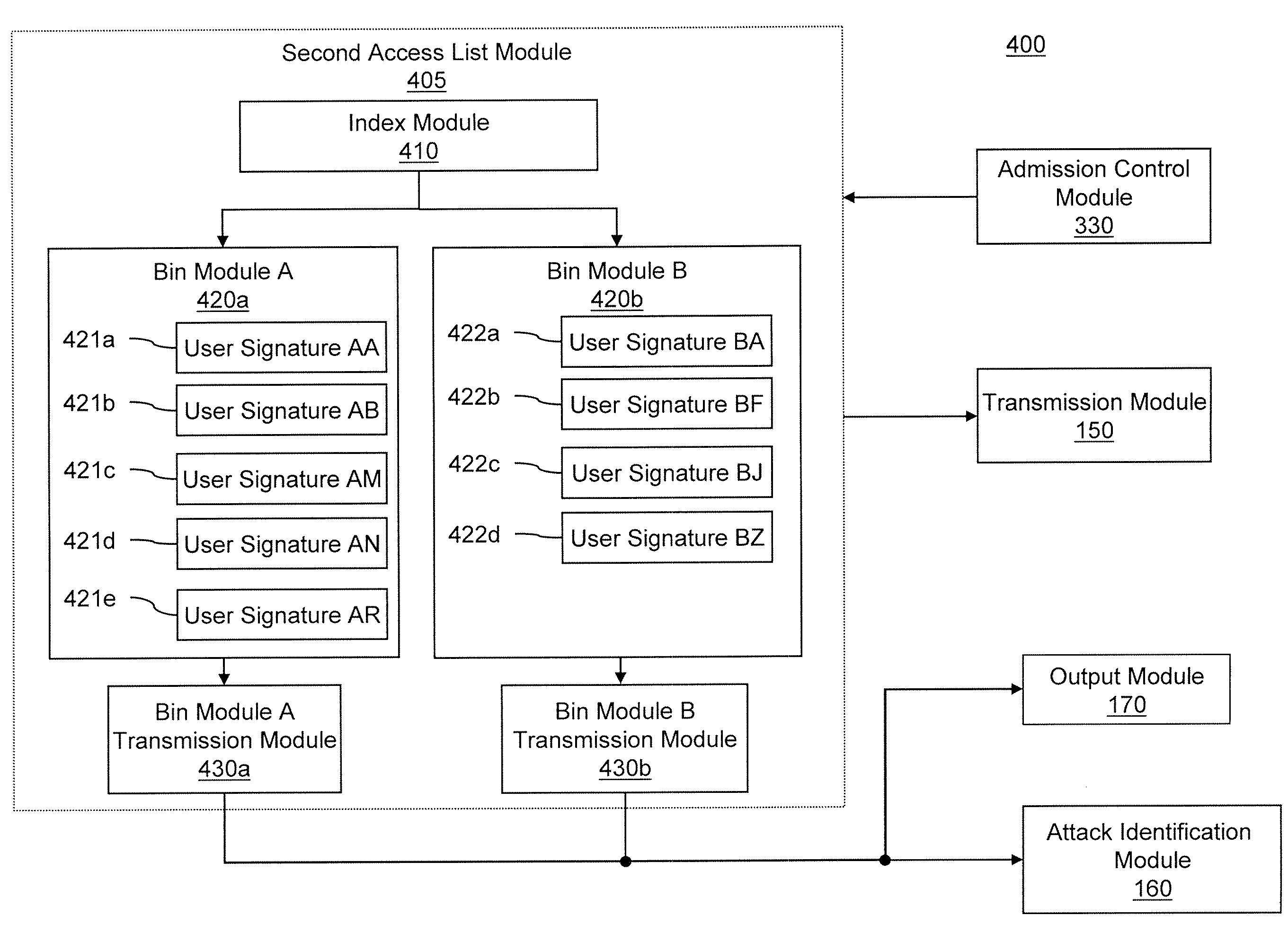
[0059]The data packets in the third tier filter (e.g., second access list) are hashed into bins and data packets matching an entry in the matched bin are transmitted to the output module based on a criterion (e.g., rate limit) for the bin. If the matched data packets are outside of the criterion, then those data packets are transmitted to an attack id...
PUM
 Login to View More
 Abstract
Description
Claims
Application Information
 Login to View More